Key takeaways
- Regular competitive matches: A Grade 1 or Grade 2 English-willow bat with a balanced pickup. Spend on sound construction and fit, not just a low advertised weight.
- Frequent net sessions on a budget: A Kashmir-willow bat or a lower-grade English-willow model. These can be practical workhorses, though their feel and performance may be less consistent.
- Slower pitches and controlled stroke play: Look for a lower middle and a bat that feels balanced through the swing. A very low middle may be less suited to consistently full-length deliveries.
- Hard-hitting play on true, quicker pitches: A fuller profile with a larger middle can help provide a substantial hitting area, but confirm the pickup is manageable before choosing it.
- Younger players: Prioritize correct length and a comfortable pickup over a large-looking profile. A bat that is too long or heavy can be difficult to control.
Best Cricket Bats for Match Play and Practice
The best cricket bat depends on your playing level, preferred pickup and conditions: choose a properly sized English-willow bat for regular match play, a serviceable Kashmir-willow bat for tighter budgets and frequent practice, and a lighter, lower-profile design if you play on slower pitches or need easier control.
Quick picks by playing situation
- Regular competitive matches: A Grade 1 or Grade 2 English-willow bat with a balanced pickup. Spend on sound construction and fit, not just a low advertised weight.
- Frequent net sessions on a budget: A Kashmir-willow bat or a lower-grade English-willow model. These can be practical workhorses, though their feel and performance may be less consistent.
- Slower pitches and controlled stroke play: Look for a lower middle and a bat that feels balanced through the swing. A very low middle may be less suited to consistently full-length deliveries.
- Hard-hitting play on true, quicker pitches: A fuller profile with a larger middle can help provide a substantial hitting area, but confirm the pickup is manageable before choosing it.
- Younger players: Prioritize correct length and a comfortable pickup over a large-looking profile. A bat that is too long or heavy can be difficult to control.
What the main choices mean
Willow grade and wood type
English willow is typically lighter and offers a softer, more responsive feel. Higher grades usually have a cleaner appearance and more uniform grains, but appearance is not a guarantee of performance. Grain count alone is not a reliable quality test: a bat with fewer, straighter grains may suit a player better than one chosen solely for a high grain count.
Our top picks


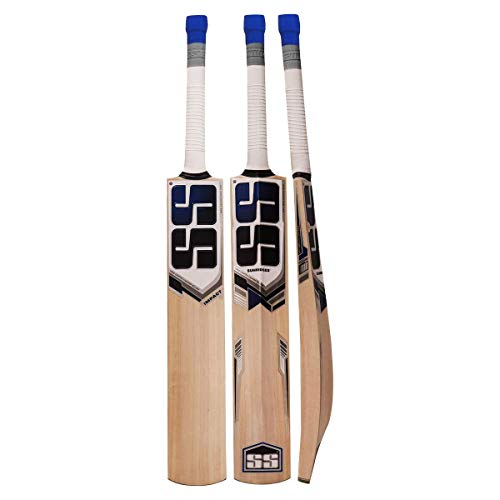
As an Amazon Associate we earn from qualifying purchases at no extra cost to you. Ratings are shown as listed on Amazon.
Kashmir willow is generally denser and more affordable. It can make a durable practice option, especially when the bat will see frequent use, but it may feel heavier and less lively than an English-willow bat of similar listed weight. Within either wood type, individual bats vary. Check for visible cracks, damaged edges, loose labels or an uneven face before buying.
Profile, middle and edges
The middle is the part of the blade where a well-timed shot is most likely to feel clean. A low middle places more mass toward the toe and can suit players who meet the ball late or play on slower surfaces. A mid or mid-high middle may be more versatile for front-foot play and quicker pitches.
Large edges and a thick spine can add hitting area and power potential, but they may also add bulk. Profile claims do not replace sound timing: a bat that feels awkward through the swing is unlikely to help simply because its edges look large. Also check the toe and shoulders. Excessively thin areas can be more vulnerable to damage, while a fuller profile may increase overall weight.
Weight, balance and pickup
Listed weight is only part of the decision. Two bats with the same scale weight can feel different because of where the mass sits. A bat with more weight near the toe may feel sluggish; a bat with a more balanced distribution can feel easier to maneuver. The practical test is to take a few controlled shadow swings and check whether you can lift the bat into your usual shots without straining or changing your technique.
Handle construction
Most cricket bats use a cane handle, often with rubber inserts to help absorb vibration. A round handle can suit players who rotate the bat in their hands; an oval handle can offer a clearer reference for hand placement and may feel more stable for some. Handle shape and grip thickness are personal preferences. A loose grip, damaged handle, or persistent vibration warrants inspection rather than being ignored.
At-a-glance comparison
The weights below are practical selection ranges, not universal standards. Actual weight depends on size, profile and individual bat, so always check the specific bat on a scale and assess its pickup.
| Option | Typical bat weight | Willow and profile | Best suited to | Main trade-off |
|---|---|---|---|---|
| Light adult bat | 2 lb 7 oz–2 lb 9 oz (about 1.11–1.16 kg) | Usually English willow; slim or balanced profile | Players prioritizing quick pickup and control | May offer less mass through the shot |
| Balanced adult bat | 2 lb 9 oz–2 lb 11 oz (about 1.16–1.22 kg) | English willow; mid-profile options are common | All-round match play and regular nets | Pickup varies considerably between profiles |
| Heavier adult bat | 2 lb 11 oz–2 lb 13 oz (about 1.22–1.28 kg) | Often a fuller profile; English or Kashmir willow | Players comfortable with a heavier swing | Can slow reactions or tire the hands sooner |
| Practice-focused bat | 2 lb 7 oz–2 lb 12 oz (about 1.11–1.25 kg) | Often Kashmir willow or a lower English-willow grade | Frequent drills and budget-conscious use | May feel denser or less consistent |
Choose by budget, experience and conditions
| Your situation | What to look for | Why |
|---|---|---|
| New or occasional player | Correct size, manageable pickup, entry-level willow | Technique and comfort matter more than a premium grade. |
| Regular club player | Mid-grade English willow, balanced weight, sound handle | Offers a useful mix of responsiveness, consistency and cost. |
| Frequent practice, limited budget | Kashmir willow or a durable lower-grade bat | Keeps the cost of routine use down; reserve a match bat if needed. |
| Slow, low-bounce surface | Comfortable pickup with a lower or mid-low middle | May suit late contact and ground strokes, depending on your technique. |
| Quicker, bouncier surface | Balanced or mid-high profile that remains easy to control | Supports a range of front-foot and back-foot shots without excessive bulk. |
Get the size right before comparing grades
Use height and reach as a starting point, then check that the bat feels controllable in your stance. Common youth sizes run from Size 1 to Size 6, followed by Harrow and full-size adult bats; exact suitability varies by maker and player proportions. With the bat held beside you, the toe should reach around the lower part of the shin rather than forcing an awkward stance. If possible, try the bat with your usual gloves, since they can change how the handle feels.
If you are between sizes, do not automatically choose the longer or heavier option. A bat that is too large can make it harder to move the blade into position. For growing juniors, fit and control today are more useful than buying far ahead of their current reach.
Durability and care: what wears first
Edges, toe and face commonly take the most punishment. Repeated hard impacts, wet conditions and balls striking near the edge can cause surface cracks or splits. Some hairline surface lines are cosmetic, but spreading cracks, a loose handle or a growing split at the toe should be assessed by a bat-repair specialist.
- Prepare it as directed: Follow the maker’s knocking-in instructions. Do not assume every bat is ready for immediate use; inadequate preparation can leave the face more vulnerable to damage.
- Protect exposed areas: An anti-scuff sheet and suitable edge protection can reduce surface wear, though they cannot prevent all cracks or replace proper preparation.
- Keep it dry: Wipe off moisture and let the bat dry naturally. Avoid leaving it in a damp kit bag, near a heater or in direct, intense sun.
- Check it regularly: Look over the toe, edges and handle after sessions. Tighten or replace a worn grip when needed, and get structural damage checked promptly.
Bottom line
For most regular players, a correctly sized, balanced English-willow bat in a comfortable midweight range is a sensible starting point. Choose Kashmir willow when value and practice use take priority, and choose a lighter or fuller profile only after checking how its pickup suits your swing. The best cricket bats are not simply the lightest, heaviest or highest-graded: they are the ones whose size, balance, handle and profile fit the player and the conditions.