Key takeaways
- 8–10 ounces: suited to smaller stirred drinks, tasting pours, and compact shelves.
- 12–14 ounces: the most versatile range for a single home-bar serving.
- 16–20 ounces: best for crushed-ice builds, large garnishes, and long tropical drinks.
- Over 20 ounces: mainly a presentation piece; it can encourage oversized pours and becomes heavy when full.
Best Tiki Mugs for Home Bars
The best tiki mugs for most home bars are heavy ceramic mugs holding 12–16 ounces, with a wide enough base to resist tipping and a dishwasher-safe glaze; choose glass instead when you want to see layered drinks, ice, or bright tropical colors.
Quick picks by drinking situation
| Home-bar situation | Best mug type | Recommended capacity | Why it fits |
|---|---|---|---|
| First tiki mug or limited budget | Simple glazed ceramic tumbler | 12–14 oz | Affordable, stable, versatile, and easy to replace |
| Large, ice-heavy cocktails | Wide ceramic vessel | 16–20 oz | Leaves room for crushed ice and a substantial garnish |
| Layered or color-changing drinks | Clear or partially clear glass | 10–14 oz | Shows gradients, carbonation, fruit, and decorative ice |
| Small shelves or crowded serving trays | Low-profile ceramic mug | 10–12 oz | Uses less vertical and lateral space and is harder to knock over |
| Frequent dishwasher cleaning | Plain, fully glazed ceramic | 12–16 oz | Fewer fragile details and less hand-cleaning than sculpted designs |
| Occasional entertaining | Durable molded glass or standard ceramic | 12–16 oz | Easy to store without committing to a large collection |
Ceramic versus glass tiki mugs
Ceramic: the traditional choice
Ceramic is usually the better all-purpose material for tiki cocktails. Its weight makes a mug feel secure when filled with crushed ice, while its opaque walls block condensation and keep the presentation focused on the shape. A good glazed ceramic mug also provides some insulation, so a cold drink is less likely to warm immediately in your hand.
Our top picks

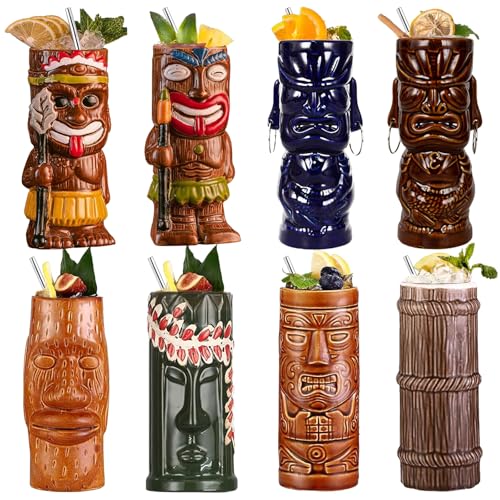


As an Amazon Associate we earn from qualifying purchases at no extra cost to you. Ratings are shown as listed on Amazon.
The trade-off is that ceramic hides the drink. It is also vulnerable to chips around the rim, handles, raised decorations, and thin sculpted features. A mug can remain usable after a small exterior chip, but a damaged drinking rim should be removed from service because it may be sharp and is difficult to clean thoroughly.
For a first purchase, look for a mug weighing roughly 1.5–2.5 pounds when empty, with a base at least 3.5 inches wide and a fully glazed interior. Avoid very narrow bases on tall novelty designs unless the mug will be used on a tray away from elbows and pets.
Glass: better visual presentation
Glass works especially well for drinks whose appearance is part of the experience. A clear vessel can show a sunset-style layered cocktail, dark rum floating over a lighter mixer, brightly colored syrups, fresh fruit, or a large decorative ice cube. It is also easier to inspect for residue after washing.
Glass generally has less thermal insulation than thick ceramic, and many novelty glass designs are more top-heavy. Tempered or borosilicate glass may tolerate temperature changes better than ordinary thin glass, but “heat-resistant” does not mean unbreakable. Do not pour boiling liquid into a cold glass, and do not move a cold glass directly into a hot dishwasher cycle if the maker’s care instructions prohibit it.
Choose glass for visual cocktails such as a layered rum drink, a clarified tropical punch, or a sparkling pineapple-and-citrus serve. Choose ceramic for dark, aromatic drinks such as a Mai Tai, Navy Grog, or strong rum punch where stability and traditional presentation matter more than visibility.
Capacity matters more than novelty shape
A mug’s stated capacity is usually filled to the rim, not to a comfortable serving level. Leave approximately 1–2 inches at the top for ice, garnish, and movement. A 12-ounce mug may therefore hold about 9–10 ounces of liquid once prepared for serving, while a 16-ounce mug may accommodate around 11–13 ounces of liquid plus crushed ice.
- 8–10 ounces: suited to smaller stirred drinks, tasting pours, and compact shelves.
- 12–14 ounces: the most versatile range for a single home-bar serving.
- 16–20 ounces: best for crushed-ice builds, large garnishes, and long tropical drinks.
- Over 20 ounces: mainly a presentation piece; it can encourage oversized pours and becomes heavy when full.
As a practical example, a 16-ounce mug filled with 10 ounces of cocktail, 4 ounces of crushed ice, and 2 ounces of headspace is already close to its usable limit. A narrow, 16-ounce mug may hold the volume but leave too little surface area for a stable ice mound and garnish.
Designs matched to popular tropical cocktails
For a Mai Tai
Use a 10–14-ounce ceramic mug with a broad base. A squat barrel, carved face, or restrained relief design suits the drink without competing with the mint and citrus garnish. A narrow opening helps concentrate aroma, but it should still be wide enough for crushed ice and a reusable straw.
For a Zombie or Navy Grog
Choose a 14–18-ounce vessel with generous vertical room. These drinks often contain multiple ounces of liquid and are commonly served over crushed ice. A tall ceramic tumbler or sturdy glass with a low center of gravity is preferable to a very tall, thin novelty mug.
For a Painkiller-style drink
A 12–16-ounce ceramic mug or opaque glass works well with creamy, pale drinks and grated spice. Select a smooth interior because dairy or coconut-rich ingredients can leave a film in deeply textured vessels.
For sparkling or layered cocktails
Choose clear glass with a 10–14-ounce capacity and a stable foot or base. Keep the design relatively simple: raised faces, narrow necks, and internal ridges make color separation harder to see and complicate cleaning.
For frozen drinks
Use a wide-mouth mug between 14 and 20 ounces. Frozen cocktails need room for the blended mixture and garnish, and a wide opening makes it easier to use a spoon or straw. Ceramic’s weight is useful here because frozen drinks can be top-heavy.
Dishwasher safety and cleaning reality
“Dishwasher safe” is most useful when it applies to the entire item, including metallic paint, decals, handles, and attached decorations. A plain, high-fired, fully glazed ceramic mug is usually the least troublesome option, but always follow the manufacturer’s care instructions. Hand-washing is safer for hand-painted details, gold or silver accents, cork components, exposed unglazed clay, and delicate glass.
- Rinse the mug soon after drinking, especially after using syrups, coconut cream, or fruit pulp.
- Wash the interior with a soft brush that can reach below the rim and into the base.
- Inspect reliefs, straw holes, and narrow necks for trapped pulp or garnish.
- Allow the mug to dry completely before storing it upside down or nesting it.
- Do not stack mugs with raised decorations touching one another.
Abrasive powders and metal scouring pads can dull glaze and scratch glass. Strong odors may also linger in porous, unglazed ceramic. If a mug smells of rum or fruit after washing, soak it in warm water with a small amount of mild dish soap, then rinse thoroughly; avoid treating an unglazed surface as if it were sealed.
Stability, storage, and durability
Stability depends on more than weight. A mug with a heavy top can tip more easily than a lighter mug with a broad foot. Before buying an unusually shaped design, compare its base width with its height: a very tall vessel with a base under about one-quarter of its height deserves extra caution. Handles also add leverage, particularly when a full mug is lifted from one side.
The parts most likely to wear first are thin handles, protruding ears or teeth, painted details, and the drinking rim. Store sculpted mugs with dividers or individual shelf space. For glass, avoid placing metal bar tools inside the vessel, since a single impact can cause a crack or chip.
For frequent use, a plain ceramic mug may offer a lower ownership cost than a highly detailed collector-style piece. If a $25 mug is used twice a month for two years, its approximate cost is $25 divided by 48 uses, or about 52 cents per use. A $60 decorative mug used four times a year for two years costs $7.50 per use. The more expensive design only becomes economical through frequent use or lasting collectible value.
What to buy
Choose a 12–16-ounce glazed ceramic mug with a broad base, smooth interior, and dishwasher-safe construction if you want one dependable vessel for most tiki cocktails. Choose a 10–14-ounce glass mug when color, layers, bubbles, or garnish visibility is the priority. Choose a 16–20-ounce wide ceramic mug for large crushed-ice drinks, and reserve tall or highly sculpted designs for occasions where presentation matters more than easy storage and cleaning.