Key takeaways
- Buying a compact board while expecting regulation practice.
- Choosing the lightest set without checking whether the legs lock securely.
- Assuming a waterproof-looking graphic means the plywood edges are sealed.
- Ignoring folded dimensions and discovering the boards do not fit the intended vehicle or closet.
- Leaving wooden boards outdoors under a cover instead of moving them into dry storage.
- Focusing on included bags while overlooking a flexible surface or weak frame.
The best cornhole boards for most backyard players are regulation-size 4-by-2-foot wooden boards with a sealed plywood playing surface, folding legs, non-skid feet, and a carrying handle; choose a lighter composite or plastic set only when portability and weather exposure matter more than tournament-style feel.
Our top picks


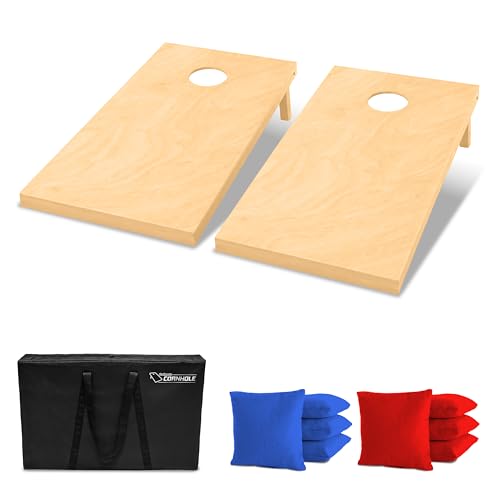

As an Amazon Associate we earn from qualifying purchases at no extra cost to you. Ratings are shown as listed on Amazon.
Quick picks by playing situation
| Situation | Best board type | What to prioritize | Typical market range |
|---|---|---|---|
| Occasional backyard games | Regulation wooden set | Sealed plywood, folding legs, carrying handles | $120–$250 per set |
| Frequent family use | Reinforced wooden set | 1/2-inch plywood, cross-bracing, replaceable hardware | $200–$400 per set |
| League or tournament play | Competition-style wooden boards | Regulation dimensions, consistent slide, rigid frame | $300–$700 per set |
| Camping, tailgating, or small vehicles | Foldable composite or plastic set | Low weight, nesting design, compact storage | $100–$300 per set |
| Frequent outdoor exposure | Weather-resistant composite set | Water-resistant construction, sealed edges, rust-resistant hardware | $180–$400 per set |
What counts as a regulation cornhole board?
A regulation board is 47.5 to 48 inches long and 23.5 to 24 inches wide. The playing surface slopes upward, with the front edge about 3 to 4 inches off the ground and the rear edge about 12 inches high. The hole is 6 inches in diameter and is centered across the board, with its center approximately 9 inches from the top edge.
Boards are placed 27 feet apart, measured from the front edge of one board to the front edge of the other. That distance is important: a set can have regulation dimensions but still require more room than a small patio provides. Allow at least 35 feet of unobstructed length for comfortable play, including throwing space and room behind each board.
Some recreational sets are shorter than regulation size. They are easier for children to use and fit in smaller spaces, but they change the throwing angle and bag rebound. If you may join a league later, regulation boards are the better long-term purchase.
Best cornhole boards by material
Wooden boards: best playing feel
Wood remains the preferred material for serious backyard and tournament play because it produces a predictable bag slide and a solid, low-vibration landing surface. Look for a 1/2-inch plywood top rather than very thin paneling, plus a perimeter frame and at least one internal brace. A full set commonly weighs 35 to 55 pounds, depending on the frame and finish.
The playing surface should be smooth without feeling excessively slick. Water-based polyurethane is common, while higher-end boards may use multiple coats of clear finish and a carefully sanded topcoat. A glossy surface can make fast-slide bags difficult to control, especially for beginners. A satin or moderate-gloss finish is usually more versatile.
Wood needs more care than composite material. Do not leave it on wet grass, store it in a damp shed, or place it face-down on muddy ground. Moisture can swell plywood edges, loosen graphics, rust hardware, and warp the frame.
Composite and plastic boards: best for transport and weather exposure
Composite and molded plastic boards are easier to carry and tolerate occasional drizzle better than unfinished wood. Many weigh roughly 20 to 35 pounds per set and include integrated handles or nesting legs. They are practical for tailgating, camping, and families that need to move equipment frequently.
The trade-off is playing feel. Some plastic surfaces are faster, louder, or more prone to bounce than a rigid wooden board. Thin composite panels may flex when a bag lands near the edge. Before buying, check whether the surface is supported underneath and whether the legs lock firmly rather than relying on loose friction hinges.
Aluminum and specialty lightweight frames
Aluminum-framed boards can reduce weight while retaining a relatively rigid platform. They are useful when one person must carry the set, but the surface material still determines most of the playing characteristics. An aluminum frame with a thin, flexible top may be lighter but less stable than a heavier plywood model.
Features that matter more than artwork
Leg stability
Legs are one of the first parts to reveal a weak design. Prefer wide legs with positive locking hardware, sturdy hinges, and rubber or non-skid feet. A board should not rock when a player steps near its front edge. Legs that fold flat are convenient, but a compact hinge is not useful if it loosens after repeated setup.
Check the underside for a center brace or crossbar. It helps prevent the board from twisting and reduces flex on uneven ground. For tournament-style use, rigid legs and a level playing surface matter more than a decorative wrap or printed design.
Playing-surface finish
A good finish should resist scuffs while allowing bags to slide consistently. Look for a surface that is sanded smooth beneath the clear coat, with no raised decal edges or visible rough patches around the hole. Printed graphics are attractive, but exposed vinyl can peel at the hole and corners if it is not covered by a durable finish.
Bag speed also depends on the bags themselves. Slick synthetic bags may slide considerably faster than break-in fabric bags, so do not judge a board by surface shine alone. If a set includes bags, inspect the stitching and fill; regulation-style bags are generally close to 6 inches square and weigh about 15 to 16 ounces each.
Weather resistance
“Weather-resistant” does not mean permanently outdoor-safe. For wooden boards, sealed faces, painted edges, galvanized or stainless hardware, and capped feet improve resistance to moisture. Composite boards usually handle humidity better, but hinges, fasteners, and stored bags can still develop mildew or corrosion.
After damp play, wipe the boards and bags dry before folding them. Never cover wet boards with a sealed tarp for long periods, because trapped moisture can be more damaging than a brief exposure to rain.
Portability and storage: measure before buying
A regulation set occupies about 48 by 24 inches when open, but folded dimensions vary. Many wooden sets fold into two panels roughly 24 inches wide and 48 inches long, with a combined thickness of 6 to 10 inches. Some composite sets nest more tightly, while reinforced tournament boards can be too heavy for a single person to carry comfortably.
Measure the actual storage location, including the diagonal opening of a closet, trunk, or shed door. A set that weighs 50 pounds may be manageable for two people but awkward for one person on stairs. Handles on both boards, a carrying strap, or a dedicated storage bag can matter more than a five-pound weight difference.
A simple ownership-cost calculation
Suppose a $240 wooden set lasts four years and is used 30 times per year. That is 120 sessions, or approximately $2 per use before any replacement bags or repairs. A $150 lightweight set used only eight times per year for four years costs about $4.69 per use.
The less expensive set is not automatically the better value. If you expect weekly games, a rigid board with replaceable legs and a durable finish may cost less over time than replacing a warped or damaged recreational set. For occasional use, the lighter set may provide better value because it is more likely to be transported and stored conveniently.
Maintenance steps that extend board life
- Inspect before setup. Check that both legs lock, feet are intact, and the board does not rock. Tighten loose bolts without overtightening into plywood.
- Choose a dry surface. Grass is acceptable for short sessions, but avoid standing water, mud, and areas where the rear legs sink unevenly.
- Clean gently. Use a soft, slightly damp cloth for dust and bag residue. Avoid abrasive pads, soaking, and household solvents that can haze the finish.
- Dry completely. Wipe moisture from the playing surface, underside, legs, and bags before storage.
- Fold without forcing hardware. Keep the legs aligned with their recesses. Forcing a misaligned leg can split the frame or bend the hinge.
- Store flat or fully supported. Leaning boards against a wall for months can encourage warping. Keep them indoors or in a dry, ventilated storage area.
Common buying mistakes
- Buying a compact board while expecting regulation practice.
- Choosing the lightest set without checking whether the legs lock securely.
- Assuming a waterproof-looking graphic means the plywood edges are sealed.
- Ignoring folded dimensions and discovering the boards do not fit the intended vehicle or closet.
- Leaving wooden boards outdoors under a cover instead of moving them into dry storage.
- Focusing on included bags while overlooking a flexible surface or weak frame.
Final buying recommendation
For most households, choose regulation-size wooden boards with 1/2-inch plywood tops, a braced frame, locking folding legs, rubber feet, carrying handles, and a moderate-gloss sealed finish. Select a composite or plastic set when one-person transport, compact storage, or frequent exposure to damp conditions is the priority. If tournament play is the goal, spend more on rigidity, consistent surface finish, and precise dimensions rather than decorative graphics. The right set is the one whose size, weight, and storage demands match how often you will actually play.