Key takeaways
- Choose open-face headgear for the clearest vision and lowest heat, cheek-protector headgear for the best all-round compromise, and full-face or bar-style headgear when front-of-face coverage outweighs ventilation and peripheral vision. The best boxing headgear is the one whose padding, closures, and shape remain centered throughout…
The best boxing headgear for most sparring is a well-fitted open-face model with 25–35 mm of layered foam, while cheek-protector headgear is the better compromise for extra coverage and full-face designs are reserved for buyers who prioritize facial protection over peripheral vision.
Headgear cannot prevent every concussion or facial injury, and it should not be used to justify harder sparring. Use it with appropriate supervision, controlled intensity, mouth protection, and sound gym rules; seek medical advice after a head impact or if symptoms develop.
Our top picks
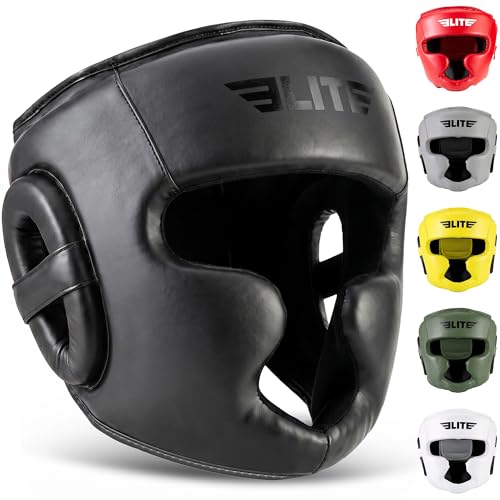


As an Amazon Associate we earn from qualifying purchases at no extra cost to you. Ratings are shown as listed on Amazon.
Quick comparison: open-face, cheek, and full-face headgear
| Design | Typical weight | Coverage | Peripheral vision | Ventilation | Best suited to |
|---|---|---|---|---|---|
| Open-face | 230–350 g | Forehead, temples, ears | Excellent | Excellent | Experienced sparring partners, boxing drills, frequent training |
| Cheek protector | 300–450 g | Forehead, cheeks, temples, ears | Good, though cheek bars can intrude | Good | General sparring, beginners, people wanting a balanced design |
| Full-face or bar-style | 400–600 g | Forehead, cheeks, nose area, chin and ears | Fair to good, depending on bar shape | Fair to limited | Users prioritizing facial coverage, technical drills, and controlled sparring |
These are useful comparison ranges rather than universal specifications. Leather, synthetic leather, foam density, size, and added face bars can change the final weight substantially. A lighter helmet is not automatically safer, but excessive weight can affect movement and encourage you to keep your head in range longer.
Which design should you choose?
Open-face headgear: clearest vision and coolest fit
Open-face headgear leaves the cheeks and front of the face largely uncovered. Its main strengths are peripheral vision, low weight, and airflow. You can see punches arriving from wider angles, track footwork, and communicate more easily during drills. These advantages matter in boxing, where a narrow field of view can alter defensive reactions.
The trade-off is obvious: the nose, cheeks, and chin receive little or no additional coverage. Open-face designs also provide less protection against accidental head clashes or glancing punches to the front of the face. They are usually the most comfortable choice for long sessions, provided the user is already capable of keeping sparring controlled.
Look for a forehead pad that is at least about 25 mm thick, dense multi-layer foam, an adjustable rear strap, and ear openings that do not collapse when you turn your head. Examples of established open-face or traditionally styled boxing headgear include the Winning FG-2900 and open-face models from Cleto Reyes, although exact construction and availability vary by model and region.
Cheek-protector headgear: the practical middle ground
Cheek headgear adds padded sections around the sides of the face without enclosing the entire front. It reduces direct exposure around the cheekbones and often shields more of the jawline than an open-face helmet. For many recreational boxers, it offers the most sensible balance of padding, visibility, ventilation, and mobility.
Its weakness is that cheek pads can block part of your downward or peripheral view. If the pads sit too close to the eyes, you may lift your chin or turn your whole body to see incoming punches. That is a fit problem, not merely a design limitation. Cheek protectors should frame the face without pressing against the nose, eyelashes, or mouth.
Commonly available examples include cheek-style models from Rival, such as the RHG2 Professional Training Headgear, and the Cleto Reyes cheek-protector range. Confirm the current version, size chart, and closure system before buying because brands use different naming conventions.
Full-face and bar-style headgear: maximum coverage, more compromises
Full-face designs use a padded face section, nose guard, or horizontal bar to cover more of the front of the head. They can reduce direct contact with the nose and cheeks during technical work, but they do not make hard sparring risk-free. A bar can also transmit force to the head, restrict vision, trap heat, and make it harder for a coach or partner to read facial cues.
Choose this design when facial coverage is your overriding priority, not simply because it looks more protective. Check whether the bar remains several millimetres away from the nose and lips, whether you can see both sides without turning your head, and whether the chin strap prevents the lower section from riding upward. If the guard touches your nose while you speak or clench your mouthguard, the shape is probably wrong for you.
Decision matrix for real training situations
| Your situation | Most suitable choice | Why | What to avoid |
|---|---|---|---|
| First headgear, regular gym sparring | Cheek protector | Balanced coverage and visibility | Oversized full-face models that shift |
| Frequent sessions of 3–5 rounds | Open-face or ventilated cheek style | Less heat, weight, and moisture buildup | Heavy models with solid, poorly ventilated panels |
| Facial coverage is the priority | Full-face or bar style | More protection around the front of the face | Bars that touch the nose or obscure side vision |
| Limited budget | Adjustable synthetic-leather cheek or open-face style | Usually easier to clean and less expensive | Very thin foam and non-replaceable, weak closures |
| Heavy use several times weekly | Reinforced leather or high-quality synthetic model | Better resistance to seam and lining wear | Unlined foam exposed to sweat and abrasion |
What to inspect beyond the label
Impact padding
Do not judge safety by thickness alone. A 35 mm soft pad can bottom out more easily than a thinner, denser layered construction. Prefer multi-layer foam with a firm outer layer and a softer comfort layer. Press the forehead and cheek areas with your fingers: they should compress slightly but should not feel hollow, permanently crushed, or uneven.
Visibility and position
Put the headgear on with your mouthguard inserted. Look straight ahead, down, and to both sides. You should be able to see a partner’s gloves entering from your peripheral vision without rotating your torso. The brow pad should sit just above the eyebrows, not on top of them. If the helmet moves when you shake your head gently, it is not secure enough for sparring.
Adjustment and retention
A reliable design normally combines a top adjustment, a rear hook-and-loop strap, and a chin strap. Lace-up systems can provide excellent shaping but take longer to adjust. Hook-and-loop closures are convenient for shared gyms, though they may collect lint and lose grip over time. The chin strap should be snug enough to keep the helmet down without restricting jaw movement.
Ventilation and sweat management
Mesh ear panels, perforated interiors, and open cheek areas reduce heat. Ventilation does not replace cleaning: sweat still reaches the lining and foam. If you train four times a week and the headgear needs to dry overnight, choose a design with removable or easily accessible padding and several airflow openings rather than a fully enclosed shell.
Fit it correctly in five steps
- Measure around the widest part of your head, approximately 2–3 cm above the eyebrows.
- Compare that measurement with the manufacturer’s chart. Typical adult sizes cover roughly 54–58 cm for small/medium and 58–62 cm for large, but these ranges are not standardized.
- Center the forehead pad and make sure the ear openings line up with your ears.
- Tighten the rear and top adjustments before fastening the chin strap. This distributes pressure instead of using the chin strap to compensate for a loose helmet.
- Move your head, speak, open your mouth, and look side to side. Re-adjust if the helmet slides, pinches, touches your eyes, or blocks useful vision.
As a practical test, place one finger between the chin strap and your skin, then perform light footwork and defensive movements. The headgear should stay centered. A model that shifts during warm-up will move more during contact.
Ownership costs and maintenance
General market pricing in 2026 is approximately $40–$90 for basic synthetic headgear, $90–$180 for better padded training models, and $180–$350 or more for premium leather construction or specialist designs. Price does not substitute for fit, and a premium helmet that moves is a poor purchase.
After every session, wipe the exterior and interior contact surfaces with a lightly damp cloth and mild soap solution recommended for the material. Leave it open to air-dry away from radiators and direct sunlight. Do not seal damp headgear in a gym bag, soak leather, or spray strong disinfectant directly onto foam. A separate cloth bag improves airflow during transport.
The lining, hook-and-loop patches, chin strap, and stitching usually wear before the outer shell. Inspect them every few weeks if you train regularly. Replace the headgear when the foam stays compressed, the shell cracks, the strap cannot hold tension, seams separate, or the helmet shifts despite correct adjustment. Do not cut away cheek or forehead padding to improve vision; choose a different shape instead.
Bottom line
Choose open-face headgear for the clearest vision and lowest heat, cheek-protector headgear for the best all-round compromise, and full-face or bar-style headgear when front-of-face coverage outweighs ventilation and peripheral vision. The best boxing headgear is the one whose padding, closures, and shape remain centered throughout movement—then use it as one part of a controlled training program, not as permission to increase impact.