Key takeaways
- Choose All-Star System 7 Axis or Rawlings Velo 2.0 for a mobile, competitive setup; Mizuno Samurai for structured coverage; Easton Elite X for adjustability and value; and Wilson EZ Gear for simple recreational use. Whichever set you select, correct sizing, current certification, secure straps, and…
Best Catchers Gear Sets for Protection and Mobility
The best catchers gear set for most players is a NOCSAE-certified, adjustable set with a 15- to 16.5-inch chest protector, full-length leg guards, and a helmet that fits securely without restricting vision; the right choice then depends on age, league rules, body size, and how much mobility you need.
Quick picks by situation
| Player or situation | Best type of set | What to prioritize | Typical complete-set price range |
|---|---|---|---|
| Young recreational player | Adjustable youth set | Lightweight helmet, simple straps, removable knee padding | $100–$220 |
| Competitive youth or high-school player | Intermediate or large adjustable set | NOCSAE chest protector, extended leg coverage, replaceable harnesses | $220–$450 |
| Frequent travel or tournament use | Durable premium set | Ventilation, reinforced bindings, compact storage, washable padding | $350–$700 |
| Adult amateur or college-level player | Adult large set | Low-profile chest protector, wide knee blocks, maximum adjustability | $300–$750 |
Best catchers gear sets compared
All-Star System 7 Axis
The All-Star System 7 Axis line is a strong choice for experienced catchers who want a compact, mobile feel without moving to minimal protection. Its chest protector is shaped to stay close to the torso, while the leg guards emphasize flexible knee movement and substantial shin coverage. All-Star offers youth, intermediate, and adult sizing, so buyers should check the exact model rather than assuming every System 7 product fits the same way.
Our top picks
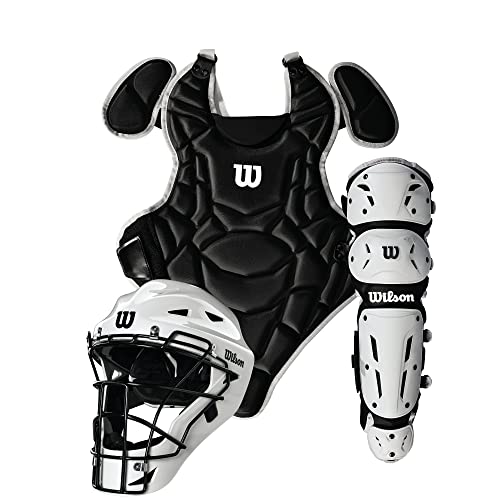
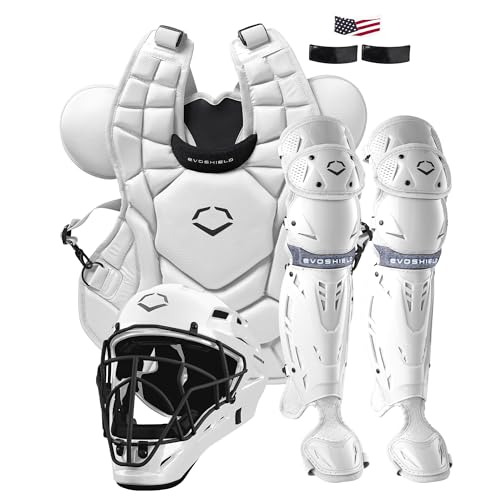
As an Amazon Associate we earn from qualifying purchases at no extra cost to you. Ratings are shown as listed on Amazon.
Choose this type of set when blocking, lateral movement, and repeated innings matter more than the lowest price. It is also a good fit for players who dislike bulky chest protectors. The trade-off is cost: premium padding, harnesses, and molded components can be more expensive to replace.
Rawlings Velo 2.0
Rawlings Velo 2.0 catcher’s equipment is aimed at players who want a traditional complete set with a relatively streamlined profile. Its chest protector and leg guards are designed for mobility, while the helmet typically uses ventilation and a multi-point fit system to reduce movement during sprints and blocks.
This is a sensible middle-to-upper-tier option for high-school and serious youth players, provided the selected size meets the league’s certification rules. Compare the published weight and certification label for the specific helmet and chest protector: products within the same Velo family can differ by size and revision.
Mizuno Samurai
Mizuno Samurai sets suit players who prefer structured protection and a secure, conventional fit. The chest protector generally feels more substantial than an ultralight design, and the leg guards provide broad knee and shin coverage. That extra material can be reassuring for younger players still learning to block consistently.
The main buying question is whether the fit is restrictive. A chest protector that reaches too far below the knees or leg guards that catch on the thighs can make a set safer to wear correctly but less effective in practice. Try the full uniform, including the cup and pants, before committing if possible.
Easton Elite X
Easton Elite X sets are worth considering when adjustability and value are more important than the lightest possible package. They commonly use multiple strap positions and broad leg-guard adjustments, making them useful for players between standard youth and adult sizes.
These sets work particularly well for developing players who may grow during the season. However, a highly adjustable set still has limits. If the helmet rocks when the player shakes their head, or the chest protector exposes the collarbone and lower ribs, moving a strap is not a substitute for choosing a different size.
Wilson EZ Gear
Wilson EZ Gear is designed for convenience, especially for younger players and families who want a straightforward, relatively easy-to-wear setup. The simplified design can reduce dressing time and help a new catcher learn the order of the equipment.
It is best for recreational play, practices, and early competitive seasons rather than players seeking the most customizable professional-style fit. Before buying, verify that the helmet and chest protector carry the certification required by the player’s league; certification can vary by model and year.
What matters more than the brand name
Helmet certification and fit
Look for the current NOCSAE certification required by the governing organization, often shown on a label inside or near the rear of the helmet. Baseball and softball rules are not identical, and youth leagues may impose additional requirements. A helmet made for one sport or age group should not be assumed legal for another.
Measure head circumference with a soft tape above the eyebrows and around the widest part of the head. A properly fitted helmet should sit level, remain stable when the player turns quickly, and leave the eyes centered in the cage opening. It should not be so tight that the player removes it between pitches because of discomfort.
Chest-protector coverage
Measure from the base of the throat to the top of the belt line while standing naturally. A chest protector should cover the sternum, heart area, ribs, and upper abdomen without interfering with the legs when crouching. For youth players, “room to grow” should mean several strap positions, not a protector that is visibly oversized today.
For leagues that require it, select a chest protector with the current NOCSAE standard. A protector can look thick and protective while still failing a league inspection if it lacks the required certification marking.
Leg-guard coverage and knee blocks
Compare the distance from the center of the knee block to the bottom of the shin guard. Typical youth leg guards measure about 12–14 inches, intermediate models about 14–16 inches, and adult models about 16–18 inches, although manufacturers measure differently.
Wide, deep knee blocks help keep the knees aligned during a crouch. Flexible thigh extensions can protect more of the upper leg, but they may rub against the inner thigh. Check that the toe caps cover the tops of the shoes and that the straps do not sit directly behind the knee joint.
Weight versus mobility
A complete set commonly weighs about 5–8 pounds in youth sizes and 7–12 pounds in adult sizes, depending on the helmet, facemask, chest protector, and leg guards. Weight alone does not determine comfort. Padding distribution, ventilation, strap tension, and knee-block shape often matter more during a long game.
| Feature | Lightweight design | Maximum-coverage design | Best for |
|---|---|---|---|
| Chest protector | Close-fitting, thinner profile | More foam and larger shoulder or thigh coverage | Mobility versus extra coverage |
| Leg guards | Flexible hinges and narrow profile | Wider shin and thigh extensions | Fast movement versus more exposed-area coverage |
| Helmet | More ventilation and lighter shell | Heavier shell or denser padding | Heat management versus a more substantial feel |
How to choose the correct size
-
Measure first. Record head circumference, torso length, height, and waist size. Use the manufacturer’s chart for the exact model.
-
Put on the uniform underneath. Try the gear over the pants, shirt, and protective cup the player will actually wear.
-
Test the crouch. The chest protector should not press into the thighs, and the leg guards should allow the heels to stay close to the ground.
-
Test movement. Walk, squat, slide sideways, and simulate blocking. The helmet should remain centered and the leg guards should not rotate around the calves.
-
Inspect the certification labels. Confirm that the helmet and chest protector meet the current rules for the league, age group, and sport.
Ownership costs and maintenance
The parts that usually wear first are knee-block fabric, leg-guard straps, helmet padding, chest-protector harnesses, and binding around the shin. A set used twice weekly for a 20-game season may see roughly 60–80 wear sessions after including practices. If a $320 set lasts three seasons, the equipment cost is about $1.33–$1.78 per wear session before replacement parts, which can make a durable midrange set better value than the cheapest option.
Air out every component after use. Remove detachable padding when the design permits, wipe hard shells with mild soap and water, and allow everything to dry fully before storage. Do not seal damp gear in a closed equipment bag. Avoid bleach, solvents, high heat, and machine drying unless the manufacturer specifically permits them.
Inspect the helmet after any significant impact, even if no crack is visible. Replace damaged shells, loose facemask hardware, torn straps, or compressed padding rather than improvising repairs. Certification does not last indefinitely after damage, and a repaired helmet may no longer provide the intended protection.
Bottom line
Choose All-Star System 7 Axis or Rawlings Velo 2.0 for a mobile, competitive setup; Mizuno Samurai for structured coverage; Easton Elite X for adjustability and value; and Wilson EZ Gear for simple recreational use. Whichever set you select, correct sizing, current certification, secure straps, and regular inspection matter more than a small difference in advertised weight.