Key takeaways
- Check it before each trip: Look for torn fabric, failed stitching, loose buckles and foam that has developed a deep permanent depression.
- Keep it dry: Brush off dirt and let a damp pad dry fully before storage. Avoid leaving it folded wet, which can encourage odor and material deterioration.
- Use the right surface: Clear sharp objects and reposition the pad if the landing shifts. A pad cannot compensate for hidden rocks, a steep slope or poor spotter communication.
- Store it sensibly: Follow the maker’s care guidance; avoid prolonged compression under heavy loads, which can contribute to foam taking a set.
Best Bouldering Crash Pads for Safer Landings
The best bouldering crash pad for most climbers is a full-size, three-layer pad with roughly 4 inches of foam, a durable folding hinge and comfortable backpack straps; choose a larger pad or pair pads when your landing zone is broad, uneven or shared. For solo sessions, easy carrying and reliable coverage matter more than maximum size. For group landings, total, well-placed coverage matters more than any single pad’s headline dimensions.
Among established options, the Mad Rock Mad Pad is a practical value pick, the Organic Climbing Full Pad is a well-regarded choice when its model specifications suit your needs, and the Black Diamond Mondo is built for situations where a broad landing surface is the priority. Exact dimensions, weight and construction can vary by model year, so check the current manufacturer listing before buying. The comparison below uses commonly published specifications as a starting point, not a substitute for verifying the current version.
Our top picks


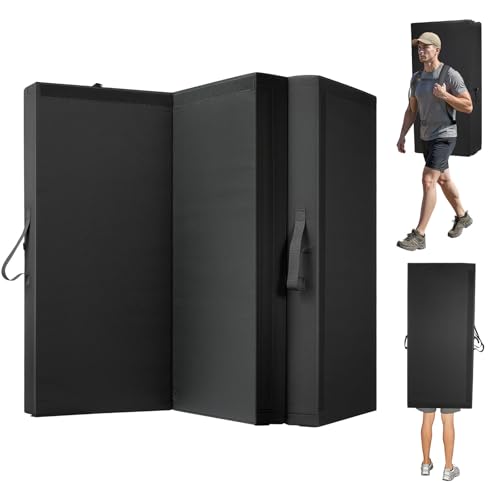
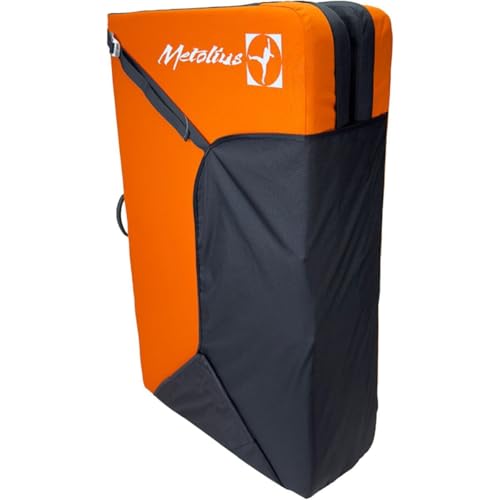
As an Amazon Associate we earn from qualifying purchases at no extra cost to you. Ratings are shown as listed on Amazon.
Compare the pads by the job they need to do
| Pad | Approx. open size | Approx. folded size | Approx. weight | Best fit |
|---|---|---|---|---|
| Mad Rock Mad Pad | 48 × 36 in | 24 × 36 × 8 in | About 9 lb | Budget-conscious climbers seeking a versatile full-size pad |
| Organic Climbing Full Pad | About 48 × 36 in | About 24 × 36 in when folded | About 10 lb | Regular outdoor use and climbers who prioritize carrying comfort |
| Black Diamond Mondo | About 48 × 36 in | About 24 × 36 × 10 in | About 12 lb | More landing coverage and shared sessions |
| Metolius Session II | About 48 × 36 in | About 24 × 36 × 5 in | About 9 lb | Approaches where a thinner, simpler fold is appealing |
Dimensions and weights are approximate and can differ between editions. Folded thickness is especially worth checking: it affects how the pad rides on your back, fits in a vehicle and stacks with another pad. A nominal open area of 48 × 36 inches is 12 square feet, but that number does not account for gaps, sloping ground or the climber moving beyond the center of the pad.
What changes the landing experience
Foam: thickness is only part of the story
Many full-size pads use layered foam, often combining firmer closed-cell foam with softer open-cell foam. The firm layer helps resist bottoming out; the softer layer helps spread impact. A thicker pad can provide more room for compression, but a thick pad with tired or poorly balanced foam may not protect as well as its dimensions suggest. Check the manufacturer’s construction details, and treat unusually thin or single-layer pads as supplemental coverage rather than an automatic substitute for a full-size pad.
Hinge design: a fold can create a weak spot
Common folding designs include taco-style pads, which fold without a center hinge gap, and hinged pads, which fold into a more compact package but have a seam. A hinge can be convenient to pack and carry, but the seam should be oriented away from the expected fall zone or covered with another pad when practical. Taco designs avoid a central fold seam, though they can be bulkier to transport. Neither design fixes poor placement on uneven ground.
Straps and carry comfort
Look for padded shoulder straps, a stable waist or sternum strap where included, and secure closures that keep the pad folded while walking. A heavier pad may feel manageable on a short approach but become frustrating on a long, steep one. Try loading the pad with your usual shoes, water and layers if you can; dangling gear can shift your balance and make the carry less comfortable. Haul straps and handles are useful for moving a pad around a boulder, but they are not a replacement for a good backpack harness.
Choose by session, not by the biggest number
| Your situation | A sensible choice | Why |
|---|---|---|
| First pad, occasional trips, tight budget | One full-size pad from a reputable maker, such as the Mad Rock Mad Pad | Useful baseline coverage without paying for a larger, heavier setup |
| Frequent sessions and longer approaches | A full-size pad with a harness that fits well; consider Organic Climbing or similar established options | Comfort and durable construction matter more when carrying it often |
| Shared sessions or broad landing zones | A larger pad such as the Black Diamond Mondo, or multiple pads arranged together | More surface area can reduce exposed ground, but placement and seams still need attention |
| Small car, limited storage or compact approach | A standard pad with a manageable folded profile, such as the Metolius Session II | Packability may be more useful than extra thickness you rarely bring along |
As a rough coverage calculation, two 48 × 36-inch pads offer 24 square feet of nominal surface area when placed side by side. That is not equivalent to one seamless 24-square-foot landing: the junction can open, the pads may slide, and rocks or slope can leave a hazardous gap. Overlap or secure the edges where the design allows, and reposition pads as the climber moves between problems. For solo climbing, a single pad is not a guarantee of safe coverage, especially for high starts, traverses, awkward landings or problems with limited control over the fall.
Buy for the landing and the approach
Before choosing, measure the space where the pad will be stored and consider the walk from the parking area. Then assess the landing: is it flat, firm and clear, or does it slope toward a rock, tree or drop? A broad pad may be the right call for an open landing; a smaller pad that you can position precisely may be more useful in a tight spot. If you climb with others, coordinate who watches the climber and who adjusts coverage rather than assuming multiple pads will stay put on their own.
Prices vary by size, materials and retailer, but expect general market ranges of roughly $150–$250 for many standard pads and $250–$400 or more for larger, premium models. Treat these as broad estimates, not fixed prices. Used pads can be a value, but inspect the foam, seams, hinge and straps in person: a worn cover can sometimes be repaired, while compressed or damaged foam is a more important safety concern.
Keep a pad useful for longer
- Check it before each trip: Look for torn fabric, failed stitching, loose buckles and foam that has developed a deep permanent depression.
- Keep it dry: Brush off dirt and let a damp pad dry fully before storage. Avoid leaving it folded wet, which can encourage odor and material deterioration.
- Use the right surface: Clear sharp objects and reposition the pad if the landing shifts. A pad cannot compensate for hidden rocks, a steep slope or poor spotter communication.
- Store it sensibly: Follow the maker’s care guidance; avoid prolonged compression under heavy loads, which can contribute to foam taking a set.
For most buyers, start with one comfortable, full-size pad and learn to place it well. Add a second pad when your regular problems genuinely need more coverage—not simply because extra surface area sounds reassuring. The right choice balances foam and hinge construction, carry comfort, storage limits and the specific landing zones you expect to encounter.