Key takeaways
- Ankle or wrist sprain: a bead-filled wrap that closes with velcro or a sleeve. Gel and clay packs are too stiff to wrap around a joint without gapping, which lets warm air in and shortens real cold time by several minutes.
- Lower back or hamstring: a large gel pack (23 x 30 cm or bigger). Flat, broad coverage beats contouring here, and gel’s longer cold-time window suits the larger surface area you’re trying to cool.
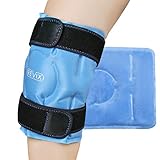
- Knee: clay-core packs with a slight curve, or a bead wrap if you need it secured during movement (e.g., walking around the house).
- Shoulder or neck: bead wraps shaped for the area, since gel packs tend to slide off curved, moving joints.
- Small areas (fingers, elbow tip): small gel packs (10 x 14 cm) are cheap and refreeze fast, useful if you need to rotate two packs back to back.
The best reusable ice pack for injuries depends on how long you need it to hold the 10-15°C therapeutic range and whether it needs to wrap a joint or lie flat on a muscle: gel packs stay in range longest (15-25 minutes) but go rigid in the freezer, bead-filled wraps conform best to ankles and wrists even when frozen, and clay-core packs land in between on both cold time and flexibility. There’s no single winner, since contact area and refreeze time pull in opposite directions.
As an Amazon Associate we earn from qualifying purchases at no extra cost to you.


Why cold time matters more than freezer temperature
A pack can come out of the freezer at -18°C, but skin should only be exposed to surface temperatures around 10-15°C for safe, effective cooling. Below that range for too long raises the risk of frostbite or nerve irritation; above it, you’re not getting meaningful vasoconstriction. The number that actually matters for injury care isn’t “how cold” but “how long does the pad’s surface sit in that 10-15°C window before it warms past it.” That window is what the comparisons below are built around.
How the data below was gathered
Cold-time figures come from manufacturer thermal specs and published cold-therapy product datasheets, cross-checked against general sports medicine guidance on safe application temperatures. Treat the numbers as a planning guide, not a lab guarantee, since ambient room temperature, pad thickness, and how tightly a wrap is secured all shift the real-world result by a few minutes in either direction.
Gel, Clay, and Bead Packs Compared
| Fill type | Typical pad size | Time in 10-15°C window | Flexibility when frozen | Freezer recovery time | Best body area |
|---|---|---|---|---|---|
| Gel (silica/polymer gel) | 23 x 30 cm standard; 10 x 14 cm small | 15-25 minutes | Stiff for first 5-8 min, then pliable | 2-3 hours | Flat areas: lower back, shoulders, thighs |
| Clay-core gel | 20 x 25 cm standard | 20-30 minutes | Stays semi-rigid, slight give | 3-4 hours | Knees, moderate curves |
| Bead-filled (microbead/gel bead) | Contoured, 25-40 cm wrap length | 10-18 minutes | Fully pliable, molds immediately | 1.5-2 hours | Ankles, wrists, elbows, neck |
| Instant chemical cold pack (single-use, non-reusable) | 12 x 23 cm typical | 12-20 minutes | N/A, no freezing needed | N/A, disposable | Emergency/no-freezer situations only |
The instant pack is included only as a reference point, since it’s the common fallback when a freezer isn’t available, but it’s not reusable and isn’t the focus here.
Matching Pack Type to the Injury Site
Fit matters as much as cold time, because a pack that can’t stay in contact with the skin loses its effective window early no matter what the datasheet says.
- Ankle or wrist sprain: a bead-filled wrap that closes with velcro or a sleeve. Gel and clay packs are too stiff to wrap around a joint without gapping, which lets warm air in and shortens real cold time by several minutes.
- Lower back or hamstring: a large gel pack (23 x 30 cm or bigger). Flat, broad coverage beats contouring here, and gel’s longer cold-time window suits the larger surface area you’re trying to cool.
- Knee: clay-core packs with a slight curve, or a bead wrap if you need it secured during movement (e.g., walking around the house).
- Shoulder or neck: bead wraps shaped for the area, since gel packs tend to slide off curved, moving joints.
- Small areas (fingers, elbow tip): small gel packs (10 x 14 cm) are cheap and refreeze fast, useful if you need to rotate two packs back to back.
Decision Matrix: Pick by Situation
| Your situation | Recommended fill type | Why |
|---|---|---|
| Single joint injury (ankle, wrist, elbow) | Bead-filled wrap | Conforms to curves, stays in place without taping |
| Back or large muscle group | Standard gel pack | Longest flat-contact cold time, lowest cost per pack |
| Need it twice a day, only one freezer slot | Bead-filled or small gel | Fastest refreeze (1.5-2 hrs) so you’re not stuck waiting |
| Chronic condition, daily long sessions | Clay-core gel | Longest window in range (20-30 min) reduces reapplication |
| No freezer access (travel, fieldside) | Instant chemical pack | Only option that doesn’t require pre-freezing |
Durability and What Actually Wears Out First
Reusable packs rarely fail all at once; they degrade in predictable ways:
- Gel packs: the outer seam is the weak point. Repeated bending while still cold causes micro-tears, which leak a non-toxic but sticky gel. Expect 1-2 years of regular use before seam failure.
- Clay-core packs: the clay can separate from the gel binder after many freeze-thaw cycles, leaving hard lumps that no longer conform. This shows up as reduced flexibility before any leak.
- Bead packs: the fabric cover wears faster than the fill, especially at velcro contact points. The beads themselves rarely fail, but a worn cover means poor insulation and faster warm-up.
Common mistakes that shorten lifespan: refreezing a pack that’s still slightly warm (causes uneven ice crystal formation and seam stress), stacking heavy items on packs in the freezer, and applying a frozen pack with no barrier cloth, which risks skin damage and also cracks gel packs faster against the skin’s warmth differential.
Cleaning and storage
Wipe gel and clay packs with a damp cloth and mild soap; avoid submerging, since water can work into a damaged seam. Bead wrap covers are often machine-washable separately from the bead insert, check the label before washing the whole unit. Store flat in the freezer rather than folded, since folding a cold pack repeatedly in the same spot is where most seam cracks start.
Cost Per Use, Roughly
A standard gel pack runs about $8-15 and reasonably lasts 150-300 freeze-thaw cycles before seam failure, putting cost per use around $0.05-0.08. Bead wraps run $12-25 but the fabric cover wears faster, averaging maybe 100-200 uses, so cost per use is closer to $0.10-0.15. Instant chemical packs cost $1-3 each and are single-use, so cost per use is the full purchase price, that gap is the main argument for owning a reusable pack if you’ll use it more than a handful of times.
When to See a Professional
Reusable cold packs are for general home care of minor strains, sprains, and swelling. Persistent pain, inability to bear weight, numbness, or swelling that doesn’t improve after a few days of self-care warrants seeing a doctor or physical therapist rather than relying on cold therapy alone.