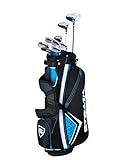
Key takeaways
- Best for: Walking, push carts, occasional cart riding
- Strengths: Light enough to carry, stable on turf, good pocket balance
- Limitations: Less structured than cart bags, can tip on a cart if overloaded on one side
What's inside
- Stand vs Cart vs Carry: Which Type Actually Fits How You Play?
- Spec Comparison: Weight, Dividers, Storage, and Materials
- Decision Matrix: Match Your Situation to the Right Bag
- Dividers, Pockets, and Materials: What Matters on the Course
- Cost Per Use: A Simple Way to Justify the Budget
- Durability and Ownership Realities: What Wears First
- Final Picks by Player Type
The best golf bags for most players in 2026 are stand bags for walkers who need light weight and legs, cart bags for riders who want maximum storage and stability, and ultralight carry bags for par-3 courses, range sessions, or travel – your choice should be based on how you get around the course, not just price.
- Stand vs Cart vs Carry: Which Type Actually Fits How You Play?
- Spec Comparison: Weight, Dividers, Storage, and Materials
- Decision Matrix: Match Your Situation to the Right Bag
- Dividers, Pockets, and Materials: What Matters on the Course
- Cost Per Use: A Simple Way to Justify the Budget
- Durability and Ownership Realities: What Wears First
- Final Picks by Player Type
As an Amazon Associate we earn from qualifying purchases at no extra cost to you.


Stand vs Cart vs Carry: Which Type Actually Fits How You Play?
All three categories hold 14 clubs, but they are built for completely different jobs. Understanding the trade-offs in weight, balance, and access prevents buying a bag that fights you every round.
Stand Bags: The All-Rounder for Walking and Hybrid Use
Stand bags use retractable legs and weigh 3.5 to 6 pounds. They are designed to stand upright on legs when set down and sit securely on a push cart or riding cart. Most have a 4-way or 5-way top with full-length dividers, 5 to 9 pockets, and water-resistant polyester or nylon shells. They are the default choice if you walk 9 or 18 holes at least half the time.
- Best for: Walking, push carts, occasional cart riding
- Strengths: Light enough to carry, stable on turf, good pocket balance
- Limitations: Less structured than cart bags, can tip on a cart if overloaded on one side
Cart Bags: Built for Riding and Storage
Cart bags are heavier at 6 to 8.5 pounds, with no legs and a flat, non-slip base that locks onto a cart. They prioritize organization and protection over portability, with 14-way divider tops, 10 to 14 pockets including insulated cooler pockets and velour-lined valuables pockets, and stiffer construction. If you ride 90% of the time or use a dedicated push cart with storage, this is the most functional option.
- Best for: Riding carts, electric push carts, golfers who carry extra gear
- Strengths: Best club separation, most pockets, easiest to access while strapped in
- Limitations: Uncomfortable to carry for more than a few holes, bulky in car trunks
Carry / Sunday Bags: Minimalist and Ultralight
Carry bags, sometimes called Sunday bags, strip weight to 2 to 3.5 pounds. They often have a 2-way or 3-way divider, 3 to 5 pockets, single or double straps, and sometimes no stand legs at all. They carry 6 to 10 clubs comfortably, though most still fit 14. Choose these for executive courses, quick practice, or as a second bag for travel.
- Best for: Short courses, range trips, lightweight travel, younger players
- Strengths: Lightest option, compact,forces you to walk lighter
- Limitations: Minimal storage, less club protection, fewer weather-resistant features
Spec Comparison: Weight, Dividers, Storage, and Materials
Use this table to see how the categories differ with real-world specs from current models in 2026 like the Titleist Players 4, Callaway Fairway 14, Ping Hoofer, Sun Mountain C-130, and Vessel Player IV series.
| Feature | Carry / Sunday Bag | Stand Bag (5-6 lb class) | Premium Cart Bag |
|---|---|---|---|
| Typical Weight | 2.0 – 3.5 lbs (0.9 – 1.6 kg) | 4.0 – 5.5 lbs (1.8 – 2.5 kg) | 6.5 – 8.5 lbs (2.9 – 3.9 kg) |
| Divider Options | 2-way to 4-way, rarely full-length | 4-way and 5-way with full-length, 14-way available | 14-way and 15-way full-length, individual putter well |
| Pocket Count & Volume | 3-5 pockets, ~15-20L | 6-9 pockets, ~22-28L | 10-14 pockets, ~30-40L, includes cooler |
| Shell Material | Ripstop nylon, 210-400D polyester | 400-600D polyester, 300D ripstop, water-resistant coating | 600-900D polyester, synthetic leather accents, waterproof options |
| Strap System | Single strap or basic double strap | Padded double strap with hip pad, self-balancing | Single strap, cart-strap pass-through |
| Rain Hood Included | Sometimes, lightweight | Yes | Yes, often dual-hood |
| Price Range (2026) | $80 – $180 | $160 – $300 | $220 – $400+ for tour-level waterproof |
Weight differences feel larger after 10 holes than they look on paper. A 5.5-pound stand bag with 25 pounds of clubs, balls, and water totals over 30 pounds on your shoulders. A cart bag with the same load exceeds 34 pounds, which is why cart bags feel punishing to carry even one round.
Decision Matrix: Match Your Situation to the Right Bag
Choose by frequency, transport, and storage needs rather than brand alone.
| Your Situation | Best Match | Why |
|---|---|---|
| Walk 18 holes weekly, use push cart sometimes | Stand Bag, 4-way or 5-way, 4.5-5.5 lbs | Light enough to carry, stable on cart, protects graphite shafts |
| Ride in cart 80%+ or use electric caddy | 14-way Cart Bag | Clubs don’t tangle when cart is moving, forward-facing pockets stay accessible |
| Beginner / budget under $180, shared clubs | Stand Bag or Sunday Bag | Lower cost, less weight while building endurance |
| Frequent traveler or second bag for par-3 | Sunday Carry Bag, 2.5-3.2 lbs | Fits in small trunk, holds 7-9 clubs, easy for airlines as checked soft goods |
| Need max protection for expensive irons / graphite | Cart Bag or Stand Bag with 14-way full-length dividers | Full-length dividers prevent shaft clanking and grip wear |
| Play in wet climate | Stand or cart bag labeled waterproof, not just water-resistant | Sealed seams and waterproof zippers keep gear dry; legs keep base off wet grass |
Dividers, Pockets, and Materials: What Matters on the Course
Divider Layout and Club Protection
4-way tops group clubs by type (woods, long irons, short irons, putter) and are fastest to pull from but allow clubs to rattle. 14-way and 15-way tops give each club its own slot, reducing chatter and grip wear, but add 6 to 10 ounces and can snag oversized putter grips. Full-length dividers – fabric tubes running to the bottom – are worth prioritizing if you carry graphite shafts, as they prevent shafts from crossing and nicking each other.
Pocket Storage That You Will Actually Use
Count matters less than placement. Look for: a velour-lined valuables pocket for phone/rangefinder, a full-length apparel pocket for a jacket, an insulated cooler pocket that holds 2-4 cans, and a ball pocket that sits opposite the cart strap side. Cart bags place most pockets facing forward when strapped in. Stand bags need a pocket configuration that remains accessible both on your back and on a cart – side ball pockets and top-mounted rangefinder pockets solve this.
Material Durability and Weather Resistance
Denier (D) indicates fabric thickness. 400D-600D polyester with a polyurethane coating is the sweet spot for durability vs weight. 900D and synthetic leather wear longer but add weight. Water-resistant means the fabric beads water but seams and zippers will leak in sustained rain. Waterproof bags use seam-sealed construction and YKK water-resistant zippers and cost more, but are the only reliable option if you play in persistent rain. Light-colored bags show grass stains faster; dark bases hide wear best.
Cost Per Use: A Simple Way to Justify the Budget
A bag that lasts 4 seasons costs less per round than replacing a cheap bag twice.
Example calculation: A $249 stand bag used 35 rounds per year for 4 years = 140 rounds. $249 / 140 = $1.78 per round. A $129 bag that lasts only 2 years before zippers or legs fail = 70 rounds. $129 / 70 = $1.84 per round, plus the hassle of replacement. If you play 20 rounds or fewer per year, the lower-priced bag wins on cost per use. If you play 30+ rounds, investing in better zippers, stitching, and leg mechanisms typically lowers long-term cost.
Durability and Ownership Realities: What Wears First
Most golf bags do not fail in the fabric first. Here is what to watch for and how to extend life:
- Zippers fail first. Large, coated YKK zippers last longer. Keep them clean, avoid overstuffing pockets, and never force a snagged zipper.
- Stand legs and springs loosen. Store the bag with legs retracted, avoid dragging, and check hinge screws twice a season.
- Strap stitching frays at shoulder contact points. Rotate straps evenly and hang the bag rather than dumping it in the garage floor.
- Base abrasion. Cart bag rubberized bases crack if left in a hot trunk all summer. Stand bag feet wear on cart paths – a bag with replaceable foot pads lasts longer.
- Divider tubes tear at the top cuff from repeated club friction. Use headcovers on woods and lift clubs straight out rather than levering them.
Cleaning: Empty all pockets, vacuum crumbs and tee debris, wipe with mild soap and warm water, and air dry open. Do not machine wash or use harsh solvents – they strip water-resistant coatings. Apply a fabric waterproofer spray once per year if you often play in rain. Store indoors, unzipped, with the rain hood off so moisture does not trap inside.
Common mistake: Buying a 14-way cart bag and then carrying it. The rigid top and heavy base make it unbalanced on a double strap and stress the single strap. If you will walk even 25% of the time, a 5-way stand bag is more versatile than a 14-way cart bag, and you can still get full-length dividers.
Final Picks by Player Type
For the weekly walker on a budget: A 4-way or 5-way stand bag around 4.5 pounds from Ping Hoofer, Titleist Players 4, or Callaway Fairway series. You get full-length dividers, 6-7 pockets, and a stable leg system without paying for tour-level waterproofing.
For the dedicated rider: A 14-way or 15-way cart bag such as the Sun Mountain C-130 or Titleist Cart 15. Prioritize a cart-strap channel, forward-facing pockets, and a cooler pocket. Weight is irrelevant on the cart, but organization saves time.
For the minimalist or traveler: A 2-way Sunday bag under 3 pounds like the Callaway Hyperlite Zero or Titleist Carry Bag. Perfect as a second bag for short courses and range sessions.
For all-weather players: Spend the extra $50-$80 for a waterproof-labeled stand or cart bag with sealed seams. It protects electronics, gloves, and grips in a way water-resistant bags cannot in prolonged rain.
Match the bag to how you move – walk, push, or ride – then choose divider count and pocket layout for the gear you actually carry. That filter narrows hundreds of best golf bags lists to the one you will not want to replace next season.