Key takeaways
- Searching for the best wheelchair accessible golf cart? Learn what ramps, restraints and controls matter, and which designs suit golfers, courses and resorts.
The best wheelchair accessible golf cart is the one a wheelchair user can board alone and ride safely, and that test matters far more than speed or range. A good design starts with the boarding path: a ramp or lowered floor, a gate wide enough for the chair, and restraints that hold it steady on slopes and turns. Speed, battery range and styling come second, because a cart that is hard to board will sit unused no matter how far it can travel.
This guide is for golfers who use a wheelchair, for courses and resorts adding accessible transport, and for families choosing a cart for a private property. It explains the features that make a cart genuinely accessible, the main designs available, and the questions to ask a dealer before ordering. As an Amazon Associate we earn from qualifying purchases.
How to Choose
Boarding: Ramps, Gates and Floor Height
Boarding is the first and hardest test, so study it before anything else. A rear ramp that folds down to the ground lets a wheelchair roll straight in, while a side gate suits chairs that transfer from the side. The floor should sit low enough that the ramp angle stays gentle, and the entry should be wide enough for the chair plus a hand on each wheel. Check the ramp surface for grip when wet, and confirm the ramp locks firmly once raised. A cart that needs a lift or a strong helper to board is not truly accessible for independent use.
Securing the Chair: Restraints and Stability
Once aboard, the chair must stay put. Look for a restraint system that locks the wheels and braces the chair frame, not just a lap belt, because a cart tilts on slopes and jolts over rough ground. The cart should carry its load low, with the battery and the chair positioned to keep the centre of gravity down. Ask the dealer how the restraints are fitted, whether they adjust to different chair widths, and whether the cart has been tested with a chair aboard on slopes. A chair that shifts during a turn is a safety problem, not a comfort issue.
Seating, Controls and Reach
The driving position must work from the chair, not beside it. Check that the steering wheel, pedals or hand controls, and the brake all fall within easy reach from the seated position, and that the seat or chair platform faces forward with a clear view ahead. Controls should be simple to operate with limited hand strength, and the dashboard should be readable without leaning. Some carts offer hand controls or a swivel seat for golfers who transfer from the chair to a seat, so ask which arrangement suits the rider best.
Range, Terrain and Where the Cart Will Run
Range and terrain decide the drivetrain and the tyres, so match them to the ground the cart will cover. A flat course with paved paths needs far less range and grip than a hilly property with grass slopes and loose surfaces. Ask how far the cart travels on a full charge with a chair and a passenger aboard, since the loaded range is shorter than the empty figure. Check the ground clearance and the tyre tread for the surfaces you will use, and confirm the cart can climb the steepest slope on your route without struggling.
Accessible Golf Cart Designs to Know
Single-Rider Carts With a Swivel Seat
Single-rider carts are built around one golfer and one chair. The rider rolls onto a low platform, and the seat swivels to face forward once the chair is secured. These carts are compact, easy to park beside a tee, and simple for a course to store. They suit a regular golfer who plays alone or with a walking partner, and who values independence over carrying passengers. Ask whether the swivel mechanism locks firmly and whether the rider can reach the bag and the clubs from the seated position.
Standing and Paragolfer-Style Carts
Standing carts let the rider play from an upright, supported position rather than sitting in the chair. The rider transfers to a standing frame with supports and straps, which puts the golfer at a normal playing height and allows a full swing. These carts suit golfers who can stand with support and want to play the game in the usual posture. They need more space to board and a helper nearby for the transfer, so they fit courses with staff who know the equipment rather than casual solo use.
Multi-Passenger Shuttles With a Rear Ramp
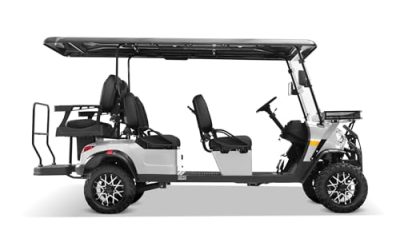
Multi-passenger shuttles carry a wheelchair user plus several seated passengers, and they suit courses, resorts and large properties. A wide rear ramp folds down, the chair rolls in and locks to floor restraints, and the other passengers sit on bench seats. These shuttles are larger and heavier than single-rider carts, so they need wider paths and more storage space. They are the right choice when the cart must serve many people through the day rather than one regular golfer.
Converted Standard Carts and Aftermarket Kits
Some buyers start with a standard golf cart and add an accessibility conversion, such as a rear ramp, a lowered floor and a restraint system. A conversion can cost less than a purpose-built accessible cart, and it lets the owner keep a familiar model. The result depends entirely on the quality of the conversion, so ask who performs the work, what the ramp and restraints are rated for, and whether the conversion affects the warranty. A poor conversion can leave a cart that looks accessible but is awkward or unsafe to board.
Buying Through a Dealer
What to Ask Before You Order
Accessible golf carts are specialist vehicles sold through dealers, not through general retailers, so the dealer conversation matters. Ask which models the dealer stocks, how long delivery takes, and whether the cart is built to order or held in stock. Ask about the warranty on the ramp, the restraints and the drivetrain separately, since different parts carry different cover. Ask for the names of other buyers or courses using the same model, and whether you can speak to one of them. A dealer who answers plainly is worth more than one who promises everything.
Trial Rides and Fit Checks
Never order an accessible cart without a trial ride in the actual chair that will use it. The trial should cover boarding on the ramp, securing the restraints, driving on a slope, and turning on a path of the width you will use. Bring the chair, the cushion and any equipment that travels with it, because a fit that works empty can fail with the full setup. Note how long boarding takes, whether the rider can do it alone, and whether the controls feel natural after a few minutes of driving.
Delivery, Service and Spare Parts
Ask the dealer who delivers the cart, who services it, and how long spare parts take to arrive. Accessible carts have specialist parts, such as ramps, restraint fittings and hand controls, that a general golf cart dealer may not stock. A dealer with a service van and a parts shelf nearby keeps the cart running, while a distant seller leaves you waiting. Confirm the service schedule, the cost of a routine visit, and whether the dealer offers a loan cart while yours is being repaired.
Which One Fits Your Situation
A Golfer Who Plays Regularly
A single-rider cart with a swivel seat suits a regular golfer who wants to arrive, board alone and play. The compact size parks easily beside the tee, and the simple controls become second nature within a few rounds. Choose a cart with enough range for a full round plus the trip to and from the car park, and make sure the bag and clubs sit within reach from the seat. A trial round on the home course settles the choice better than any brochure.
A Course or Resort Adding Accessible Transport
A multi-passenger shuttle with a rear ramp suits a course or resort, because it serves many guests through the day. The wide ramp and floor restraints handle different chair sizes, and the bench seats carry companions. Train the staff on boarding and restraints, and keep the shuttle charged and parked where guests can reach it without crossing traffic. A shuttle that is easy to find and easy to board gets used; one hidden in a shed does not.
A Family Property With Paths and Slopes
A sturdy single-rider cart or a converted standard cart suits a family property, provided the paths are wide enough and the slopes are gentle. Check the ground clearance and the tyre grip for grass and gravel, and confirm the cart climbs the steepest slope on the property with the chair aboard. Store the cart under cover with a charger nearby, and keep the ramp and restraints clean, since mud and leaves make boarding harder.
A First Accessible Cart on a Modest Budget
Start with a converted standard cart from a reputable converter, or a simpler single-rider model, rather than the largest shuttle. Spend the budget on the boarding path and the restraints, since those decide whether the cart is usable at all. Ask the dealer about demonstrator models and trade-in options, and confirm the warranty and service cover before you commit. A modest cart that boards easily beats an expensive one that does not.
Common Mistakes
- Choosing a cart for its range or speed before testing whether the chair can board it independently.
- Accepting a lap belt alone as a restraint, with nothing to stop the chair shifting on slopes and turns.
- Buying without a trial ride in the actual chair, cushion and equipment that will travel in the cart.
- Forgetting to check path widths, slope angles and storage space on the course or property where the cart will run.
- Ordering from a distant seller with no local service, so a broken ramp or restraint leaves the cart unusable for weeks.
Frequently Asked Questions
Can a wheelchair user drive a golf cart alone?
Yes, when the cart is designed for it. A single-rider cart with a low ramp, a locking restraint system and controls within reach from the chair lets the rider board, secure the chair and drive without help. The key is a trial ride in the actual chair, because independence depends on the fit between the rider, the chair and the cart. Courses should also confirm their own rules allow solo use.
Are wheelchair accessible golf carts street legal?
That depends on where the cart will run. Most accessible golf carts are built for private courses, resorts and estates, not for public roads, and road use may need lights, mirrors, seat belts and registration under local low-speed vehicle rules. Check the rules for your area before assuming the cart can leave the property, and ask the dealer what equipment the model carries for road use.
How do I secure a wheelchair inside a golf cart?
A proper system locks the chair wheels and braces the frame, using floor tracks, wheel chocks and straps or a docking mechanism. The restraints should adjust to the chair width and hold it steady on slopes and turns. Ask the dealer to demonstrate the full securing routine, and practise it until it becomes quick and routine. A lap belt alone is not a wheelchair restraint.
Can a standard golf cart be converted for wheelchair access?
Yes, a standard cart can be fitted with a rear ramp, a lowered floor and a restraint system, and a good conversion works well. The quality of the work decides the result, so choose a converter with experience in accessible vehicles and ask to see a finished cart. Confirm whether the conversion affects the original warranty, and have the finished cart checked by someone who understands wheelchair transport before you accept it.
More from Amazon
Programs that pair well with the guide above. Offers and eligibility are set by Amazon and may change.
Free shipping on eligible items, Prime Video and more. Eligible new members can start with a free trial.
Start a Prime free trialA Prime membership for ages 18-24 with a trial period. Eligibility is set by Amazon.
See Prime for Young AdultsAudiobooks and podcasts to listen to on the go. Eligible new members can start with a free trial.
Try Audible freeAd-free music streaming. Eligible new subscribers can start with a free trial.
Try Music Unlimited freeAs an Amazon Associate we earn from qualifying purchases.