Key takeaways
- Expect the top tier and small pockets to need water first. In hot weather, a pocket planter may require daily attention, while a larger tiered box can often go two or three days between checks; actual frequency depends on wind, sunlight, plant size, and potting…
Best Vertical Garden Planters
The best vertical garden planters are modular, stable containers with at least 1.5–2 gallons of growing space per fruiting plant, open drainage, reachable watering points, and a footprint that leaves enough sunlight for the plants on every tier.
Vertical gardening saves floor space, but stacking containers creates compromises: upper levels can dry quickly, lower levels may receive less light, and a tall planter can become unstable when saturated with wet soil. The right choice depends less on the number of pockets or tiers than on what you intend to grow and where the planter will stand.
Our top picks



As an Amazon Associate we earn from qualifying purchases at no extra cost to you. Ratings are shown as listed on Amazon.
Best choices by situation
| Situation | Recommended planter type | Useful target specifications | Why it fits |
|---|---|---|---|
| Small balcony or apartment patio | Freestanding tiered tower | 12–20 in. wide; under 5 ft. tall; 10–25 gal. total capacity | Uses limited floor area without requiring wall drilling |
| Balcony railing | Railing-mounted box or pocket planter | 6–10 in. deep; locking brackets; 1–3 gal. per container | Keeps the load close to the railing and is easier to reach |
| Patio with herbs and salad greens | Stackable or column planter with central watering | 4–6 tiers; 20–35 gal. total capacity; drainage reservoir or overflow | Provides many planting positions while reducing repetitive watering |
| Small yard or fence line | Wall-mounted modular planter | 12–24 in. depth; masonry-rated fixings; 2–5 gal. per module | Offers high capacity but needs a structurally sound mounting surface |
| Tomatoes, peppers, or strawberries | Large tiered pots or fabric grow bags | At least 3–5 gal. per tomato or pepper; 8–12 in. depth for strawberries | Prevents restricted roots and reduces rapid drying |
What to examine before buying
Planter capacity
Capacity determines both plant size and how often the container needs water. Small pockets of 0.5–1 gallon are suitable for shallow-rooted herbs, small lettuce, and many succulents, but they dry rapidly in warm weather. They are a poor match for tomatoes, cucumbers, zucchini, or large peppers.
For productive vegetables, look for roughly 3–5 gallons of soil per tomato or pepper plant. Strawberries can manage with less, although 1–2 gallons per plant gives the roots more moisture reserve. A planter advertised with a high total capacity may still have small individual pockets, so check both figures.
A useful sizing calculation is to multiply the number of plants by their recommended container volume. Four peppers at 3 gallons each require about 12 gallons of usable soil, not merely a tower with 12 gallons of nominal internal space. Shared reservoirs, hollow columns, and drainage gaps may reduce actual planting volume.
Drainage and water control
Every pocket should have a drainage opening, and stacked systems should provide a route for excess water to escape without flooding the lowest tier. Drainage holes that are too small clog with potting mix; holes that are too large can wash nutrients out quickly.
Look for overflow outlets, removable saucers, or a catch tray when the planter will sit on a balcony. Water draining onto a neighbor’s balcony or staining masonry is an ownership problem, not a minor inconvenience. A reservoir can extend the interval between watering, but it should not leave roots permanently submerged.
Central watering tubes or top-fill systems are useful on tall towers because water can reach several tiers from one point. However, inspect the design for access. A narrow opening that cannot be cleaned can collect algae, mineral deposits, and plant debris.
Mounting stability and loaded weight
Wet potting mix is heavy. A 20-gallon planter can hold approximately 120–160 pounds of saturated soil and water, depending on the mix, before the container itself and plants are added. Balcony users should check the building’s rules and load limits rather than assuming a railing can support a large planter.
Freestanding towers should have a broad base, a low center of gravity, and a way to be secured in windy locations. A tall, narrow tower filled with lightweight dry mix may still tip when foliage catches wind. On a railing, use brackets designed for the railing profile and a secondary strap or clamp where appropriate; do not rely on friction alone.
Wall-mounted systems need fasteners matched to the surface. Brick, concrete, timber, and hollow masonry require different fixing methods. If a planter will hold several gallons of wet soil, attach it to structural material rather than siding or decorative cladding.
Watering access
Count the number of watering points, not just the number of pockets. A six-tier planter with one opening at shoulder height may be convenient, while a similar design requiring every pocket to be watered individually can become tedious during hot weather.
Check whether the lowest tiers can be reached without moving the planter. Dense foliage often hides lower pockets later in the season. A removable tier, wide top opening, or drip-line connection makes routine care easier. If you travel or work long hours, choose a system that can accept a timer and has an overflow path; no reservoir eliminates the need to check plants during heat waves.
Sunlight fit
Most vegetables and fruiting plants need around six or more hours of direct sunlight, but a vertical structure can shade itself. The upper tiers usually receive the most light, while the lower and north-facing sides may be suitable only for shade-tolerant herbs or leafy greens.
Place the tallest plants toward the side that will not block shorter plants during the brightest part of the day. On a north-facing balcony, a vertical planter may be better for mint, parsley, chives, lettuce, and other lower-light crops than for tomatoes. On a hot, reflective south- or west-facing patio, small pockets can overheat, so larger containers and light-colored materials offer a better moisture buffer.
Head-to-head: common vertical planter designs
| Design | Typical size | Capacity range | Best feature | Main drawback |
|---|---|---|---|---|
| Fabric hanging pocket | 24–48 in. wide; 8–12 in. deep | 8–20 pockets, about 0.5–1.5 gal. each | Low cost and light when empty | Dries quickly and may stain or weaken after prolonged sun exposure |
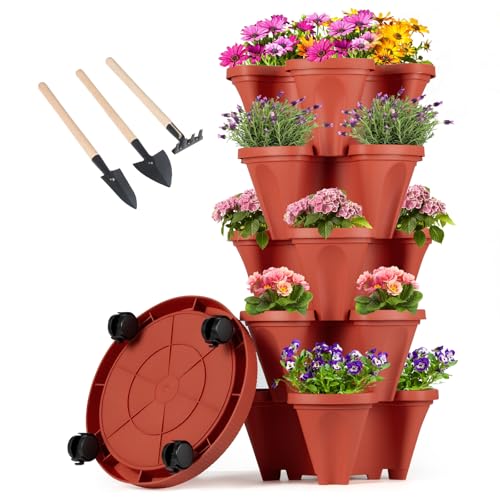
| Plastic stackable tower | 12–20 in. diameter; 36–72 in. tall | 15–35 gal. total | High planting density in a small footprint | Can become top-heavy and difficult to clean between tiers |
| Tiered planter box | 24–48 in. wide; 12–24 in. deep | 15–50 gal. total | Better root volume and easier access | Uses more floor space than a tower |
| Wall-mounted modular pots | 12–24 in. projection from wall | 2–5 gal. per module | Strong sunlight exposure when correctly positioned | Installation and wall load are significant considerations |
| Railing planter system | 6–10 in. deep; 20–36 in. wide | 3–12 gal. total | Convenient height for harvesting | Limited capacity and potentially high wind exposure |
Best planter material for long-term ownership
UV-stabilized plastic is usually the most practical option for balconies and patios. It is light, does not rot, and is easy to wash, although thin plastic can become brittle after several years of intense sunlight. Choose thicker walls and reinforced connectors if the planter will be moved while full.
Fabric planters provide excellent aeration and fold away for storage, but they dry faster and may develop algae or mildew where they stay continuously damp. Their seams and hanging loops are the parts most likely to wear first. Empty and dry them before storing.
Wooden planters look natural in a yard, but inspect the base, corners, and fasteners annually. Standing water accelerates rot. A liner can slow deterioration, but it must still include drainage holes. Metal planters are durable when properly coated, yet dark metal can raise root-zone temperatures significantly in direct afternoon sun.
Setup steps that prevent common failures
- Measure the location. Record width, depth, railing height, and the path of direct sunlight. Leave room to rotate, clean, and water the planter.
- Calculate the wet load. Multiply usable gallons by approximately 8–10 pounds, then add the planter and plants. This gives a conservative estimate for balcony and mounting decisions.
- Test drainage before planting. Fill each tier with water and confirm that it reaches the intended outlet rather than pooling in one section.
- Use container mix, not garden soil. A quality mix drains more predictably and weighs less than excavated soil. Add support for tall plants with stakes or a trellis.
- Plant according to position. Put sun-loving or taller crops on upper or exposed tiers and shade-tolerant herbs or greens on lower tiers.
- Secure the structure. Lock stackable sections together and anchor tall units in windy yards or exposed balconies.
- Water deeply, then inspect. Water until a controlled amount exits the drainage point. Check the upper and lower tiers separately because they may dry at different rates.
Maintenance and buying verdict
Expect the top tier and small pockets to need water first. In hot weather, a pocket planter may require daily attention, while a larger tiered box can often go two or three days between checks; actual frequency depends on wind, sunlight, plant size, and potting mix. Do not use a fixed calendar in place of touching the mix and inspecting leaves.
Flush mineral buildup from irrigation openings every few weeks, remove dead leaves before they block drainage, and empty reservoirs before freezing weather. At the end of the season, wash containers with mild soapy water, rinse thoroughly, and check connectors for cracks.
Choose a freestanding stackable tower when floor space is the priority and you mainly grow herbs, greens, or strawberries. Choose a tiered planter box when root capacity, stability, and easy access matter more than maximum planting density. Choose wall-mounted or railing systems only after confirming the mounting surface, wind exposure, and wet load. For tomatoes, peppers, and other demanding plants, fewer large containers will usually outperform a taller planter filled with cramped pockets.