Key takeaways
- Compare the best skimboards for beginners and intermediates: five wood, foam and fiberglass picks with sizing, rocker and traction tips for every rider.
Skimboarding is one of the most approachable board sports you can learn. You sprint along the shoreline, drop the board onto the thin sheet of water left by a receding wave, hop on, and glide. The board under your feet makes a real difference. A skimboard that is too small will bog down and stall, while an oversized one feels slow and clumsy. Construction matters just as much: wood, foam, and fiberglass boards behave very differently on wet sand and in small shorebreak.
This guide compares five boards for beginners and intermediate riders, from compact wooden kids’ boards to a big foam board for adult learners. For each pick we list the specifications that decide how a board rides: length, material, rider weight limit, rocker, and traction. A buying guide and FAQ follow, so you can match a board to your weight, your beach, and the way you plan to ride.
Disclosure: As an Amazon Associate, I earn from qualifying purchases.
1. BPS ‘Shaka’ Skimboard (30 Inch)

The BPS ‘Shaka’ is a hardwood skimboard from Barrel Point Surf in New Zealand, and it is one of the friendliest first boards for younger and lighter riders. The deck is covered with a colored EVA grip pad, so there is no wax to apply or scrape off. Under the pad, the wood body is sealed with an epoxy high gloss clear coat that keeps water out of the grain and slides smoothly across wet sand.
A built-in nose rocker lifts the front of the board so it climbs over small chop instead of digging in, which makes turning easier while a new rider finds their balance. The Shaka family comes in three sizes matched to rider weight, and this 30-inch version is the smallest, intended for riders up to 80 lbs. For kids and light teens learning on flat, hard-packed sand, it is a simple, durable place to begin.
Specs
- Length: 30 inches
- Material: Engineered hardwood with epoxy high gloss clear coat
- Rider weight limit: Up to 80 lbs
- Rocker: Built-in nose rocker
- Traction pad: Colored EVA grip pad covering the deck, no wax needed
2. iBOARD 41″ Skipper Skimboard
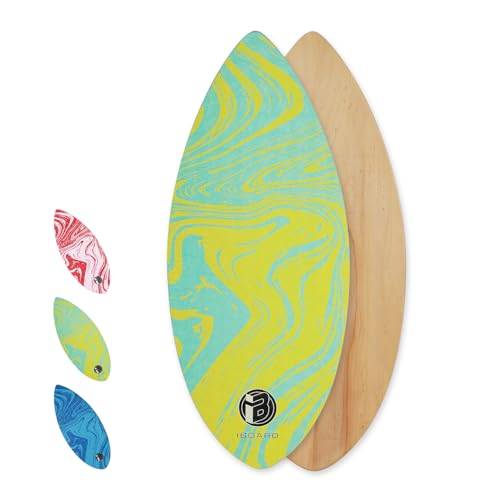
The iBOARD Skipper is the step up for teens and adults who have outgrown a kids’ board but are still learning. At 41 inches it gives a developing rider a stable platform with room for both feet, and its seven-layer engineered wood body is finished with a high gloss epoxy coat that shrugs off everyday scrapes. A soft foam traction pad covers the deck, giving secure barefoot grip without wax.
The Skipper’s shape is tuned for flatland rather than steep waves. Its rocker profile is low and nearly flat, with a rounded nose that resists catching on bumps in the sand, so glides stay long and predictable. iBOARD sizes this board for riders between 80 and 150 lbs, covering most teens and many adults learning basic slides before moving to a wave board.
Specs
- Length: 41 inches (41 x 15 x 0.5 inches)
- Material: Seven-layer engineered wood with high gloss epoxy coat
- Rider weight limit: 80 to 150 lbs
- Rocker: Low, near-flat rocker with a rounded nose
- Traction pad: Soft foam traction pad covering the deck, no wax needed
3. Wavestorm 48″ Foam Skimboard

This 48-inch skimboard follows Wavestorm’s forgiving foam formula. The foam core is reinforced with four fiberglass stringers for stiffness, and the bottom is a hard HDPE slick skin that slides freely over wet sand. Because the whole board is foam, falls and contact with shins hurt far less than on a wooden board, which matters in the first weeks of learning.
Size is the other advantage: at 48 inches long and about 20.5 inches wide, this is the biggest board in this guide, with enough float for adult beginners up to 185 lbs. It works for flatland cruising and for meeting small shorebreak once your drop is consistent. The board ships bare, with no pad fitted, so plan on wax or an adhesive traction pad before your first session.
Specs
- Length: 48 inches (48 x 20.5 x 1 inches)
- Material: Foam core with four fiberglass stringers and HDPE slick bottom
- Rider weight limit: Up to 185 lbs
- Rocker: Upturned nose rocker
- Traction pad: None fitted; add wax or an adhesive traction pad
4. South Bay Board Co. Skipper Skimboard (41 Inch)

The Skipper from South Bay Board Co. is a wooden beginner board built around a performance tear drop shape, a longer template that helps new riders settle their feet and hold a straight glide. The wood body is coated with epoxy to keep water out, and the top is a wax-free textured foam deck, so there is no wax to apply and no separate pad to fit before the first session.
At 41 inches long and half an inch thick, this is a board for kids, teenagers, and lightweight adults up to 160 lbs learning on flat wet sand. The thin, maneuverable shape suits switch and backside practice as skills grow, while the soft foam top stays forgiving under bare feet. If you want a simple wooden board that is ready to ride straight away, the Skipper is an easy place to start.
Specs
- Length: 41 inches (41 x 17 x 0.5 inches)
- Material: Wood body with epoxy coating
- Rider weight limit: Up to 160 lbs
- Rocker: Not published by the maker
- Traction pad: Wax-free textured foam top deck, no wax needed
5. seething 35 Inch Skimboard

The seething 35 Inch is a compact wooden board for beginners, kids, teenagers, and smaller adults who want a light board that is easy to carry, drop, and turn. It is made from high quality wood that the maker describes as sturdy, resilient, and lightweight, and the surface carries a high gloss coat that helps prevent water from entering the wood during a session.
That gloss deck is bare, with no traction pad fitted, so wax is part of the routine, just as it is on other plain coated wooden boards. The 35-inch size keeps the board nimble for learning basic slides on flat water and gentle shoreline wash, and the listing includes a skimboard bag for carrying it to the beach. seething does not publish a rider weight limit or a rocker measurement for this model, so lighter riders will get the most from its compact platform, and heavier riders should consider a longer board from this guide instead.
Specs
- Length: 35 inches
- Material: Wood with high gloss coat
- Rider weight limit: Not published by the maker
- Rocker: Not published by the maker
- Traction pad: None fitted; bare high gloss deck, apply wax for grip
How to Choose the Right Skimboard
Size by rider weight first. Skimboards are sized by weight, not height. A board that is too small sinks and stalls under a heavy rider, while an oversized board is clumsy for a light one. Use the maker’s weight range for the exact model, then sanity-check with the board stood on end: it should reach between the waist and mid-chest.
Pick a material for your style of riding. Wooden boards are stiff, durable, and ideal for flatland skimming on wet sand, and they shrug off hard use. Foam boards are softer and more forgiving, with float that helps when you begin meeting small waves. Fiberglass boards over a foam core are the lightest, fastest option for riding shorebreak, but they ask for better technique and more care.
Understand rocker. Rocker is the board’s curve from nose to tail. A flatter profile glides farther and feels stable on flat water, suiting beginners and flatland riders. More nose rocker helps the board climb over chop and onto waves without burying, at some cost to flat-water speed.
Sort out traction before your first session. Boards with a full EVA or foam pad are ready to ride barefoot with no wax. Bare wood, gloss, and laminate decks need skimboard wax, and a bare high gloss deck like the seething board’s depends on it.
Match the board to your beach. Gentle, flat beaches with a wide wash of shallow water favor flatland boards. Steeper beaches with waves breaking right on the sand call for a foam or fiberglass wave board with more rocker. Buying for the beach you actually visit beats buying for the one you imagine.
Frequently Asked Questions
What size skimboard should a beginner buy?
Begin with the maker’s weight range for the model you like. As a rough guide, riders under 80 lbs usually fit a 30-inch board, riders from 80 to 150 lbs fit boards around 35 to 41 inches, and heavier or taller beginners should look at 45 inches and up for enough float and glide.
Is wood or foam better for learning?
Both work. Wood is stiff and durable and gives the longest, most predictable glide on flat wet sand, which is where most learning happens. Foam is softer to fall on and more buoyant, which helps when you begin riding small waves.
Do I need wax if my board has a traction pad?
No. A board with a full EVA or foam traction surface is grippy enough on its own. Wax is for bare decks: wooden boards without a pad, gloss finishes, and smooth laminate bases. Keep a bar in your bag if your board has any unpadded area.
How can I make a wooden skimboard last longer?
Rinse it with fresh water after sessions, let it dry out of direct sun, and store it flat indoors. Avoid dragging it across dry sand, shells, or pavement, which grind through the coat. Check the rails and edges now and then; small chips sealed early keep water out of the wood.
Conclusion
The right first skimboard is the one that matches your weight and your beach. Younger and lighter beginners are well served by the BPS ‘Shaka’, teens and adults learning the basics by the iBOARD Skipper, and bigger beginners who want a soft, floaty platform by the Wavestorm foam board. Riders who want a longer wooden board with a wax-free foam top should look at the South Bay Board Co. Skipper, while the compact seething 35 Inch suits lighter beginners who prefer a small, nimble gloss-coated board. Pick your size by weight, sort out traction before the first session, and spend your beach days gliding instead of shopping.
More from Amazon
Programs that pair well with the guide above. Offers and eligibility are set by Amazon and may change.
Free shipping on eligible items, Prime Video and more. Eligible new members can start with a free trial.
Start a Prime free trialA Prime membership for ages 18-24 with a trial period. Eligibility is set by Amazon.
See Prime for Young AdultsAudiobooks and podcasts to listen to on the go. Eligible new members can start with a free trial.
Try Audible freeAd-free music streaming. Eligible new subscribers can start with a free trial.
Try Music Unlimited freeAs an Amazon Associate we earn from qualifying purchases.