Best Lacquer Sprays for Woodworking: Choose by Sheen, Speed, and Surface
The best lacquer sprays for woodworking depend on where the piece will live: for a fast-drying, clear general-purpose finish, choose a conventional nitrocellulose lacquer such as Deft Interior Clear Wood Finish; for a tougher coating on furniture or cabinets, consider a spray lacquer labeled for that use, such as Rust-Oleum Specialty Lacquer; and for a small project where easy handling matters more than speed, a water-based clear spray such as Minwax Polycrylic is a practical alternative, though it is a water-based polyurethane—not lacquer.
That distinction matters. “Clear spray finish” covers several chemistries with different recoating behavior, odor, and compatibility. Check the can’s label and technical data sheet for the exact surface, recoat window, and intended use. Formulations and availability can vary by region.
Our top picks
 Rust-Oleum Lacquer Clear Spray Paint
- Ideal for use on interior/exterior surfaces including plaster,…
- Acrylic formula offers an ultra-hard, high luster finish…
- Dries to the touch in 20 minutes, covers…
 Minwax Clear Lacquer Spray
- Minwax Clear Lacquer Spray is a beautiful, durable,…
- This wood finishing spray requires no sanding between…
- Ideal for interior wood surfaces, Minwax Aerosol Lacquer…
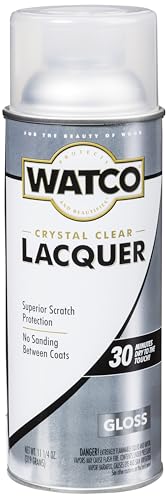 Watco Clear Gloss Lacquer Finish Spray
- Ideal for use on furniture, doors, cabinets and…
- Formulated for a higher clarity finish than polyurethane
- Dries to the touch in 30 minutes and…
| Product | Key specs | |
|---|---|---|
| Rust-Oleum Lacquer Clear Spray Paint | Ideal for use on interior/exterior surfaces including plaster,… Acrylic formula offers an ultra-hard, high luster finish… Dries to the touch in 20 minutes, covers… | Check price |
| Minwax Clear Lacquer Spray | Minwax Clear Lacquer Spray is a beautiful, durable,… This wood finishing spray requires no sanding between… Ideal for interior wood surfaces, Minwax Aerosol Lacquer… | Check price |
| Watco Clear Gloss Lacquer Finish Spray | Ideal for use on furniture, doors, cabinets and… Formulated for a higher clarity finish than polyurethane Dries to the touch in 30 minutes and… | Check price |
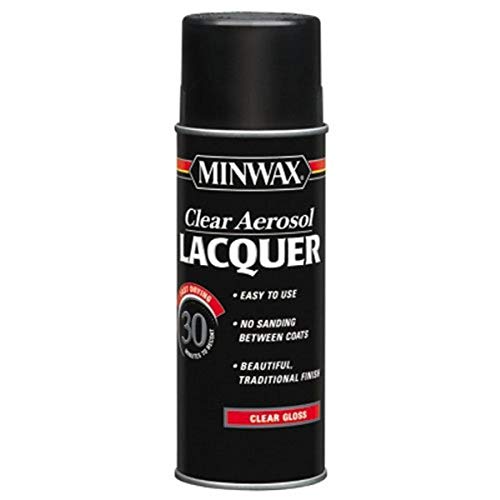 Minwax 15200 Gloss Brushing Lacquer Spray | Minwax Clear Lacquer Spray is a beautiful, durable,… This wood finishing spray requires no sanding between… Ideal for interior wood surfaces, Minwax Aerosol Lacquer… | Check price |
As an Amazon Associate we earn from qualifying purchases at no extra cost to you.
Quick comparison
| Product or type | Finish options | Typical dry/recoat guidance | Best fit | Important limitation |
|---|---|---|---|---|
| Deft Interior Clear Wood Finish aerosol | Commonly sold in gloss, semi-gloss, and satin | Often touch-dry in about 30 minutes; follow the can for recoating | Indoor furniture, trim, and small projects where a traditional lacquer look is wanted | Solvent fumes; not a casual choice for a small, occupied room |
| Rust-Oleum Specialty Lacquer aerosol | Clear gloss and other labeled sheen options, depending on product line | Dry and recoat times vary by formula and conditions; use the label’s stated window | Projects needing a readily available lacquer-style spray and a smooth, hard-looking surface | Confirm wood suitability and interior/exterior rating on the specific can |
| General-purpose nitrocellulose lacquer aerosol | Usually gloss, satin, or semi-gloss | Fast-drying; often touch-dry within tens of minutes | Small indoor pieces and compatible existing lacquer finishes | Solvents can soften some paints, plastics, and older coatings |
| Minwax Polycrylic aerosol | Commonly gloss, semi-gloss, and satin | Allow roughly 2 hours before recoating, subject to label and conditions | Light-colored indoor wood where a lower-odor water-based clear coat is preferred | Water-based polyurethane, not lacquer; test first over stain or paint |
Drying times above are indicative, not guarantees. Temperature, humidity, coat thickness, and airflow change the result. “Dry to touch” also does not mean cured or ready for heavy use.
Which one should you buy?
- For a small indoor project and a traditional lacquer finish: Start with a wood-labeled nitrocellulose lacquer aerosol. Its fast flash-off makes it useful for building several light coats, but it needs careful ventilation.
- For a cabinet door or frequently handled furniture: Choose a product whose label specifically covers interior furniture or cabinetry. Prioritize the stated durability and recoat instructions over the word “lacquer” alone. A spray lacquer is convenient, but it is not automatically as resistant to heat, alcohol, or household chemicals as a purpose-built catalyzed finish.
- For pale wood, painted surfaces, or a lower-solvent indoor option: Consider a compatible water-based clear spray such as Polycrylic. It may preserve a lighter appearance better than some solvent finishes, but it is a different coating chemistry and still needs a test patch.
- For a large tabletop or repeated production work: Aerosols can become costly and tiring to apply evenly. Compare the can’s stated coverage with the project area, then consider a spray-gun finish if you can manage the equipment, cleanup, and ventilation safely.
Sheen, spray pattern, and surface compatibility
Sheen changes how flaws show
Gloss reflects more light and can make color look deeper, but it also highlights dust, scratches, and uneven spray overlap. Satin softens reflections and is often forgiving on everyday furniture. Semi-gloss sits between them. Match the sheen across coats: mixing products or sheens can leave visible differences, and a final clear coat will not reliably hide sanding scratches or poor preparation.
Spray pattern matters more than the label suggests
Aerosol nozzles differ in fan width and consistency. A narrow pattern gives control on trim and edges; a broader, even fan can reduce striping on a panel. Test the nozzle on cardboard before approaching the work. Keep the can moving, overlap each pass by about half the fan width, and begin and end each pass beyond the edge of the piece. If the spray spits, sputters, or produces a lopsided fan, stop and check the nozzle rather than trying to bury the defect under another coat.
Check the existing finish before spraying
New, bare wood is the simplest surface: sand it evenly, remove dust, and apply thin coats. Stain must be fully dry according to its manufacturer before clear coating. On an existing finish, lacquer solvents may wrinkle, lift, or dissolve the coating beneath. On unknown paint, plastic, or a repaired surface, test an inconspicuous spot and let it dry before committing. Avoid spraying over wax, silicone polish, or oily residue; adhesion problems often begin there.
Coverage and cost: a useful planning check
Use the coverage printed on the can rather than assuming every aerosol covers the same area. As a worked example, suppose a can is labeled for 20 square feet per coat and a cabinet project has 12 square feet of exposed surface. One coat uses about 12 ÷ 20 = 0.6 can in ideal conditions. Three coats would be about 1.8 cans, before accounting for overspray, edges, and test sprays—so plan on at least two cans, with a spare if color or sheen consistency is important. Actual coverage falls when coats are heavy or the spray misses the work.
Application steps that prevent common failures
- Prepare the workspace. Work outdoors or in a properly equipped spray area, away from flames, pilot lights, sparks, and smoking. Many lacquer aerosols contain highly flammable solvents. Ordinary open windows alone may not provide safe ventilation.
- Prepare the surface. Sand uniformly, remove dust, and let stain or other undercoats dry as directed. Mask nearby surfaces; fine overspray travels farther than expected.
- Condition and test the can. Bring it to the temperature specified on the label, shake it for the stated time, then spray a test pass. Do not heat the can.
- Apply several light coats. Hold the can at the labeled distance—often around 8 to 12 inches—and keep it moving. Heavy coats are more likely to sag, trap solvent, or dry unevenly.
- Respect the recoat window. Follow the can’s timing. Some lacquer systems bond well through successive coats within the stated window; waiting too long may require scuff-sanding. Do not assume the same schedule applies across brands.
- Allow the finish to harden. Protect the piece from dust while it dries, then wait for the manufacturer’s recommended cure time before stacking, packing, or placing objects on it.
Wear the respiratory protection specified by the product’s safety data sheet; a basic dust mask does not protect against solvent vapor. Keep children and pets away from the spray area, and do not spray near food or occupied rooms.
Ownership realities
Aerosols avoid brush marks and equipment cleanup, but the nozzle is a consumable weak point: dried finish can clog it, and a damaged valve may waste the remaining contents. Clear the nozzle only as the label directs; many cans recommend turning them upside down and spraying briefly after use. Store and dispose of cans according to local rules, especially if they still contain pressure or flammable residue.
The most common avoidable defects are runs from applying too much at once, roughness from dust or overspray, and adhesion failure over an incompatible or insufficiently dry surface. If the finish looks dull or textured, do not immediately add a wet coat. Let it dry, inspect it under angled light, and follow the product’s sanding and recoating instructions.