The best facial cleansing devices and brushes for daily use are usually soft silicone models for sensitive or low-maintenance routines, while bristle brushes make more sense for shoppers who want a stronger exfoliating feel and are prepared to replace heads regularly.
The right choice depends less on the number of vibration modes than on contact softness, cleaning effort, waterproofing, battery habits, and whether your skin tolerates mechanical exfoliation. A cleansing device can help spread cleanser and remove surface residue, but it should not replace a gentle cleanser, sunscreen, or professional advice for persistent irritation or acne.
Our top picks
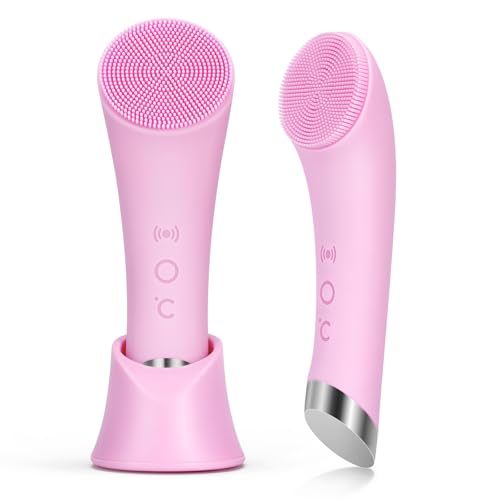 PRITECH Facial Cleansing Brush
- The facial cleansing brush is suitable for various…
- The face exfoliator scrubber with soft silicone bristles,…
- Compared to other silicone face scrubber, our exfoliating…
 Michael Todd Beauty Soniclear Face Brush 2026
- Enjoy the powerful yet gentle removal of pore-blocking…
- This facial brush works at 4 speeds for…
- Get the face brush that cleanses and gently…
 Facial Cleansing Brush Face Scrubber: CLSEVXY Electric
- This 360-degree rotation exfoliating face cleanser brush greatly…
- Our facial cleansing brush has 2 rotation speeds…
- You can use it with any face cleanser…
| Product | Key specs | |
|---|---|---|
| PRITECH Facial Cleansing Brush | The facial cleansing brush is suitable for various… The face exfoliator scrubber with soft silicone bristles,… Compared to other silicone face scrubber, our exfoliating… | Check price |
| Michael Todd Beauty Soniclear Face Brush 2026 | Enjoy the powerful yet gentle removal of pore-blocking… This facial brush works at 4 speeds for… Get the face brush that cleanses and gently… | Check price |
| Facial Cleansing Brush Face Scrubber: CLSEVXY Electric | This 360-degree rotation exfoliating face cleanser brush greatly… Our facial cleansing brush has 2 rotation speeds… You can use it with any face cleanser… | Check price |
 Waterproof Facial Cleansing Spin Brush Set with | The Cleansing system of our Latest spinning Technology… Our facial cleansing brush has 2 rotation speeds… You can use it with any facial cleanser… | Check price |
As an Amazon Associate we earn from qualifying purchases at no extra cost to you.
Silicone vs. bristle: the important head-to-head
Silicone devices
Silicone cleansing devices use flexible nubs or ridges rather than fibers. They are generally easier to rinse, dry quickly, and do not require replacement brush heads in normal use. Nonporous silicone is also less likely to retain product residue than a damp fabric or densely packed bristle head.
The trade-off is feel. Silicone often provides a lighter, less “scrubbed” sensation, and some users may find it less effective at loosening heavy makeup unless they remove makeup first. Look for medical-grade or skin-friendly silicone descriptions, rounded contact points, multiple intensity levels, and a low setting that does not pull the skin.
Bristle brushes
Bristle brushes can give a more familiar cleansing-brush sensation and may lift flakes or residue effectively. Models with very fine, densely packed synthetic bristles can feel soft at first, but pressure and frequency matter more than the label “sensitive.” A brush head that stays wet between uses can also become unpleasant to maintain.
Most bristle systems have a replaceable-head cost. Replace the head when fibers bend, splay, develop an odor, or no longer rinse clean—not only when the manufacturer’s calendar reminder appears. Avoid sharing a brush head, and do not use a worn head to compensate for reduced performance by pressing harder.
| Feature | Silicone device | Bristle brush | Best fit |
|---|---|---|---|
| Typical contact material | Flexible silicone nubs or ridges | Synthetic fibers, commonly nylon or similar polymers | Silicone for low-maintenance use; bristles for a brush-like feel |
| Typical device weight | About 70–150 g | About 100–220 g, including handle and head | Lower weight for shower or travel use |
| Common battery range | About 300–600 minutes per charge | About 60–180 minutes per charge | Silicone for fewer charging interruptions |
| Typical session length | 60–120 seconds | 60–120 seconds | Both can fit a daily routine when used gently |
| Water resistance | Many are fully waterproof, but verify the exact rating | Some are shower-safe; others are only splash-resistant | Waterproof models for sink-to-shower convenience |
| Ongoing consumables | Usually no scheduled head replacement | Replacement heads commonly cost about $10–$30 each | Silicone for predictable long-term ownership cost |
These are useful comparison ranges rather than guarantees. Battery capacity, motor strength, charging design, and waterproofing differ by model, so check the manufacturer’s specifications before buying.
Best choices by situation
| Your situation | Recommended type | What to prioritize |
|---|---|---|
| First device or sensitive-feeling skin | Soft silicone with a low setting | Large, rounded contact points; gentle timer; no need to use maximum intensity |
| Daily use with minimal maintenance | Fully waterproof silicone | Easy-rinse surface, USB charging or long battery life, simple controls |
| Preference for stronger exfoliating sensation | Fine-bristle brush with adjustable speed | Replaceable heads, a very soft head option, and clear cleaning instructions |
| Frequent travel | Compact silicone model | Under 150 g, protective cap or pouch, at least 100 minutes of usable runtime |
| Lowest purchase price | Basic manual silicone pad or entry-level brush | Comfort and cleanability rather than extra modes |
| Several users in one household | Device with separately replaceable heads, or individual silicone devices | Do not share a bristle head; label heads and let them dry fully |
Notable device types and examples
Foreo Luna-style silicone cleansing devices
Foreo’s Luna range is the best-known example of a silicone facial-cleansing format. Depending on the model, the device may offer different silicone surfaces, massage-oriented modes, app-connected controls, or a long claimed charge interval. The appeal is low head-maintenance and a compact waterproof body. Before purchasing, compare the specific Luna model rather than assuming every version has the same size, controls, or charging system.
PMD Clean-style silicone devices
PMD Clean is another recognizable silicone option, using sonic cleansing with a flexible silicone surface. It is suited to shoppers who want a handheld rechargeable device without disposable bristle heads. Check whether the exact version includes the intensity range and charging accessories you want, since product generations can differ.
Rechargeable bristle systems
Rechargeable facial brushes from established skincare-device brands can be a sensible choice when you prefer replaceable heads and a more conventional brush texture. The buying decision should center on the softest available head, speed control, head cost, and drying routine—not on having numerous programmed modes. A device with one comfortable low setting is more useful than one with five settings you cannot tolerate.
Battery life: calculate the difference before you pay more
Manufacturers often quote battery performance in days or months, while daily use is easier to compare in minutes. For example, a device rated for 400 minutes and used for 90 seconds per day provides approximately 266 sessions:
400 minutes ÷ 1.5 minutes per session = about 266 uses.
At one use per day, that is roughly eight to nine months before accounting for standby drain, aging, and the fact that advertised runtime is often measured under controlled conditions. A bristle device rated for 120 minutes would provide about 80 sessions at the same usage. If a replacement head costs $20 and is changed every three months, two years of head replacements would add approximately $160, excluding the initial device price.
Long battery life is useful, but charging convenience matters too. A model with a proprietary charger may be less convenient than one using a standard USB cable, while a sealed waterproof charging design may be safer around a sink. Never assume a USB port is waterproof simply because the device is splash-resistant.
Waterproofing and cleaning details that matter
“Waterproof” can mean different things in product descriptions. Look for an explicit statement that the device is suitable for shower use, or an IP rating when supplied. Splash resistance is enough for a sink, but it is not the same as submersion protection. Keep charging ports closed, use the supplied cable, and follow the specified charging location.
- Rinse the contact surface immediately after use so cleanser does not dry in grooves or between bristles.
- Shake off excess water and pat the device with a clean towel.
- Store it upright or in an open, ventilated area rather than inside a sealed wet pouch.
- Clean the handle and charging area according to the manual; do not soak a model that is only splash-resistant.
- For bristle heads, remove the head periodically and rinse underneath it, where residue can accumulate.
The part that usually wears first is the bristle head, not the motor. On silicone models, inspect for cracks, torn contact points, sticky surfaces, or changes in texture. Stop using a device if the casing splits, it overheats, the charging area corrodes, or the motor behaves unpredictably.
How to use a cleansing device without overdoing it
- Remove eye makeup and heavy makeup separately; a cleansing device is not a reason to scrub the eye area.
- Wet the face and apply a mild cleanser to the skin or device as directed.
- Start on the lowest setting and use light contact. Let the device glide rather than pressing it into the skin.
- Keep the session around 60 seconds at first, dividing time among the forehead, cheeks, nose, and chin.
- Rinse the face and device, then pat dry and apply your usual moisturizer.
- Increase frequency only if your skin remains comfortable. Burning, persistent redness, tightness, or peeling means you should stop and reassess.
People using prescription treatments, recovering from a procedure, or managing a skin condition should ask a dermatologist or other qualified professional whether mechanical cleansing is appropriate. Avoid using a device over broken, sunburned, actively irritated, or infected skin.
Bottom line
Choose a soft silicone device if you value easy cleaning, long battery life, waterproof convenience, and minimal replacement costs. Choose a fine-bristle model only if you prefer its texture and will replace heads and control pressure carefully. In either case, the most useful features are a genuinely gentle low setting, a clear waterproof rating, a comfortable shape, and a maintenance routine you will follow every day.