Key takeaways
- Best value with extensive controls: Breville Dual Boiler. A strong fit for an engaged home barista who wants programmable pre-infusion, a shot timer, and simultaneous brewing and steaming without moving into premium-machine pricing. Its feature-rich design is less appealing if you prioritize a simple, highly repairable machine.
- Best compact, service-minded choice: Rancilio Silvia Pro X. A good match for frequent espresso and milk drinks in a smaller kitchen. It combines dual boilers and PID control in a comparatively narrow chassis, with a more conventional, durable metal-machine feel.
- Best premium ownership experience: La Marzocco Linea Mini. Consider it if budget is secondary to a polished build, temperature management, and a machine designed around a familiar commercial-style group. It is larger and more expensive than the practical needs of many households require.
- Best for buyers who value café-style workflow: Rocket Espresso R58 Cinquantotto. Its dual-boiler layout and separate control interface suit someone who wants more direct control and a substantial stainless-steel machine. Check the current version’s included controller and dimensions before buying, as configurations can change.
The best dual boiler espresso machines for most home baristas are the Breville Dual Boiler for value and control, the Rancilio Silvia Pro X for a compact, repairable workhorse, and the La Marzocco Linea Mini for premium fit and finish. Choose by how often you steam, how much counter space you have, and whether you value programmable features or simpler serviceable hardware; boiler size alone does not predict shot quality.
Our top picks
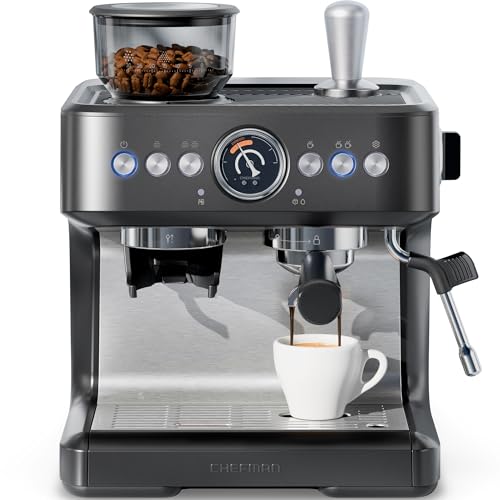
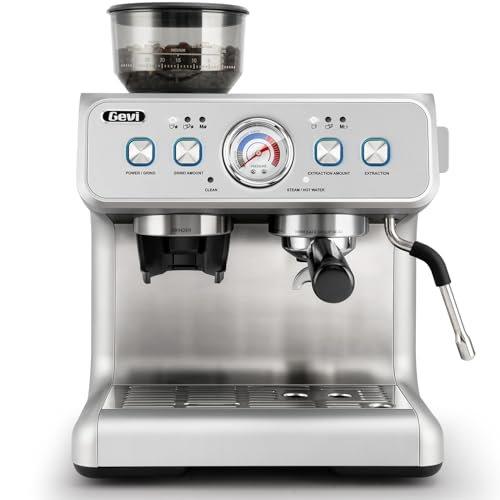


As an Amazon Associate we earn from qualifying purchases at no extra cost to you. Ratings are shown as listed on Amazon.
Dual boilers: what matters beyond the headline capacity
A dual boiler uses one boiler for brewing and another for steam, so you can pull a shot and texture milk at the same time without waiting for a single boiler to switch temperatures. That convenience is most noticeable when making several milk drinks in a row. For straight espresso, temperature control, consistent preparation, and grinder quality matter at least as much as the number of boilers.
Compare the machines’ published capacities with a little care. Manufacturers may describe usable water volume, nominal boiler volume, or a boiler’s physical capacity; those figures are not always directly comparable. A larger steam boiler can support sustained steaming, but it also takes space and time to heat. PID temperature control, stable group temperature, and a well-insulated design help make repeatable shots more attainable.
Shortlist by situation
- Best value with extensive controls: Breville Dual Boiler. A strong fit for an engaged home barista who wants programmable pre-infusion, a shot timer, and simultaneous brewing and steaming without moving into premium-machine pricing. Its feature-rich design is less appealing if you prioritize a simple, highly repairable machine.
- Best compact, service-minded choice: Rancilio Silvia Pro X. A good match for frequent espresso and milk drinks in a smaller kitchen. It combines dual boilers and PID control in a comparatively narrow chassis, with a more conventional, durable metal-machine feel.
- Best premium ownership experience: La Marzocco Linea Mini. Consider it if budget is secondary to a polished build, temperature management, and a machine designed around a familiar commercial-style group. It is larger and more expensive than the practical needs of many households require.
- Best for buyers who value café-style workflow: Rocket Espresso R58 Cinquantotto. Its dual-boiler layout and separate control interface suit someone who wants more direct control and a substantial stainless-steel machine. Check the current version’s included controller and dimensions before buying, as configurations can change.
Specification comparison
The figures below are published specifications for commonly listed versions, rounded where appropriate. Capacity and dimensions can vary by market or model revision, so confirm the exact regional listing before purchase.
| Machine | Brew / steam boiler capacity | Approx. width | Build and temperature approach | Best fit |
|---|---|---|---|---|
| Breville Dual Boiler (BES920) | 0.3 L / 0.95 L | 37 cm | Stainless-steel boilers; PID control and programmable pre-infusion | Feature-focused value |
| Rancilio Silvia Pro X | 0.3 L / 1.0 L | 25 cm | Stainless-steel boilers; dual PID temperature control | Compact, frequent use |
| La Marzocco Linea Mini | 0.17 L / 2.5 L | 36 cm | Insulated stainless-steel boilers; PID and saturated group design | Premium build and steaming reserve |
| Rocket Espresso R58 Cinquantotto | 0.58 L / 1.8 L | 31 cm | Copper brew boiler and stainless-steel steam boiler; electronic temperature control | Traditional, substantial setup |
How to choose: match the machine to your routine
If you make one or two drinks at a time
The Breville Dual Boiler or Silvia Pro X will generally make more sense than paying extra for a large steam boiler. Both provide simultaneous brewing and steaming; the Silvia is notably narrower, while the Breville offers more built-in workflow features. If you rarely steam milk, a dual boiler may be more capability than you need, and a capable single-boiler or heat-exchanger machine could be a better-value alternative.
If you make several milk drinks back-to-back
Look beyond the word “dual.” Compare steam-boiler capacity, steam pressure management, and wand design, then consider how much recovery time you can tolerate. The Linea Mini’s larger steam boiler is suited to sustained milk work, while the R58 also provides substantial steam capacity. A powerful boiler can still produce poor milk texture if the wand technique is inconsistent: introduce air briefly, then keep the milk circulating to create a smooth, glossy texture.
If counter space is tight
Measure width, depth, and height with room for the portafilter handle, cup clearance, water-tank access, and ventilation. The Silvia Pro X’s roughly 25 cm width is a real advantage, but a grinder and knock box also need space. A machine that fits only when pushed against a wall may be awkward to refill and clean.
If you want repairability over automation
Favor a machine with accessible service information, available replacement parts, and a local technician familiar with the brand. A metal exterior is reassuring but does not guarantee that every internal component is easy or inexpensive to replace. The Breville’s electronics and feature set are useful, but buyers who expect to keep a machine for many years should check local parts and service support before committing.
What temperature stability can—and cannot—fix
PID control helps maintain a selected boiler temperature, but the temperature at the coffee puck also depends on the group, portafilter, water, and how the machine is prepared. Let the machine fully warm up, including the group and portafilter; a boiler display reaching its target does not mean every metal part is ready. Use the same dose, grind, and yield while dialing in, changing one variable at a time.
For repeatability, weigh the coffee dose and espresso output rather than relying only on a timed shot. A practical starting ratio is 18 grams of ground coffee to about 36 grams of espresso, adjusted to taste and the coffee. If shots run too quickly or taste thin, make the grind finer; if they choke or taste harsh, try a coarser grind or a different recipe before changing the machine’s temperature.
Ownership costs and maintenance to plan for
As a broad 2026 market guide, dual-boiler home machines range from roughly $1,500–$2,000 for value-oriented options to $3,000–$6,000 or more for premium machines, depending on region, configuration, and taxes. Budget separately for a capable espresso grinder, water treatment suitable for the machine, a tamper if one is not included, and cleaning supplies. The grinder is not an optional upgrade: inconsistent particle size can make a premium machine produce inconsistent shots.
- Water is a longevity issue. Hard water encourages scale, which can impair heating and flow. Follow the manufacturer’s water guidelines; do not assume bottled or filtered water is automatically suitable. Some water treatments can also be too low in minerals for reliable operation.
- Clean the group regularly. Brush coffee residue from the group gasket and screen, and backflush with the specified detergent and schedule. Coffee oils turn rancid and can add bitterness to later shots.
- Expect wear parts. Group gaskets, shower screens, steam-wand tips, and pump or valve components may need service over time. Frequency depends on use, water, and cleaning—not simply the brand.
- Avoid unnecessary descaling. Descaling can be risky if scale is heavy or the process is not approved for the machine. Prevention through suitable water is usually preferable; follow the manufacturer’s service instructions.
Bottom line
For most buyers seeking the best dual boiler espresso machines without overspending, start with the Breville Dual Boiler if built-in controls matter, or the Silvia Pro X if compact size and a conventional, serviceable design matter more. Choose the Linea Mini or R58 when frequent milk drinks, premium construction, and a larger investment fit your priorities. Whichever you choose, a well-matched grinder, suitable water, and a consistent warm-up and cleaning routine will do more for dependable daily espresso than chasing the largest boiler specification.