Key takeaways
- Best compact commuter: Landyachtz Dinghy, typically 28–29 inches long with 60–63 mm soft wheels.
- Best for rough sidewalks and larger riders: Landyachtz Tugboat, usually about 30–31 inches long and 60–63 mm wide-wheel compatible.
- Best relaxed neighborhood cruiser: Arbor Oso, generally about 30–32 inches long with a broad, stable platform.
- Best surf-inspired carving feel: Arbor Pilsner, approximately 28–29 inches long with a wide front and a responsive short wheelbase.
- Best affordable beginner-style setup: Globe Big Blazer, commonly around 32 inches long with soft, larger wheels.
- Best for combining cruising with tricks: Loaded Omakase, a compact but wide deck designed to accept larger wheels and provide substantial foot space.
The best cruiser skateboard for most riders is the Landyachtz Dinghy, but a longer board such as the Landyachtz Tugboat or Arbor Oso is usually more stable for rough sidewalks, longer commutes, and larger riders.
A cruiser should be judged less by its graphic or maximum speed than by four practical factors: deck length, wheel diameter, truck geometry, and how easily the board holds a line without feeling twitchy. The right combination depends on whether you are carrying it through a city, crossing broken pavement, or simply making relaxed neighborhood loops.
Our top picks
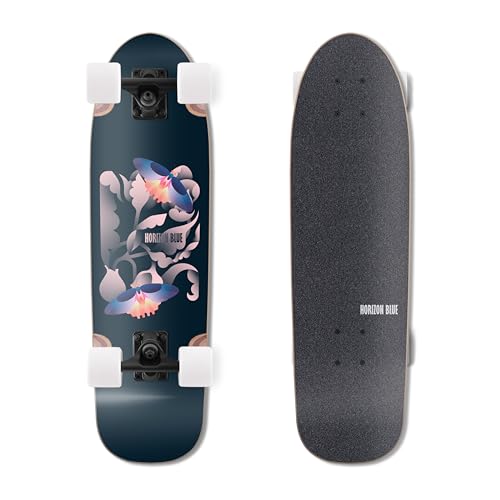

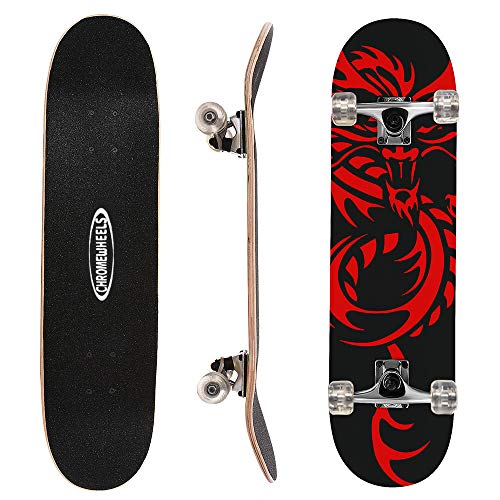
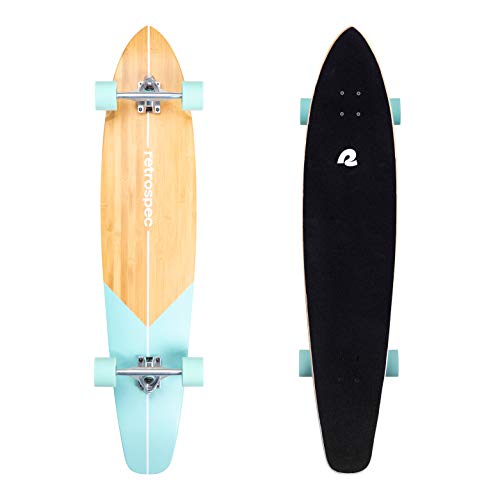
As an Amazon Associate we earn from qualifying purchases at no extra cost to you. Ratings are shown as listed on Amazon.
Best cruiser skateboards by riding situation
- Best compact commuter: Landyachtz Dinghy, typically 28–29 inches long with 60–63 mm soft wheels.
- Best for rough sidewalks and larger riders: Landyachtz Tugboat, usually about 30–31 inches long and 60–63 mm wide-wheel compatible.
- Best relaxed neighborhood cruiser: Arbor Oso, generally about 30–32 inches long with a broad, stable platform.
- Best surf-inspired carving feel: Arbor Pilsner, approximately 28–29 inches long with a wide front and a responsive short wheelbase.
- Best affordable beginner-style setup: Globe Big Blazer, commonly around 32 inches long with soft, larger wheels.
- Best for combining cruising with tricks: Loaded Omakase, a compact but wide deck designed to accept larger wheels and provide substantial foot space.
Head-to-head comparison
| Board or setup | Typical deck length | Typical wheel size | Deck character | Best match |
|---|---|---|---|---|
| Landyachtz Dinghy | 28–29 in | 60–63 mm, soft urethane | Narrow, portable, kicktail-equipped | Short commutes and crowded sidewalks |
| Landyachtz Tugboat | 30–31 in | 60–63 mm, soft urethane | Wider standing platform and more stability | Rough pavement and heavier riders |
| Arbor Pilsner | 28–29 in | 59–62 mm, soft urethane | Directional, carving-oriented shape | Quick turns and relaxed carving |
| Arbor Oso | 30–32 in | 60–65 mm, soft urethane | Broad deck with a stable wheelbase | Neighborhood cruising and uneven paths |
| Globe Big Blazer | 32 in | 60–65 mm, soft urethane | Longer, comfortable cruiser platform | Beginners and straight-line comfort |
| Loaded Omakase | 33.5 in | 65–70 mm commonly used | Wide, low-feeling composite deck | Longer rides and mixed cruising |
Dimensions can differ between model years, colorways, and complete configurations, so confirm the exact wheelbase, truck width, and wheel clearance before ordering. The table is useful for comparing the design categories rather than treating every listed number as universal.
Why deck length changes the ride
A 28-inch cruiser turns around obstacles quickly and fits beside a desk, under a seat, or in a small entryway. Its short wheelbase also makes foot-powered steering feel lively. The trade-off is that small movements from your ankles can produce noticeable direction changes. This is excellent for weaving around pedestrians but less relaxing on a fast downhill or cracked sidewalk.
Boards from about 30 to 33 inches spread your feet farther apart. That extra length generally improves directional stability and gives the front foot more room when the pavement becomes unpredictable. The board is less convenient to carry, but many riders find it easier to ride for 20–40 minutes without constantly correcting their line.
Deck width matters almost as much as length. A narrow board around 8–9 inches can feel nimble, while a broad deck around 9.5–10 inches gives larger shoes and less experienced riders a more secure stance. A longer board is not automatically stable if its wheelbase is short and its trucks are very loose.
Wheel size and softness: the comfort equation
For general cruising, wheels around 60–65 mm are a useful middle ground. They roll over small cracks and paving seams more effectively than typical 52–54 mm street wheels while remaining light enough to accelerate without excessive effort. Wheels around 65–70 mm can feel smoother on rough asphalt, but they add rotational weight and may require riser pads or wheel-well clearance.
Soft urethane, commonly in the 78A–83A range, filters vibration and grips painted surfaces better than hard street wheels. Softer wheels are not magic: deep potholes, raised tree roots, and loose gravel still require caution. They can also feel slower during sharp slides and may develop flat spots if the rider repeatedly brakes by dragging the wheels.
There is a practical speed cost to oversized wheels. Suppose a 3-mile commute includes 20 stops and starts. A 60 mm wheel may feel easier to accelerate repeatedly than a 70 mm wheel, while the larger wheel saves effort only on the rolling sections. For a stop-heavy route, choose moderate wheels; for a relatively continuous path with coarse pavement, larger wheels make more sense.
Truck geometry determines turning stability
Most cruiser completes use traditional kingpin trucks. Their geometry is familiar, easy to adjust, and capable of both carving and stable straight-line travel. Trucks with a lower angle tend to turn less aggressively and feel calmer at speed. Higher-angle trucks lean into sharper turns, which can be enjoyable on a short cruiser but demanding for a beginner.
Truck width should broadly match the deck. A truck that is too narrow can make a wide deck feel tippy and can reduce leverage during turns. An excessively wide truck may catch the ground during deep leaning and can make a compact deck feel awkward. The manufacturer’s recommended truck size is normally the safest starting point.
Turning stability also depends on bushings and adjustment. Softer bushings make steering easier for lighter riders but may feel loose for a heavier rider. Tightening the kingpin nut by small increments can reduce wobble, but over-tightening crushes the bushings and makes the board difficult to turn. Never use tightening as a substitute for choosing an appropriate wheelbase.
Decision matrix: choose by route, experience, and storage
| Your priority | Recommended format | Why it fits |
|---|---|---|
| Small apartment, bus or train transfers | 28–29 in deck, 60 mm wheels | Easy to carry and maneuver in confined spaces |
| New rider who values calm steering | 30–33 in deck, 60–65 mm wheels | More standing room and a longer wheelbase |
| Broken sidewalks and coarse asphalt | 60–70 mm soft wheels, adequate clearance | Improves crack and surface transition performance |
| Frequent carving in open areas | Short-to-medium wheelbase, responsive trucks | Requires less effort to link turns |
| Commuting several times weekly | Medium deck with replaceable wheels and bushings | Balances comfort, portability, and maintenance cost |
| Occasional relaxed rides on smooth paths | Any complete with soft wheels and a comfortable deck | Specialized high-end components are less important |
Ownership costs and maintenance people overlook
The first parts to wear are usually wheels, bearings, bushings, and grip tape—not the deck itself. A reasonable general-market allowance is about $25–$60 for replacement cruiser wheels, $15–$40 for bearings, and $10–$25 for bushings, depending on brand and material. These are broad ranges, not fixed prices.
Clean bearings without soaking them in water. Remove surface dirt, use a bearing-specific cleaner if needed, allow the bearings to dry fully, and apply a small amount of skate bearing lubricant. Avoid household oils, which can attract grit. Wipe the deck after wet rides and do not store a wood deck in a damp garage or leave it in a hot vehicle.
Check hardware before every few rides. Loose truck bolts can create unwanted movement between the deck and trucks, while loose axle nuts can allow wheel play. The wheel should spin freely but should not rattle side to side. Inspect for wheel bite—contact between a wheel and deck during a hard turn—especially after fitting larger wheels. Risers, different trucks, or a slightly tighter setup may be needed.
Final recommendation
Choose the Landyachtz Dinghy when portability and quick maneuvering matter most. Choose the Tugboat or Arbor Oso when stability and pavement comfort are higher priorities. The Arbor Pilsner suits riders who want a lively carving feel, while the Globe Big Blazer is a sensible longer beginner cruiser. For the most comfortable mixed-use setup, prioritize a deck wide enough for your stance, 60–65 mm soft wheels, and trucks that remain controlled rather than merely loose.