Key takeaways
- The best blanket ladders are sturdy, wall-safe or well-balanced, and sized so your throws remain visible without turning the room into a storage obstacle. For most living rooms, choose a 5- to 6-foot solid-wood ladder with 10- to 12-inch rung…
The best blanket ladders are sturdy, wall-safe or well-balanced, and sized so your throws remain visible without turning the room into a storage obstacle. For most living rooms, choose a 5- to 6-foot solid-wood ladder with 10- to 12-inch rung spacing, a footprint of about 16 to 20 inches, and a practical load limit of at least 15 pounds.
Our top picks
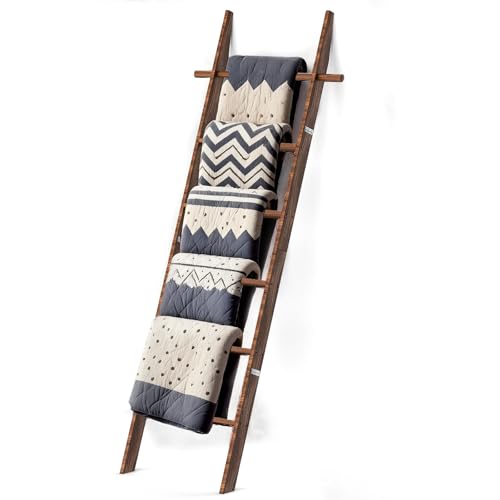


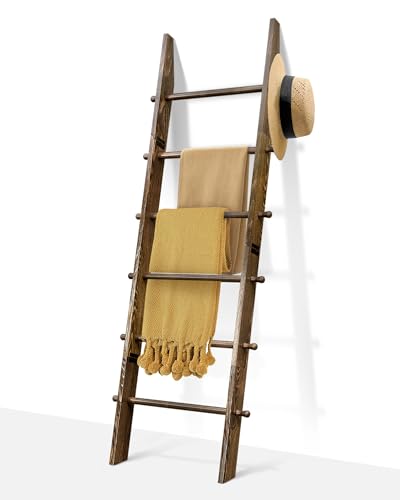
As an Amazon Associate we earn from qualifying purchases at no extra cost to you. Ratings are shown as listed on Amazon.
Best blanket ladders by decorating situation
| Best for | Recommended material | Typical size | Useful load limit | What to prioritize |
|---|---|---|---|---|
| Large living room | Solid wood | 60–72 inches high, 18–24 inches wide | 15–25 pounds | Wide feet, deeper rungs, stable lean |
| Bedroom or reading corner | Wood or powder-coated steel | 48–60 inches high, 14–18 inches wide | 10–20 pounds | Smooth finish and quiet contact points |
| Small apartment | Lightweight steel or narrow wood | 48–60 inches high, 10–16 inches wide | 8–15 pounds | Small footprint and anti-slip feet |
| Heavy quilts | Thick solid wood or welded steel | 60–72 inches high, 18–24 inches wide | 20–30 pounds | Reinforced joints and closely spaced support points |
| Occasional decorative use | Bamboo or hollow metal | 48–60 inches high, 14–18 inches wide | 8–12 pounds | Low weight and coordinated finish |
Wood, metal, or bamboo: which material is better?
Solid wood
Solid wood is the most versatile choice when the ladder will hold blankets every day. Pine is usually affordable and lightweight, while hardwoods such as oak, ash, or rubberwood tend to resist denting and flexing better. Wood also contributes visual warmth and is less likely than bare metal to scratch a wall or make noise when a blanket is moved.
Inspect the joints rather than focusing only on the finish. A ladder with glued and screwed or doweled connections is preferable to one held together by decorative caps alone. Look for rounded rung edges, a sealed surface, and feet that sit flat. Unfinished wood can absorb oils and moisture, so it may require occasional wiping and careful spot cleaning.
Powder-coated steel
Steel ladders are often slimmer and stronger for their width. They suit modern, industrial, or minimalist rooms and can carry several thick throws without taking up much visual space. Powder coating is preferable to untreated metal because it helps resist surface corrosion and reduces the chance of sharp edges.
The trade-off is comfort and floor contact. Thin metal rungs can create hard pressure points in folded blankets, and metal can clatter against flooring or walls. Choose tubular rungs, capped ends, and rubber or silicone feet. For a bedroom, avoid designs with exposed welds or sharp corners near walking paths.
Bamboo and engineered materials
Bamboo can offer the appearance of wood at a lower weight, making it useful in small spaces. Its quality varies considerably: thin rails and lightly fastened joints may loosen under repeated loading. Engineered wood can also work well when the ladder has a thick profile and protected edges, but it is less forgiving of prolonged dampness than sealed solid wood.
Rung spacing matters more than it appears
Rungs spaced 10 to 12 inches apart are a practical range for most blankets. This gives each throw enough support while leaving room to drape one blanket per level. Spacing closer than 8 inches creates more storage positions but can make the ladder look crowded and may force blankets into narrow folds. Spacing wider than 14 inches looks airy, but a blanket may sag toward the floor or obscure the rung below.
Consider the blanket thickness as well as the ladder dimensions. A lightweight cotton throw can hang from nearly any rung arrangement. A thick wool blanket or quilt needs a rung with at least a 1-inch diameter, a smooth edge, and enough vertical clearance to prevent the lower hem from dragging.
Floor stability and wall safety
A decorative blanket ladder is not automatically safe to climb. Never use one as a step stool, and do not assume a stated load limit applies to a person or to a sideways pull. The relevant capacity is the combined weight of the blankets, not just the heaviest single item.
For a leaning ladder, stability depends on three contact areas: both feet and the upper rail or wall contact points. Wide feet, non-slip pads, and a slight backward angle are more important than an extra rung. A ladder that is 18 inches wide with feet extending 1 to 2 inches beyond the rails usually has a more forgiving base than a narrow, straight-sided model.
Hard floors can allow unpadded feet to slide, while thick carpet can make a narrow ladder wobble. On wood, laminate, tile, or vinyl, use factory-fitted rubber feet or removable felt-and-rubber pads suited to the surface. Avoid adhesive pads that are too soft; they can compress unevenly and tilt the ladder.
If children, pets, or frequent traffic are present, choose a ladder with a wall-anchor option or use a purpose-built freestanding rack instead. When anchoring, follow the manufacturer’s instructions and use hardware appropriate for the wall structure. Do not drill solely into drywall for a heavily loaded ladder.
How to choose the right size
Measure the intended floor area before shopping. Leave at least 24 inches of clear walking space in front of the ladder where possible, and allow extra room if blankets will project from both sides. A 72-inch ladder may fit under a tall ceiling but still feel oversized beside a low sofa or nightstand.
For a simple fit calculation, measure the available wall width and subtract 4 inches for visual breathing room. If the space is 30 inches wide, a ladder around 24 to 26 inches wide may fit physically, but a 16- to 20-inch model will usually look less cramped and leave room for the blanket edges.
Small-space shoppers should examine depth as well as width. A narrow ladder can still obstruct a walkway if its feet extend 18 inches from the wall. For a studio apartment or compact bedroom, a 48- to 60-inch ladder with a 10- to 14-inch footprint is often easier to live with than a taller, wider model.
Decision matrix: match the ladder to your use
| Your priority | Best choice | Why | Avoid |
|---|---|---|---|
| Lowest reasonable budget | Simple pine or bamboo ladder | Lightweight and generally available in compact sizes | Very thin rails, loose rung joints |
| Daily use by several people | Solid hardwood or welded steel | Better resistance to joint fatigue | Stapled or purely decorative construction |
| Very limited floor space | Narrow 48–60-inch ladder | Less intrusion into the walkway | Wide feet without a stable pad system |
| Heavy quilts and blankets | Reinforced wood or tubular steel | Higher capacity and less flex | Thin round rails and widely spaced rungs |
| Frequent rearranging | Lightweight wood or steel | Easier to move without lifting strain | Oversized hardwood designs |
| Maximum child or pet resistance | Anchored rack or secured ladder | Reduces tipping risk | Unsecured leaning ladder in a busy route |
Ownership costs and durability
Blanket ladders are generally inexpensive compared with furniture, but the cheapest construction can cost more over time if the joints loosen or the feet wear through. General market pricing is roughly $25–$60 for lightweight bamboo or basic pine, $60–$130 for better-finished solid wood, and $80–$180 for heavier welded steel or premium hardwood designs. These are broad ranges rather than fixed prices.
The parts most likely to wear first are rubber feet, adhesive pads, finish at the hand-contact areas, and fasteners at the rung joints. Check the ladder every few months if it is used daily. Tighten accessible screws gently, replace missing foot caps, and stop using the ladder if a rail is splitting or a rung rotates.
For routine cleaning, remove blankets and vacuum dust from the joints. Wipe sealed wood or coated metal with a slightly damp cloth, then dry it promptly. Avoid soaking wood, abrasive cleaners, furniture polish that leaves a slippery film, and bleach on colored finishes. Wash blankets according to their care labels before returning them to storage; a clean ladder cannot prevent dust or pet hair from transferring between textiles.
Final buying recommendation
For the broadest range of living rooms and bedrooms, select a 60- to 72-inch solid-wood ladder, 16 to 20 inches wide, with 10- to 12-inch rung spacing, non-slip feet, rounded rungs, and a tested capacity of at least 15 pounds. Choose steel when you need a slimmer profile or higher capacity, and choose a compact 48- to 60-inch design when floor space matters most. The most attractive ladder is only the best choice if its base stays stable, its joints suit the intended load, and its dimensions leave the room comfortable to walk through.