Our Top Picks
 Electric Scooter for Kids w/150W Powerful Motor24 inches x 12 inches x 31"24 x 12 x 31 inches9 PoundsCheck on Amazon
The best electric scooter for a child is the one that matches their age, height and weight and that you are comfortable supervising, so the first step is the age range on the listing, not the top speed. This page sorts eight Amazon listings into three groups: low-speed three-wheelers for younger riders, two-wheel starters for around ages 6 to 10, and faster models for older kids.
Everything below is based on the listing titles, which are seller claims, plus general safety knowledge. Powered scooters can cause injuries, so a helmet, supervision and a check of local rules matter more than any feature in the table.
Top picks at a glance

LINGTENG Electric Scooter for Kids Age of 6-9, Kick-Start Boost Scooter with Adjustable Speed and Height, Flash Wheel & Deck Lights


As an Amazon Associate we earn from qualifying purchases. Product prices and availability are accurate as of the date/time indicated.

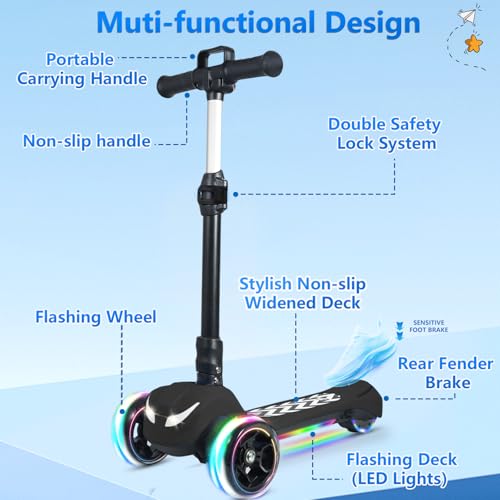
Electric Scooter for Kids Ages 3-12, 3 Adjustable Heights, 5MPH Safe Speed | Full Body Lights Up, Wide Deck, 90min Riding, Foldable 3 Wheel Electric Scooter for Kids Boys Girls Toddler Birthday




As an Amazon Associate we earn from qualifying purchases. Product prices and availability are accurate as of the date/time indicated.

Segway Ninebot C2 Lite Electric Scooter for Kids, Ages 6–10 | 5.6-mile max operating range, and 70-minute run time for young riders, UL 2272 and UL 2271 certified


As an Amazon Associate we earn from qualifying purchases. Product prices and availability are accurate as of the date/time indicated.

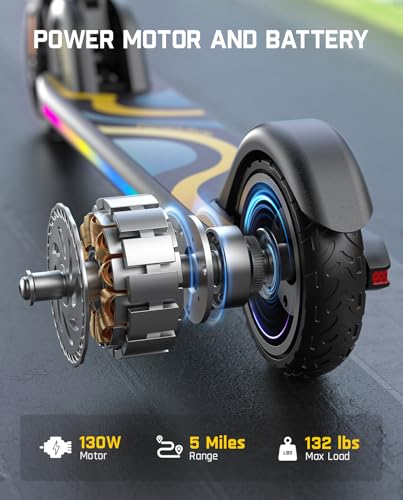
FanttikRide C9 Pro Kids Electric Scooter Ages 8-12, Colorful Rainbow Lights, E-Scooter for Kids 3.9-5.2 ft, 132 lbs, 5 Miles Range, Up to 40 min Ride Time, 5/8/10 MPH, 3 Adjustable Heights, Black




As an Amazon Associate we earn from qualifying purchases. Product prices and availability are accurate as of the date/time indicated.

Segway C2 Pro Kids Electric Scooter for Ages 9+, UL Certified | Up to 12.4 mph, 9.3-mile range for recreational rides and everyday neighborhood fun, UL 2272 2271 certified


As an Amazon Associate we earn from qualifying purchases. Product prices and availability are accurate as of the date/time indicated.
Electric Scooter for Kids w/150W Powerful Motor, Thumb Throttle, LCD Screen, Bluetooth, Light-Up Stem Deck & Wheels, 3 Adjustable Heights, 5MPH Safe Speed, 3 Wheel Electric Scooter for Kids, Pink


As an Amazon Associate we earn from qualifying purchases. Product prices and availability are accurate as of the date/time indicated.
| Model | Key point from the title | Price tier | Best for |
|---|---|---|---|
| BLISSRIDE 3-Wheel | Ages 3-12 claim, 5 mph, 90 min riding | Budget | First powered ride |
| IRIMMY 3-Wheel | 150W, 5 mph, LCD, Bluetooth, pink | Mid-range | Young riders who like lights |
| LINGTENG, Ages 6-9 | Kick-start boost, adjustable speed and height | Budget | Kids new to scooters |
| Gotrax, Ages 6-12 | 7.5 mph, 3.75 miles, UL2272, 120 lb load | Budget | Cautious first purchase |
| Segway Ninebot C2 Lite | Ages 6-10, 5.6 miles, UL 2272 and 2271 | Mid-range | Certified starter |
| SIMATE | Top 8.7 mph, 5 miles, dual braking | Mid-range | Confident riders |
| FanttikRide C9 Pro | Ages 8-12, 5/8/10 mph, 132 lb | Mid-range | Growing riders, speed modes |
| Segway C2 Pro | Ages 9+, 12.4 mph, 9.3 miles | Premium | Older kids, longer rides |
Before you shop: age, weight and local rules
An electric scooter is a motor vehicle in miniature, and the listings here do not agree on what counts as “for kids”. Age claims range from 3-12 to 9+, and some titles give no age at all, only “kids”. Check the manufacturer’s stated age, maximum rider weight and minimum height before price. A child who sits at the edge of a range is usually better off with the lower-speed option.
Local rules matter too. Some cities and states set age limits, helmet requirements or limits on where powered scooters can be used, and private property such as a school or an apartment complex may have its own policy. Look up your local regulations and any insurance considerations before you buy, because the listing will not do it for you.
It is also worth deciding who the scooter is really for. A gift for a birthday is easy to over-buy: relatives tend to choose the fastest, brightest model, while the right choice for a first-time rider is often the slowest. If you are buying for a child you do not see daily, ask a parent for the child’s weight and experience, and keep the receipt in case the size or speed turns out to be wrong.
What is changing in kids’ electric scooters
Safety certification wording has become a selling point. Several titles here cite UL 2272 and UL 2271, standards generally associated with the electrical system and the battery of personal e-mobility devices, and one mentions CPC certification. That is a positive trend, though a title is not proof, so confirm the claim on the manufacturer’s site or the product label.
Speed control is the second shift. Many listings now limit the speed or offer modes, such as 5, 8 and 10 mph, so a parent can keep a beginner slow and unlock more as skills improve. Three-wheel designs, which add stability for younger riders, are common in the cheaper listings, and lights on the deck and wheels have become standard decoration.
Another change is the spread of foldable frames and adjustable stems, which make a scooter easier to carry into a house or a car and let one frame last through a growth spurt. Folding mechanisms are moving parts, though, so a quick tightness check before each ride is sensible. Finally, app and display features are appearing on kid-focused models, including a Bluetooth link and an LCD in one title. These are conveniences, not safety features, and they add complexity. Treat the headline range and speed numbers as maximums that depend on rider weight, terrain and temperature.
How we picked these
We compared eight Amazon listings shown for electric scooters for kids and grouped them by age target and design. Our basis is published specifications, manufacturer documentation and buyer reviews. Nobody on the team used or measured these units. Titles are seller claims, so unclear age or speed wording is flagged, and anything the title does not state is marked “check the listing”. Certification wording is reported as written in the title, not verified.
Three-wheel scooters for younger riders
BLISSRIDE 3-Wheel Electric Scooter for Kids
The title claims ages 3 to 12, three adjustable heights, a 5 mph safe speed, a wide deck, a body that lights up, 90 minutes of riding and a foldable frame. The age span is very wide: a toddler and a 12-year-old are not the same rider, so look for the maker’s weight limit and height guidance.
The low speed and three-wheel layout suit a young child who is learning to balance, with an adult walking alongside. An older or heavier child may outgrow it quickly.
Imagine a four-year-old on a flat driveway with a parent jogging alongside. The 5 mph limit keeps the pace near a walk, and the wide deck gives small feet room. The same scooter would feel slow and cramped to a ten-year-old, which is why the 3-12 headline is best read as a ceiling for marketing, not a promise of a good fit across the range. Also note that the title does not name a braking system or a weight limit, and both are essential at this age.
Pros
- 5 mph cap suits beginners
- Three adjustable heights
- Budget tier among the powered options
Cons
- Age claim is very broad
- No certification mentioned in the title
Check the listing for the weight limit, braking method and any safety certification. Question to ask: will my child still fit this in a year?
IRIMMY 3-Wheel Electric Scooter for Kids (Pink)
The listing data attributes this to IRIMMY, while the title itself begins “Electric Scooter for Kids”. It claims a 150W motor, a thumb throttle, an LCD screen, Bluetooth, a light-up stem, deck and wheels, three heights and a 5 mph safe speed. The title states no age range, so that must be confirmed.
It suits a young rider who likes lights and a display, with an adult managing the speed. Bluetooth is a convenience feature, not a safety one, and a thumb throttle is easy to hold open in a moment of panic.
Imagine a six-year-old rolling down a gentle slope at the park: a throttle that stays open when the child gets nervous is a very different experience from a kick-start design where the motor only helps while the child pushes. If you choose a thumb-throttle model, practice stopping on flat ground first, and check whether letting go of the control cuts the power.
Pros
- 5 mph cap and a stable three-wheel design
- Display and light features appeal to children
- Three adjustable heights
Cons
- No age or weight range in the title
- Thumb throttle needs supervision for beginners
Check the listing for age, weight limit, the braking method and the certification. Question to ask: what happens when my child lets go of the throttle?
Two-wheel starters for ages 6 to 10
LINGTENG Electric Scooter for Kids Age 6-9
This one is a kick-start boost scooter: the rider pushes off to get the motor going, with adjustable speed and height and flashing wheel and deck lights. The push-to-start design is a gentle introduction because the motor does not run from a standstill.
It is the lowest-priced scooter in the set and suits a child who already rides a kick scooter. The title gives no speed, range or certification figures, so those must be found on the product page.
The kick-start approach teaches balance and braking before speed becomes a factor, which is why it is often suggested for children who are new to powered scooters. The trade-off is that the child must still push, so a child who wants to be carried along without effort may find it less exciting. Look for how the boost behaves at the top setting and whether the speed adjustment is easy for a child to change without a parent noticing.
Pros
- Kick-start boost limits sudden acceleration
- Adjustable speed and height
- Lowest price in the set
Cons
- No speed, range or certification in the title
- Narrow stated age band, 6-9
Check the listing for top speed, range, weight limit and certification. Question to ask: what is the maximum speed at the highest setting?
Gotrax Electric Scooter for Kids 6-12 (Pink)
The title gives a good amount of detail: a maximum of 3.75 miles and 7.5 mph, thumb control, a 150W motor, a 6-inch solid wheel, UL2272 and “CPC Certification Approved”, and support for 120 lb. Solid wheels cannot go flat, though they usually give a harsher ride.
The range is the shortest in the set, which is fine for neighborhood rides but limiting for longer outings. CPC usually refers to a Children’s Product Certificate, and the listing should say what it covers.
A realistic scenario is a 9-year-old who rides to a friend’s house along a quiet, smooth street at a pace close to a jog. At 7.5 mph the speed is comfortable for that, and the solid tire avoids punctures. On rough pavement or cracked sidewalks, though, solid wheels transmit more bumps to a small rider, so choose your riding surface with that in mind.
Pros
- Clear speed, range and load figures
- UL2272 wording in the title
- Solid wheels need no air
Cons
- Short 3.75-mile range
- 120 lb limit rules out heavier kids
Check the listing for brake type and what the certification actually covers. Question to ask: does my child weigh comfortably less than the limit?
Segway Ninebot C2 Lite Electric Scooter, Ages 6-10
The title cites a 5.6-mile maximum range, a 70-minute run time and UL 2272 and UL 2271 certification, for ages 6 to 10. Citing both standards is more specific than most titles, and a brand with a service network may matter if something goes wrong.
It suits a parent who prefers a documented safety claim and a defined age band. The title does not state a top speed or weight limit.
Consider a parent whose child has just graduated from a three-wheeler and who wants something that looks like a grown-up scooter without a big jump in speed. The defined age band and the named certifications make the conversation with the child easier, as the rules are set by the product, not by an argument at the front door. Remember that a certification applies to the electrical system and battery, not to how the child rides.
Pros
- Both UL standards named
- Defined age band and stated range
- Established brand name
Cons
- Higher price than most
- No top speed or weight limit in the title
Check the listing for top speed, weight limit and the warranty. Question to ask: is the price premium worth the stated certification to me?
Faster models for older kids
SIMATE Electric Scooter for Kids with Colorful Lights
SIMATE claims a top speed of 8.7 mph, a 5-mile range, a foldable frame, a front light and pedal lights, an LED display and dual braking. The title says “Kids, Girls, Boys, Teens” and gives no age band, so the target is broad.
Dual braking is a sensible feature for a faster scooter. 8.7 mph is quicker than most young children can control, so this suits a confident older child with a helmet and clear space.
Picture a 10-year-old using a school-yard path on a weekend. The pedal lights and LED display may make the ride more fun, but the more relevant feature is how the dual brakes feel and whether the child can reach the levers comfortably. A scooter that folds is easier to store in a hallway or car trunk, though folding mechanisms deserve a periodic check for tightness. The lack of an age band or a stated certification in the title means that more homework is needed here than with the Segway pair.
Pros
- Dual braking system
- Folds for storage
- Display and lights
Cons
- No age or weight range in the title
- No certification mentioned
Check the listing for age, weight limit and the speed modes. Question to ask: can the top speed be capped for a beginner?
FanttikRide C9 Pro Kids Electric Scooter, Ages 8-12
The title offers ages 8 to 12, a rider height of 3.9 to 5.2 ft, a 132 lb limit, a 5-mile range, up to 40 minutes of ride time, three speed modes (5, 8 and 10 mph) and three adjustable heights. Speed modes are the standout: a parent can start on 5 mph and move up.
A child who has outgrown a three-wheeler and wants a real scooter will find this appealing. Note the 40-minute figure is the shortest run time among the two-wheelers.
The three adjustable heights and the stated 3.9 to 5.2 ft rider height range help a family share the scooter between siblings of different sizes, as long as weight and age limits are respected. Because the speed jumps from 5 to 8 to 10 mph, it is worth agreeing on a rule such as staying on the lowest setting until the child has ridden for several weeks without a fall.
Pros
- Three speed modes
- Height and weight range stated
- Three adjustable heights
Cons
- No certification in the title
- Run time is short
Check the listing for how modes are selected and whether a child can change them. Question to ask: can the speed mode be locked?
Segway C2 Pro Kids Electric Scooter, Ages 9+
The title claims up to 12.4 mph, a 9.3-mile range and UL 2272 and 2271 certification, for ages 9 and up. It is the fastest and longest-range model in the set and the most expensive.
It suits an older, steady rider who will wear a helmet and pads and ride on suitable paths. At 12.4 mph a fall is more serious, so this is not a scooter to buy for a nervous or younger child.
A fair way to look at it is as a scooter for the child who has already outgrown the others on this page. A teen who commutes a short distance along a path may find the range useful, though the stated 9.3 miles is a maximum and will shrink with weight, hills and cold. At the premium tier, the question is whether you will use the range and speed, or simply be paying for headroom.
Pros
- Longest stated range
- Certification wording for both standards
- Room to grow into
Cons
- Highest price
- Top speed is too much for beginners
Check the listing for speed modes, weight limit and the braking system. Question to ask: does the speed cap work reliably for a first month?
How long the battery lasts and how to charge it
Stated ranges in this set run from 3.75 to 9.3 miles, and run times from 40 to 90 minutes. Treat them as maximums: heavier riders, higher speeds, hills, cold weather and battery age all reduce them. Charge with the supplied charger, on a hard surface away from flammable items, and do not leave a scooter charging unattended or overnight. Stop using a scooter whose battery swells, smells or overheats, and follow the manufacturer’s instructions.
Battery health also depends on storage. Keep the scooter indoors in a dry place at moderate temperatures, avoid leaving it in a hot car or freezing garage, and check the battery compartment and charging port for damage from time to time. If the scooter will sit unused for months, the manufacturer’s manual will say how to store it, and following that advice protects both the battery and your home.
How to choose
Age, height and weight first
Start with the manufacturer’s age, height and weight limits. A scooter that is too fast or too large for a child is the main risk, and a child who fits the low end of a range should pick the slower model.
It also helps to think about growth. A scooter with adjustable handlebar height will last longer, but a speed that is right for a seven-year-old will not be right for a twelve-year-old, so a model with several speed modes can cover more of the years than one with a fixed top speed.
Speed, brakes and certification
Prefer adjustable or capped speed, reliable brakes (dual braking, or a foot brake plus an electronic one) and a stated certification you can verify. Solid wheels are low maintenance, while air tires ride softer.
A worked example
Assume a 7-year-old who weighs about 55 lb, has ridden a kick scooter and rides on a smooth driveway and sidewalk. A 5 mph or kick-start model, such as LINGTENG, Gotrax or the BLISSRIDE, fits the speed need. If the stated range is 3.75 miles and the child rides 20 minutes at a time, that is well within the claim. A 12.4 mph model would be too fast for this rider. These numbers are illustrative assumptions.
| Spec concept | What to look for | Why it matters |
|---|---|---|
| Top speed | 5 mph for beginners, adjustable modes | Limits the severity of a fall |
| Weight limit | Stated and above the child’s weight | Affects stability and braking |
| Brakes | Dual braking or a clear foot brake | Stopping is the key skill |
| Certification | UL 2272 and UL 2271 wording, verified | Electrical and battery safety |
| Range | Enough for the rides you plan | Real range is below the claim |
Safety gear and supervision
Buy a helmet that fits and is rated for the activity, and add elbow and knee pads, gloves and closed shoes. Supervise young riders at all times, keep them away from roads, water and slopes, and teach them to stop before they speed up. Follow the manufacturer’s instructions and your local rules. No feature on a listing replaces protective gear.
Before the first ride, check tire pressure where applicable, test the brakes while the scooter is stationary, and make sure the handlebar and folding joint are tight. Set the speed to the lowest mode, choose a flat, smooth, traffic-free space, and make the first few rides short. Agree on simple rules with the child: stay within sight, no riding at dusk without lights, no passengers and no riding in wet conditions unless the manufacturer says it is fine. Teach the child to dismount and walk across busy crossings and driveways.
Mistakes buyers make
Buying for the child they will become. A fast scooter for a six-year-old to grow into is a risk now. Trusting the age range. Heavy or tall children may exceed the limits well before the age band ends. Ignoring local rules. Restrictions on age and location vary. Skipping the helmet. A fitted helmet comes first. Charging unattended. Lithium batteries need care. Counting on the headline range. Plan for less.
Treating a certification as a guarantee. It speaks to electrical and battery safety, not to crashes. Skipping the manual. Weight limits, charging steps and wet-weather advice live there, and they matter more than the marketing copy. Forgetting that siblings share. If two children of different ages will ride the same scooter, buy for the younger one’s skills and weight, not the older one’s.
Verdict by use case
These suggestions follow listing details, not performance rankings. Youngest riders: a three-wheel at 5 mph, the BLISSRIDE or IRIMMY, with an adult beside the child. First two-wheeler, cautious parent: the Gotrax, LINGTENG or Segway C2 Lite. Growing riders: the FanttikRide for its speed modes. Older, steady kids: the Segway C2 Pro, or the SIMATE if the speed can be capped.
If you cannot decide between two, choose the one with the lower top speed and the clearer certification wording, and revisit the question after a month of supervised riding. A scooter that is slightly too slow is a minor disappointment; one that is too fast is a safety problem. Listings near-duplicate each other in places, so compare weight limits and braking before price, and check the seller’s return policy before you open the box.
What age is an electric scooter appropriate for?
There is no single answer, because it depends on the child’s height, balance, weight, maturity and the scooter’s own limits. Listings here target anything from toddlers up to teens, and the manufacturer’s stated age and weight range is the starting point. A child who cannot stand steadily on a kick scooter is not ready for a powered one. An adult should supervise, and local rules may set minimum ages.
What top speed is sensible for a child?
Lower is generally better for younger children, and several listings here are limited to around 5 mph, which is close to a brisk walk. Faster scooters, such as the 12.4 mph model, are aimed at older riders and need better judgment and protective gear. Look for a scooter with adjustable speed modes, and keep the setting low until the rider is confident.
Do kids need a helmet and pads on an electric scooter?
A properly fitted helmet is the minimum, and many parents add elbow and knee pads and sturdy closed shoes, especially for beginners. Gloves can help with scraped palms. Follow the scooter manufacturer’s safety instructions and any local helmet rules. Falls on hard surfaces can be serious even at low speeds, so protective gear is not optional equipment, whatever the listing says.
How long do kids electric scooter batteries last?
Range and run time on these listings run from about 3.75 miles to 9.3 miles, and from about 40 minutes to 90 minutes, according to the seller. Real figures depend on rider weight, speed setting, hills, temperature and battery age, and they usually fall short of the maximum claim. Plan for less than the headline number, and charge only with the supplied charger.
What do UL 2272 and UL 2271 mean on a listing?
These are generally understood as safety standards covering the electrical system of personal e-mobility devices (UL 2272) and the battery pack (UL 2271) for light electric vehicles. A listing that cites them is making a certification claim worth checking on the manufacturer’s site or product label. A certification does not make a scooter crash-proof, and it does not replace helmets or supervision.
Where can kids ride an electric scooter?
Rules differ by city, state and property, and they can restrict where powered scooters are allowed, who may ride them and at what speed. Some areas treat them like bicycles; others limit them to private property. Check your local regulations before buying, ride away from traffic, and choose smooth, dry, flat surfaces such as driveways and parks while a child is learning.