Our Short List of 3

- Capacity: 35 liters
- Dimensions: 21 x 13 x 4 inches
- Material: Polyester with a water-resistant finish
- Closure: Zipper with a wide-mouth top opening

- Capacity: 40 liters
- Dimensions: 21.62 x 15.72 x 11.79 inches
- Material: Mostly nylon with a polyester blend and a water-resistant finish
- Closure: Zipper with a closet-style opening and carabiner hook

- Capacity: 40 liters
- Dimensions: 24 x 17 inches
- Material: Polyester mesh with a ventilated body
- Closure: Barrel-lock top closure
All 4 Picks at a Glance
| Product | Specs | Action |
|---|---|---|
| Best Overall Swim Pack: Nike Swim Repel Backpack 35L |
| Check price on Amazon |
| Best Premium Organizer: Arena Fastpack 3.0 Backpack 40L |
| Check price on Amazon |
| Best Mesh Team Bag: TYR Elite Team Mesh Backpack 40L |
| Check price on Amazon |
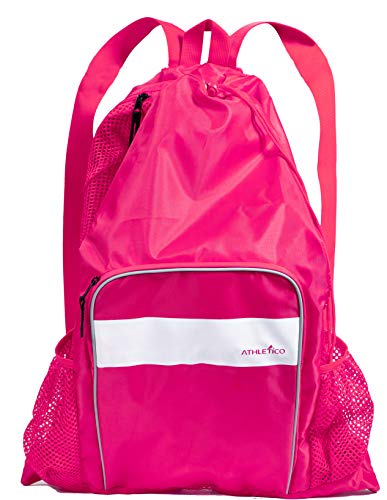 Best Budget Mesh Bag: Athletico Mesh Swim Bag |
| Check price on Amazon |
Key takeaways
- Compare the best pool backpacks for swim practice, lessons, and team days, with help on capacity, wet and dry storage, comfort, and durability.
Table of Contents
- Best Pool Backpacks for Swimmers and Swim Team Days
- Quick Answer
- What Makes a Pool Backpack Different
- How Much Capacity Do You Need
- Wet and Dry Separation
- Comfort, Straps, and Carry
- Materials and Pool-Deck Durability
- Best Overall Swim Pack: Nike Swim Repel Backpack 35L
- Best Premium Organizer: Arena Fastpack 3.0 Backpack 40L
- Best Mesh Team Bag: TYR Elite Team Mesh Backpack 40L
- Best Budget Mesh Bag: Athletico Mesh Swim Bag
- Best Budget Drawstring Pack: HOHOM Mesh Swim Bag
- Which Pool Backpack Fits Your Swim Routine
- Packing and Care Tips
- Frequently Asked Questions
- Conclusion
- Product and ASIN Reference
As an Amazon Associate, we earn from qualifying purchases.
Quick Answer
The best pool backpack for most swimmers is a pack with a roomy main compartment, a separate place for wet gear, padded straps, and a water-resistant base that can sit on a wet pool deck without soaking through. A capacity between 35 and 40 liters covers a towel, a suit, goggles, a cap, a water bottle, and a small set of training tools for a regular practice or swim lesson. Larger training loads with fins, a kickboard, and a pull buoy call for a 40-liter pack or a mesh bag that can swallow bulky gear without a fight.
This guide covers five pool backpacks that take different approaches to the same job. The Nike Swim Repel Backpack leads with a structured 35-liter design, a wide top opening, and lined pockets that protect goggles and a phone. The Arena Fastpack 3.0 works like a mobile locker, with a closet-style opening, a bottom compartment for wet gear or shoes, and a padded back panel. The TYR Elite Team Mesh Backpack keeps things light and airy, with a ventilated mesh body that lets wet gear drain and dry. The Athletico Mesh Swim Bag is a simple, tough drawstring pack for swimmers who want a light bag that dries fast. The HOHOM Mesh Swim Bag is a roomy 40-liter drawstring option for swimmers who carry a full load on a tight budget.
Every swimmer packs differently, so the right choice depends on how much gear you carry, how far you walk with the bag, and whether you need wet and dry separation or maximum airflow. The sections below explain what to look for, then walk through each pack in detail so you can match the bag to your routine.
What Makes a Pool Backpack Different
A regular backpack is built for books, a laptop, and dry clothes. A pool backpack is built for a damp swimsuit, a wet towel, goggles that scratch easily, and a deck that is always a little wet. That difference shows up in the materials, the layout, and the way the bag handles water. Pool backpacks use water-resistant fabrics, coated bases, mesh panels, and separate wet compartments so that damp gear does not soak everything else in the bag.
The opening matters more at the pool than it does at school or work. A wide top opening or a full-length zip lets you reach a kickboard, a towel, or a pair of fins without emptying the whole bag onto a bench. A narrow opening turns every practice into a digging exercise. The best pool backpacks open wide and stay open while you pack, so you can load bulky training tools first and tuck small items into pockets afterward.
Pockets are the other big difference. A pool backpack needs a lined pocket for goggles, a safe spot for a phone and keys, side pockets for a water bottle, and a wet pocket or a removable wet bag for a damp suit. Without those pockets, small gear ends up loose in the main compartment, where goggles get scratched and caps get lost. A good layout keeps the small, fragile, and wet items apart from the big, soft items like towels and dry clothes.
Durability is tested every day at the pool. A pool backpack gets set down on rough concrete, splashed with chlorinated water, stuffed with wet gear, and hung on a hook by one strap. Seams, zippers, and strap stitching take more punishment than they do in a school bag. Look for reinforced stitching, sturdy zippers, a coated or rubberized base, and straps that stay comfortable when the bag is fully loaded. A bag that survives one season is not enough; a good pool backpack should last through many months of regular sessions.
How Much Capacity Do You Need
Capacity is measured in liters, and the number tells you how much the bag can hold, not how well it is organized. A 35-liter pack is the sweet spot for most swimmers. It holds a towel, a suit, goggles, a cap, a water bottle, a snack, and a change of clothes without feeling oversized on your back. Swimmers who travel light for lessons or lap swimming often find that 35 liters is more than enough, and the bag still fits in a standard locker.
A 40-liter pack suits swimmers who carry training tools. Fins, a kickboard, a pull buoy, hand paddles, and a snorkel take up a surprising amount of room, and a 40-liter main compartment gives those tools a home without forcing you to strap things to the outside. Competitive swimmers, swim team members, and triathletes who train with a full set of tools should lean toward 40 liters or more. A mesh bag in the same size range feels roomier than a structured pack because the soft body stretches around bulky items, which helps when a kickboard is wider than the bag looks.
Smaller swimmers and younger team members should be careful with oversized packs. A 40-liter bag that is taller than the swimmer carrying it will bounce, pull backward, and make the walk from the locker room to the pool deck harder than it needs to be. For children and smaller adults, a compact 35-liter pack or a light mesh bag is easier to carry and easier to store. The right size is the smallest bag that still holds everything you need, because a bag that is too big invites you to overfill it.
Think about the rest of your routine as well. If you walk or cycle to the pool, a compact pack with padded straps and a chest strap is more comfortable than a tall mesh bag that swings. If you drive and the bag lives in the car between sessions, a larger pack with more pockets is a better fit. If you share a crowded team bench, a pack that stands upright on its own is easier to live with than one that flops over and spills.
Wet and Dry Separation
Wet and dry separation is the single most useful feature in a pool backpack. A damp swimsuit or a wet towel will soak through dry clothes, a paperback, or a phone case if everything shares one compartment. A separate wet pocket, a waterproof compartment, or a removable wet bag keeps the damp gear contained so the rest of your load stays dry. The best designs put the wet section at the bottom or in its own zippered pocket, so water drains away from dry items instead of pooling around them.
Mesh bags solve the same problem in a different way. Instead of sealing wet gear away, a mesh body lets water drain out and air circulate, so gear begins drying as soon as you leave the pool. This works well for training tools, fins, and kickboards that are already wet and need airflow more than they need a waterproof seal. The trade-off is that a mesh bag will drip on the way to the car, so it suits swimmers who carry a separate dry bag for clothes and valuables, or who do not mind a little dripping on the walk out.
Solid packs with wet compartments suit swimmers who carry electronics, dry clothes, and a towel in the same bag. The wet pocket holds the suit and the damp towel, while the main compartment stays dry for everything else. Check that the wet pocket is lined with a waterproof material and that it closes with a zip rather than an open mesh panel, because an open wet pocket will still leak into the main compartment. A removable wet bag is a bonus, since you can pull it out, empty it, and hang it to dry without unpacking the whole pack.
Whatever design you choose, empty the wet section after every session. Even a well-ventilated bag will develop odors if a damp suit sits in it for days. Hang the bag open, turn mesh pockets inside out if you can, and let everything dry before the next session. A bag that dries fast lasts longer and smells better, and it is ready to pack without a second thought.
Comfort, Straps, and Carry
A pool backpack is carried wet, which means it is heavier on the way home than it was on the way in. Padded shoulder straps make that return trip far more comfortable, especially when the bag holds fins, a kickboard, and a full water bottle. Look for straps that are wide, padded, and adjustable, with a shape that sits flat on the shoulders instead of digging in. A chest strap or sternum strap helps spread the load and keeps the straps from sliding off your shoulders when you walk.
The back panel matters just as much as the straps. A padded back panel with airflow channels keeps the bag from pressing hard against your back and lets air move behind you on a warm day. A flat, unpadded back panel is fine for a light mesh bag, but a structured pack with a hard or lumpy load needs padding to stay comfortable. Some packs add a foam back panel with a shaped profile that follows the curve of the back, which is a welcome touch on a long walk from the car park to the pool.
A top handle is a small feature that earns its keep every session. You will grab the bag by the handle to lift it onto a bench, hang it on a hook, or pull it out of a locker, and a sturdy handle makes all of those moves easier. A bag with only thin straps and no handle is awkward to carry in one hand. Side handles or a grab loop on the front can help too, but the top handle is the one you will use most.
Weight matters before you load the bag. A heavy structured pack begins at a disadvantage, because every extra ounce of bag is an ounce you carry on top of your gear. Mesh bags win on weight, often weighing far less than a structured pack of the same capacity. If you walk a long way to the pool or you are buying for a younger swimmer, a light bag is worth more than extra pockets. If you drive and the bag mostly sits on a bench, a heavier pack with better organization is a fair trade.
Materials and Pool-Deck Durability
Pool decks are hard on bags. Chlorinated water, rough concrete, and constant dampness wear out cheap fabric fast. The best pool backpacks use polyester or nylon shells with a water-resistant coating, a reinforced base, and mesh that resists tearing. Polyester is a common choice because it holds up well to chlorine, dries quickly, and keeps its shape. Nylon is tougher and more abrasion resistant, which suits packs that get dragged across concrete or stuffed into crowded lockers.
The base of the bag deserves special attention. A rubberized or coated base stands up to wet concrete and keeps water from soaking up into the main compartment when you set the bag down. A fabric base with no coating will wick water upward and leave the bottom of your towel damp. Some packs add a waterproof bottom panel or a tarpaulin-style base that sheds water completely. If you always set your bag on a wet deck, this feature is worth prioritizing over extra pockets.
Zippers are the most common failure point on a swim bag. A zipper that sticks when it is wet or sandy will frustrate you every session, and a zipper that splits will end the bag’s life early. Look for chunky zippers with large pulls that are easy to grip with wet hands. Mesh panels should be tightly woven and reinforced at the edges, because a thin mesh will snag on a kickboard or a fin and tear. Reinforced stitching at the strap attachments is another sign of a bag built to last, since straps carry the full weight of a wet load.
Care is simple but it matters. Rinse the bag with fresh water after sessions when you can, especially if it has been sitting in a puddle of chlorinated water. Hang it open to dry instead of zipping it shut and tossing it in a closet. A bag that dries between sessions resists odors and keeps its fabric and zippers in better condition. With basic care, a well-made pool backpack should handle a full season of regular use without falling apart.
Best Overall Swim Pack: Nike Swim Repel Backpack 35L
- Capacity: 35 liters
- Dimensions: 21 x 13 x 4 inches
- Material: Polyester with a water-resistant finish
- Closure: Zipper with a wide-mouth top opening
The Nike Swim Repel Backpack is a structured 35-liter pack built for swimmers who want a proper backpack rather than a sack. It opens from the top with a wide mouth, so you can load a towel, a suit, and training tools without folding everything into a narrow slot. The water-resistant polyester shell sheds splashes from the deck, and the coated base gives the bag a stable footing when you set it down beside the pool. It is the kind of pack that works as well for a daily lap session as it does for a team practice, because it carries like a normal backpack and organizes like a swim bag.
Inside, the layout is straightforward and practical. The large main compartment holds the bulky items, while lined pockets protect goggles and a phone from scratches. A wet pocket keeps a damp suit away from dry clothes, and versatile side pockets hold water bottles of different shapes. The 3D foam back panel adds comfort on the walk to the pool, and the adjustable ergonomic straps let you tune the fit whether the bag is full or half empty. At 35 liters, it is big enough for a full practice load and small enough to fit in a standard locker without a struggle.
The dimensions are 21 x 13 x 4 inches, which gives the pack a tall, slim profile that sits well on the back. That shape suits swimmers who walk or cycle to the pool, because the bag stays close to the body instead of sticking out sideways. The zipper closure keeps everything secure, and the single main compartment means there is no learning curve: you open the top, pack your gear, and go. Swimmers who like a simple, reliable routine will appreciate that there is nothing fiddly about this bag.
What sets this pack apart from a generic sports backpack is the swim-specific detailing. The wet pocket, the lined goggle pocket, and the water-resistant shell all address real pool problems, and the wide top opening solves the packing frustration that comes with a narrow bag. It is a mid-range pack that covers the essentials without adding compartments you will never use. For a swimmer who wants one bag for practice, lessons, and the occasional swim meet, this is a strong all-round choice that balances capacity, comfort, and durability.
This pack also suits swimmers who carry a laptop or a book alongside their gear, because the lined pockets and the structured shape protect flat items better than a soft mesh bag. The padded back panel and the adjustable straps make a full load comfortable, and the water-resistant base means you can set the bag on a wet deck without worrying about the bottom of your towel. If your routine includes a stop at the gym or a walk across a large facility, the backpack-style carry is more comfortable than a drawstring sack over the same distance.
One point to note is that the slim profile rewards careful packing. A kickboard and a pair of long fins will fit, but they need to go in first, with softer items packed around them. Swimmers who carry a very large set of training tools may prefer a 40-liter pack or a mesh bag with a more forgiving shape. For most swimmers, though, the 35-liter capacity hits the right balance, and the structured design keeps the load stable on your back. It is a dependable daily pack that does the basics very well.
Best Premium Organizer: Arena Fastpack 3.0 Backpack 40L
- Capacity: 40 liters
- Dimensions: 21.62 x 15.72 x 11.79 inches
- Material: Mostly nylon with a polyester blend and a water-resistant finish
- Closure: Zipper with a closet-style opening and carabiner hook
The Arena Fastpack 3.0 is a 40-liter pack that works like a mobile locker for swimmers and triathletes. Its signature feature is a closet-style opening: the main compartment opens wide and the pack can hang from a carabiner hook, so you can see all of your gear at a glance instead of digging through a dark tube. That opening changes the way you pack and unpack, because everything is visible and reachable, from the towel at the bottom to the goggles in the front pocket.
The bottom compartment is the other highlight. A separate zippered section at the base holds wet clothes or shoes, keeping them apart from dry gear in the main compartment. This is the feature that competitive swimmers ask for most, because a wet suit and damp shoes are the two items that cause the most trouble in a shared bag. The water-resistant fabric and the coated base add to the pool-deck toughness, and the airflow back panel keeps the pack comfortable on the walk from the locker room to the lanes.
Organization is generous without being confusing. Several front pockets hold small items, a mesh compartment keeps accessories in view, and side pockets take a water bottle. The padded shoulder straps and the front chest buckle spread the load, which matters when a 40-liter pack is fully loaded with fins, a kickboard, and a pull buoy. The pack is built from a nylon blend that resists abrasion, so it holds up to concrete benches, locker doors, and the daily grind of team training.
At 40 liters, the Fastpack 3.0 is aimed at swimmers who carry a full training set. The dimensions are 21.62 x 15.72 x 11.79 inches, which gives it a taller, deeper shape than a 35-liter day pack. That extra room is what lets you carry fins and a kickboard inside the bag rather than strapped to the outside. The trade-off is that the pack is bigger on your back, so it suits adult swimmers and older team members better than younger children. If you train with a lot of tools, the extra capacity is worth the size.
The closet-style opening also helps at swim meets, where you need to find gear quickly between events. Instead of emptying the bag onto a crowded bench, you hang the pack, open it wide, and pull out what you need. The carabiner hook is a simple idea that works well in practice, and the separate wet compartment means you can toss a damp suit in at the end of the day without repacking the whole bag. It is a premium pack, and the design shows it in the details.
For swimmers who want the most organized pool backpack available, the Fastpack 3.0 is hard to beat. It costs more than a simple mesh bag, but it replaces the need for a separate wet bag and a separate gear sack, because the compartments do that job inside one pack. If you swim several times a week, compete regularly, or carry a laptop alongside your training gear, the organization and the durable build justify the step up. It is the pack for swimmers who treat their gear seriously and want a bag that keeps up.
Best Mesh Team Bag: TYR Elite Team Mesh Backpack 40L
- Capacity: 40 liters
- Dimensions: 24 x 17 inches
- Material: Polyester mesh with a ventilated body
- Closure: Barrel-lock top closure
The TYR Elite Team Mesh Backpack is a 40-liter mesh pack built for swimmers who want maximum airflow and minimum weight. The mesh body lets water drain out and air circulate, so fins, a kickboard, paddles, and a pull buoy begin drying the moment you leave the water. That ventilation is the main reason team swimmers reach for a mesh bag: wet training tools dry faster, odors stay down, and the bag itself stays light even when it is fully loaded.
The design is simple and proven. A barrel-lock closure at the top cinches the main compartment shut, while a front zipper pocket holds small items like a cap, a lock, or a phone. A side water bottle pocket keeps a bottle within reach, and external gear loops give you a place to clip accessories. The shoulder straps are adjustable, and the mesh body flexes around bulky gear, so a kickboard that looks too wide for the bag still fits. At 40 liters, it swallows a full training set without a struggle.
Measuring 24 inches high and 17 inches wide, the pack is tall enough for long fins and a kickboard, and the open mesh makes it easy to see what is inside. That visibility is a small but real advantage at a crowded team bench, where you need to grab a specific tool without unpacking everything. The polyester mesh is durable for its weight, and the reinforced base and trim help the bag hold its shape when it is loaded. It is a bag that prioritizes function over structure, and it does that job well.
Mesh bags suit swimmers who carry wet training tools as their main load. If your bag is mostly fins, a kickboard, and a pull buoy, the mesh design is ideal, because those items are already wet and need to dry, not to be sealed away. The trade-off is that a mesh bag will drip on the way to the car, and it will not protect a phone or dry clothes from a damp towel unless you use the zippered pocket or a separate dry pouch. Swimmers who pair this bag with a small dry bag for valuables get the best of both designs.
This pack is a mid-range option that punches above its weight for team use. It is light enough for younger swimmers to carry comfortably, roomy enough for a full set of tools, and tough enough for daily practice. The barrel-lock closure is easy to operate with wet hands, and the mesh dries quickly between sessions, which keeps the bag fresh. For a swimmer who wants a dedicated training bag that breathes, the Elite Team Mesh is a practical and durable choice.
Best Budget Mesh Bag: Athletico Mesh Swim Bag
- Capacity: Medium, fits a full set of swim gear
- Dimensions: 24 x 17 inches
- Material: Quick-dry coated mesh with reinforced stitching
- Closure: Drawstring with adjustable backpack straps
The Athletico Mesh Swim Bag is a straightforward drawstring pack for swimmers who want a light, tough bag that dries fast and costs little. The medium size measures 24 x 17 inches, which is roomy enough for a towel, a suit, goggles, a cap, and a set of training tools, yet the bag itself weighs almost nothing. The quick-dry mesh is coated for extra durability, and the reinforced stitching helps the bag survive being stuffed, dragged, and hung by its straps day after day.
The drawstring closure is the whole point of this bag: open it wide, drop your gear in, pull the cords, and go. There is no zipper to jam with sand or chlorine, and no rigid frame to fight when you pack a kickboard. The adjustable backpack straps let you carry the bag on your back, and an external pocket gives you a place for small items. The heavy-duty mesh drains water fast, so the bag begins drying as soon as you pick it up, and the open weave lets air reach every item inside.
This bag suits swimmers who want a second bag as much as a first one. It works as a gear hauler for training tools, a beach bag for a family swim day, or a lightweight option for lessons when a structured pack would be overkill. Younger swimmers like it because it is light and easy to carry, and parents like it because it is simple to clean: rinse it, hang it open, and it is ready for the next session. The tear-resistant fabric and the webbing straps are built for that kind of regular use.
The trade-offs are the ones that come with any drawstring mesh bag. There is no padded back panel, no wet and dry separation beyond the mesh itself, and no lined pocket for goggles, so you will want a small case for fragile items. The bag will drip after a swim, so it is best paired with a dry pouch for a phone and dry clothes. Those are fair compromises at this level, because the bag does its main job, carrying wet gear and letting it dry, very well.
For the budget tier, the Athletico Mesh Swim Bag is hard to fault. It holds a full load, dries quickly, weighs very little, and stands up to daily use. Swimmers who want a simple bag for practice, lessons, or the beach will find it does everything they need without extra features they will never use. It is the bag to buy when you want to spend less and still get a dependable pool companion.
Best Budget Drawstring Pack: HOHOM Mesh Swim Bag
The HOHOM Mesh Swim Bag is a roomy 40-liter drawstring backpack for swimmers who carry a lot of gear and want a simple bag to do it. The mesh body breathes, drains, and dries quickly, which makes it a natural fit for wet towels, suits, fins, and kickboards. The drawstring closure opens wide for easy loading, and the backpack straps let you carry a full load hands-free from the car to the pool deck. It is a no-fuss bag that focuses on capacity and airflow.
At 40 liters, this bag holds more than most drawstring packs. The dimensions are 19 x 23 x 6.5 inches, which gives it a tall shape that fits fins and a kickboard without forcing them in sideways. The mesh panels let you see what is inside, so you can find goggles or a cap without emptying the bag. The waterproof base material on the lower section adds a little protection where the bag meets a wet deck, and the lightweight build means the bag itself adds almost nothing to the load.
The drawstring design keeps the bag simple and reliable. There are no zippers to jam, no rigid panels to crack, and no complicated compartments to learn. You open the top, load your gear, pull the cords tight, and the bag is ready to carry. That simplicity suits swimmers who pack the same kit every session and want a bag that never gets in the way. It also suits families, because the same bag works for a swim lesson, a beach day, or a trip to the gym.
Like other mesh bags, this one is best used with a small dry pouch for a phone, keys, and dry clothes, because the mesh will let water through. The bag will drip on the way home, so a towel over the car seat or a plastic liner is a sensible habit. Those are normal trade-offs for a mesh drawstring bag, and they are easy to live with when the bag itself is light, roomy, and easy to clean. Rinse it after use, hang it open, and it dries fast.
For swimmers on a budget who need real capacity, the HOHOM Mesh Swim Bag is a strong pick. It gives you 40 liters of breathable storage, a comfortable backpack carry, and a tough mesh build at a budget tier. It is the bag for swimmers who carry a full training load and want a simple, airy pack that dries quickly between sessions.
Specs
- Capacity: 40 liters
- Dimensions: 19 x 23 x 6.5 inches
- Material: Mesh with a waterproof base section
- Closure: Drawstring with backpack straps
- Tier: Budget
- ASIN: B0DRRW72BD
Which Pool Backpack Fits Your Swim Routine
Begin with how much you carry. If your kit is a towel, a suit, goggles, and a cap, the Nike Swim Repel Backpack at 35 liters is the most comfortable and organized choice, because its structured shape and lined pockets protect the small items. If you add fins, a kickboard, and a pull buoy, move up to a 40-liter pack. The Arena Fastpack 3.0 gives you that capacity with the best organization, while the TYR Elite Team Mesh Backpack gives you the same capacity with the best airflow and the lightest carry.
Think about wet gear next. Swimmers who carry dry clothes, a phone, and a towel in the same bag need real wet and dry separation, and that points to the Nike pack or the Arena pack, both of which keep damp items apart from dry ones. Swimmers who carry mostly training tools can choose a mesh bag instead, because fins and kickboards need airflow more than they need a waterproof pocket. The TYR, Athletico, and HOHOM bags all excel here, and the choice between them comes down to capacity, straps, and how much structure you want.
Consider who carries the bag. Adult swimmers and older team members can handle a full 40-liter structured pack without trouble, and they will appreciate the organization and the padded straps. Younger swimmers and smaller adults do better with a lighter bag, and a mesh pack or a compact 35-liter pack is easier to carry and easier to store in a school locker. If the bag is for a child, let them try the straps and the weight before you settle, because a bag that fits an adult will not always fit a younger swimmer.
Think about the rest of your week as well. A swimmer who goes to the pool daily needs a bag that dries fast between sessions, which favors mesh or a pack with a ventilated back panel. A swimmer who goes once a week can choose a heavier structured pack without worrying about drying time. A swimmer who competes needs quick access to gear between events, which favors the Arena pack with its wide opening. A swimmer who walks a long way to the pool needs padded straps and a comfortable back panel, which favors the Nike and Arena packs over a bare drawstring sack.
Budget is the last filter, not the first. A budget mesh bag is a fine choice for lessons, beach days, and light training, and the Athletico and HOHOM bags prove that a low-cost bag can still be durable and roomy. A mid-range pack is worth the step up if you swim several times a week and want better straps, better pockets, and a longer life. A premium pack is worth it if you compete, carry a full training set, or want the most organized bag available. Match the bag to the routine first, then let the tier follow.
Packing and Care Tips
Pack heavy and bulky items first. Fins, a kickboard, and a pull buoy go into the main compartment before anything else, because they set the shape of the load and everything else packs around them. Put the towel in next, then the suit, then the small items in their pockets. Goggles go in a lined pocket or a hard case, never loose at the bottom of the bag where they can get scratched by a fin or a zipper. A phone and keys go in a zippered pocket, away from anything damp.
Use the wet pocket or a separate wet bag for the damp suit and towel at the end of a session. Wring the suit out before it goes in the bag, and do not leave a soaking towel in a sealed compartment for hours, because trapped water is what causes odors. If your bag is mesh, let it drip for a minute on the deck before you carry it to the car, and keep a spare towel in the car for the seat. Small habits like these keep the bag fresh and keep your car dry.
Clean the bag regularly, but gently. Rinse it with fresh water after sessions when you can, especially after it has been sitting in chlorinated water. A mild soap and a soft brush will handle most marks on the shell, and a rinse will clear sand and grit from mesh panels. Avoid harsh cleaners and high heat, which can damage coatings and weaken mesh. Hang the bag open to dry, with the pockets unzipped, so air reaches every part. A bag that dries fully between sessions lasts longer and smells better.
Store the bag open and dry between sessions. Do not zip a damp bag shut and leave it in a closet or a car boot for days, because that is how mildew sets in. If you swim daily, consider rotating two bags so one can dry fully while you use the other. Check the straps and zippers now and then, and tighten any loose stitching before it becomes a tear. A little care goes a long way with a pool backpack, and the bags in this guide are built to reward it.
Frequently Asked Questions
What size pool backpack do I need for swim practice?
A 35-liter pack covers a towel, a suit, goggles, a cap, a water bottle, and a change of clothes for most swimmers. Move up to 40 liters if you carry fins, a kickboard, a pull buoy, and hand paddles, because training tools take up far more room than they look like they should. Younger swimmers should stay with a compact pack that fits their frame, even if it means packing a little lighter.
Are mesh pool backpacks better than solid ones?
Mesh bags are better for wet training tools, because the open weave lets water drain and air circulate, so gear dries faster and odors stay down. Solid packs are better when you carry dry clothes, a phone, and a towel in the same bag, because a wet pocket or a waterproof compartment keeps damp gear away from dry items. Many swimmers own one of each and use the mesh bag for training and the solid pack for meets and travel.
How do I keep a wet swimsuit from soaking everything in my bag?
Use a separate wet pocket, a waterproof compartment, or a removable wet bag for the damp suit, and wring the suit out before it goes in. Do not pack a soaking towel next to dry clothes, and empty the wet section as soon as you get home. Hang the bag open to dry, and let the suit dry separately rather than leaving it sealed in the bag overnight.
Can a pool backpack hold a kickboard and fins?
A 40-liter pack or a tall mesh bag can hold a standard kickboard and a pair of fins, but you need to load them first and pack softer items around them. A 35-liter structured pack can also work if the fins are short, but long fins may stick out of the top. Measure your longest tool against the height of the bag before you buy, and favor a tall mesh bag if you carry the largest fins.
Conclusion
The best pool backpack is the one that matches how you swim. For most swimmers, the Nike Swim Repel Backpack is the strongest all-round choice, with a 35-liter capacity, a wide top opening, lined pockets, and a comfortable padded carry. Swimmers who want the most organization should look at the Arena Fastpack 3.0, whose closet-style opening and bottom wet compartment turn a 40-liter pack into a mobile locker. Swimmers who train with a full set of tools will love the airflow and light weight of the TYR Elite Team Mesh Backpack, while budget buyers get real capacity and fast drying from the Athletico Mesh Swim Bag and the HOHOM Mesh Swim Bag.
Capacity, wet and dry separation, comfort, and durability are the four things that matter, and each bag in this guide handles them in a different way. Choose the capacity that fits your gear, choose the wet and dry design that fits your load, and choose straps and a back panel that stay comfortable on the walk home. With the right bag, packing for the pool becomes a quick routine instead of a daily struggle, and your gear stays organized, dry where it should be dry, and ready for the next session.
Product and ASIN Reference
| Product | ASIN |
|---|---|
| Nike Swim Repel Backpack 35L | B0CZ13B1HC |
| Arena Fastpack 3.0 Backpack 40L | B0B1QG8KPL |
| TYR Elite Team Mesh Backpack 40L | B08915N83P |
| Athletico Mesh Swim Bag | B07C38W4XX |
| HOHOM Mesh Swim Bag | B0DRRW72BD |
More from Amazon
Programs that pair well with the guide above. Offers and eligibility are set by Amazon and may change.
Free shipping on eligible items, Prime Video and more. Eligible new members can start with a free trial.
Start a Prime free trialA Prime membership for ages 18-24 with a trial period. Eligibility is set by Amazon.
See Prime for Young AdultsAudiobooks and podcasts to listen to on the go. Eligible new members can start with a free trial.
Try Audible freeAd-free music streaming. Eligible new subscribers can start with a free trial.
Try Music Unlimited freeAs an Amazon Associate we earn from qualifying purchases.