Our Short List of 3

- Product type: analog floating pool thermometer
- Display: easy-read temperature scale in Fahrenheit and Celsius
- Power: none required, no battery and no solar panel
- Housing: floating design with tether cord for the pool ladder
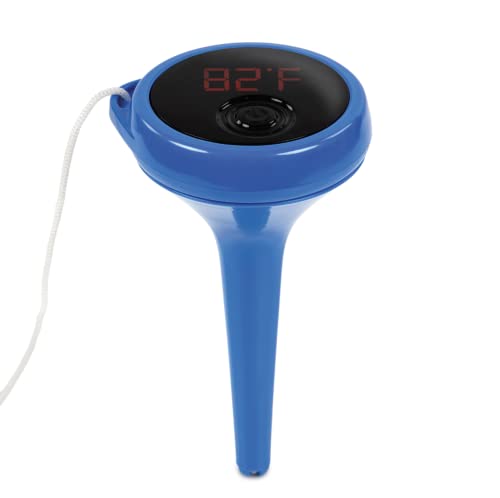
- Product type: digital floating pool thermometer
- Display: large easy-read digital display
- Power: battery powered for use in sun, shade, and under a pool cover
- Housing: floating design with string tether
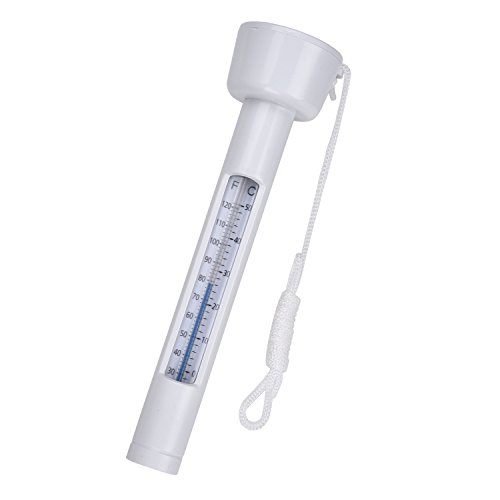
- Product type: large analog floating pool thermometer
- Display: large floating thermometer scale, easy to read from the poolside
- Power: none required, no battery and no solar panel
- Housing: fully sealed integrated structure for reliable water immersion
All 4 Picks at a Glance
| Product | Specs | Action |
|---|---|---|
| Intex Floating Pool Thermometer |
| Check price on Amazon |
| Milliard Digital Floating Pool Thermometer |
| Check price on Amazon |
| eLander Pro Large Floating Pool Thermometer |
| Check price on Amazon |
 DeeprBlu Floating Solar Pool Thermometer |
| Check price on Amazon |
Key takeaways
- Find the best pool thermometers for pools, spas, and hot tubs. Compare floating, digital, and solar models to keep your water comfortable and safe.
The best pool thermometer is the GAME Solar Digital Floating Pool and Spa Thermometer, because it pairs a large, easy-to-read digital display with solar power, so there is no battery to replace and the reading stays visible from the pool deck. If you prefer a simple, no-battery analog option, the Intex Floating Pool Thermometer is a dependable budget pick, while the Milliard Digital Floating Pool Thermometer suits swimmers who want a clear digital readout without a solar panel. Every thermometer in this guide floats on the water surface, reads pool and spa water, and is built to live outdoors in chlorinated water.
As an Amazon Associate, we earn from qualifying purchases.
Table of Contents
- Why a Pool Thermometer Matters
- Types of Pool Thermometers
- How to Choose a Pool Thermometer
- GAME Solar Digital Floating Pool and Spa Thermometer
- Intex Floating Pool Thermometer
- Milliard Digital Floating Pool Thermometer
- eLander Pro Large Floating Pool Thermometer
- DeeprBlu Floating Solar Pool Thermometer
- Which Pool Thermometer Fits Your Pool
- Care and Maintenance
- Frequently Asked Questions
- Conclusion
- Product and ASIN Reference
Why a Pool Thermometer Matters
Water that feels fine to a hand can still be too cold for young children, too warm for safe exercise, or far from the range where sanitizer works best. A pool thermometer removes the guesswork. It gives you a number you can act on before anyone gets in, whether you are opening the pool for the season, checking a spa before an evening soak, or deciding whether the heater needs more time.
Comfort is the most obvious reason to measure. Most swimmers find pool water comfortable in a fairly narrow band, and small differences matter more than they seem. Water a few degrees below that band feels bracing at first and can chill small children quickly, while water a few degrees above it can feel heavy and tiring during laps. A thermometer lets you set the heater once and confirm the result, instead of adjusting by feel and hoping for the best.
Safety is the second reason. Infants, toddlers, and older adults lose body heat faster than healthy adults, and long soaks in a hot spa carry their own risks. Knowing the actual temperature helps you keep swim sessions reasonable and spa sessions short. For families with a backyard pool, a floating thermometer also doubles as a visual reminder: if the thermometer is in the water, the water has been checked.
Water chemistry is the third reason, and it is the one pool owners overlook most often. Chlorine and other sanitizers work within a temperature window, and test readings make more sense when you know how warm the water is. Warm water also uses sanitizer faster, so a thermometer reading helps explain why chlorine demand climbs in midsummer. Pool service guides consistently tie temperature to sanitizer performance, algae growth, and heater efficiency, which is why a thermometer belongs next to the test kit rather than in a drawer.
Finally, a thermometer protects your equipment. Running a heater against a faulty thermostat wastes energy, and freezing overnight temperatures can damage pumps, filters, and plumbing. A quick glance at a floating thermometer in the morning tells you whether the water stayed above the danger zone after a cold night. For above-ground pools and spas, that single reading can be the difference between a normal start to the day and a repair bill.
Types of Pool Thermometers
Pool thermometers come in a few distinct designs, and each one suits a different kind of pool owner. Understanding the types first makes the product list below much easier to navigate.
Analog floating thermometers are the classic design. A sealed tube or dial sits inside a floating housing, often shaped like a turtle, fish, duck, or simple disc, with a cord or string for tethering it to the pool ladder or skimmer. They need no battery, they are easy to read at arm’s length, and they keep working season after season with almost no maintenance. Their main limitation is readability: the scale is small, and the numbers can be hard to read from the deck or in low light.
Digital floating thermometers replace the tube with an electronic sensor and a liquid-crystal display. The numbers are larger and easier to read, and many models switch between Fahrenheit and Celsius at the touch of a button. They run on small batteries, so they need an occasional battery change, and the display can be harder to read in very bright direct sun. For most families, the trade is worth it: a digital readout ends all squinting at a tiny scale.
Solar digital floating thermometers add a small solar panel to the digital design. The panel powers the display in daylight, which removes the battery from the equation during the swim season. These are the most convenient option for pools that get regular sun, and they tend to have the largest displays of any floating type. Their weakness is shade: a thermometer that spends the day under a pool cover or in a heavily shaded corner will not charge well, so they suit sunny, uncovered pools best.
Pocket and probe thermometers are a different category altogether. They are handheld instruments with a metal probe that you dip into the water for a spot reading. Pool service technicians favor them for accuracy checks, and they are useful for testing water at different depths or in different corners of the pool. They are not designed to float unattended, so they work better as a second instrument than as your only thermometer.
Wireless and smart thermometers are the newest option. A floating sensor transmits the water temperature to an indoor display or a phone app, so you can check the pool from the kitchen. They are appealing for anyone who heats a pool or spa on a schedule, but they cost more and add batteries and wireless setup to a simple job. For most backyard pools, a floating thermometer on the water is all that is needed.
How to Choose a Pool Thermometer
Choosing a pool thermometer is mostly about matching the design to your pool, your eyesight, and your habits. The points below cover what matters and what can be ignored.
Accuracy comes first. A pool thermometer should read within a degree or two of the true water temperature. Analog models can drift if the tube is damaged or the housing fogs, while digital models can drift if the sensor seal fails. Look for models with a reputation for steady readings, and check a new thermometer against a known reference, such as a kitchen thermometer in a bucket of pool water, before trusting it for the season.
Readability comes second. If you cannot read the thermometer from the deck, you will stop using it. Large displays and bold numbers matter, especially for older swimmers and anyone checking the water before a morning swim. Digital models usually win here, and solar digital models usually have the largest displays of all. Analog models with oversized numbers close the gap, but small dials remain hard to read at a distance.
Durability matters because a pool thermometer lives in chlorinated water under direct sun. Look for a shatter-resistant casing and a sealed housing that keeps water out of the display or tube. A thermometer that fogs, cracks, or leaks after one season is a false economy. Tethering also helps durability: a thermometer tied to the ladder cannot drift into the skimmer or get stepped on at the pool edge.
Power source is a practical question. Analog models need no power at all, which makes them the most reliable option for a pool that sits unused for weeks. Battery digital models need an occasional battery change, so check whether the battery compartment is easy to open and reseal. Solar models need sun, so they suit pools that are uncovered during the day and struggle in shaded or covered pools.
Compatibility with your water type is worth a check. Most floating thermometers are rated for chlorine and saltwater pools, as well as spas and hot tubs, but it is worth confirming before buying. Salt systems are harder on seals and housings than traditional chlorine, so a thermometer that is explicitly rated for saltwater use is a safer choice for a salt pool.
Size and tethering round out the list. A large floating thermometer is easier to spot and harder to lose, while a small one is easier to store. A tether cord or string lets you keep the thermometer near the ladder instead of drifting to the far end of the pool. If your pool has a cover, check that the thermometer can stay in the water under it or be removed easily each evening.
What does not matter much is decoration. Floating thermometers shaped like animals are popular with children, and that is a genuine benefit for a family pool, but the shape has nothing to do with accuracy. Choose the design your family will actually leave in the water, and judge it on its reading, its display, and its seal.
GAME Solar Digital Floating Pool and Spa Thermometer
The GAME Solar Digital Floating Pool and Spa Thermometer is the strongest all-around pick in this guide. It is a solar-powered digital thermometer with a large display, built to float in pools and spas and to be read at a glance from the deck. GAME has sold pool thermometers for years, and this solar digital model is the one that best balances readability, convenience, and durability for a typical backyard pool.
The headline feature is the solar panel. It powers the digital display in daylight, so there is no battery to buy, install, or replace during the swim season. That matters more than it sounds: battery compartments are the most common failure point on digital pool thermometers, because a seal that is opened and closed eventually lets water in. A solar design removes that cycle entirely. In a sunny, uncovered pool, the thermometer stays powered all day and the display stays on whenever you look at it.
The large digital display is the second reason this model leads the guide. The numbers are bold and easy to read from the pool edge, which is the whole point of a floating thermometer. There is no squinting at a thin tube or guessing between small tick marks. The display is also a decorative element: the housing has a clean, finished look that suits a backyard pool without looking like a piece of test equipment.
Build quality is in line with the GAME pool line. The casing is shatter-resistant, which matters for a device that gets bumped against the pool wall, handled by children, and stored in a skimmer basket over winter. It is designed for chlorine and saltwater pools, as well as spas and hot tubs, so one thermometer can cover the whole backyard. The floating housing keeps the sensor at the right depth and the display above the waterline, where it can be read without lifting the unit out.
There are two limits to know about. The first is shade: like every solar device, this thermometer needs sunlight to power the display, so a heavily shaded pool or a pool that stays covered will not keep it running at its best. The second is that a solar digital thermometer is still an electronic device in water, so it should be brought in before freezing weather and stored dry over winter. Neither limit is unusual, and both are easy to manage with a tether and a storage routine.
For a sunny backyard pool, this is the thermometer to buy first. It is the easiest to read, the easiest to own, and the most likely to still be working the same way next season.
Specs
- Product type: solar digital floating pool and spa thermometer
- Display: large digital display, easy to read from the pool deck
- Power: solar panel, no battery replacement during the swim season
- Housing: shatter-resistant casing designed for pool and spa use
- Water compatibility: chlorine pools, saltwater pools, spas, and hot tubs
- Design: floating housing keeps the sensor in the water and the display above it
- Use: pools, spas, and hot tubs
Intex Floating Pool Thermometer
- Product type: analog floating pool thermometer
- Display: easy-read temperature scale in Fahrenheit and Celsius
- Power: none required, no battery and no solar panel
- Housing: floating design with tether cord for the pool ladder
The Intex Floating Pool Thermometer is the budget pick in this guide, and it is the simplest thermometer here. It is a classic analog floating thermometer: a sealed temperature tube inside a floating housing, with a tether cord for tying it to the pool ladder. It needs no battery, no solar panel, and no setup. Drop it in the water, wait for the reading to settle, and read the scale.
Simplicity is the whole appeal. There is nothing to charge, nothing to program, and nothing to fail except the seal itself, which is why analog floating thermometers have survived decades of digital competition. The Intex model is widely sold as a pool accessory, and its white housing with a clear temperature scale is easy to spot in the water. The tether cord keeps it near the ladder instead of drifting to the far side of the pool, where it would be hard to reach.
The temperature scale reads in both Fahrenheit and Celsius, which is useful for households that think in one unit and a pool service that works in the other. The floating design keeps the sensing element submerged while the scale stays visible at the surface. For an above-ground pool or a small backyard pool, it does the job with no fuss and no ongoing cost.
Readability is the main trade-off. The scale is smaller than a digital display, so it is best read at close range rather than from across the deck. That is a fair exchange at this end of the range: you give up the large numbers and gain a thermometer that works in shade, under a cover, and in any weather, with no power source at all. Families with children often keep an analog thermometer like this one in the water all season as a second check, even when a digital model is the primary reader.
Durability is straightforward. The housing is a single sealed unit with no battery door to leak, and the tether cord is the only moving part. Rinse it after use in heavily chlorinated water, store it out of freezing weather, and it should last for several seasons. It is a good fit for above-ground pools, small in-ground pools, spas, and anyone who wants a thermometer that simply works.
Milliard Digital Floating Pool Thermometer
- Product type: digital floating pool thermometer
- Display: large easy-read digital display
- Power: battery powered for use in sun, shade, and under a pool cover
- Housing: floating design with string tether
The Milliard Digital Floating Pool Thermometer is the mid-range digital pick, and it suits swimmers who want a clear electronic readout without moving to a solar model. It is a battery-powered digital floating thermometer with a large, easy-to-read display, a floating housing, and a string for tethering it to the side of the pool.
The display is the reason to choose this model over an analog one. Digital numbers remove all interpretation: you read the temperature directly instead of judging where a liquid column sits between two marks. That is especially helpful early in the morning, when the light is low, or for swimmers who check the water before getting in. The display is large for the size of the unit, and the housing floats high enough that the numbers stay above the waterline.
Milliard sells this thermometer for pools, hot tubs, fish ponds, and other outdoor and indoor water, which speaks to the versatility of a floating digital design. The same unit that checks a backyard pool on Saturday can check a spa on Sunday. The string tether keeps it in place, and the sealed housing is built to live in chlorinated water through the season.
Battery operation is both the strength and the limit of this design. A battery-powered digital thermometer works in shade, under a cover, and on cloudy days, which is exactly where a solar model struggles. The trade is that the battery will eventually need replacing, and the battery compartment must be resealed carefully each time. Keep a spare battery with the pool supplies, and check the seal before the unit goes back in the water.
This is the right pick for a pool that spends part of the day in shade, for an indoor pool, or for anyone who wants digital readability without depending on sunlight. It is also a sensible second thermometer for a household that already owns an analog model and wants a faster, clearer reading.
eLander Pro Large Floating Pool Thermometer
- Product type: large analog floating pool thermometer
- Display: large floating thermometer scale, easy to read from the poolside
- Power: none required, no battery and no solar panel
- Housing: fully sealed integrated structure for reliable water immersion
The eLander Pro Large Floating Pool Thermometer is the large analog pick in this guide. It is a big floating thermometer with an oversized display area, designed to be read easily from the poolside without lifting it out of the water. For swimmers who want analog reliability with better readability than a standard small thermometer, this is the model that closes the gap.
Size is the defining feature. The housing is larger than a typical floating thermometer, which makes it easier to find in the water, harder to lose, and easier to read at a distance. The temperature scale is correspondingly larger, with clear markings that can be read without leaning over the pool edge. For older swimmers and anyone who checks the water before a morning swim, that extra size is a genuine benefit rather than a cosmetic one.
Like the other analog model in this guide, the eLander Pro needs no battery and no sunlight. It works in shade, under a cover, indoors, and in any weather, and it keeps working through the season with no maintenance beyond an occasional rinse. The fully sealed housing is built to keep water out of the sensing element, and the floating design keeps the thermometer at the surface where it belongs.
The eLander Pro is sold for outdoor and indoor swimming pools, spas, hot tubs, and fish ponds, so it covers the same range of water as the digital models here. A tether point lets you keep it near the ladder or skimmer, which is worth using: a large thermometer is easier to find, but it can still drift to the far end of a big pool on a windy day.
The trade-off is the same as with any analog thermometer: the reading is a position on a scale rather than a digital number, so it takes a few seconds longer to read precisely. In exchange, you get a thermometer with no electronics to fail, no battery to replace, and no dependence on sun. For a family pool, a vacation rental pool, or a spa that needs a simple, always-ready check, that is a good exchange.
DeeprBlu Floating Solar Pool Thermometer
- Product type: floating solar pool thermometer
- Display: extra-large digital display, easy to read from the pool deck
- Power: extra-large solar panels for daylight operation, no battery replacement during the swim season
- Housing: floating design built to stay stable on the water surface
The DeeprBlu Floating Solar Pool Thermometer is the solar pick for pools that get strong sun and for owners who want the largest possible solar charging area. Its headline feature is a set of extra-large solar panels, described by the maker as substantially larger than the panels on comparable solar pool thermometers. A bigger panel collects more light, which keeps the digital display powered through long sunny days and in less-than-ideal light.
The display is a large, easy-to-read digital readout, in line with the other solar model in this guide. It floats on the surface, so the reading is visible without lifting the thermometer out of the water, and the housing is built to stay stable on the surface in a normal pool. The thermometer is designed for pools, spas, and hot tubs, and the solar design means there is no battery to replace during the season.
What sets the DeeprBlu apart from the GAME solar model is the emphasis on the panel itself. In a pool that gets partial shade or intermittent sun, a larger panel is a real advantage: it gathers usable light earlier in the morning and later in the afternoon than a smaller panel would. For pools surrounded by trees or fences that shade the water for part of the day, that difference can decide whether the display stays on.
The usual solar limits still apply. A solar thermometer needs daylight, so it is not the best choice for an indoor pool or a pool that stays covered all day. It should also come out of the water before freezing weather, like every floating thermometer here. But for a sunny backyard pool, a spa on a sunny patio, or a pool that is uncovered during the day, the DeeprBlu is a strong alternative to the GAME model, with its larger panel as the deciding feature.
Choose the DeeprBlu if your pool gets sun but not all-day direct sun, or if you simply want the most solar charging area available in a floating thermometer. Choose the GAME model if you prefer a more established pool brand and a decorative housing. Either way, you get a large digital display with no battery to maintain.
Which Pool Thermometer Fits Your Pool
The right thermometer depends on your pool, not on a ranking. Start with the sun. If your pool is uncovered and sunny for most of the day, a solar digital model is the easiest to own: the GAME Solar Digital Floating Pool and Spa Thermometer or the DeeprBlu Floating Solar Pool Thermometer will stay powered all season with no battery changes. Between the two, pick the GAME model for a well-known pool brand and decorative housing, or the DeeprBlu for the largest solar panel area and better performance in partial shade.
If your pool is shaded, covered, or indoors, skip solar and choose a battery digital or analog model. The Milliard Digital Floating Pool Thermometer gives you a clear digital readout in any light, while the Intex Floating Pool Thermometer and the eLander Pro Large Floating Pool Thermometer need no power at all. The eLander Pro is the better analog choice if readability matters, because its larger scale is easier to read from the deck. The Intex is the better choice if you want the simplest, lowest-maintenance thermometer available.
Pool size matters too. A large in-ground pool rewards a large, visible thermometer that will not drift out of sight, which favors the eLander Pro and the two solar digital models. A small above-ground pool or a spa is well served by any of the five, and the Intex is a natural fit there. For a spa or hot tub used in the evening, a digital display is easier to read in low light than an analog scale, which favors the Milliard or one of the solar models that has charged during the day.
Households with children often keep two thermometers: a digital or solar model as the primary reader, and an analog model as a backup that always works. That is a sensible setup, because the two types fail in different ways. The analog backup keeps working if a battery dies or the sun does not shine, and the digital primary gives the fast, clear reading the family uses every day.
Budget is the last filter, not the first. The analog models are the most affordable way to get a reliable reading, the battery digital model sits in the middle, and the solar digital models are the premium options. All five measure the same water, so the extra cost buys readability and convenience rather than a different result. Spend more only if you will use the larger display or the freedom from batteries often enough to notice.
Care and Maintenance
A pool thermometer lasts longer with a little care, and the routine is simple. Rinse the thermometer with fresh water after use in a heavily chlorinated pool or a saltwater pool, and wipe the display or scale dry before storing it. Chlorine residue and mineral deposits cloud a display over time, and a quick rinse prevents most of that buildup.
Tether the thermometer to the ladder, the skimmer, or a fixed point at the pool edge. A tethered thermometer cannot drift into the skimmer basket, get caught in the automatic cleaner, or wash up against the far wall where it is hard to reach. Check the cord or string at the start of the season and replace it if it is frayed, since a broken tether is the most common way a floating thermometer gets lost.
Bring floating thermometers indoors before freezing weather. Water trapped in a housing expands when it freezes, and that can crack a seal or a display. Store the thermometer in a dry place over winter, and check the seal and the display before the first swim of the new season. For battery models, remove the battery for winter storage so a leaking battery cannot damage the compartment.
Check accuracy at the start of each season. Fill a bucket with pool water, place the floating thermometer and a trusted kitchen thermometer in it, and compare the readings after a few minutes. If the floating thermometer reads consistently off, replace it: a thermometer that reads wrong is worse than no thermometer, because it creates false confidence about water that is too cold or too warm.
Finally, keep the thermometer away from direct contact with concentrated chemicals. Never drop it into a skimmer basket right after adding chlorine or shock, and never store it next to chemical containers. A floating thermometer is a measuring instrument, and keeping it clean and dry between uses is what keeps its readings trustworthy.
Frequently Asked Questions
What is the best pool thermometer for a backyard pool?
The GAME Solar Digital Floating Pool and Spa Thermometer is the best all-around choice for a sunny backyard pool, because its large digital display is easy to read from the deck and its solar panel removes battery changes during the season. For a shaded or covered pool, the Milliard Digital Floating Pool Thermometer is a better fit, and the Intex Floating Pool Thermometer is the simplest budget option.
How accurate are floating pool thermometers?
Floating pool thermometers are accurate enough for everyday pool use when they are in good condition, and most read within a degree or two of the true water temperature. Check a new thermometer against a trusted kitchen thermometer in a bucket of pool water at the start of the season, and replace any thermometer that reads consistently off or shows fogging inside the housing.
Do I need a solar pool thermometer or is analog enough?
An analog thermometer is enough if you check the water at close range and do not mind reading a scale. A solar digital thermometer is worth it if you want a large display that can be read from the deck and you have a sunny, uncovered pool. A battery digital thermometer is the middle option for shaded, covered, or indoor pools where solar charging is unreliable.
Can I leave a pool thermometer in the water all season?
Yes, floating pool thermometers are designed to stay in the water through the swim season, and tethering one to the ladder keeps it in place. Bring it indoors before freezing weather, rinse it after heavy chlorine exposure, and check the seal and the reading at the start of each season.
Conclusion
A pool thermometer is a small purchase that changes how you run a pool. It tells you when the water is ready, when the heater has done its job, and when a spa is safe for a short soak. The GAME Solar Digital Floating Pool and Spa Thermometer is the best overall pick for a sunny pool, with a large display and no battery to maintain. The DeeprBlu Floating Solar Pool Thermometer is the strongest alternative for pools with partial shade, thanks to its extra-large solar panels. The Milliard Digital Floating Pool Thermometer suits shaded, covered, and indoor pools, while the Intex Floating Pool Thermometer and the eLander Pro Large Floating Pool Thermometer cover the budget and large-analog roles with no power source at all. Pick the design that matches your sun, your pool, and your eyesight, tether it to the ladder, and check it before every swim.
Product and ASIN Reference
| Product | ASIN |
|---|---|
| GAME Solar Digital Floating Pool and Spa Thermometer | B09683GKM3 |
| Intex Floating Pool Thermometer | B00I9LO0Z8 |
| Milliard Digital Floating Pool Thermometer | B0B3GP16KC |
| eLander Pro Large Floating Pool Thermometer | B01GHM6XEQ |
| DeeprBlu Floating Solar Pool Thermometer | B0DYJ6WYGH |
More from Amazon
Programs that pair well with the guide above. Offers and eligibility are set by Amazon and may change.
Free shipping on eligible items, Prime Video and more. Eligible new members can start with a free trial.
Start a Prime free trialA Prime membership for ages 18-24 with a trial period. Eligibility is set by Amazon.
See Prime for Young AdultsAudiobooks and podcasts to listen to on the go. Eligible new members can start with a free trial.
Try Audible freeAd-free music streaming. Eligible new subscribers can start with a free trial.
Try Music Unlimited freeAs an Amazon Associate we earn from qualifying purchases.