Key takeaways
- Pro: FHD 1080P panel at $229.99 is rare value in this tier.
- Pro: Windows 11 means current security updates and a familiar interface.
- Con: Only 4GB RAM restricts multitasking significantly; opening more than a handful of browser tabs may cause slowdowns.
Finding the best laptops under 500 dollars means navigating a market where every dollar saved often costs you in performance, build quality, or long-term software support. A student needing a machine for writing papers and streaming lectures has entirely different requirements from a parent shopping for a home office workstation, and the sub-$500 tier contains models that serve both well alongside machines that will frustrate you within months. The difference usually comes down to whether the manufacturer invested in a faster processor generation, adequate RAM, or a quality display panel.
We compared these eight machines on their published specifications, current asking prices, and recurring themes in owner feedback to identify which models deliver genuine value. The N4020-based laptops at the bottom of the price range suit basic tasks but show their age quickly. Intel N150 and AMD-powered options in the $299–$349 band represent the practical sweet spot for most buyers, offering noticeably better multitasking headroom without pushing past the $500 ceiling.
Our top picks




As an Amazon Associate we earn from qualifying purchases at no extra cost to you.
Quick Picks
| Product | Best for | Price |
|---|---|---|
| 15.6″ N4020 FHD Laptop | Tightest budgets, basic use | $229.99 |
| Lenovo Essential 15.6″ | Trusted brand, everyday reliability | $349.99 |
| HP 14 (2026-2027 Edition) | Cloud storage and bundled software | $299.99 |
| HP 14 (DDR5) | Modern memory on a budget | $299.99 |
| AKCHART 15.6″ AI Laptop | Max RAM and storage per dollar | $329.99 |
| Amzboy 15.6″ N4020 | Ultra-cheap second machine | $229.99 |
| HP Everyday Slim (AMD) | Battery life and portability | $299.99 |
| HP Essential Laptop 2026 | Office 365 productivity bundle | $319.98 |
How We Picked
For this category, four factors separate a worthwhile purchase from a regrettable one. First, processor generation determines how many applications you can run simultaneously without stuttering, which matters more than any single spec. Second, RAM capacity below 8GB constrains everyday multitasking noticeably, so we flagged models that compensate with fast storage or cloud workarounds. Third, build and display quality at this price point vary dramatically between established brands and lesser-known entries. Fourth, bundled software value can offset a slightly higher sticker price, effectively reducing your total cost of ownership.
The 8 Best Laptops Under 500 Dollars in 2026
15.6″ N4020 FHD Laptop
This machine serves buyers who need a large-screen laptop for the absolute lowest price. The N4020 processor handles document editing, web browsing, and video streaming without complaint, while the 1080P display delivers sharp text at a size that suits older eyes or shared household use.
- Pro: FHD 1080P panel at $229.99 is rare value in this tier.
- Pro: Windows 11 means current security updates and a familiar interface.
- Con: Only 4GB RAM restricts multitasking significantly; opening more than a handful of browser tabs may cause slowdowns.
Skip this if you need to run heavier applications, manage spreadsheets with thousands of rows, or expect the machine to remain comfortable beyond two years of daily use.
Lenovo Essential 15.6″
The Lenovo Essential targets buyers who prioritize brand trust and consistent build quality over raw specification numbers. With a 15.6″ FHD screen and an Intel processor, it occupies a middle ground where you pay a modest premium for a chassis and keyboard you can rely on daily. The 128GB storage is adequate for a streamlined setup if you lean on cloud services.
- Pro: Lenovo’s everyday laptop line has a track record of solid keyboards and hinge durability.
- Pro: FHD display and larger screen suit multi-window work better than 14″ alternatives at similar prices.
- Con: $349.99 places it near the top of this roundup, and the Intel processor is not named at a specific generation, leaving some uncertainty about real-world speed.
Skip this if you want maximum specifications per dollar and are comfortable with lesser-known brands.
HP 14 (2026-2027 Edition)
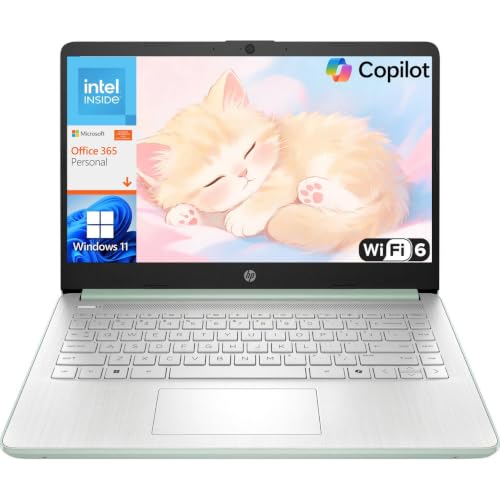
HP’s 14-inch entry stands out by bundling 1TB of cloud storage alongside Microsoft 365, effectively addressing the 128GB local storage limitation. The Intel N150 processor is a modern low-power chip that handles everyday productivity tasks with noticeably more composure than older Celeron-class silicon. For students or remote workers who live in browser-based apps and document suites, this package removes two recurring friction points.
- Pro: Included Microsoft 365 and 1TB cloud storage add substantial value beyond the hardware itself.
- Pro: Intel N150 offers a clear generational improvement over budget chips from prior years.
- Con: 4GB RAM is the one spec that limits multitasking regardless of the processor’s capability.
Skip this if you work offline frequently or store large local files that cloud storage cannot practically replace.
HP 14 (DDR5)
Essentially a sibling to the model above, this HP 14 distinguishes itself with DDR5 memory, a faster standard that reduces latency when juggling multiple applications. The N150 processor and 128GB SSD remain identical, so the practical gain centers on smoother everyday responsiveness. At $299.99, it matches its sibling’s price while offering a more future-proof memory architecture.
- Pro: DDR5 RAM provides measurably faster memory bandwidth than DDR4 alternatives in this price range.
- Pro: HP’s support network and parts availability reduce long-term ownership risk.
- Con: No bundled cloud storage or productivity software, unlike the 2026-2027 edition above.
Skip this if the software bundle matters more to you than marginal performance gains in memory speed.
AKCHART 15.6″ AI Laptop
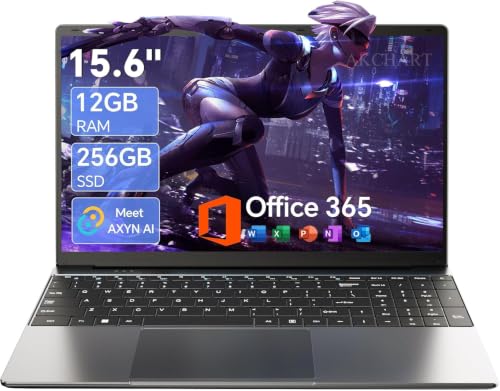
The AKCHART claims the specification crown in this roundup with 12GB of RAM and a 256GB SSD, figures that rival laptops costing twice as much. It includes Office 365 and runs Windows 11 on a 15.6″ screen, positioning it as a productivity-focused option. The “AI Laptop” label is marketing shorthand; the real advantage here is simply having enough memory to keep many applications open simultaneously.
- Pro: 12GB RAM and 256GB SSD are far above the category norm at $329.99.
- Pro: Office 365 inclusion adds immediate utility without extra subscription cost.
- Con: AKCHART is a lesser-known brand, and build quality, after-sale support, and firmware update cadence carry more uncertainty than HP or Lenovo equivalents.
Skip this if brand reliability and long-term software support are non-negotiable priorities for you.
Amzboy 15.6″ N4020
Matching the price floor at $229.99, the Amzboy offers a similar proposition to the first entry: an N4020-powered, 1080P, 15.6-inch laptop for basic computing. The 128GB eMMC storage is slightly slower than an SSD, which shows during boot and application launch. It suits households needing an inexpensive second or third machine for a child’s homework or a parent’s email-and-news browsing.
- Pro: FHD display at this price remains a genuine differentiator over TN-panel competitors.
- Pro: Light enough for casual portability despite the larger screen.
- Con: eMMC storage is noticeably slower than SSDs, making file-heavy tasks feel sluggish.
Skip this if you will use the machine daily as a primary device or need to transfer large files regularly.
HP Everyday Slim (AMD)
HP’s slim AMD-powered entry targets mobile users who value battery endurance over raw processing power. AMD’s current low-power silicon pairs well with DDR5 memory for efficient multitasking, and HP advertises long battery life explicitly, which matters for students carrying a single charger across a full day of classes. The 128GB SSD is modest but sufficient if you keep local files lean.
- Pro: AMD processor with DDR5 RAM delivers efficient performance with lower power draw than many Intel equivalents.
- Pro: Emphasis on battery life and a slim profile makes it genuinely portable.
- Con: 4GB RAM caps how many applications remain responsive simultaneously.
Skip this if your workflow demands more than light multitasking or you keep dozens of browser tabs open throughout the day.
HP Essential Laptop 2026
Positioned as an office-ready machine, the HP Essential bundles Office 365 out of the box, removing the first-month software cost that other models leave hanging. Its Intel CPU and 128GB storage mirror what competitors offer at similar prices, but the $319.98 tag buys you a productivity suite worth more than the small price premium over the N150 HP models.
- Pro: Pre-installed Office 365 delivers immediate value for students, job seekers, and small business users.
- Pro: HP’s established support infrastructure and driver update reliability.
- Con: The Intel CPU is not specified to a named generation, making it harder to judge peak performance versus the N150 options.
Skip this if you already have an Office 365 subscription through a school or employer, making the bundle redundant.
Buying Guide
Processor and RAM: Where Performance Bottlenecks Live
In the sub-$500 tier, the processor and memory combination determines whether a laptop feels comfortable or frustrating. Intel N150 and current-generation AMD chips handle web browsing, document editing, and media streaming without strain. The N4020, by contrast, is a prior-generation design that works but will bottleneck more demanding multitasking. RAM is the harder ceiling here: 4GB is genuinely tight in 2026, and if your budget stretches to 12GB (as with the AKCHART), the difference in daily responsiveness is immediate and lasting.
Storage Type and Capacity: SSD vs. eMMC Matters More Than Size
A 128GB SSD will feel significantly snappier than a 128GB eMMC module during startup, application loading, and file operations. eMMC uses a slower interface originally designed for phones, and at the $229 price point, manufacturers cut costs here. If a listing does not explicitly say “SSD,” assume eMMC and weigh whether the savings justify the daily friction. Cloud storage bundles (like HP’s 1TB offering) can offset local capacity limits if you have reliable internet access.
Screen Size and Resolution: Balance Portability Against Usability
Fifteen-inch screens give you more horizontal space for multi-window work but add weight and reduce lapability. Fourteen-inch models are easier to carry daily and often feel less cramped in a coffee shop or lecture hall. Full HD (1080P) resolution should be your floor regardless of size choice; anything lower will make text look soft during extended reading sessions. All eight models here meet at least FHD, which is the baseline we recommend.
Our Verdict
Top pick: The HP 14 (2026-2027 Edition) at $299.99 offers the strongest overall balance of modern processor, bundled cloud storage, Microsoft 365, and HP’s reliable support at a price well under the $500 ceiling. Budget pick: The AKCHART 15.6″ at $329.99 delivers 12GB RAM and 256GB SSD—specifications otherwise found only in machines costing $500 or more—making it the best raw-value option if you can accept a lesser-known brand. Condition that shifts the ranking: If portability and battery endurance matter more than memory or storage specs, the HP Everyday Slim with AMD and long battery life becomes the clear winner for students or travelers who need all-day runtime without a charger.
FAQ
Can these laptops handle basic video calls and streaming?
All eight models run Windows 11 and include Wi-Fi, so Zoom, Teams, and streaming services work on every one of them. The N4020-based machines may show slight lag during video calls if many browser tabs are simultaneously open, but for a dedicated call they perform fine.
Is 4GB RAM enough for everyday use?
It is workable for light use—email, a few browser tabs, a word processor, and media playback. Once you exceed five or six applications running at once, 4GB becomes a genuine constraint and you will notice slowdowns or forced page refreshing.
Should I buy the cheapest laptop if I only use it occasionally?
If the machine will sit idle most days and only serve for quick email checks or a single browser window, a $229 N4020 laptop is a reasonable choice. The risk is that even occasional use can feel frustrating when the storage or processor is consistently slow, so consider whether you would notice that friction daily.
Do these laptops support external monitors?
Yes. All models in this price range include at least one video output (HDMI or USB-C with DisplayPort), letting you connect an external monitor or projector. This effectively turns a 14″ laptop into a desktop setup at home without any additional hardware beyond a cable.