Key takeaways
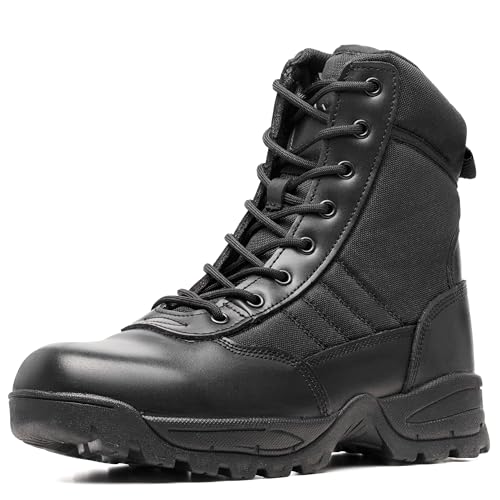
- Pro: Unbeatable cost for a boot that still offers structured sole grip and a breathable upper lining.
- Pro: Available across a wide size range, making it accessible for officers with harder-to-fit feet.
- Con: Long-term midsole compression is the primary complaint—cushioning thins noticeably after several months of daily shifts.
Law enforcement duty boots occupy a peculiar niche in the footwear market. An officer stands on concrete for eight to twelve hours, walks uneven terrain during foot pursuits, and needs ankle support without sacrificing the ability to sprint or climb a chain-link fence. The right pair absorbs impact, dries quickly after rain or sweat, and maintains grip on slick surfaces like parking garage floors or wet asphalt. The wrong pair causes plantar fasciitis within a month, blisters on the first long shift, or worse—slips during a critical moment when traction determines whether an arrest goes smoothly or turns dangerous.
What separates a genuine duty boot from a cosmetically similar sneaker is construction quality: the density of the midsole, the rubber compound’s slip rating, the breathability of the upper lining, and how well the boot holds up after repeated flex cycles. Many budget options use EVA foam that compresses flat within weeks, while premium boots layer cushioning that lasts across an entire contract period. We compared published specifications, manufacturer claims, and aggregated owner feedback from departments and academy graduates to identify which boots in 2026 deliver the durability and comfort officers actually need on duty.
Our top picks




As an Amazon Associate we earn from qualifying purchases at no extra cost to you.
Quick Picks
| Product | Best for | Price |
|---|---|---|
| LUDEY Tactical Boots | Entry-level comfort on a tight budget | $29.99 |
| NORTIV 8 Steel Toe | Patrol officers needing toe protection | $50.99 |
| LUDEY Lightweight Tactical | Foot pursuits and active patrol | $53.99 |
| RIELD Side Zipper | Quick on/off convenience at duty stations | $54.99 |
| WIDEWAY Combat Boots | Lightweight everyday carry without breaking the bank | $46.99 |
| Oakley Light Assault 2 | Officers prioritizing speed and all-day agility | $155.00 |
| HANAGAL 8″ Lightweight | Ankle support for uneven terrain | $65.99 |
| Oakley SI Light Patrol | Long shifts on polished floors and tile | $125.00 |
How We Picked
Three criteria dominated our selection. First, outsole compound and tread geometry—boot owners consistently report that slip resistance degrades faster than any other feature, so we prioritized boots whose rubber formulations and lug patterns are specifically noted for wet and oily surfaces. Second, midsole construction relative to price: a boot must cushion for twelve hours or it fails on the job, and we looked for multi-density or nitrogen-infused foam rather than single-layer EVA. Third, upper breathability and weight, because officers in hot climates or with heavy load-bearing belts need boots that shed heat and do not add unnecessary kilograms to every step. A fourth tiebreaker was long-term owner reports on stitching durability at stress points like the zipper attachment and heel counter.
The 8 Best Boots For Cops in 2026
LUDEY Tactical Boots
These boots serve as the absolute floor for someone who needs a serviceable pair immediately and cannot spend beyond the bare minimum—think rookie on probation, reserve officer, or a temporary replacement while waiting for a duty-issued pair. The anti-slip outsole and breathable lining are listed as core features, and owners highlight reasonable comfort for all-day wear despite the minimal price. Side lacing and a padded collar provide basic ankle security without adding bulk.
- Pro: Unbeatable cost for a boot that still offers structured sole grip and a breathable upper lining.
- Pro: Available across a wide size range, making it accessible for officers with harder-to-fit feet.
- Con: Long-term midsole compression is the primary complaint—cushioning thins noticeably after several months of daily shifts.
Skip these if your department requires ASTM-rated toe protection or if you regularly traverse rough terrain, where the lower-profile sole offers insufficient underfoot protection.
NORTIV 8 Steel Toe
Steel toe protection is a non-negotiable for officers who work in industrial areas, handle equipment in evidence rooms, or encounter heavy machinery during calls. This NORTIV 8 pair integrates that safety requirement into a side-zipper tactical format, so you get OSHA-adjacent protection without the clunky appearance of a traditional work boot. Owners appreciate the zipper’s utility during extended stops and the overall build quality relative to other steel-toe options in this bracket.
- Pro: Genuine steel toe cap protects against compression and impact hazards on the job.
- Pro: Side zipper makes donning and doffing straightforward after long shifts with tired feet.
- Con: The steel cap adds measurable weight compared to composite-toe or unprotected alternatives, which affects agility during foot pursuits.
Skip if speed and lightness matter more to your role than toe protection—patrol-focused officers in warm climates may find the added mass and reduced breathability frustrating.
LUDEY Lightweight Tactical
For officers whose primary concern is mobility—those in bike patrol, mounted units, or departments with significant foot pursuit activity—this LUDEY model trades some ruggedness for a noticeably lighter upper and sole package. Owner feedback emphasizes how little they feel on foot during long walks and how quickly they dry after rain. The construction favors flexibility over rigid support, which suits officers with healthy ankles and a need for natural range of motion.
- Pro: Substantially lighter than full-grain leather alternatives, reducing fatigue over extended patrol shifts.
- Pro: Breathability is a highlighted strength, keeping feet cool during high-activity scenarios.
- Con: The lighter construction means less inherent ankle bracing, which some owners note after uneven-surface incidents.
Skip if you have a history of ankle rolls or require maximum side-to-side stability on curbs, gravel, or uneven ground.
RIELD Side Zipper
This RIELD boot targets the officer who values the convenience of a side zipper above almost everything else—those doing frequent prisoner transport, entering and exiting vehicles repeatedly, or working in stations with a strict boot-on policy during court appearances. The jungle-style upper keeps weight moderate while the zipper saves time across dozens of daily transitions. Owners report solid tread grip on wet pavement and a comfortable break-in period.
- Pro: Full-length side zipper eliminates the time cost of re-lacing during active shifts.
- Pro: Jungle boot design balances breathability with enough structure for routine patrol tasks.
- Con: Several owners note zipper longevity concerns at roughly the mid-year mark if the boot is put on and removed without care.
Skip if you anticipate harsh abuse—zipper teeth are a failure point that full-lace boots simply do not have, making this a poor choice for rugged field or tactical assignments.
WIDEWAY Combat Boots
Offering both six- and eight-inch shaft heights, the WIDEWAY boot gives officers a choice in ankle coverage without a meaningful price jump, sitting in the affordable tier alongside the other budget picks. The side-zipper variant speeds transitions, while the combat aesthetic ensures it reads as professional in any uniform context. Owners consistently call out comfort right out of the box with minimal break-in required.
- Pro: Dual height options let you match ankle support to your patrol environment and personal preference.
- Pro: Comfortable immediately out of the box, reducing the adjustment period that newer boots often require.
- Con: Tread depth is a recurring owner concern when surfaces shift from concrete to mud or loose gravel.
Skip if your assignments regularly involve off-pavement terrain—search and rescue support or rural patrol—where the moderate sole depth will feel inadequate.
Oakley Light Assault 2
The Oakley Light Assault 2 is a long-standing favorite among officers who treat their boots as performance equipment rather than standard-issue gear. The speed-lace system, lightweight leather-and-Cordura upper, and slip-resistant outsole combine into a boot that moves like a trail runner while maintaining a professional appearance. Owner reviews across multiple platforms consistently cite exceptional comfort for twelve-hour shifts and surprising grip in wet conditions for its weight class.
- Pro: Among the best comfort-to-weight ratios available—owners describe forgetting they are wearing boots during active patrol.
- Pro: Speed-lace closure means the boots stay tight without the looseness that traditional laces develop mid-shift.
- Con: The price is the steepest in this roundup, and the lighter construction trades some long-term durability for that comfort.
Skip if you prioritize maximum lifespan over daily comfort or if your department’s reimbursement cap falls well below this price point.
HANAGAL 8″ Lightweight
At eight inches, the HANAGAL boot sits squarely between ankle coverage and freedom of movement, making it a strong candidate for officers who want more lateral stability than a six-inch provides without the stiffness of a full combat boot. The lightweight designation is not marketing fluff—owners confirm they feel significantly less fatigued than they did in heavier all-leather options, while still getting the shaft height they prefer for uneven ground and vehicle stepping.
- Pro: Eight-inch shaft delivers reliable ankle support during climbs, curbs, and irregular terrain without excessive weight.
- Pro: Owner feedback highlights durability of the outsole and stitching over extended duty use.
- Con: The upper lining is reported to retain more heat than the best-ventilated competitors, a factor in warm climates.
Skip if you patrol primarily in hot, humid conditions and your department has no ankle-support mandate—a lower-cut breathable boot will serve you better.
Oakley SI Light Patrol
The SI Light Patrol is engineered specifically for the indoor-to-outdoor transitions that define police work: stepping from a polished station floor onto rain-slicked pavement, moving through lobby tile, then back onto concrete sidewalk. The slip-resistant outsole is the headline feature, and owners who work shifts heavy on facility patrol, courthouse detail, or mall security consistently rank its grip above other boots in this range. The Blackout colorway keeps a clean uniform appearance without visible wear patterns.
- Pro: Slip resistance on smooth, polished, and wet surfaces is the standout strength according to owner consensus.
- Pro: Professional Blackout appearance meets uniform standards without requiring additional maintenance or polish.
- Con: Owners note the tread pattern wears faster on rough asphalt than the more aggressive lug designs found on outdoor-focused boots.
Skip if your duties skew heavily toward outdoor terrain, parking lots with loose gravel, or pursuits over rough ground—this boot is built for slick and smooth surfaces.
Buying Guide
Outsole Compound and Tread Design
Grip failure is the single most dangerous shortcoming in any duty boot. The outsole rubber compound matters as much as the tread pattern: softer compounds bite wet surfaces better but wear faster on concrete; harder compounds last longer but can skate on rain-slicked floors. Look for boots specifically labeled as slip-resistant on oil and water, not just generic “anti-slip” claims. Tread depth and lug spacing determine whether the boot clears mud and slush or packs and loses contact with the ground. For patrol work dominated by parking lots and sidewalks, a shallower multi-directional pattern reduces trip risk on stairs and curbs.
Midsole Cushioning and Energy Return
Standing on concrete for eight or more hours places sustained pressure on the plantar fascia and knee joints. Single-density EVA foam compresses permanently within a few months of daily use, after which the boot feels like walking on a board. Multi-layered midsoles—typically a firmer base for stability topped with a softer comfort layer—delay that compression and maintain energy return longer. Some premium boots incorporate nitrogen-infused or polyurethane compounds that resist pack-down. If your department does not provide insoles, budget for a quality orthotic replacement from day one to extend the midsole’s effective life.
Upper Materials and Ankle Support
The upper determines breathability, weight, and how the boot holds your foot during lateral movement. Full-grain leather is the most durable but adds weight and retains heat; nylon-and-leather combos offer a compromise; Cordura and synthetic mesh uppers are lightest but abrade faster on rough surfaces. Ankle support relates to shaft height and internal counter rigidity. Eight-inch boots brace the ankle joint for uneven ground; six-inch boots allow more natural flex for sprinting. Match shaft height to your typical terrain and any departmental requirements rather than defaulting to the taller option.
Our Verdict
The Oakley Light Assault 2 is our top overall pick for officers who want maximum daily comfort without sacrificing professional appearance or grip. For a budget pick that still meets real duty requirements, the WIDEWAY Combat Boots deliver immediate comfort and solid tread at a price point that leaves room for quality insoles. However, if your assignments involve heavy time on polished floors—courthouse details, mall security, hospital patrol—the Oakley SI Light Patrol wins over the Light Assault 2 specifically for its superior slip resistance on smooth surfaces.
FAQ
Do cops need steel toe boots?
Only if their department or specific assignment requires it—officers working industrial sites, evidence rooms, or areas with heavy equipment benefit from the protection. Most patrol roles do not mandate steel toes, and the added weight and reduced agility are meaningful drawbacks during active calls.
How often should police boots be replaced?
Expect six to twelve months of daily wear before midsole compression and outsole wear noticeably reduce performance. Officers covering high-mileage shifts or harsh terrain may need replacement sooner, while those on primarily desk or vehicle-based assignments stretch that window further.
Are expensive tactical boots worth it for patrol officers?
The premium buys comfort technology and longer midsole life, which translates directly into reduced fatigue on shifts. If your budget allows it, the per-day cost over a twelve-month life is marginal compared to the difference in how your feet feel by the end of a shift.
Can I wear any boot my department does not explicitly ban?
Check your agency’s uniform policy first—many specify color, shaft height, and whether visible branding is permitted. Beyond policy, make sure the boot meets the physical demands of your assignment; a boot that passes a dress-code check but fails on wet pavement creates a safety risk no department wants on its hands.