Key takeaways
- Compare the best neck stretchers for home use, from curved foam pillows to over-door and supine traction kits, with specs to help you choose safely.
Training loads the neck in ways that are easy to overlook. Grappling, lifting, cycling, swimming, and long hours at a desk between sessions can leave the cervical spine feeling stiff and compressed. A neck stretcher is a simple home tool designed to support the natural curve of the neck and provide a gentle traction-style stretch while you lie down, sit, or use a controlled pulling system.
This guide compares five approaches from five brands: a curved foam pillow, a two-sided foam relaxer, a supine hand-pump kit, an over-door pulley set, and an inflatable collar. The right choice depends on how much stretch you want, how much setup you will tolerate, and whether a clinician has discussed traction with you. If you have a cervical spine condition, a recent injury, numbness, or pain that travels into the arm, talk with a doctor or physical therapist before using any traction device.
Disclosure: As an Amazon Associate, I earn from qualifying purchases.
1. RESTCLOUD Neck and Shoulder Relaxer

The RESTCLOUD Neck and Shoulder Relaxer is the simplest design in this roundup. It is a wave-shaped piece of foam that you place on a hard surface, such as a floor or a yoga mat, and then lie back on so the curve sits under your neck. Your own body weight and the shape of the foam provide the stretch, with support described by the brand in vertical, horizontal, and curvature directions.
Because there is nothing to inflate, hang, or assemble, it fits easily into a post-workout routine. The listing directs users toward short sessions and notes that it should not be used as an ordinary pillow all night long. Beginners often prefer this style because the stretch feels gradual.
Specs
– Brand: RESTCLOUD
– Type: Curved foam neck stretcher, floor use
– Material: Polyurethane foam
– Color: Black
– Model Name: Wave neck stretcher
– Product Dimensions: 8.66 x 6.69 inches
– Suggested Session: 10 minutes at a time
– ASIN: B094MQVXMB
2. ComfortLife Neck Stretcher

The ComfortLife Neck Stretcher is also a foam relaxer that you use lying on your back, but its shape adds a few extra details. The listing describes an ergonomic curve that follows the neck and shoulders, six acupressure points positioned to contact the neck area, and a design that can be used on two sides for different levels of stretch. That two-sided approach can help new users start with the gentler side.
It is made from self-skinning foam and is light enough to move between home, work, and travel settings. The brand guidance is to stretch for about 10 minutes a day and not to use the device as a pillow overnight. If you like the idea of a foam cradle but want some texture and progression built in, this model offers a slightly more structured option than a plain curved pillow.
Specs
– Brand: ComfortLife
– Type: Cervical traction pillow, floor or bed use
– Material: Self-skinning foam
– Color: Blue
– Item Weight: 350 grams
– Use For: Neck
– Features: 6 acupressure points, two-sided use
– ASIN: B0C141Q82D
3. ComforTrac Deluxe Home Cervical Traction Kit 2.0
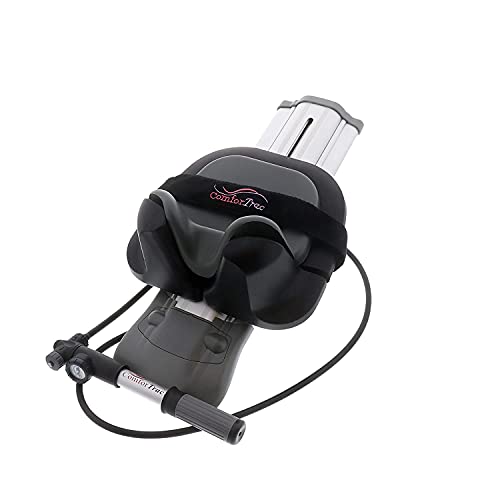
The ComforTrac Deluxe kit is a very different kind of device. Instead of a passive foam curve, it is a supine traction unit that you use lying down, with your head in a contouring memory foam headrest. A patented hand pump lets you increase or decrease force in a controlled way, and a quick-release button lets you reduce the pull quickly when you want to stop.
The incline can be set to 10, 15, or 20 degrees without extra parts, and independently adjustable neck wedges help customize the fit around the head and neck. The kit includes a carrying case, which makes storage cleaner than leaving a larger therapy device out in a training space. This is the most clinic-style option in the guide, so it makes the most sense for people who have already discussed a structured home traction plan with a clinician and who want measured, repeatable force rather than a passive stretch.
Specs
– Brand: ComforTrac
– Type: Supine home cervical traction kit
– Item Model Number: Cervical
– Product Dimensions: 11 x 7 x 7 inches
– Item Weight: 7 pounds
– Maximum Force: Up to 50 lbs
– Angles of Incline: 10, 15, and 20 degrees
– Headrest: Memory foam
– Included: Carrying case
– ASIN: B000II85YC
4. DMI Over the Door Cervical Traction Device by Duro-Med

The DMI set from Duro-Med uses the classic over-door method. A pulley system slides over the top of a standard door, a foam padded head halter fits around the head, and a vinyl weight bag provides the pulling force. The bag is graduated and is filled with water, so the weight can be adjusted within the range marked on the bag, and the listing notes that no tools are required to assemble the set.
This seated approach will feel familiar to anyone who has seen traction equipment in a physical therapy clinic. It does require a suitable door, a stable chair, and careful attention to the instructions and to the amount of force a clinician recommends for you. The brand states that this product should only be used under the direction of an authorized healthcare professional, which is important context for anyone considering a weighted system rather than a passive foam stretcher.
Specs
– Brand: Duro-Med
– Type: Over-door cervical traction set, seated use
– Weight Bag: Vinyl, graduated, up to 20 pounds of water weight
– Head Halter: Foam padded, hook and loop adjustment
– Installation: Slides over top of standard door, no tools required
– Model Number: 534-2014-0000
– ASIN: B000FH19QW
5. DR-HO’S Neck Comforter
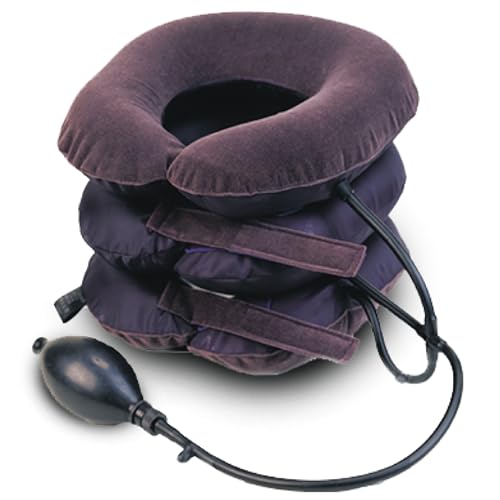
The DR-HO’S Neck Comforter is an inflatable collar that wraps around the neck while you are seated or resting upright. You secure it with adjustable straps and then use the attached hand pump to inflate it. As the collar fills, it supports the head and creates an upward stretch, and you control the level by how much air you add and by using the slow air release valve to let air out.
The manual lists the inflatable unit, hand pump with slow air release valve, air lock bead, and adjustable straps. Because it deflates, it packs down smaller than a foam pillow or framed kit, which can appeal to athletes who travel. Partial inflation can be used for support and fuller inflation for a stronger stretch, so start low and stop if you feel discomfort or dizziness.
Specs
– Brand: DR-HO’S
– Type: Inflatable cervical traction collar
– Power Source: Manual, hand pump
– Components: Inflatable unit, hand pump with slow air release valve, air lock bead, adjustable straps
– Product Dimensions: 6.89 x 3.15 x 10.43 inches
– Item Weight: 10.4 ounces
– Use For: Neck
– ASIN: B0047AB8P0
How to Choose the Right Neck Stretcher
Start with the mechanism. Foam cradles such as the RESTCLOUD and ComfortLife models provide a passive stretch driven by gravity and body weight. They are quick to use, easy to store, and a sensible first step for general stiffness after training or desk work. Inflatable collars add adjustability while you sit upright, while over-door and supine pump systems provide a more direct, measurable pull and need more care, space, and professional guidance.
Next, think about control. If you want to change the intensity during a session, look for a hand pump, a release valve, adjustable angles, or a weighted bag with clear markings. If you prefer to keep things simple and repeatable, a fixed foam curve removes decisions and makes a short daily routine easier to maintain. Fit matters too: check the shape, the contact points, and whether straps, wedges, or two-sided foam let you adapt the device to your neck.
Consider where you will use it. A small foam pillow suits a gym bag, a deflatable collar suits travel, and a larger supine or over-door set needs dedicated space. Finally, be honest about your history. Traction is not appropriate for everyone, and stronger is not automatically better. If you have a diagnosed cervical condition, recent trauma, surgery, or symptoms that spread into the shoulder or arm, consult a doctor before choosing any of these styles.
Frequently Asked Questions
How long should a session with a neck stretcher last?
Follow the directions for your specific device. The foam models in this guide describe short sessions of about 10 minutes, while other systems describe different timing and force progressions. Start shorter than the maximum suggested time, see how you feel later that day, and do not fall asleep on a foam stretcher that is not meant to be used as a regular pillow.
Can athletes use a neck stretcher after training?
Many people place a short stretch after training or a long workday, when the goal is simply to relax and change position. Keep the intensity gentle after hard sessions, and skip traction entirely if you took a blow to the head or neck until a medical professional has cleared you.
What is the difference between a foam pillow and a traction kit?
A foam pillow supports the neck in a curved position and lets gravity create a mild stretch. A traction kit applies a more deliberate pulling force, either through a pump, an inflatable collar, or a weighted pulley system. The second group offers more adjustment but also requires more careful setup and, for weighted systems, professional direction on how much force to use.
When should I avoid using a neck stretcher?
Avoid use and seek medical advice first if you have a recent neck injury, a known fracture, recent surgery, severe or worsening pain, weakness, numbness, or symptoms that have not been evaluated. Stop a session if you develop pain, dizziness, nausea, or tingling, and talk with a doctor if those symptoms persist. This guide describes products and selection factors only and does not promise treatment or a cure for any condition.
Conclusion
The best neck stretcher is the one that matches your comfort level, your space, and any guidance you have received from a clinician. Choose RESTCLOUD for the simplest curved foam routine, ComfortLife if you want a two-sided foam design with acupressure points, ComforTrac for a supine system with measured force and adjustable angles, DMI for the traditional over-door pulley format, or DR-HO’S for a portable inflatable collar you control with a hand pump. Start gently, follow each device’s directions, and treat consistency and good form as more important than chasing a stronger stretch.
More from Amazon
Programs that pair well with the guide above. Offers and eligibility are set by Amazon and may change.
Free shipping on eligible items, Prime Video and more. Eligible new members can start with a free trial.
Start a Prime free trialA Prime membership for ages 18-24 with a trial period. Eligibility is set by Amazon.
See Prime for Young AdultsAudiobooks and podcasts to listen to on the go. Eligible new members can start with a free trial.
Try Audible freeAd-free music streaming. Eligible new subscribers can start with a free trial.
Try Music Unlimited freeAs an Amazon Associate we earn from qualifying purchases.