Key takeaways
- Compare the best monoculars for hiking, bird watching, hunting and sports, with clear specs on magnification, lens size, weight and weather sealing.
A good monocular puts distant detail in one hand and one pocket, without the bulk of a full-size optic. This guide covers handheld monocular telescopes only — single-eye optics for hiking, bird watching, hunting, and watching sports. It does not cover binoculars, which use both eyes and follow different buying logic.
The five picks below come from five different makers. They include a compact trail model you can clip to a pack, a balanced 10×42 for low light, and larger 12x models with phone adapters. Each was chosen for a clear use case, published specifications you can verify on its listing, and weather protection suited to outdoor use. Compare magnification, objective size, weight, and field of view first, because those figures predict most of your experience in the field.
Disclosure: As an Amazon Associate, I earn from qualifying purchases.
1. Vortex Optics Solo Monocular 10×36
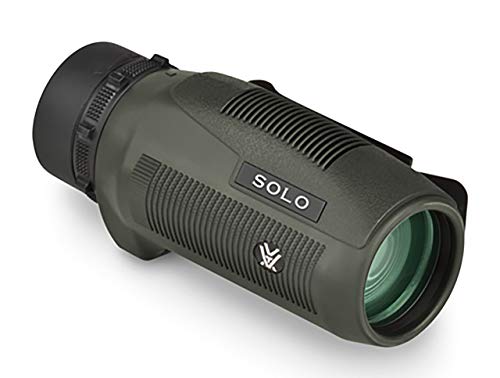
The Vortex Solo 10×36 is the balanced trail pick. Its 10x magnification is strong enough to identify birds and read distant markers, while the 36mm objective keeps the body short and light for a hip belt pocket. Fully multi-coated lenses, rubber armor, and a utility clip make it easy to grab without a separate harness.
Specs
– Magnification: 10x
– Objective lens: 36mm
– Field of view: 325 feet at 1,000 yards
– Eye relief: 15mm
– Weight: 9.7 ounces
– Length: 4.9 inches
– Construction: Rubber armor, nitrogen purged, O-ring sealed, waterproof and fogproof
– Included: Utility clip, neck lanyard, soft carry case
– ASIN: B00161ZI4A
In use, the Solo suits scanning ridgelines, checking a far shore for waterfowl, and following play from upper seats. The adjustable eyecup twists up and down, which helps with glasses or sunglasses. Close focus is not its strength, so it works best at moderate distance rather than for subjects a few feet away. For most day hikes, that trade is worth it for the low weight and rugged build.
2. Bushnell Legend Ultra HD Monocular 10×42
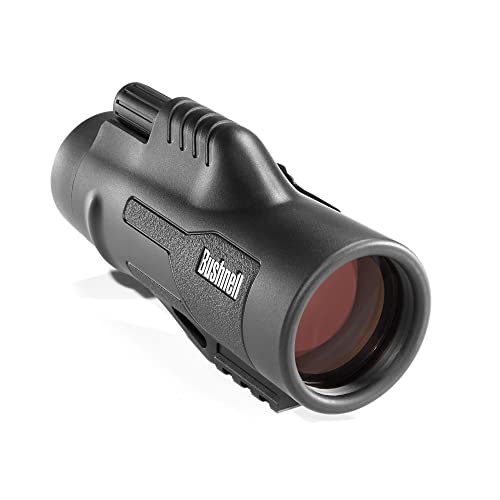
The Bushnell Legend Ultra HD 10×42 is the low-light pick. A 42mm objective gathers more light than smaller models, and Bushnell pairs it with ED Prime glass and an ultra wide band coating to preserve color and contrast at dawn and dusk. That matters for hunters glassing field edges and birders working under a forest canopy.
Specs
– Magnification: 10x
– Objective lens: 42mm
– Field of view: 340 feet at 1,000 yards
– Eye relief: 15.2mm
– Close focus: 6.5 feet
– Weight: 13.2 ounces
– Prism: BaK-4 roof prism
– Features: ED Prime glass, fully multi-coated optics, waterproof and fogproof, Picatinny rail mount, tripod adaptable
– ASIN: B006U3ZIVC
The Legend adds details lighter picks skip. The Picatinny rail lets you mount accessories, the body accepts a tripod, and the 6.5-foot close focus is unusually short for a 10×42, so nearby subjects stay usable. Twist-up eyecups help with glasses. It is heavier than the Solo, but for hunting and stationary watching from a blind or porch, the brighter image is the right priority.
3. Gosky 12×55 HD Monocular Telescope
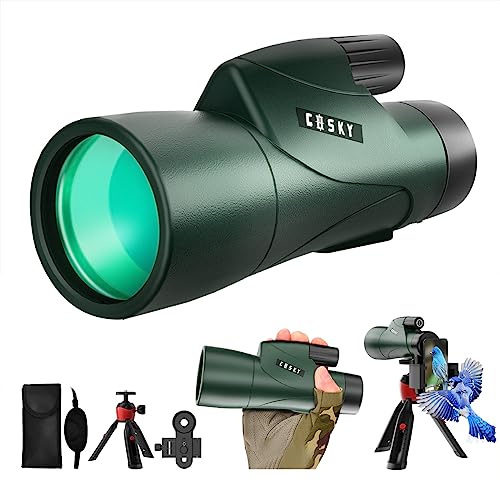
The Gosky 12×55 HD is built around reach and brightness. The 12x magnification pulls distant subjects closer than the 10x models, and the 55mm objective helps keep the view bright as light fades. It ships with a smartphone adapter, so you can capture what you see without holding a phone freehand against the eyepiece.
Specs
– Magnification: 12x
– Objective lens: 55mm
– Field of view: 325 feet at 1,000 yards, 6.5 degrees
– Prism: BaK-4, 18mm
– Lens coating: Fully multi-coated (FMC)
– Eye relief: 18mm
– Weight: 15.85 ounces
– Protection: IPX7, nitrogen filled, waterproof, fogproof, dustproof and shockproof
– Included: Smartphone adapter, hand strap, carrying case, lens covers, cleaning cloth
– ASIN: B07B8XTS3Z
Twelve-power glass shows hand shake more clearly, so the Gosky rewards a steady brace against a tree or pack, and it has a tripod thread for longer sessions. The 18mm eye relief is generous for glasses wearers. Choose it if you watch wildlife across open ground, follow boats from shore, or want a phone adapter in the box.
4. Pankoo 12×50 HD Monocular Telescope

The Pankoo 12×50 HD bundles accessories many buyers purchase separately: a smartphone adapter, a tripod, and a hand strap. Its 12x magnification and 50mm objective sit between the compact trail models and the largest glass here, giving strong reach without the longest body.
Specs
– Magnification: 12x
– Objective lens: 50mm
– Field of view: 325 feet at 1,000 yards, 6.5 degrees
– Prism: BaK-4, 21mm eyepiece prism assembly
– Lens coating: Fully multi-coated (FMC)
– Weight: 14 ounces
– Dimensions: 6.81 x 2.95 x 3.74 inches
– Model number: 10010
– Included: Smartphone adapter, tripod, hand strap
– ASIN: B08XYTR8HT
For sports fans, the Pankoo works well from mid-level seats where you want faces and jersey numbers, not just the flow of play. For travel, the tripod steadies views of landmarks and harbors, and the phone adapter turns sightings into shareable photos. As with any 12x optic, short handheld bursts are fine, while longer viewing is more comfortable with the tripod or a solid rest.
5. Wingspan Optics Explorer 12×50 Monocular

The Wingspan Optics Explorer 12×50, formerly sold under the Polaris Optics name, is a daytime specialist for bird watching and wildlife. It uses single-hand focus, durable external armor for a secure grip, and a waterproof, fogproof build.
Specs
– Magnification: 12x
– Objective lens: 50mm
– Field of view: 246 feet at 1,000 yards
– Close focus: 2.5 meters
– Eye relief: 14mm
– Weight: 11 ounces in published specification tables (retail listings vary by bundle)
– Features: Single-hand focus, durable external armor, waterproof and fogproof
– Intended use: Daytime bird watching and wildlife viewing
– ASIN: B00K9SYPAE
The Explorer has a narrower field of view than the Gosky and Pankoo models, so it suits following a single subject — a hawk on a snag, a deer at a field edge, a sailboat on a lake — more than scanning wide scenery quickly. Its focus is designed for one-handed use, which helps when your other hand holds a leash, a trekking pole, or a field guide. Pick it if daytime clarity and a grippy, armored body matter more than the widest view.
How to Choose the Right Monocular
Magnification. Eight to ten power is the sweet spot for handheld trail use, with useful detail and less visible shake. Twelve power reaches farther but needs a steadier hand, a brace, or a tripod. Compare the optical figure in the specification table, because some budget packaging highlights combined or digital zoom instead.
Objective lens size. The second number in a name like 10×42 is the front lens diameter in millimeters. Larger lenses gather more light and help at dawn, dusk, and under tree cover, but add weight. A 25mm to 36mm lens suits pocket carry. A 42mm to 56mm lens suits low light and stationary watching.
Field of view. A wider field, measured in feet at 1,000 yards, makes it easier to find and follow moving birds, players, and boats. A narrower field can still deliver fine detail, but you will spend more time searching for your subject.
Eye relief and eyecups. If you wear glasses, look for eye relief around 15mm or more and an eyecup that twists or folds down. Short eye relief can cut off the edges of the view when glasses sit between your eye and the eyepiece.
Prism and coatings. BaK-4 prisms and fully multi-coated lenses are the baseline worth paying for in this class. They improve brightness and contrast compared with uncoated glass, especially when looking toward bright sky or water.
Weather sealing. For hiking and hunting, choose a model described as waterproof and fogproof, ideally nitrogen filled and O-ring sealed. Sealing protects the inside when temperature changes quickly, such as stepping from a warm car into cold morning air.
Weight and accessories. Compact models under 10 ounces disappear in a pocket. Mid-size models around 13 to 16 ounces are still easy to carry, but a hip belt pouch often beats a neck strap by the end of the day. A phone adapter and tripod add value if you take photos through the optic or watch from one spot. If you mostly glance and go, a hand strap and lens covers matter more.
FAQ
Is a monocular better than binoculars for hiking?
Neither is better for everyone. A monocular is lighter, smaller, and faster to raise with one hand, which suits hiking, travel, and sports. Two-eye optics are usually more comfortable for long, stationary glassing.
What magnification is best for bird watching?
Ten power is a practical default because it balances detail and steadiness. Twelve power helps with distant shorebirds and raptors if you can brace the optic or use a tripod. For small, fast birds in woods, a wider field of view often matters more than extra power.
Can I use a monocular with glasses?
Yes. Twist the eyecup down, hold the eyepiece close to your glasses, and choose eye relief around 15mm or longer when you can. Each model above lists eye relief where the maker publishes it.
Will a phone adapter really work for photos?
Yes, with careful alignment. An adapter lines up your phone camera with the eyepiece so you can record what the optic sees. Good light and a steady support improve sharpness a lot, especially at 12x.
How do I keep the view steady at 12x?
Tuck your elbows against your body, brace your holding hand against a tree, post, or pack, and use short viewing bursts. For longer sessions, use the tripod thread or rest the optic on a padded surface.
Are these monoculars suitable in rain?
The models here are described by their makers as waterproof and fogproof, so normal rain and splashes should not be a problem. Dry the outside lenses with a clean microfiber cloth afterward, and store the optic dry.
Conclusion
For most hikers, the Vortex Solo 10×36 offers the best mix of low weight, simple handling, and rugged sealing. If you watch in low light or from a fixed position, the Bushnell Legend Ultra HD 10×42 gives you a larger objective, ED Prime glass, and short close focus. If reach and phone photos are your priority, the Gosky 12×55 HD and Pankoo 12×50 HD pair 12x power with included adapters, while the Wingspan Optics Explorer 12×50 focuses on grippy, one-handed daytime viewing.
Match the optic to how you spend time outdoors: pocket carry for daily trails, larger glass for dawn and dusk, and a tripod-friendly model for long, steady looks.
More from Amazon
Programs that pair well with the guide above. Offers and eligibility are set by Amazon and may change.
Free shipping on eligible items, Prime Video and more. Eligible new members can start with a free trial.
Start a Prime free trialA Prime membership for ages 18-24 with a trial period. Eligibility is set by Amazon.
See Prime for Young AdultsAudiobooks and podcasts to listen to on the go. Eligible new members can start with a free trial.
Try Audible freeAd-free music streaming. Eligible new subscribers can start with a free trial.
Try Music Unlimited freeAs an Amazon Associate we earn from qualifying purchases.