Key takeaways
- Compare the best air pistols for target shooting and plinking, from CO2 repeaters to pump and single-stroke models, with key specs to help you choose well.
Air pistols occupy a sweet spot for backyard practice and casual range time. They are compact, generally simpler to handle than longer airguns, and they let you work on grip, sight alignment, and trigger control without needing a large range. If you already enjoy air rifles, a pistol adds a different challenge: a shorter sight radius, a lighter hold, and a greater reward when your groups tighten up.
The tricky part is that air pistols come in very different power systems. A CO2 repeater feels nothing like a variable-pump single shot, and neither feels like a single-stroke pneumatic target pistol. This guide compares five pistols from five different makers, covering CO2, multi-pump, and single-stroke designs, so you can match the mechanism to the way you want to shoot.
Disclosure: As an Amazon Associate, I earn from qualifying purchases.
Crosman P1322 American Classic

The Crosman P1322 American Classic is the traditionalist pick in this lineup. It is a .22 caliber, single-shot pellet pistol powered by pumping. You work the pump arm between three and ten times, load one pellet through the bolt action, and take your shot. That deliberate rhythm is why many shooters love it for focused target work: there is no rushing, and each shot gets your full attention.
Because you control the number of pumps, you also control the effort and output. Fewer pumps suit close paper targets, while more pumps bring the pistol toward its listed maximum velocity for longer plinking distances. The rifled steel barrel helps pellets stay stable, a real advantage over smoothbore BB designs when you care about tight groups.
This is not a fast repeater, and it is not meant to be. Choose it if you enjoy a methodical pace, want .22 caliber pellets for a bit more impact on cans and reactive targets, and prefer a pistol that needs no gas cartridges. For slow, deliberate accuracy practice, it remains a benchmark design.
Specs: Caliber: .22 pellet; Powerplant: variable-pump pneumatic, 3 to 10 pumps; Velocity: up to 460 fps; Action: single-shot bolt action; Barrel: rifled steel
Daisy Powerline 426

The Daisy Powerline 426 takes the opposite approach: quick, easy, repeatable fun. This CO2 pistol fires .177 caliber BBs in semi-automatic fashion from a built-in magazine that holds 15 BBs. Load a 12 gram CO2 cartridge, fill the magazine, and you can work through a string of shots at cans or paper without pumping between each one.
Daisy lists velocity up to 430 fps, plenty for plinking at typical backyard distances. The pistol pairs an alloy steel barrel with a plastic frame, keeping weight low for longer, relaxed sessions and for newer shooters who may find heavier pistols tiring. A blade ramp front sight and fixed rear sight keep the setup simple, and an accessory rail under the barrel lets you add a small light or laser if your range setup calls for one.
The trade-off is inherent to BB pistols: smoothbore BB shooting is generally less precise than rifled pellet shooting, so think of the Powerline 426 as a high-enjoyment plinker rather than a precision target tool. If your priority is easy loading, quick follow-up shots, and simple operation for casual practice and teaching safe handling habits, this Daisy fits that role well.
Specs: Caliber: .177 BB; Powerplant: CO2, 12 gram cartridge; Velocity: up to 430 fps; Capacity: 15 BBs in built-in magazine; Action: semi-automatic; Barrel material: alloy steel; Frame material: plastic
Umarex Glock 19 Gen3
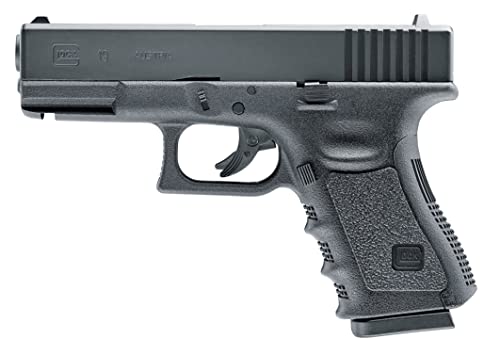
The Umarex Glock 19 Gen3 is built for shooters who want training-style handling in an air pistol. Made by Umarex as a licensed Glock replica, it copies the size and control layout of the firearm it is modeled on, which makes it popular for practicing grip, presentation, and sight alignment at home or on a casual range. It fires .177 caliber steel BBs powered by a single 12 gram CO2 cartridge housed in the grip.
Umarex lists velocity up to 410 fps and a 15-shot magazine, a combination that supports steady strings of practice without constant reloading. The frame is polymer with a metal barrel, and the pistol carries fixed Glock-style sights and an integrated Weaver rail for accessories. Its non-blowback layout also tends to use gas efficiently, helping you get more shots from each cartridge.
Keep expectations in the right lane: like other BB repeaters, it favors handling practice and plinking over the fine precision of a rifled pellet pistol. If your goal is realistic handling, draw practice, and target work that mirrors a compact duty-style pistol, this is the most training-focused option in our five picks.
Specs: Caliber: .177 steel BB; Powerplant: CO2, 12 gram cartridge; Velocity: up to 410 fps; Capacity: 15-shot magazine; Frame material: polymer; Barrel material: metal; Sights: fixed Glock-style; Rail: integrated Weaver rail
Gamo P-430 Dual Ammo

The Gamo P-430 stands out because it can shoot both .177 caliber pellets and BBs, giving you flexibility in one CO2 pistol. Gamo lists velocity at 495 feet per second, the highest figure in this guide, and the pistol uses a double magazine arrangement with a rotary clip at each end, holding 16 rounds in total, eight at each end. When one end is empty, you can use the other, which keeps a plinking session moving.
That dual-ammo ability is the main reason to choose the P-430. Pellets are the better pick when you want cleaner target work, while BBs are convenient for casual can plinking. The listing shows an alloy steel barrel and a plastic frame, and the pistol feels light and easy to maneuver for newer shooters or anyone who prefers a pistol that does not fatigue the arm during a long session.
As with any dual-ammo design, follow the maker guidance on pellet choice for the magazine, since clip-fed pellet pistols work best with standard skirt pellets of suitable length. If you want one pistol that can switch between pellet target practice and BB plinking, the P-430 is the versatile pick here.
Specs: Caliber: .177 pellet and BB, dual ammo; Powerplant: CO2; Velocity: 495 fps; Capacity: 16 rounds, double magazine with rotary clips holding 8 at each end; Barrel material: alloy steel; Frame material: plastic
Beeman Sportsman Series Deluxe Air Pistol

The Beeman Sportsman Series Deluxe, also known as the P17, is the precision-minded pick for shooters who want consistency without buying gas cartridges. It uses a single-stroke pneumatic system: one overlever pump stroke charges the pistol for each shot. That single, repeatable stroke helps deliver very similar performance shot after shot, exactly what you want when chasing smaller groups on paper.
It fires .177 caliber pellets through a rifled steel barrel, with listed velocity of 410 fps. The build combines a lightweight polymer frame with an aluminum slide, and the pistol weighs about 1.7 pounds. Fiber optic sights, with an adjustable rear sight, make it easier to pick up your sight picture in varied light, and the finger-groove grip helps the pistol settle into a repeatable hold. The recoilless character of the design also helps, since there is little movement to disturb your aim.
The trade-off is effort: closing the overlever takes a firm, deliberate motion, and the single-shot pace is slow by design. In return you get a self-contained pistol with no cartridges to buy and a shooting experience built around discipline and precision rather than volume.
Specs: Caliber: .177 pellet; Powerplant: single-stroke pneumatic, overlever; Velocity: 410 fps; Action: single-shot; Barrel: rifled steel; Frame: polymer; Slide: aluminum; Weight: 1.7 lbs
How to Choose
Begin with the powerplant, because it decides your pace. CO2 pistols like the Daisy, Umarex, and Gamo models offer semi-automatic strings and quick follow-up shots, but they need cartridges, and output can dip as a cartridge empties or in cold weather. Pump designs remove the cartridge cost. A variable-pump pistol like the Crosman lets you tune effort per shot, while a single-stroke pistol like the Beeman gives you one consistent stroke and no consumables beyond pellets.
Next, match ammunition to your goal. Rifled barrels shooting pellets generally group tighter on paper, which suits scored target practice. BB pistols are simpler and faster to load, and they shine for plinking and handling drills, but do not expect the same fine precision. Dual-ammo models sit in between and reward careful pellet selection.
Then consider capacity, weight, and sights. A 15 or 16 round magazine keeps sessions flowing, while single-shot pistols force a slower routine many target shooters prefer. Adjustable rear sights help you dial in for a given distance and pellet, while fixed sights are simpler and workable for casual distances.
Safety comes before any of the above. Treat every air pistol as if it is loaded, keep the muzzle pointed in a safe direction, and keep your finger off the trigger until ready to shoot. Wear eye protection, use a proper backstop, and never point an air pistol at people or animals. Check local rules, store the pistol unloaded and secured away from children, and read the manual for your model before first use.
FAQ
Are air pistols good for beginners?
Yes, when chosen well. A light CO2 BB pistol is easy to operate for casual plinking, while a single-stroke pellet pistol teaches careful aim without needing cartridges. Adult supervision, eye protection, and a safe backstop are essential for any new shooter.
Which is better for accuracy, pellets or BBs?
Pellets fired from a rifled barrel generally group tighter, so pellet pistols are the better choice for paper target work. BB pistols are convenient and fun for plinking and handling practice, but their smoothbore design usually gives wider groups.
Do CO2 pistols work in cold weather?
CO2 output tends to fall as temperature drops, so velocity and shot count can suffer outdoors in winter. Pump and single-stroke pistols do not rely on gas pressure in the same way, which makes them more consistent across seasons.
How far can I shoot an air pistol for targets?
Most owners do their best work at short to moderate distances, often around 10 yards for careful target practice. Set up where you can group well and move out gradually.
Conclusion
There is no single best air pistol for everyone, only the best match for how you shoot. Pick the Crosman P1322 for deliberate .22 caliber pump-powered target work, the Daisy Powerline 426 for simple BB plinking, the Umarex Glock 19 Gen3 for training-style handling, the Gamo P-430 for dual-ammo versatility, or the Beeman Deluxe for cartridge-free precision. Decide on powerplant and ammunition first, and any of these five will give you rewarding time on target.
More from Amazon
Programs that pair well with the guide above. Offers and eligibility are set by Amazon and may change.
Free shipping on eligible items, Prime Video and more. Eligible new members can start with a free trial.
Start a Prime free trialA Prime membership for ages 18-24 with a trial period. Eligibility is set by Amazon.
See Prime for Young AdultsAudiobooks and podcasts to listen to on the go. Eligible new members can start with a free trial.
Try Audible freeAd-free music streaming. Eligible new subscribers can start with a free trial.
Try Music Unlimited freeAs an Amazon Associate we earn from qualifying purchases.