Key takeaways
- A good ebike brand is one that will still answer the phone, ship replacement parts, and honor a warranty two or three years after the purchase.
A good ebike brand is one that will still answer the phone, ship replacement parts, and honor a warranty two or three years after the purchase. The motor and battery matter, but the company standing behind them matters just as much, because an ebike is a bike and an electrical appliance at the same time.
Rather than ranking names, this guide explains how to judge any brand: the categories of ebike companies, the specs that signal quality, the support details that separate a safe buy from a risky one, and the mistakes that lead to regret. The goal is to make any shortlist easier to evaluate.
Start With the Kind of Riding
Brands tend to specialize, and the right one depends on the use. Before judging any company, decide what the bike must do most weeks.
Commuting and city riding
Commuter ebikes usually have fenders, racks, integrated lights, and upright geometry. A reliable brand in this segment emphasizes durability, low maintenance, and weather resistance, because the bike will be ridden in all conditions and parked outdoors.
Trail and mountain riding
Electric mountain bikes need strong frames, quality suspension, powerful brakes, and motors that deliver torque smoothly on steep, loose terrain. Brands here are typically rooted in traditional mountain biking and offer detailed geometry and component choices.
Cargo and family hauling
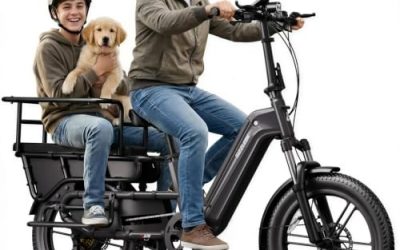
Longtail and front-loader bikes carry kids, groceries, or gear. Look for brands that publish clear weight limits, offer accessories designed for the frame, and use stable, low-slung geometry and powerful brakes.
Folding and compact
Folding ebikes suit small apartments, boats, and multimodal trips. Hinge quality and folded dimensions matter more than raw power, and the best brands document how the fold mechanism is built and maintained.
Casual and recreational
Cruiser and comfort models prioritize a relaxed ride and a low step-over. These suit older riders, shorter trips, and flat terrain, and they often keep the component list simple for easier servicing.
Types of Ebike Companies
Understanding how a brand sells is as important as understanding what it sells.
- Established bicycle makers. Companies with decades of bike manufacturing that added electric lines. They usually sell through local bike shops, which means test rides, assembly, and local service.
- Dedicated ebike companies. Brands built around electric bikes from the start. Quality ranges widely, from highly engineered products to loosely assembled imports, so research matters.
- Direct-to-consumer sellers. They ship a bike mostly assembled to the door, often at lower cost, but service depends on the company’s own network or on a willing local shop.
- Drive-system suppliers. Many bikes use motors and batteries from specialist component makers. A bike built around a well-known drive system benefits from broader parts and repair knowledge.
Specs That Reveal Quality
Motor type and placement
Mid-drive motors sit at the crank and use the bike’s gears, which suits hills and gives a natural feel. Hub motors sit in a wheel, are simpler and often less expensive, and work well on flat to moderate terrain. Neither is automatically better, but a brand should explain which it uses and why.
Battery capacity and cell quality
Battery size is stated in watt-hours, and higher numbers generally mean longer range. Real range depends on rider weight, terrain, wind, assist level, and tire pressure, so treat any single range number as a best-case figure. Quality brands name the cell source or battery supplier, provide clear charging guidance, and sell replacement batteries for years.
Safety certification
Look for battery and electrical system certification to a recognized standard such as UL 2849 for complete ebike systems, or UL 2271 for batteries. Lithium-ion battery fires are a documented concern with poorly built packs and chargers, so certification is not a minor detail. Many cities and transit systems now require it.
Class rating
In the United States, ebikes are commonly grouped into three classes. Class 1 provides pedal assist up to 20 mph. Class 2 adds a throttle with the same top assisted speed. Class 3 provides pedal assist up to 28 mph. Trail and path access rules often depend on class, so a good brand labels each model clearly.
Brakes, frame, and components
Hydraulic disc brakes give more stopping power and consistent feel than cable-actuated ones, which matters on a bike that is heavier and faster than a standard one. Look at frame material, weight limit, tire width, and drivetrain quality. Components from known bicycle parts makers generally mean easier repairs.
Support and Service: The Brand Test That Matters Most
Reading the support page often reveals more than reading the spec sheet.
- Warranty terms. Look at the length and what it covers separately for frame, motor, battery, and electronics. Vague or very short coverage on the battery is a red flag.
- Parts availability. Can chargers, batteries, displays, and controllers be bought separately? Brands that sell only complete bikes can leave owners stranded.
- Service network. A bike shop that will work on the brand locally is worth a great deal. Ask nearby shops which brands they service willingly.
- Documentation. Clear manuals, assembly videos, and published specifications show a company that expects customers to maintain its products.
- Company track record. Brands that have operated for several years and continue to release updates are safer bets than very new names with no history.
Brand Types Compared
| Criteria | Traditional bike maker | Direct-to-consumer brand | Specialist ebike company |
|---|---|---|---|
| Where service happens | Local bike shop | Company support or partner shops | Varies widely |
| Test rides | Usually available | Rarely, often return policy instead | Sometimes at demo events |
| Assembly | Done by shop | Owner or local mechanic | Varies |
| Parts availability | Broad, standard bike parts | Depends on company | Often proprietary |
| Cost tier | Mid-range to premium | Budget to mid-range | All tiers |
| Best suited to | Riders wanting in-person support | Riders comfortable with basic maintenance | Riders focused on specific niches |
Common Mistakes When Choosing a Brand
- Chasing the largest battery or the highest wattage. Marketing numbers can hide mediocre brakes, frames, or software.
- Ignoring who services the bike. A great bike with no available repair help becomes a problem the first time a part fails.
- Trusting unverifiable claims. Range, top speed, and torque numbers deserve skepticism unless the conditions are stated.
- Skipping certification. Uncertified batteries and chargers carry risk, and some buildings and transit systems refuse them.
- Buying the wrong size. Frame size and standover height affect comfort and control. Many brands publish a size chart, and a few minutes with it saves a return.
- Overlooking weight. Ebikes are heavy. If the bike must be carried upstairs or lifted onto a rack, check the stated weight and the rack’s capacity.
Budget Tiers Without Numbers
Entry-level bikes often use hub motors, basic mechanical brakes, and simpler displays. They can serve short, flat commutes well, but buyers should weigh the warranty and parts support closely.
Mid-range bikes commonly add hydraulic brakes, better suspension or tires, stronger frames, and recognized drive systems. This tier is where most commuters find the best balance of reliability and cost.
Premium bikes feature top-tier motors, integrated batteries, refined frames, and extensive dealer support. They fit riders who log high mileage, ride demanding terrain, or want the lowest hassle ownership.
Buying Checklist
- Define the main use: commuting, trail, cargo, folding, or casual riding.
- Confirm the class and whether local trails and paths allow it.
- Check for recognized electrical safety certification on the battery and system.
- Compare warranty terms separately for frame, motor, and battery.
- Find a local shop willing to service the brand.
- Verify replacement parts, chargers, and batteries are sold separately.
- Match frame size and weight limit to the rider and cargo.
- Look at brakes, tires, and fenders as safety items, not extras.
Ownership Basics
Charge the battery with the supplied charger, avoid leaving it plugged in for days after it is full, and store it indoors at moderate temperatures. Check tire pressure often, since a correct number extends range and improves handling. Keep the chain clean and lubricated, and have brakes and bolts inspected on a regular schedule. A helmet is strongly advised, and lights and reflectors improve visibility on shared roads.
Related guides
Frequently Asked Questions
Is a well-known name always the safer choice?
Not always, but an established name usually means better parts availability, clearer warranty handling, and more shops familiar with the product. A lesser-known brand can still be a good choice if it publishes certifications, offers solid warranty terms, and has a track record of customer support.
Does a mid-drive motor matter more than a hub motor?
It depends on the terrain. Mid-drive systems perform better on steep hills and feel more natural, while hub motors are simpler and perform well on flat to rolling routes. The brand’s overall build quality and support often matter more than the motor placement alone.
How long should an ebike battery last?
Lithium-ion batteries gradually lose capacity with use and age, and many last several years of regular riding when charged and stored sensibly. Reputable brands state the expected number of charge cycles and sell replacements, which is worth confirming before buying.
Are direct-to-consumer ebikes a bad idea?
They can be a fine choice for riders comfortable with basic assembly and maintenance. The key is checking the return policy, warranty process, and whether a local shop is willing to handle repairs if something goes wrong.
More from Amazon
Programs that pair well with the guide above. Offers and eligibility are set by Amazon and may change.
Free shipping on eligible items, Prime Video and more. Eligible new members can start with a free trial.
Start a Prime free trialA Prime membership for ages 18-24 with a trial period. Eligibility is set by Amazon.
See Prime for Young AdultsAudiobooks and podcasts to listen to on the go. Eligible new members can start with a free trial.
Try Audible freeAd-free music streaming. Eligible new subscribers can start with a free trial.
Try Music Unlimited freeAs an Amazon Associate we earn from qualifying purchases.