
Key takeaways
- Thumb’s width of space: leave roughly a thumb’s width between the longest toe and the front of the shoe, since feet swell during runs.
- Shop later in the day: feet are slightly larger after activity, so a late-day fitting is more realistic.
- Bring your socks: try shoes with the type of running socks you normally wear.
- Heel lockdown: the heel should hold without slipping; if it lifts when you jog, try a different lacing pattern or model.
- Toe box: toes should splay without pressing on the sides. Hoka, Altra, and some New Balance models are often described as roomier up front.
- Heel-to-toe drop: makers list this in millimetres. Higher drop shoes can feel kinder to calves and Achilles tendons, while lower drops feel flatter. Change gradually if you are switching.
For most women who run a few times a week on pavement, a cushioned neutral daily trainer such as the Brooks Ghost, Hoka Clifton, or Saucony Ride is the safest place to start, while runners who want a plush, softer ride for long miles lean toward the ASICS Gel-Nimbus or Brooks Glycerin, and runners who need guidance for overpronation should look at a stability model instead. The right pair depends less on brand than on foot shape, running surface, weekly mileage, and how much cushioning feels comfortable underfoot.
Our top picks


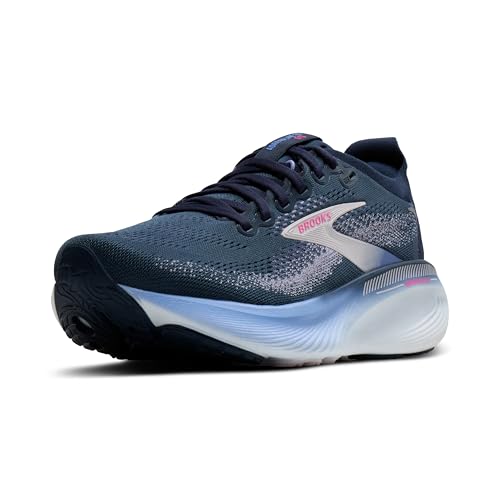

As an Amazon Associate we earn from qualifying purchases at no extra cost to you.
At a Glance: Current Women’s Running Shoe Picks
| Shoe | Best for | Key traits the maker or reviewers cite | Limits |
|---|---|---|---|
| Brooks Ghost | All-round daily miles | Balanced cushioning, neutral platform, familiar fit, available in several widths | Not a lightweight racer; ride is moderate rather than bouncy |
| Hoka Clifton | Easy and recovery runs | Lightweight for the stack height, rocker-shaped sole, soft landing | Some runners find the platform less stable on uneven ground |
| Saucony Ride | Runners who want a firmer, responsive feel | Well-rounded neutral trainer, reviewers often call it versatile | Less plush than max-cushion shoes |
| ASICS Gel-Nimbus | Long, slow miles and comfort | High cushioning, soft heel, gel-style and foam heel technology listed by the maker | Heavier and higher off the ground |
| Brooks Glycerin | Plush cushioning with a smooth transition | Soft midsole, premium upper, neutral ride | Higher cost tier and more shoe than a casual jogger needs |
| New Balance Fresh Foam X 880 | Reliable mid-range trainer | Neutral daily trainer with a straightforward fit, multiple width options | Not the lightest or most exciting ride |
| Nike Pegasus | Mixed paces, short to mid distances | Long-running daily trainer line, responsive foam | Fit runs narrower for some feet |
| ASICS Gel-Kayano / Brooks Adrenaline GTS | Runners who overpronate or want guidance | Stability features listed by the makers | Firmer, more structured feel |
Model generations update roughly every year, so the numbered version on shelves may differ from what is described here. The traits above describe each line’s general character as reported by the makers and running outlets.
Start With Your Running Profile
Before choosing a shoe, three questions narrow the field quickly: where do you run, how far, and how does your foot behave? Road runners can choose among the daily trainers listed above. Trail runners need a lugged outsole and a more protective upper, which road shoes lack. Runners logging many weekly miles tend to prefer more cushioning, while those doing short fitness runs often get along with a simpler, lighter shoe.
Foot behaviour matters too. Neutral runners generally do well in neutral trainers. Runners whose ankles roll inward noticeably may benefit from a stability design, though plenty of runners with mild pronation do fine in neutral shoes. A specialty running store can watch you jog and suggest a category. Persistent pain, shin splints, or recurring injuries are worth discussing with a podiatrist or physical therapist rather than solving with shoes alone.
Cushioning Levels Explained
Moderate cushioning
Shoes such as the Saucony Ride, Nike Pegasus, and New Balance 880 sit in the middle. They offer enough protection for regular mileage and typically feel more connected to the ground. Many reviewers treat this tier as the default recommendation for a first serious running shoe.
Max cushioning
The Hoka Clifton, ASICS Gel-Nimbus, and Brooks Glycerin offer thicker midsoles. Runners with sore joints, those doing long easy runs, and those who prefer a soft landing often like them. The trade-off is weight and, in some designs, a less precise feel on turns.
Stability support
Stability shoes add guide rails, firmer medial foam, or wider bases to discourage excess inward roll. They suit runners who have been advised to use them or who feel more comfortable with the extra structure. They are not necessary for everyone, and some runners find them stiff.
Fit, Sizing, and Women’s-Specific Details
Women’s running shoes are built on lasts designed for typically narrower heels and different volume than men’s versions, and several makers offer narrow, standard, wide, and extra-wide options. Brooks and New Balance in particular are known for offering multiple widths across their daily trainers, according to the makers’ own size charts.
- Thumb’s width of space: leave roughly a thumb’s width between the longest toe and the front of the shoe, since feet swell during runs.
- Shop later in the day: feet are slightly larger after activity, so a late-day fitting is more realistic.
- Bring your socks: try shoes with the type of running socks you normally wear.
- Heel lockdown: the heel should hold without slipping; if it lifts when you jog, try a different lacing pattern or model.
- Toe box: toes should splay without pressing on the sides. Hoka, Altra, and some New Balance models are often described as roomier up front.
- Heel-to-toe drop: makers list this in millimetres. Higher drop shoes can feel kinder to calves and Achilles tendons, while lower drops feel flatter. Change gradually if you are switching.
Budget Tiers Without the Price Tags
Budget tier: Previous-generation daily trainers are often discounted when a new version arrives, and older versions of the Ghost, Pegasus, Ride, and 880 can serve well if the fit is right. Entry-level lines from Brooks, ASICS (such as the Gel-Contend or GT-1000 family), and Saucony also fall here.
Mid-range tier: Most of the current daily trainers sit in this band, including the Ghost, Clifton, Ride, Pegasus, and 880. It is the sweet spot for most runners who want dependable cushioning and a long life.
Premium tier: The Gel-Nimbus, Glycerin, Gel-Kayano, and carbon-plated race shoes belong here. They bring softer foams, upgraded uppers, or racing technology, which matters more to high-mileage or performance-minded runners.
Pick X If… Decision Table
| If you… | Consider | Why |
|---|---|---|
| Are new to running and want one dependable shoe | Brooks Ghost or New Balance 880 | Neutral, moderate cushioning and width options |
| Want a soft, lightweight-feeling shoe for easy days | Hoka Clifton | Rockered, cushioned platform |
| Prefer a firmer, more responsive ride | Saucony Ride or Nike Pegasus | Moderate stack with a lively feel |
| Run long and slow and want maximum comfort | ASICS Gel-Nimbus or Brooks Glycerin | Plush midsoles |
| Feel your ankles collapse inward | Brooks Adrenaline GTS or ASICS Gel-Kayano | Guidance features listed by the makers |
| Have a wide forefoot | Wide-size Ghost, 880, or Hoka options | Offered in extra width |
| Run mainly on trails | A dedicated trail shoe | Lugs and protection road shoes lack |
Alternatives Worth Considering
- Mizuno Wave Rider or Wave Inspire: a firmer, springy feel favoured by some runners, with the Inspire serving as a stability option.
- Altra Torin or Escalante: zero-drop designs with a foot-shaped toe box, for runners who want roominess and a flatter platform. Transition slowly.
- On Cloud lines: lightweight shoes with a distinctive sole design that some runners like for short runs and casual wear.
- Adidas Supernova or Ultraboost: cushioned options suitable for mixed use.
Care and Replacement
Most running shoes are commonly cited as lasting several hundred miles, with many outlets giving a range of roughly 300 to 500, depending on runner weight, surface, and foam. Signs a pair is done include flattened midsole creases, uneven outsole wear, new aches after runs, and a dead feel underfoot. Rotating between two pairs can help foam recover between runs.
- Air-dry shoes at room temperature; avoid direct heat, which can warp foam.
- Skip the washing machine and dryer unless the maker’s care page allows it.
- Remove insoles to dry after wet runs.
- Reflective details help with visibility on early or late runs; add a light where traffic is present.
Frequently Asked Questions
What is the best running shoe for a beginner woman?
A neutral daily trainer with moderate cushioning, such as the Brooks Ghost, Saucony Ride, or New Balance 880, suits most beginners. Fit matters more than the specific model, so try a few in a store if possible. If you have persistent pain, speak with a podiatrist before buying.
Do I need stability shoes?
Not necessarily. Stability shoes are designed for runners whose feet roll inward more than average, but research and many specialists note that comfort is a strong guide. If a neutral shoe feels fine and you have no recurring pain, you can stay with it. A gait analysis at a running store can help you decide.
How much should I size up in running shoes?
Many runners go about half a size larger than their casual shoe so there is room for foot swell. The thumb’s-width rule at the toe is a better check than the number on the box. Sizing varies between brands, so check each maker’s size chart.
Are women’s shoes really different from men’s?
Women’s versions are typically built on a narrower heel and a different volume, and the cushioning is often tuned for lower average body weight. Some women with wider feet do well in men’s models or wide sizes, so go by fit rather than label.
How often should I replace my running shoes?
Commonly cited guidance is every 300 to 500 miles, but heavier runners or those on rough surfaces may wear them out sooner. Replace sooner if you notice new aches or flattened cushioning.
Can I use road running shoes for the gym?
Light gym work and treadmill running are fine in road shoes. For heavy lifting or lateral drills, a flatter, more stable training shoe works better, since thick soft midsoles can feel unstable under load.



