
Key takeaways
- Feet swell during long runs. Many runners choose a half size up from their street shoe or ensure about a thumb’s width of room in front of the toes.
- Try shoes late in the day, with the socks you will race in.
- Racing shoes can run narrow. Look for wide options if the standard width pinches; several brands list wide widths for trainers more often than for racers.
- Rotate two pairs if you can, since foam recovers between runs according to several makers.
- Air-dry shoes away from direct heat, and do not machine wash plated racers.
- Replace trainers when cushioning feels flat or the outsole is worn through. Makers commonly cite several hundred miles as a typical range, but this varies by runner weight and surface.
- Persistent foot, shin or knee pain is a reason to see a doctor or sports podiatrist rather than simply changing shoes.
For most marathoners, the best choice is a carbon-plated super shoe such as the Nike Alphafly or Vaporfly, the Adidas Adizero Adios Pro, the Asics Metaspeed line or the Saucony Endorphin Pro if race-day speed is the goal, and a well-cushioned daily trainer such as the Asics Novablast, Saucony Endorphin Speed, Hoka Mach or Brooks Hyperion family if you need a shoe that survives months of training. Many runners use both: a durable trainer for the build-up and a racing shoe for the start line. Model names change yearly, so the guidance below focuses on shoe families; check each maker’s page for the current version before buying.
Our top picks

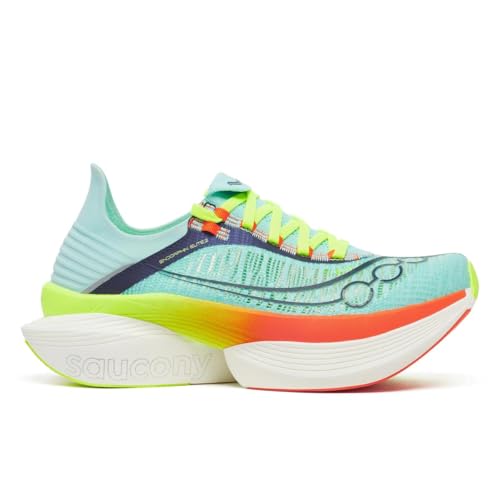
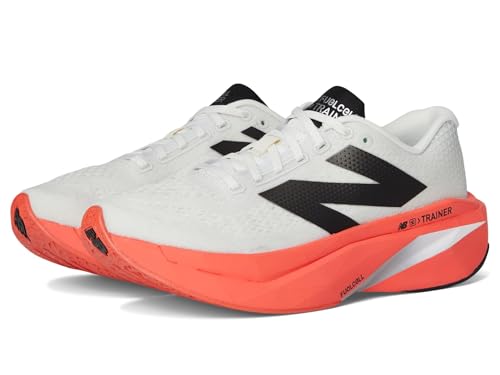

As an Amazon Associate we earn from qualifying purchases at no extra cost to you.
At a glance
| Shoe family | Best for | Key traits (as the makers describe them) | Limits |
|---|---|---|---|
| Nike Alphafly | Fast runners wanting maximum bounce | Carbon plate with forefoot air pods and a very tall foam stack | Premium tier, tall stack can feel unstable on turns |
| Nike Vaporfly | Racers who want a lighter, more stable super shoe | Carbon plate, lightweight foam, lower stack than the Alphafly | Premium tier, limited outsole durability |
| Adidas Adizero Adios Pro | Runners who like a firm, propulsive ride | Rod-style structures plus a lightweight foam | Premium tier, feels firmer to some |
| Asics Metaspeed Sky and Edge | Longer-stride or quicker-cadence racers | Two versions tuned for different running styles | Premium tier, choose the version for your style |
| Saucony Endorphin Pro | Runners wanting a smooth rolling race shoe | Carbon plate with a rocker geometry | Premium tier |
| Saucony Endorphin Speed | Marathon training and budget-conscious racing | Nylon plate, springy foam, daily-trainer durability | Mid-range tier, heavier than super shoes |
| Asics Novablast | Cushioned, bouncy training miles | Soft foam with a high-energy feel | No plate, less efficient at race pace |
| Hoka Mach | Fast but protective tempo and long runs | Light cushioned trainer with a responsive foam | Fit can run narrow on some versions |
| Brooks Hyperion line | Runners who want a fast Brooks option | Nitrogen-infused foam, some versions plated | Lineup varies, so check the version |
What makes a good marathon shoe
A marathon asks your feet to absorb tens of thousands of impacts. Cushioning, weight, stability and fit matter more than any single headline feature. Reviewers at outlets such as Runner’s World and Believe in the Run generally evaluate these shoes on energy return, weight, stability, outsole wear and fit over long distances.
Carbon plates and super foams
Most modern racing shoes pair a stiff plate (often carbon fiber) with a lightweight, resilient foam, typically a PEBA-based compound. The makers say this combination improves running economy, and published research has reported average economy gains for these shoes compared with traditional racers, though individual results vary. Governing bodies set limits on sole thickness for road racing, so the tallest shoes are designed to sit at the permitted limit. If you race in sanctioned events, check that your model is allowed.
Weight and stack height
Super shoes usually weigh less than a typical trainer despite carrying more foam. A tall stack gives bounce but can reduce stability, especially for runners with ankle concerns or those who run on cambered roads. A lower stack, as in the Vaporfly and some Asics racers, tends to feel more stable.
Drop and geometry
Heel-to-toe drop in marathon shoes commonly falls in a mid-single-digit millimeter range. Rockered shapes help the foot roll forward, which many runners find reduces late-race calf fatigue. If you are used to a higher-drop trainer, move to a lower-drop racer gradually.
Racing shoes versus training shoes
Super shoes tend to wear faster than daily trainers, and makers often suggest saving them for key workouts and race day. The foam can also lose some of its snap with mileage. A common approach is to run a few long runs in the racing shoe so your feet and calves adapt, but to do most training in a durable shoe. Budget-conscious runners can often cover training and a first marathon in one plated trainer like the Endorphin Speed, which reviewers frequently describe as a versatile choice.
Fit, sizing and care notes
- Feet swell during long runs. Many runners choose a half size up from their street shoe or ensure about a thumb’s width of room in front of the toes.
- Try shoes late in the day, with the socks you will race in.
- Racing shoes can run narrow. Look for wide options if the standard width pinches; several brands list wide widths for trainers more often than for racers.
- Rotate two pairs if you can, since foam recovers between runs according to several makers.
- Air-dry shoes away from direct heat, and do not machine wash plated racers.
- Replace trainers when cushioning feels flat or the outsole is worn through. Makers commonly cite several hundred miles as a typical range, but this varies by runner weight and surface.
- Persistent foot, shin or knee pain is a reason to see a doctor or sports podiatrist rather than simply changing shoes.
Pick X if
| If you … | Pick |
|---|---|
| Want the highest-bounce race shoe and run fairly fast | Nike Alphafly |
| Want a lighter, steadier plated racer | Nike Vaporfly or Asics Metaspeed |
| Prefer a firm, snappy feel | Adidas Adizero Adios Pro |
| Want a smooth rolling race shoe | Saucony Endorphin Pro |
| Need one shoe for training and race day on a mid-range budget | Saucony Endorphin Speed |
| Want soft, bouncy training miles | Asics Novablast |
| Need a light, protective tempo trainer | Hoka Mach |
| Are a slower runner or first-timer who values comfort over speed | A max-cushion trainer (see alternatives) |
Who benefits from a super shoe?
Studies of plated shoes have reported larger average gains for faster runners, though many recreational runners report finishing more comfortably too. The shoes are not magic. Training volume, pacing and fueling matter far more. If your budget is limited, a mid-range plated trainer gives much of the feel at a gentler cost than a premium racer. A first-time marathoner who prioritizes comfort over time may be better served by a cushioned trainer.
Alternatives worth considering
- Puma Fast-R Nitro Elite and New Balance FuelCell SC Elite: Other plated racers that reviewers mention, offering different foam feels and fits.
- Hoka Rocket X and Clifton families: The Rocket X line is a plated racer, while the Clifton is a lighter cushioned trainer.
- Brooks Glycerin or Asics Gel-Nimbus: Max-cushion trainers for slower paces and heavy training weeks.
Race-week checklist
Do not debut any shoe on race day. Run at least one long run in the exact pair, with the same socks and lacing. Check that laces stay tied, consider a runner’s loop lock, and apply any anti-chafe products you plan to use. If your toes touch the front on downhills during a long run, go up half a size.
Matching the shoe to your pace and training block
Runners finishing in the three-hour range are the group most often discussed in super-shoe research, and their choices usually come down to stability and feel on race day. Runners finishing in four to five hours spend longer on their feet, so comfort, a wide toe box and a forgiving heel matter more than the last gram of weight. Many of these runners choose a mid-range plated trainer or a cushioned daily shoe for the whole build-up and race. Because your stride changes as fatigue sets in, reviewers often suggest doing at least one long run at goal marathon pace in the shoe you plan to race in.
Terrain and weather
Most racing shoes are built for dry pavement. Wet roads, painted lines and metal bridge grates can feel slick in shoes with thin or exposed foam outsoles, so look at the outsole coverage the maker describes. Cold weather can stiffen some foams, and heat can soften them, so a shoe may feel different on a cold start line than on a warm training run. Trail marathons need a different shoe entirely, with lugged outsoles and more protection.
Socks, lacing and blister prevention
Seamless, moisture-wicking running socks reduce friction, and many marathoners wear the same sock brand in training and on race day. If you feel pressure across the top of the foot, try skipping an eyelet or using a window lacing pattern. If your heel lifts, use the extra top eyelet for a heel lock. Hot spots that appear on a long run are a signal to adjust fit or size before race day, not to push through.
Injury history
Switching suddenly from a conventional trainer to a tall, rockered super shoe changes how load is shared between the calf, Achilles tendon and foot. Many coaches suggest phasing the new shoe in over a few weeks. If you have a history of Achilles, calf or stress-related injuries, talk to a clinician or coach before changing shoe type close to a race.
Frequently Asked Questions
Are carbon-plated shoes worth it for a first marathon?
Not necessarily. Plated shoes are designed to improve running economy at faster paces, and they can be less forgiving for beginners. A cushioned, durable trainer is often a better first choice, and some mid-range plated trainers sit in between.
How many miles do marathon shoes last?
Makers and reviewers commonly cite a few hundred miles for trainers, and fewer for super racers. Wear depends on body weight, surface and stride. Replace shoes when the cushioning feels flat or the outsole is worn.
Should I size up for a marathon?
Many runners go up about half a size to allow for swelling over 26.2 miles. Aim for a thumb’s width in front of the longest toe, and make sure the heel stays locked in.
Can I train in my racing shoes?
You can, but the foam and outsole may wear faster than a trainer. Many runners use them for a few long runs and key workouts, then save them for race day.
Are super shoes legal in races?
Road-racing rules limit sole thickness and require shoes to be available for purchase. Models sold by major brands are designed to meet current limits, but check your event’s rules.
When should I see a professional about my feet?
If you have persistent pain, numbness or recurring injuries, see a doctor or sports podiatrist. A shoe change alone may not address the cause.



