Key takeaways
- Head size. Bigger heads (105-115 sq in) have a larger sweet spot, so off-center hits still go over the net. Standard 98-100 sq in frames reward precise contact you have not built yet.
- Weight. Lighter frames are easier to swing and maneuver at the net, but very light rackets transmit more shock and feel unstable against hard-hit balls. Around 260-290 g unstrung is the sweet spot for most adult beginners.
- Stiffness. Stiffer frames give more free power but can be harsher on the arm. Flexible frames feel softer and more controlled.
- Strung or unstrung. Budget rackets usually come prestrung with basic synthetic gut. Performance frames are often sold unstrung, so add $25-$50 for strings and labor.
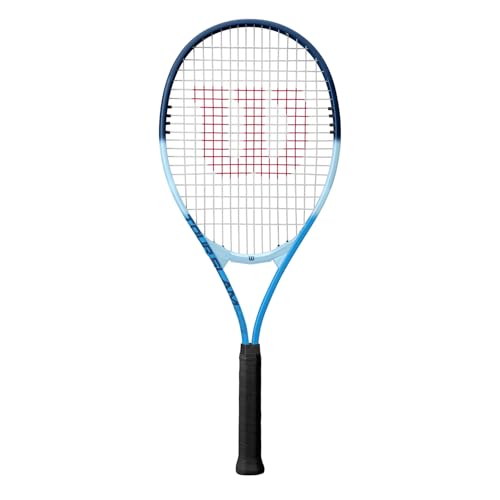
The best tennis racket for most beginners is a light, oversized frame with a 105 to 110 square inch head and an unstrung weight of roughly 260 to 290 grams, such as the Wilson Clash 108 v3 or Babolat Pure Drive 107; if you only plan to play casually and want to spend under $100, the prestrung Head Ti.S6 is the classic budget choice. The rest of this guide explains how to choose between them based on how often you play, your age and strength, and how quickly you expect to improve.
Our top picks



As an Amazon Associate we earn from qualifying purchases at no extra cost to you.
What Actually Makes a Racket “Beginner-Friendly”
Marketing aside, four specs decide whether a racket helps or hinders a new player.
- Head size. Bigger heads (105-115 sq in) have a larger sweet spot, so off-center hits still go over the net. Standard 98-100 sq in frames reward precise contact you have not built yet.
- Weight. Lighter frames are easier to swing and maneuver at the net, but very light rackets transmit more shock and feel unstable against hard-hit balls. Around 260-290 g unstrung is the sweet spot for most adult beginners.
- Stiffness. Stiffer frames give more free power but can be harsher on the arm. Flexible frames feel softer and more controlled.
- Strung or unstrung. Budget rackets usually come prestrung with basic synthetic gut. Performance frames are often sold unstrung, so add $25-$50 for strings and labor.
Beginner Racket Comparison
| Racket | Head size | Weight (unstrung) | Length | Character | Price range |
|---|---|---|---|---|---|
| Head Ti.S6 | 115 sq in | about 225 g | 27.75 in | Very light, head-heavy, prestrung | $60-$100 |
| Babolat Boost Drive | 105 sq in | about 260 g | 27 in | Light, prestrung, Pure Drive look | $80-$120 |
| Wilson Clash 108 v3 | 108 sq in | 280 g | 27.25 in | Very flexible, arm-friendly | $200-$260 |
| Babolat Pure Drive 107 | 107 sq in | 285 g | 27 in | Stiffer, easy power and spin | $200-$260 |
| Wilson Clash 100 v3 | 100 sq in | 295 g | 27 in | Flexible, more control, grow-into frame | $200-$260 |
Which Racket Fits Your Situation
| You are… | Choose | Reason |
|---|---|---|
| Trying tennis a few times this summer | Head Ti.S6 | Lowest cost, ready to play, huge sweet spot |
| Older adult or returning after years off | Head Ti.S6 or Clash 108 v3 | Light swing weight, or a soft frame that is easy on joints |
| Taking weekly lessons and want one racket for 2-3 years | Clash 108 v3 | Forgiving now, still useful as strokes develop |
| Athletic teen or adult who wants easy depth | Pure Drive 107 | Power and spin without a full-size Pure Drive’s demands |
| Played other racket sports and pick things up fast | Clash 100 v3 | Smaller head adds control as consistency arrives |
| Want a brand-name frame but stay under $120 | Babolat Boost Drive | Prestrung, lighter cousin of the Pure Drive |
Notes on Each Pick
Head Ti.S6
This titanium-graphite frame has been around for decades for a reason: it is light, inexpensive and generates power without a long swing. Its 115 square inch head is the largest here. The trade-off is control. Because it is so light and head-heavy, the ball can fly long when you swing hard, and players usually outgrow it once they develop full strokes. For recreational doubles or occasional hitting, it is hard to beat for the money.
Wilson Clash 108 v3
The Clash series is known for being unusually flexible for a modern racket, which translates into a soft, comfortable feel and good ball pocketing. The 108 version adds a larger head and an extra quarter inch of length, which helps on serves. It is among the best choices for anyone worried about arm comfort, though it costs considerably more than prestrung options and is usually sold unstrung.
Babolat Pure Drive 107
The standard Pure Drive 100 is an intermediate-to-advanced frame. The 107 keeps the family’s easy power and spin-friendly string pattern in a slightly lighter, larger package. It is stiffer than the Clash, so beginners with any history of elbow or wrist issues may prefer the Wilson, but players who want the ball to jump off the strings will like it.
Wilson Clash 100 v3 and Babolat Boost Drive
The Clash 100 v3 is a sensible “skip a step” choice for fast learners, since its 100 square inch head gives more precision once you make consistent contact. The Boost Drive sits at the other end: prestrung, lighter and much cheaper than the Pure Drive line, aimed at casual players who want a recognizable frame.
Getting the Grip Size Right
A grip that is too small makes you squeeze harder; one that is too large limits wrist movement. A simple measurement works for most adults:
- Open your hitting hand with fingers together.
- Measure from the middle crease of your palm to the tip of your ring finger.
- Use the table below. If you fall between sizes, choose the smaller one and add an overgrip, which adds about 1/16 inch.
| Measurement | US grip size | Common fit |
|---|---|---|
| 4 to 4 1/8 in | 1 (4 1/8) | Juniors, smaller hands |
| 4 1/8 to 4 1/4 in | 2 (4 1/4) | Many women |
| 4 1/4 to 4 3/8 in | 3 (4 3/8) | Many men |
| 4 3/8 to 4 1/2 in | 4 (4 1/2) | Larger hands |
Children under about 10 should use junior rackets (19 to 26 inches long) sized to height rather than a cut-down adult frame.
Strings and Tension for New Players
If you buy an unstrung frame, ask for a synthetic gut or multifilament string rather than a stiff polyester. Polyester strings help advanced players control big swings but are harsh on the arm and lose tension quickly. Stringing in the middle to lower part of the racket’s recommended tension range, often around 50 to 55 pounds, gives more power and comfort. A good rule of thumb is to restring as many times per year as you play per week, so a twice-a-week player restrings about twice a year.
Common Beginner Mistakes
- Buying a pro’s racket. Heavy, small-headed tour frames make learning harder.
- Going ultra-light for “easy power.” Very light frames vibrate more and are less stable against hard serves.
- Ignoring grip wear. A slick grip causes over-squeezing. Overgrips cost a few dollars and take a minute to change.
- Skipping a demo. Many tennis shops and clubs offer demo programs; hitting two or three frames for a session tells you more than any spec sheet.
Racket Specs and Terms Explained
Head size
Head size is the string-bed area in square inches. A bigger head enlarges the sweet spot and adds easy power, which helps when contact is inconsistent. A smaller head asks for cleaner contact but rewards it with control. For a first racket, the middle-to-large range is the forgiving place to start, then you can move down as your timing steadies.
String pattern
The pattern is the count of main and cross strings, for example 16 by 19. An open pattern has fewer strings and spaces them wider, which tends to give more bite on the ball and more power. A denser pattern feels firmer and lasts longer between breaks. Most beginner frames use an open pattern because it is easier to generate depth.
Balance
Balance describes where the weight sits along the frame. Head-heavy rackets put more mass in the hitting zone, which adds power with less effort. Head-light frames feel quicker to maneuver at the net. For a new player, a head-heavy or even balance is usually easier to swing.
Stiffness and feel
Stiff frames transfer more energy back to the ball but also more vibration to the arm. Flexible frames feel softer and are often described as comfortable. The Wilson Clash line is commonly described as flexible and arm-friendly, while the Babolat Pure Drive line is known for a lively, stiffer response.
Length
Standard adult rackets are about 27 inches long. Extended frames add reach and a little leverage on serves, but they feel harder to swing and can leave newer players late on the ball. Unless you are tall or want extra serve power, a standard length is the safer choice.
Grip shape and handle
The handle has eight flat sides, called bevels, and your index knuckle usually rests against one of them. Rackets are sold with a stated grip size, but overgrips and wrap tape can add thickness. A handle that is too small makes you squeeze, while one that is too large restricts wrist movement.
Weight versus swing feel
Unstrung weight is only half the story. Swingweight describes how heavy the frame feels in motion, and it depends on where the mass sits. A light racket with weight in the head can still feel sluggish, while a slightly heavier one with balanced weight can feel easy to whip around. When listings show only grams, treat that number as a starting point and read the balance description too.
Which One Should You Buy?
| If you… | Choose… |
|---|---|
| Play casually and want a simple prestrung frame | Head Ti.S6 |
| Want a comfortable, forgiving oversized frame | Wilson Clash 108 v3 |
| Like a lively, powerful response and have a sound arm | Babolat Pure Drive 107 |
| Are improving and want a smaller head for more control | Wilson Clash 100 v3 |
| Want a light, easy-power frame to start with | Babolat Boost Drive |
Who Should Skip These
Anyone with arm, shoulder or elbow pain should be cautious with stiffer frames, since extra vibration tends to aggravate the problem; the Babolat Pure Drive 107 has the livelier, stiffer response of this group and is not the softest option. Very light prestrung frames like the Head Ti.S6 suit casual play, but players who start hitting harder may outgrow them fast. Children should use junior rackets sized for their height, not an adult model with the handle cut down. Advanced players who prefer a heavy, dense-pattern frame will find all of these too forgiving for their style.
Setup and Care Tips
A little attention in the first weeks makes a new racket last and feel better.
- Add an overgrip before your first hit. It protects the original grip, absorbs sweat and lets you fine-tune handle thickness.
- Avoid leaving a racket in a hot car or boot. Heat and cold weaken the frame and string bed over time.
- Wipe the frame and grip after sessions, especially if you play outdoors.
- Inspect the frame for cracks near the throat and head after a hard drop or a clash with the court.
- Keep a spare overgrip in the bag, since a fresh one takes seconds to fit and changes the feel of the handle completely.
- Rotate overgrips often. A worn one makes players squeeze harder, which can tire the forearm.
Frequently Asked Questions
Is a bigger head always better for a beginner?
Usually, yes, because the larger sweet spot forgives off-center hits. Very large heads can feel unwieldy for some players, so pick a size you can swing comfortably.
Should a beginner buy a prestrung racket?
A prestrung racket is a practical start for casual play. Serious learners may later want a better string setup, but the first frame does not need a custom string job.
Why does the racket feel heavy after a few hours?
Fatigue builds quickly in new players, and a head-heavy frame adds to it. If your arm tires early, a lighter frame or a shorter session can help.
Can I share a racket with a friend?
Yes for casual play, but grip size and weight preferences differ. An overgrip helps tune the handle size for each person.
More from Amazon
Programs that pair well with the guide above. Offers and eligibility are set by Amazon and may change.
Free shipping on eligible items, Prime Video and more. Eligible new members can start with a free trial.
Start a Prime free trialA Prime membership for ages 18-24 with a trial period. Eligibility is set by Amazon.
See Prime for Young AdultsAudiobooks and podcasts to listen to on the go. Eligible new members can start with a free trial.
Try Audible freeAd-free music streaming. Eligible new subscribers can start with a free trial.
Try Music Unlimited freeAs an Amazon Associate we earn from qualifying purchases.