
Key takeaways
- You are new or returning after years away: A boxed set (typically 10-14 clubs including driver, fairway wood, hybrid, 6 irons, putter, and bag) ensures proper loft gapping and consistent shaft flex without needing a fitting.
- You play less than twice a month: Forgiveness and ease of launch matter more than workability. Complete sets are almost all designed with high launch and maximum forgiveness.
- Budget is under $800-$1,200: In this range, a complete set delivers the lowest cost-per-club and often includes a bag. Buying the same number of individual clubs separately would cost 30-50% more.
- You want to get on the course immediately: No research on lie angles, shaft weights, or wedge grinds needed.
What's inside
- Complete Set vs. Building Your Own Bag: Which Saves You More?
- The 3 Specs That Actually Change Performance
- Best Golf Clubs by Situation in 2026
- Decision Matrix: Match Your Profile to the Right Spec
- Cost Per Round: A Worked Calculation Before You Spend
- Durability and Ownership Realities Most Listings Skip
- How to Choose in 4 Steps
- Frequently Asked Questions
The best golf clubs for most beginners and intermediates in 2026 are complete forgiving sets with graphite shafts and lightweight cavity-back irons, while improving players get better value from building a custom set around steel-shafted game-improvement irons and a fitted driver.
- Complete Set vs. Building Your Own Bag: Which Saves You More?
- The 3 Specs That Actually Change Performance
- Best Golf Clubs by Situation in 2026
- Decision Matrix: Match Your Profile to the Right Spec
- Cost Per Round: A Worked Calculation Before You Spend
- Durability and Ownership Realities Most Listings Skip
- How to Choose in 4 Steps
- Frequently Asked Questions
Complete sets win on price, simplicity, and forgiveness. Individual clubs win on fitting, gapping, and long-term performance. Your skill level, swing speed, and how often you play determine which approach saves you money and strokes.
As an Amazon Associate we earn from qualifying purchases at no extra cost to you.
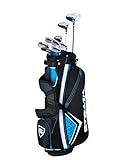

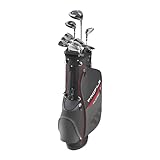

Complete Set vs. Building Your Own Bag: Which Saves You More?
This is the first decision to make before looking at any brand. Both paths can be right, but they solve different problems.
When a Complete Set Is the Better Buy
- You are new or returning after years away: A boxed set (typically 10-14 clubs including driver, fairway wood, hybrid, 6 irons, putter, and bag) ensures proper loft gapping and consistent shaft flex without needing a fitting.
- You play less than twice a month: Forgiveness and ease of launch matter more than workability. Complete sets are almost all designed with high launch and maximum forgiveness.
- Budget is under $800-$1,200: In this range, a complete set delivers the lowest cost-per-club and often includes a bag. Buying the same number of individual clubs separately would cost 30-50% more.
- You want to get on the course immediately: No research on lie angles, shaft weights, or wedge grinds needed.
When to Buy Individual Clubs
- You break 100 consistently and want to break 90: You will benefit from a driver fitted to your swing speed, irons with tighter distance control, and wedges with the right bounce for your course conditions.
- You have a clear strength or weakness: For example, you hit your driver well but struggle with irons. Buying premium irons while keeping a budget-friendly driver and putter is more efficient.
- You have a faster or slower than average swing: Off-the-shelf complete sets usually come in only Regular flex. If you need Senior, Stiff, or Extra Stiff, individual clubs allow proper shaft matching.
The 3 Specs That Actually Change Performance
Marketing focuses on distance claims. The specs below determine forgiveness, accuracy, and whether a club matches your body and swing.
1. Forgiveness: Head Design Matters More Than Brand
Forgiveness is the club’s ability to keep ball speed and direction on off-center hits. It comes from head size, perimeter weighting, and center of gravity (CG).
- Drivers: 460cc is the maximum legal size and the most forgiving. Any smaller (like 440cc) is for workability, not help. Look for Moment of Inertia (MOI) above 5,000 g-cm² for beginners.
- Irons: Cavity-back irons with a wide sole and perimeter weighting are 20-30% more forgiving than muscle-back blades. Super game-improvement irons add a hollow body or foam filling to lower the CG.
- Hybrids vs. Long Irons: A 4-hybrid is significantly easier to launch than a 4-iron for anyone with a swing speed under 85 mph with a driver.
2. Shaft Material and Flex
Shaft is at least half the club’s performance.
- Graphite: Lighter (50-85 grams), dampens vibration, helps generate clubhead speed. Standard in drivers, fairway woods, hybrids, and in most irons for seniors, women, and slower swingers. Also common in complete sets for all players to keep total weight down.
- Steel: Heavier (90-130 grams), more stable and consistent for tempo control, less expensive. Preferred in irons and wedges for intermediate and faster swingers who prioritize accuracy over raw speed. A steel-shafted 7-iron will typically be 10-15 grams heavier than its graphite equivalent and fly slightly lower.
- Flex: Choosing the wrong flex costs more distance than the wrong brand. A player with an 80 mph driver swing using a Stiff flex will lose height and carry. A player with a 105 mph swing using a Regular flex will lose accuracy and left-right control.
3. Total Weight and Swing Weight
Lightweight clubs (total weight under 290g for a driver, 360g for a 7-iron) help players with slower swing speeds (under 90 mph) gain 3-6 mph of speed. Standard weight clubs give stronger players more control. If you feel you have to swing hard to get the club to move, it is too heavy. If you feel you cannot feel where the clubhead is, it is too light.
Best Golf Clubs by Situation in 2026
Instead of a single winner, these picks match common budgets and skill levels using real product lines available in 2026.
| Situation | Recommended Approach | Example Models (Type) | Key Specs (Approx.) | General Market Range |
|---|---|---|---|---|
| True Beginner, $500 – $800 | Complete 12-piece set, graphite shafts, all Regular flex | Wilson Profile SGI, Tour Edge Bazooka 370, Callaway Strata Ultimate | Driver 460cc, 10.5°; Irons: cavity-back, wide sole, graphite 65g; Total bag weight ~11 kg | $500 – $800 for 12 clubs + bag |
| Beginner Who Wants to Improve, $900 – $1,400 | Premium complete set | Callaway XR Complete Set, Cobra FLY-XL 2.0 Complete Set, TaylorMade RBZ SpeedLite | Driver 460cc with adjustable hosel; Hybrids 4H/5H replace long irons; Irons hollow-body, steel or graphite 75-95g | $900 – $1,400 |
| Intermediate (Shoots 90-100), $1,200 – $1,800 | Build your own: Fitted driver + game-improvement irons | Driver: Ping G430 SFT / TaylorMade Qi10; Irons: Callaway Paradym X, Ping G430, TaylorMade Stealth HD | Irons: 7-iron loft 28-30°, offset 4-6mm, steel 85-105g or graphite 65-75g; MOI >2,500 g-cm² | $1,200 – $1,800 for driver + 6 irons + hybrid + wedges |
| Improving Player (Shoots 85-95) | Player-distance irons + fitted wedges | Irons: Titleist T350, TaylorMade P790, Ping i530; Wedges: Titleist Vokey SM10, Callaway Jaws Raw | 7-iron loft 30-32°, thinner topline, steel 95-120g; Wedges: 54°/58° with 8-14° bounce | $1,500 – $2,200+ |
| Senior / Slower Swing Speed (Driver <85 mph) | Ultra-lightweight graphite throughout | Cobra AIR-X 2, Callaway Paradym Star, Wilson Launch Pad 2 | Driver 45.5″-46″, 50-55g shaft; Irons graphite 55-65g; Swing weight C8-D0 (lighter than standard D2) | $1,000 – $1,700 |
Decision Matrix: Match Your Profile to the Right Spec
Use this to translate your situation into a spec sheet to take to a shop or fitter.
| Your Profile | Forgiveness Priority | Best Shaft Material | Weight Priority | Ideal Set Makeup |
|---|---|---|---|---|
| New, athletic, practice 1x/month, budget conscious | Maximum | Graphite in woods/hybrids, graphite or light steel in irons | Light (easier to swing) | Complete set with 2 hybrids, no 3-5 irons |
| Play weekly, shoot 95-105, average strength | High | Graphite driver/woods (60-65g), Steel irons (95-105g) Regular flex | Standard-Light | Driver, 3W, 4H, 5H, 6-PW, 52° & 56° wedges, putter |
| Play weekly, shoot 88-98, faster swing 95+ mph | Moderate | Steel irons (105-120g) Stiff flex, graphite woods (65-75g) | Standard | Fitted driver + game-improvement or player-distance irons |
| Older player or smaller build, swing speed <85 mph | Maximum | Graphite in ALL clubs, Senior or Regular flex, 45-65g | Ultra-Light | Driver 12°, 5W, 4H, 5H, 7-PW/SW, lightweight bag |
| Strong but inconsistent ball-striker | High in woods, Moderate in irons | Steel wedges (120g+) for control | Standard | Forgiving woods + cavity-back irons + 2 specialty wedges |
Cost Per Round: A Worked Calculation Before You Spend
A complete set that seems cheap can be expensive if you outgrow it in one season. Do this quick math:
Formula: (Set Price) / (Expected Rounds Before Upgrade) = Cost Per Round
- Budget complete set: $650 / 40 rounds (about 1 year of casual play) = $16.25 per round. Good value if you are testing whether you will stay with golf.
- Premium complete set: $1,200 / 100 rounds (2-3 years before any club feels limiting) = $12.00 per round. Lower long-term cost despite higher upfront price.
- Built bag with fitted irons: $1,700 / 200 rounds (4-5 years, only wedges/grips need replacing) = $8.50 per round. Highest initial cost, lowest cost over time if you play regularly.
If you play fewer than 15 rounds per year, the budget set is the rational economic choice. If you play 25+ rounds per year, investing in irons you will not need to replace quickly actually saves money.
Durability and Ownership Realities Most Listings Skip
Golf clubs last years, but not all parts age equally.
- What wears first: Grips and wedges. Grips lose tackiness after 40-60 rounds or one year of sun exposure, costing $8-$15 per club to replace. Wedge grooves dull after 75-100 rounds of practice, especially from sand and range mats, which reduces spin noticeably.
- Shafts and heads: Graphite shafts can chip or crack if they bang together without headcovers. Steel shafts almost never break but can rust at the hosel if stored wet. Driver faces can develop hairline cracks after 5+ years of high-speed use, but irons rarely fail structurally.
- Cleaning and storage: Clean grooves with a plastic brush and warm water after every round. Never soak grips in hot water. Store indoors, not in a hot car trunk where epoxy and grips degrade. Use headcovers on woods and hybrids always, and on irons during travel.
- Common mistakes: Buying a full set of blades as a beginner because they look professional will make the game harder and more expensive. Buying a Stiff shaft because you think you should rather than what your swing speed needs will cost you 10-15 yards. Ignoring loft gaps – you need about 4-5° between wedges – creates awkward 30-yard distance holes.
How to Choose in 4 Steps
Follow this sequence instead of browsing by brand alone:
- 1. Measure your driver swing speed. Most shops have a free monitor. Under 85 mph = Senior flex, 86-95 mph = Regular, 96-105 mph = Stiff. This filters 50% of incompatible sets instantly.
- 2. Decide complete vs. individual. Use the cost-per-round math above and how often you will play.
- 3. Prioritize the right gapping. Ensure your set has no gap larger than 15 yards. For most beginners, that means 2 hybrids (4H at ~22° and 5H at ~25°) instead of long irons, and at least two wedges after the pitching wedge (e.g., 52° and 56°).
- 4. Get a basic fitting check. Even with a complete set, ask a shop to check length and lie. A wrist-to-floor measurement takes 2 minutes and determines if you need +0.5″ or -0.5″ or standard length. Poor length causes consistent toe or heel contact.
Frequently Asked Questions
Should beginners buy expensive pro-level clubs?
No. Blades and low-handicap clubs (like TaylorMade P7MB or Titleist MB) have smaller sweet spots and less launch help. They will lower your enjoyment and raise your scores until your handicap is consistently under 10.
Is graphite or steel better for irons?
Neither is universally better. Graphite is better for swing speeds under 90 mph, players with joint pain, or anyone who wants lighter weight for more speed. Steel is better for faster, more aggressive tempos where weight provides control and feedback. Many players now use graphite in hybrids and steel in short irons and wedges.
How many clubs do I actually need to start?
You can start with 9-11 clubs and not be at a disadvantage: driver, fairway wood, two hybrids, 7-iron through 9-iron, pitching wedge, sand wedge, and putter. This covers every distance without complicating decisions. You can add gaps later as your distances become consistent.


