The best soccer ball for most players is a size 5 thermally bonded or machine-stitched ball with FIFA Quality or IMS certification, and the Adidas Trionda Competition, Select Numero 10 and Nike Academy cover match play, club use and daily training. If you want the official 2026 World Cup match ball, the Adidas Trionda Pro is the premium choice. This guide sorts six current balls by use, explains size and construction, and tells you which ball to buy for a team, a backyard or an indoor court.
Our top picks



As an Amazon Associate we earn from qualifying purchases at no extra cost to you.
Quick Comparison of Soccer Ball Picks
| Ball | Best for | Construction | Sizes | Certification | Budget tier |
|---|---|---|---|---|---|
| Adidas Trionda Pro | Premium match ball | Thermally bonded panels | Size 5 | FIFA Quality Pro | Premium |
| Adidas Trionda Competition | Best overall for serious play | Bonded or machine-stitched by model | 3, 4, 5 | See listing | Mid |
| Select Numero 10 | Clubs and high school | Hand-stitched PU cover | 4, 5 | IMS approved | Mid |
| Nike Flight | Accuracy and flight stability | Bonded | Size 5 | FIFA Quality Pro | Premium |
| Nike Academy | Daily training | Machine-stitched | 3, 4, 5 | See listing | Budget |
| Puma Orbita | Value for match and practice | Machine-stitched or bonded by model | 3, 4, 5 | See listing | Budget to mid |
Certification and construction differ by version and year, so confirm details on the maker’s page before ordering.
1. Adidas Trionda Pro: Best Premium Match Ball
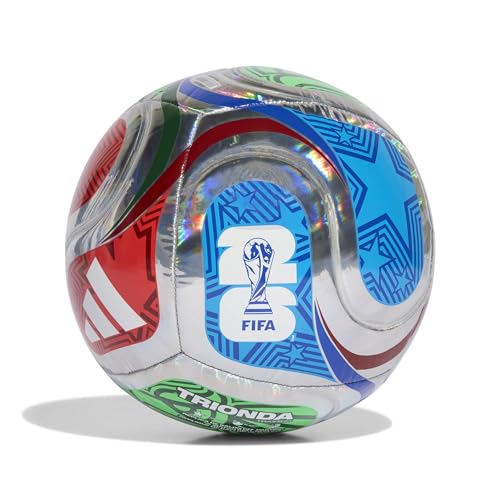
The Trionda is the match ball of the 2026 FIFA World Cup, and the Pro version carries the highest certification level. It uses a four-panel, thermally bonded design with minimal stitching, which helps it hold shape and take on less water. The surface texture is meant to give steady flight and a clean strike.
It costs a lot, and it is overkill for a casual kickabout. Use it for a final, a serious match, or as a prized gift. Rotate it with a cheaper training ball to extend its life.
2. Adidas Trionda Competition: Best Overall
For players who want the Trionda design without the premium price, the Competition version is a smart compromise. It carries the same graphic and a similar panel shape and is made for regular match and training use on grass and turf. It comes in sizes 3, 4 and 5, which makes it practical for a youth club.
It will not match the Pro in touch or water resistance. For most teams, the difference is minor compared with the savings.
3. Select Numero 10: Best for Clubs and High School
Select, a Danish brand, makes the Numero 10 as a hand-stitched ball with a diamond-textured polyurethane cover and a latex bladder. Hand stitching gives a soft touch and a durable seam structure, and the ball is approved for competitive matches in many leagues. Latex bladders feel responsive but lose air faster, so check pressure before each session.
Because it is hand-stitched, it takes on more water than a bonded ball on rainy days. It is a favorite for clubs that want a classic feel and long life.
4. Nike Flight: Best for Flight Accuracy
Nike Flight is the line used by the English Premier League, and it is known for its flight stability. The ball features a grooved surface that is designed to reduce wobble and keep the flight true. Accuracy-minded players such as strikers and set-piece takers will appreciate it.
It is expensive and designed for good fields. Annual graphics change, so check which year’s model you are buying.
5. Nike Academy: Best for Training
The Academy is a durable machine-stitched ball made to take heavy use on grass, turf and hard surfaces. The cover is thick and the butyl bladder holds air longer than latex. Many youth teams buy a bag of these for practices.
The touch is firmer than a match ball. It is perfect for drills and warm-ups, but not for an important match.
6. Puma Orbita: Best Value
The Puma Orbita covers match and training use at a friendly price. Newer Orbita models are bonded in some versions, which gives them better shape retention than the cheapest stitched balls. Sizes run from 3 to 5, and the graphics are bright.
Quality varies by version, from entry-level machine-stitched to match-level bonded. Make sure you pick the version that fits your play level.
How to Choose a Soccer Ball
Size by age
Size 3 is for ages under 8, size 4 for ages 8 to 12, and size 5 for ages 13 and up and adults. Using the right size helps technique.
Construction
Machine-stitched balls are durable and affordable. Hand-stitched balls offer a soft touch and long life. Thermally bonded balls have no stitching, absorb less water and keep a consistent shape.
Certification
FIFA Quality and FIFA Quality Pro marks indicate testing for weight, size, bounce and water absorption. IMS means the ball meets International Matchball Standard. Leagues may require one of these for official matches.
Surface
Grass and turf are easy on balls. Concrete and indoor courts wear the cover quickly, so use a cheap training ball or a futsal ball on hard surfaces.
Bladder material
Latex feels livelier and softer, but loses air faster. Butyl holds air longer and suits training.
Match Ball or Training Ball?
| Use | Choose | Reason |
|---|---|---|
| League match | Match ball with certification | Consistent flight and touch |
| Team practice | Training ball | Durable, cost effective |
| Backyard play | Value ball | Handles rough surfaces |
| Indoor or futsal | Futsal ball with lower bounce | Control on hard floors |
Many teams keep two or three training balls and one or two match balls to extend their life.
Frequently Asked Questions
What size soccer ball do I need?
Size 5 is for ages 13 and up and for adults. Size 4 suits ages 8 to 12, and size 3 is for younger children.
What is the difference between a match ball and a training ball?
A match ball is built to precise standards and has a more refined cover. A training ball is made to withstand heavy use and costs less.
How much air should a soccer ball have?
Most balls need 8 to 12 psi, and the recommended range is printed near the valve. Check it before each session.
Are hand-stitched soccer balls better?
They are durable and have a soft touch, but they absorb more water than bonded balls. Neither is automatically better.
Can I use a grass ball on concrete?
You can, but it will wear out quickly. Use a cheaper ball or one designed for street play.
How do I make a soccer ball last longer?
Keep it properly inflated, clean off mud, store it away from heat and avoid abrasive surfaces. Rotate balls in practice.