Key takeaways
- Four shotshell belts and bandoliers compared: 25-shell waist belts and 56-shell bandoliers for 12 and 20 gauge, with fit, loop and capacity tips.
A shotshell belt looks simple, but the wrong one makes itself known fast: loops that let shells slide out when you bend for a bird, a strap that runs out of adjustment over a heavy jacket, or a capacity that empties halfway through a busy dove field. The real decision is how many shells you honestly burn in a session, which gauge you shoot, and whether you want that weight riding on your waist or across your shoulder.
This guide is for upland hunters, dove and waterfowl shooters, and clay shooters who want live shells on their body instead of in a bag. Every product below was picked from the names and specifications on its Amazon product page, then matched against a second source for the same model, gauge range and capacity before it earned a place here.
Quick Picks
As an Amazon Associate we earn from qualifying purchases.
| Product | Best for | Key spec from title |
|---|---|---|
| Aim Sports Shotgun Shell Bandolier, 56 Rounds | Long upland walks where you want a full hunt of shells across your chest | 56 rounds, 12 or 20 gauge |
| Ezshoot Bandolier Shotgun Shell Holder, 56 Shells, Black | High-volume dove fields where you reload again and again from the shoulder | 56 shells, black |
| Hunters Specialties Shotgun Shell Belt | A plain waist belt for a morning duck hunt or a relaxed round of clays | One size, black |
| DynoGoods Dove, Field and Game Belt, Adjustable, Camo | Dove shoots where you also want shell pockets and a game bag on one belt | Adjustable from 29 to 60 inches |
How to Choose
Match Capacity to How You Actually Shoot
Capacity is the first fork in the road. A 25-shell belt covers a full box of ammunition, which suits a morning in a duck blind, a walk behind a dog, or a casual round of sporting clays. A 56-shell bandolier carries more than two boxes, which matters on a hot dove field where a limit can take thirty or forty shots, or on a preserve hunt where nobody wants to walk back to the truck. Extra capacity is not free, though: fifty-six loaded shells add real weight, so buy the count your typical day uses, not the biggest number on the page.
Check Gauge and Shell Length Before Anything Else
Loops are sized for a gauge, and a belt that swallows 12 gauge hulls will grip 20 gauge shells loosely, while tight 20 gauge loops may refuse a 12 gauge shell entirely. Several belts here cover both 12 and 20 gauge, which helps households that share gear. Shell length matters too, because a loop cut for short field loads may not hold a long magnum shell securely when you are pushing through brush. Read the gauge range in the product name and specifications literally, and if your gun and loads are not named there, keep looking rather than hoping elastic will forgive the mismatch.
Decide Between a Waist Belt and a Shoulder Bandolier
A waist belt keeps shells at hip height, where many hunters already reach out of habit, and it layers easily under a vest or over a jacket. A bandolier spreads the same shells diagonally across the chest, which balances a heavy load better on long walks and keeps shells clear of a belt line crowded with a knife, calls or a hand warmer. Fit range decides comfort: check the smallest and largest waist or strap measurements against your own, measured over the clothing you actually hunt in, not over a thin shirt in the kitchen.
Look at Loop Style and the Extras Riding Along
Elastic loops are the standard because they grip different hulls and release a shell with one pull, but pocket-style belts trade that speed for security and simplicity, since shells sit inside a pouch instead of hanging in the open. Then weigh the extras. A full-length zipper pocket swallows a license, choke tubes and a phone. A game bag keeps a dove belt from needing a separate vest. A quick-release buckle lets you drop the whole rig at the truck in one motion. None of these extras helps if the basic carry is wrong, so rank them after gauge, capacity and fit.
The 4 Best Options
Aim Sports Shotgun Shell Bandolier, 56 Rounds

This is the high-capacity pick for hunters who measure a day in dozens of shots. Fifty-six shells ride in loops across the chest, so a dove shooter can work through a long afternoon or an upland hunter can cross big country without rationing ammunition or detouring to the truck. The nylon build suits wet grass, muddy field edges and gear that gets tossed in a truck bed rather than babied. Because the listing covers both 12 and 20 gauge, one bandolier can serve two guns in the same family, which makes it an easy shared purchase for households that shoot both gauges.
Specs
- Holds 56 rounds of shotgun shells
- Fits 12 gauge or 20 gauge shells
- Material: nylon
- Color: black
- Part number: Asbs2
Best for: High-volume dove fields and long upland walks far from the truck
Watch out for: A full load of 56 shells is heavy across one shoulder on an all-day walk
ASIN: B00551HARU
Ezshoot Bandolier Shotgun Shell Holder, 56 Shells, Black

The Ezshoot bandolier answers the same high-volume problem with a plain, all-black holder that keeps fifty-six shells lined up across the torso. It suits dove hunters who shoot fast when birds pour in, preserve hunters working released birds all morning, and anyone who prefers shells presented in a single row they can count at a glance. Worn over the shoulder, it stays out of the way of a belt already carrying a knife or a game pouch, and the black finish pairs with any jacket or vest without adding a camo pattern you may not want outside hunting season.
Specs
- Bandolier-style shotgun shell holder
- Holds 56 shells
- Fits 12 gauge or 20 gauge shells
- Color: black
Best for: Dove and preserve hunters who reload often and want shells across the chest
Watch out for: The listing names capacity and gauge only, so confirm strap details on the page before ordering
ASIN: B08CVFPMPF
Hunters Specialties Shotgun Shell Belt

Not every hunt needs two boxes of shells on the body, and this waist belt is the simple answer for the ones that do not. It is a one-size black belt built around a single job: keep a modest row of shells at your waist for a morning duck hunt, a short upland loop, or a friendly round of clays where a full box is more than enough. The light build, just 113 grams, disappears under a vest or over a jacket, and the single included component is the shell belt itself, with no extra pouches or hardware to manage in the dark before shooting light.
Specs
- Brand: Hunters Specialties
- Model number: 00680
- Color: black
- Size: one size
- Item weight: 113 g
- Included component: shell belt
Best for: Short hunts and clay sessions where one box of shells is plenty
Watch out for: One-size fit and modest capacity leave little room for bulky layers or long shoots
ASIN: B001F0M2V4
DynoGoods Dove, Field and Game Belt, Adjustable, Camo
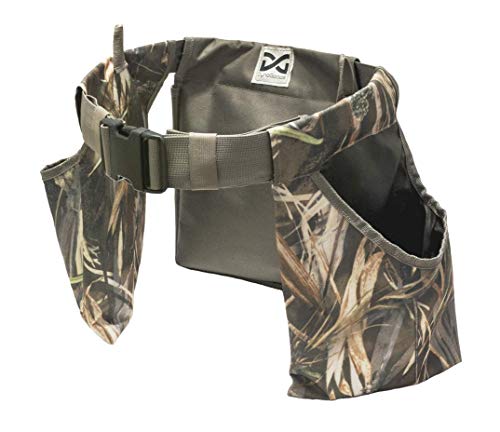
This one is a pocket-style dove belt rather than a loop belt, and that difference is the point. Two large shell pockets hold your live shells inside fabric instead of in open loops, and a game bag on the same belt carries birds as the morning adds up, so a dove shooter can leave the vest at home. The strap adjusts from 29 to 60 inches, the widest fit range in this guide, which helps it ride over anything from a shirt in early season to a jacket in late season. The camo finish is aimed squarely at field use, and the design favors walk-in dove and upland hunting.
Specs
- Dove belt with two large shell pockets and one game bag
- Belt strap adjustable from 29 to 60 inches
- Adjusting below 29 inches requires removing one pouch
- Color: camo
Best for: Dove hunters who want shells and a game bag on a single belt
Watch out for: Pocket carry is slower than pulling shells from open loops, and there are no individual shell loops
ASIN: B07SRF1YM6
Which One Fits Your Situation
Walking All Day Behind a Dog for Upland Birds
Pick the Aim Sports bandolier. Miles of walking punish a heavy waist belt, while a bandolier spreads fifty-six shells across the chest and keeps them clear of brush catching at your hips. The 12 and 20 gauge coverage also means the same rig works whether you carry the light gun or the heavy one that day.
Shooting a Busy Dove Field
Pick the Ezshoot bandolier if your dove days are about volume, because fifty-six shells across the torso keep reloads flowing when birds come in waves. If your dove shoots are slower and you also carry birds out, pick the DynoGoods belt instead: its pockets and game bag replace a vest, and the wide adjustment range fits over whatever the weather demands.
A First Belt for Clays and Occasional Hunts
Pick the Hunters Specialties belt. A new shooter needs shells held securely and nothing more, and this one-size waist belt does exactly that at 113 grams. It works for a round of sporting clays on Saturday and a short hunt the next weekend, and its simplicity means there is nothing to adjust wrong or lose in the field.
Hunting in Layers as the Season Turns Cold
Pick the DynoGoods belt. Its strap adjusts from 29 to 60 inches, far beyond the other belts here, so it still fits in January over an insulated jacket after fitting over a shirt in September. The pocket design also keeps shells sheltered inside fabric when sleet or rain moves in, instead of leaving every hull exposed in an open loop.
Common Mistakes
- Buying loops for the wrong gauge, then blaming the belt when 20 gauge shells slip out of 12 gauge loops or refuse to seat the other way around.
- Choosing the largest capacity by default and spending the season carrying two extra boxes of weight the hunt never uses.
- Measuring waist size over a thin shirt, then finding the belt runs out of adjustment over a winter jacket and waders.
- Treating a pocket-style dove belt and an open-loop belt as the same tool, when one protects shells and the other reloads faster.
- Leaving loaded belts in a damp truck or garage all off-season, which lets elastic relax and fabric mildew before the next opener.
Frequently Asked Questions
Will a 12 gauge shell belt also hold 20 gauge shells?
Only when the listing says so. Some belts in this guide are made for both 12 and 20 gauge, but loops sized purely for 12 gauge grip smaller 20 gauge hulls loosely, and shells can work free while walking. Match the gauge range printed on the product page to the gun you actually carry.
How many shells should a shotshell belt hold?
Let the hunt decide. Twenty-five shells, one full box, covers most duck mornings, upland walks and clay rounds. Dove fields and preserve hunts can burn through two boxes quickly, which is where a 56-shell bandolier earns its weight. Carrying far more than you shoot only adds strain to your shoulder or waist.
Can I wear a bandolier over a heavy hunting jacket?
Yes, and that is one of its strengths. A bandolier rides diagonally across the chest, so it layers over insulated jackets and vests without fighting your waist belt for space. Check the strap length and adjustment range on the product page, and size it while wearing the bulkiest layer you hunt in, not a shirt.
How do I keep shells from slipping out of elastic loops?
Start with the right gauge, since most slipping is a sizing problem, not a worn belt. Push each shell fully home until the loop grips the hull body, and avoid mixing shell lengths in one row. Store the belt unloaded between seasons so the elastic rests, and replace it when loops stay stretched after a shell is removed.
More from Amazon
Programs that pair well with the guide above. Offers and eligibility are set by Amazon and may change.
Free shipping on eligible items, Prime Video and more. Eligible new members can start with a free trial.
Start a Prime free trialA Prime membership for ages 18-24 with a trial period. Eligibility is set by Amazon.
See Prime for Young AdultsAudiobooks and podcasts to listen to on the go. Eligible new members can start with a free trial.
Try Audible freeAd-free music streaming. Eligible new subscribers can start with a free trial.
Try Music Unlimited freeAs an Amazon Associate we earn from qualifying purchases.