Key takeaways
- Compare the best neck harnesses for weighted training, with padded fits, steel chains, tethers, and adjustable straps for safer neck work at home.
A strong neck rarely happens by accident. Most gym programs train the chest, back, legs, and arms in detail, then leave the neck to chance, even though neck strength matters for posture, contact sports, wrestling, boxing, football, and everyday resilience during hard training. A neck harness is a simple tool that closes that gap. You wear the padded head harness, attach a weight plate with a chain or tether, and train flexion, extension, and side-to-side movement under controlled load.
That simplicity is also why choosing well matters. A harness that slips, digs into your forehead, or uses a weak chain will cut a session short and make progressive training hard to trust. A good one stays put, spreads pressure evenly, and lets you add small amounts of weight over time without fighting the equipment. The five picks below cover the main styles worth considering: classic chain models for plate work, a tether model for multi-direction training, and higher-capacity options for experienced lifters who already train their neck regularly.
If you are new to this type of training, go lighter than you think you need, learn the movement with no load first, and build up slowly. Neck training rewards patience and clean form far more than heavy, sloppy reps.
Disclosure: As an Amazon Associate, I earn from qualifying purchases.
How to Choose a Neck Harness
Fit and Adjustability
Fit comes first. Look for an adjustable head strap and, ideally, a separate chin strap. The head strap sets the circumference so the harness does not slide down over your eyes during extension work, while the chin strap keeps it secure when you flip the load behind you for flexion. Hook-and-loop closures are quick to adjust between sets, while buckle closures can feel extra secure once set. One-size designs work for most people, but check whether the straps adjust in more than one place if you have a larger or smaller head.
Padding and Comfort
You will be loading skin and bone, not a large muscle group, so padding matters a lot. Neoprene and padded nylon linings spread pressure across the forehead and crown and reduce chafing during longer sets. Thicker padding, such as a 4mm layer, helps when loads climb. Breathable padding is also worth having if you train in a warm garage gym, because a sweaty harness that slips is both uncomfortable and unsafe. Seams should sit flat, and any metal rings should be positioned so they do not press directly against your ears or temples.
Chain, Tether, or Strap
Most classic harnesses use a steel chain, usually around 30 inches long, that hangs in front or behind and holds standard weight plates. Chains are durable, easy to inspect for wear, and simple to shorten or lengthen by clipping a different link. A nylon tether is the alternative: it keeps the plate centered, runs quieter than a chain, and often pairs with carabiners for cable or band work. Some harnesses give you both side D-rings and a hanging point, which opens up lateral and rotational work with bands in addition to plate-loaded flexion and extension.
Weight Capacity and Build Quality
Check the stated capacity and the hardware behind it. Reinforced stitching, steel D-rings, and a chain with solid welds matter more than a bold capacity claim on its own. Beginners will use light plates for a long time, so a moderate capacity is plenty. Experienced lifters doing heavy extension work should choose a model with a higher stated limit and hardware that looks overbuilt for the job. Whatever you buy, inspect the chain, rings, and stitching regularly and retire the harness if anything frays or bends.
Training Style
Match the harness to how you plan to train. If you mainly want seated or standing plate-loaded nods and extensions, a simple chain harness is ideal and packs flat in a gym bag. If you want four-way training with bands, sled pulls, or rotational work, choose a harness with side clips and multiple attachment points. If you are returning from a layoff or working under guidance from a coach or clinician, prioritize comfort and fine adjustability so you can keep loads very light and progress in small steps.
1. DMoose Fitness Neck Harness for Weight Lifting

The DMoose harness is the classic chain-and-plate design done with an emphasis on comfort. It uses a soft padded head strap and a separate chin strap, so the harness stays centered when the load hangs in front for flexion or behind for extension. The 30-inch heavy duty steel chain gives enough drop for plates to clear your torso, and the hook-and-loop fastening makes it quick to get on and off between sets. It is a sensible first harness for lifters who want straightforward flexion and extension work at home or in a commercial gym, and its padded lining makes light, high-rep sets more tolerable while you learn the movement.
Specs
- Material: 100% nylon
- Padding: Soft padded head and chin strap
- Chain/Strap Type: 30-inch heavy duty steel chain
- Closure: Hook and loop
- Adjustability: Adjustable head strap with support strap
- ASIN: B071W5WP2W
2. Iron Neck Alpha Harness
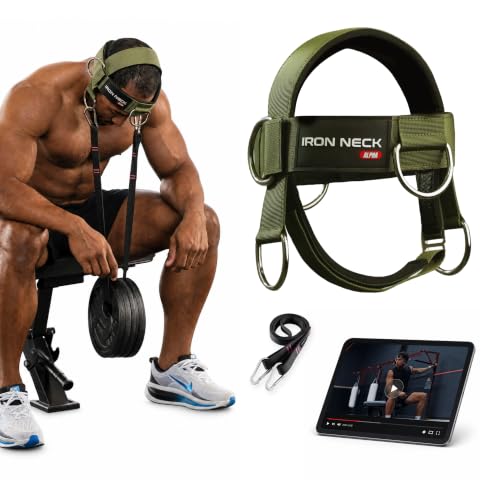
The Iron Neck Alpha takes a different approach from a pure chain harness. Instead of hanging everything from a single chain, it uses a 43-inch nylon tether with two carabiners, plus four side clips and two hanging clips. That layout lets you train up and down, side to side, and with rotation, and it works well with resistance bands and sled pulls as well as plates. The adjustable head strap and chin strap keep the fit secure, and the neoprene nylon construction keeps it light and easy to pack for travel training. Choose this one if you want one harness for a wider range of neck work rather than plate nods alone.
Specs
- Material: Neoprene nylon harness, metal D-rings
- Padding: Soft nylon construction with padded fit
- Chain/Strap Type: 43-inch nylon tether with 2 carabiners, no chain
- Attachment Points: 4 side clips and 2 hanging clips
- Adjustability: Adjustable head strap and chin strap, one size fits most
- ASIN: B08NHWGCN9
3. RDX Neck Harness Weight Lifting Training

The RDX harness is built around padding. Its 4mm padded interior is designed to cushion the head during heavier sets, and the long steel chain gives you room to load plates and adjust the hang by clipping different links. At 90cm, the chain is longer than the typical 30-inch chain, which taller lifters and anyone training from a bench will appreciate. The neoprene nylon build keeps the harness flexible enough to fold into a kit bag, while the adjustable fit suits regular gym use for boxing, grappling, and general strength work. It is a good pick if comfort under load is your main concern.
Specs
- Material: Neoprene nylon
- Padding: 4mm padded interior
- Chain/Strap Type: 90cm long adjustable steel chain (35 inches)
- Adjustability: Adjustable head harness fit
- Use: Plate-loaded flexion and extension training
- ASIN: B011QZ0ENU
4. WKWE Neck Harness

The WKWE harness is the high-capacity option in this group, listed for safely lifting weights up to 280 lbs. That ceiling is far beyond what most people will ever need for neck work, but it signals overbuilt hardware: a 30-inch heavy duty steel chain, a nylon tether, and two carabiners. The neoprene and nylon build includes an adjustable head design with a buckle closure, which gives a firm, set-and-forget fit once dialed in. For experienced lifters who already do heavy extension work and want hardware they will never outgrow, this is the harness to look at, though beginners should still begin with very light loads regardless of capacity.
Specs
- Material: Neoprene, nylon
- Padding: Padded neoprene lining
- Chain/Strap Type: 30-inch heavy duty steel chain with nylon tether and 2 carabiners
- Weight Capacity: Up to 280 lbs
- Closure: Buckle, uniform size
- Adjustability: Adjustable head strap
- ASIN: B0F32M86CW
5. POZTEV Neck Harness with Heavy-Duty Chain

The POZTEV harness keeps things simple and focused: a neoprene and nylon head harness with adjustable head and chin straps and a heavy-duty chain for plate work. The hook-and-loop closure makes sizing changes fast, which helps if you share equipment with a training partner or wear it over different headwear in a cold garage gym. The with-support-strap sizing and padded build suit general strength work, posture-focused training, and gradual progression for people adding neck work to an existing routine. It is a practical, no-fuss choice for home gyms where the harness will be used a few times a week and stored in a drawer between sessions.
Specs
- Material: Neoprene, nylon
- Padding: Padded head harness with support strap
- Chain/Strap Type: Heavy-duty steel chain
- Closure: Hook and loop
- Adjustability: Adjustable head and chin straps
- Size: With support strap
- ASIN: B0D9YKHD66
Verdict: Which Neck Harness Should You Buy?
For most lifters, the best neck harness is the one that fits securely, pads the forehead and crown well, and uses hardware you trust. The DMoose is a balanced all-rounder for classic plate-loaded training, with padding and a chain length that suit beginners and regulars alike. The Iron Neck Alpha is the most versatile pick here, thanks to its tether, carabiners, and side clips for band and rotational work. The RDX stands out for its thicker padding and longer chain, while the WKWE offers the highest stated capacity for experienced lifters who train heavy. The POZTEV covers the essentials in a simple, adjustable package for home use.
Whichever model you choose, treat neck training like any other strength work: warm up, begin with little or no load, move through a comfortable range, and add weight in the smallest steps your plates allow. Two or three short sessions a week, done consistently with clean form, will do more for your neck strength, posture, and confidence in contact sports than occasional maximal efforts. Pick the harness that matches your training style, inspect it often, and progress patiently.
More from Amazon
Programs that pair well with the guide above. Offers and eligibility are set by Amazon and may change.
Free shipping on eligible items, Prime Video and more. Eligible new members can start with a free trial.
Start a Prime free trialA Prime membership for ages 18-24 with a trial period. Eligibility is set by Amazon.
See Prime for Young AdultsAudiobooks and podcasts to listen to on the go. Eligible new members can start with a free trial.
Try Audible freeAd-free music streaming. Eligible new subscribers can start with a free trial.
Try Music Unlimited freeAs an Amazon Associate we earn from qualifying purchases.