Key takeaways
- Heated head contacts: Wipe the metal contact ring and gun port with a dry cloth after each use. Moisture, lotion, or massage oil can corrode the pins and cause intermittent heating. Do not submerge the heated head.
- Battery care: Store at 40-80% charge if you will not use the gun for weeks. Running heat on every session deep-cycles the battery faster; turn heat off for minutes when you only need percussion.
- Attachment fit: Heated heads fit tighter than standard plastic heads. Insert straight without twisting and remove after each session rather than leaving the head mounted. Forcing a hot head out at an angle loosens the collar over time.
- Common mistake: Holding the heated head stationary on one spot for more than 45-60 seconds at the highest temperature. Keep the head moving slowly, and use lower heat on bony areas such as shins, elbows, and collarbones.
- Cleaning: Clean non-heated attachments with mild soap and water. Clean the heated metal head only when unplugged and fully cool, using isopropyl on a cloth for residue.
- When to replace: If heat-up time doubles, the head no longer reaches the top temperature, or the gun stalls under light pressure, battery cell loss rather than motor damage is the likely cause after 18-24 months of frequent use.
The best massage guns with heat for most users in 2026 are mid-size models that heat to 100-113°F (38-45°C) in under 90 seconds, provide 35-55 lbs of stall force, include 4-6 attachments, and last 2.5 to 4 hours per charge without exceeding 60-65 decibels — with the Ekrin Kestrel, Bob & Brad Q2 Pro Heated, and LifePro Sonic LX Heated representing the most balanced options across budget, power, and portability needs.
Our top picks
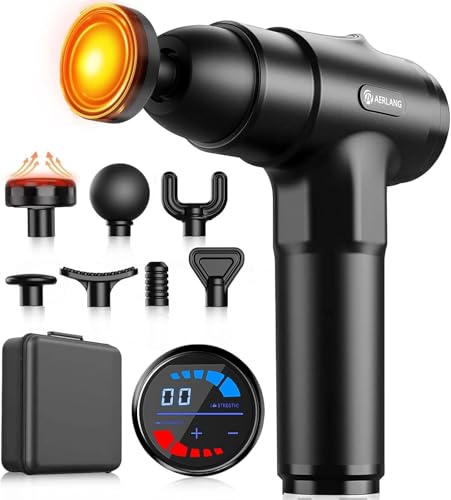

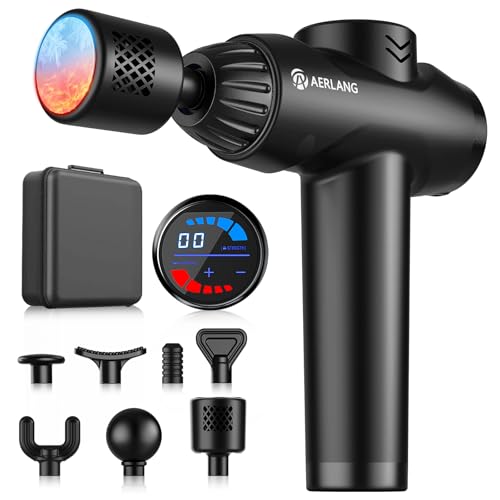

As an Amazon Associate we earn from qualifying purchases at no extra cost to you. Ratings are shown as listed on Amazon.
Does Heat Actually Improve Recovery?
Heat does not replace a proper warm-up, cool-down, or stretching routine, but it changes how a massage gun feels and functions. A standard percussive head delivers mechanical pressure; a heated head adds superficial warmth that increases local blood flow and makes dense muscle tissue feel less resistant to pressure. For many users, that means less guarding and less discomfort when working calves, hamstrings, or the upper back, especially in cold environments or first thing in the morning.
From a practical standpoint, heat is most useful for three situations: short pre-workout priming when you cannot do a full warm-up, post-workout work on stiff areas where cold percussion feels too sharp, and general muscle tension from desk work where gentle warmth improves comfort. It is not deep tissue heating like a hot stone or ultrasound, as the contact area is small and the temperature is limited to safe skin-contact levels (typically capped at 113-122°F). For general information only, people with neuropathy, impaired circulation, skin sensitivity, or acute injuries should get guidance from a healthcare professional before using heated attachments.
The limitation is that most heated guns only heat one attachment, usually a flat or rounded metal head. If you prefer a bullet, fork, or soft foam head, you will be using it without heat. The heating element also draws battery power, so runtime drops by 15-25% when heat is left on continuously.
What to Evaluate Before You Buy
1. Heating Temperature and Control
Look for a stated temperature range and how quickly it heats. Useful heated guns offer at least two or three heat levels, starting around 95°F and topping out at 110-115°F, reaching the target in 45-90 seconds. Single-temperature models tend to run either too cool to notice or too hot for extended contact. Automatic shutoff after 30-60 seconds of idle contact is a safety plus.
2. Attachment Variety
Count matters less than utility. A good set includes a heated flat metal head, a standard ball for large muscle groups, a bullet or cone for trigger points, and a fork for the spine and Achilles area. Foam or air-cushioned heads reduce harshness for sensitive areas. Proprietary attachments are harder to replace than universal push-fit types.
3. Stall Force and Amplitude
Stall force tells you how much pressure you can apply before the motor stops. For heated use, aim for 35 lbs or higher; below that, the motor will stall if you lean into a heated head. Amplitude (stroke length) around 10-12mm provides enough percussion without being overly aggressive. Shorter 8mm strokes feel gentler but less penetrating.
4. Noise
Brushless motors have lowered noise across the category. In 2026, budget heated guns often run at 62-70 decibels at mid speed, while premium models stay under 60 decibels at level 2 of 5. If you plan to use the device while watching TV or in shared spaces, noise on the top two speeds is the deciding factor.
5. Battery Life
Manufacturers quote battery life without heat. Subtract about a third for real-world heated use. For example, a 240-minute rating with percussion only often translates to 170-190 minutes with heat cycling on. Removable batteries extend ownership life, while built-in batteries keep weight and cost down but require complete replacement when they degrade after 300-500 charge cycles.
Heated Massage Guns Compared: Specs That Matter
The table below compares common heated models and types widely available in 2026. Figures are based on manufacturer specifications for the heated attachment active unless noted.
| Model / Type | Heat Range | Heat-Up Time | Stall Force | Amplitude | Attachments Included | Weight | Battery Life (Claimed) | Noise at Mid Speed |
|---|---|---|---|---|---|---|---|---|
| Ekrin Kestrel | 98 / 104 / 113°F (3 levels) | ~60 seconds | 55 lbs | 12mm | 6 (heated flathead + ball, bullet, fork, soft head) | 2.0 lbs (907g) | 240 min (percussion only), ~180 min heated | 55-60 dB |
| Bob & Brad Q2 Pro Heated (Mini Size) | 98 / 107 / 113°F (3 levels) | ~75 seconds | 35 lbs | 10mm | 5 (heated aluminum flat + 4 standard) | 1.6 lbs (725g) | 210 min, ~155 min heated | 58-62 dB |
| LifePro Sonic LX Heated | 100 / 115°F (2 levels) | ~45 seconds | 40 lbs | 12mm | 8 (heated flat + 7 standard) | 2.2 lbs (998g) | 200 min, ~150 min heated | 60-65 dB |
| Therabody Theragun-style Heated Adapter Type | 95 / 105 / 115°F (via app/attachment) | ~90 seconds | 45-50 lbs | 12mm | 5-6 (heated option sold as separate head on some models) | 2.3 lbs (1043g) | 150-180 min, ~120 min heated | 60-64 dB |
| Budget Heated Gun Type (Generic 30-50W Motor) | Single level ~105°F | ~120 seconds | 25-30 lbs | 8-10mm | 4 (heated ball only) | 1.8-2.4 lbs | 120-150 min, ~90 min heated | 65-72 dB |
Weight and noise differences are most noticeable during travel or daily use. Mini heated models save about half a pound and fit in a backpack side pocket, but you trade stall force and battery capacity. Full-size models handle leg and glute work without stalling, which matters if you weigh over 180 lbs or prefer firm pressure.
Decision Matrix: Which Heated Gun Fits Your Situation
Use this guide to match your priorities rather than chasing the highest stall force or lowest price alone.
| Your Situation | Best Fit | Why |
|---|---|---|
| Limited space, travel, or office use; noise sensitive | Mini heated gun like Bob & Brad Q2 Pro Heated | Compact, quietest at low speeds, heats quickly, battery is sufficient for 4-5 short sessions per charge |
| Daily training, larger muscle groups, want long-term durability | Full-size heated gun like Ekrin Kestrel or LifePro Sonic LX | Higher stall force prevents stalling on quads/glutes, longer amplitude, more attachments for varied work |
| Tight budget, occasional use | Budget heated type with single heat level | Provides basic heat + percussion for under typical mid-range pricing, acceptable if you use heat only on occasion |
| Temperature sensitivity or desire for fine control | Model with 3 heat levels and quick heat-up (Ekrin Kestrel, Therabody-style) | Allows low warmth for neck/forearms and higher for cold calves, with less waiting |
| Need to share among household members | Model with multiple head types + heated flat included | Non-heated foam and fork heads accommodate different pain tolerances while heated head remains optional |
Worked Example: Battery and Cost Per Use
To estimate real value beyond the market price range, calculate runtime per charge with heat on. Take the Ekrin Kestrel as an example: 180 minutes heated runtime / average 8-minute session = 22.5 sessions per charge. If you use it four times per week, that is about 5.5 weeks between full charges. Over two years (416 sessions), even a general premium price range of $250-$400 equates to roughly $0.60 to $0.96 per session on device cost alone, before electricity. A budget heated type at a general range of $80-$140 with 90 minutes of heated runtime yields about 11 sessions per charge and requires charging twice as often, with battery degradation appearing sooner. This illustrates why an extra $100 upfront can be justified if you use heat regularly.
Durability and Ownership Realities
Heated massage guns introduce two failure points that non-heated models do not have: the heating element in the head and the wiring that passes through the attachment stem. What wears first is usually not the motor, but the heated head’s connector and the battery.
- Heated head contacts: Wipe the metal contact ring and gun port with a dry cloth after each use. Moisture, lotion, or massage oil can corrode the pins and cause intermittent heating. Do not submerge the heated head.
- Battery care: Store at 40-80% charge if you will not use the gun for weeks. Running heat on every session deep-cycles the battery faster; turn heat off for minutes when you only need percussion.
- Attachment fit: Heated heads fit tighter than standard plastic heads. Insert straight without twisting and remove after each session rather than leaving the head mounted. Forcing a hot head out at an angle loosens the collar over time.
- Common mistake: Holding the heated head stationary on one spot for more than 45-60 seconds at the highest temperature. Keep the head moving slowly, and use lower heat on bony areas such as shins, elbows, and collarbones.
- Cleaning: Clean non-heated attachments with mild soap and water. Clean the heated metal head only when unplugged and fully cool, using isopropyl on a cloth for residue.
- When to replace: If heat-up time doubles, the head no longer reaches the top temperature, or the gun stalls under light pressure, battery cell loss rather than motor damage is the likely cause after 18-24 months of frequent use.
Models with a removable battery offer the longest usable lifespan because you can replace the battery instead of the entire device. Check whether the heated head is sold separately; replacement cost for a heated attachment typically falls in a general range of $25-$50 when available.
How to Choose by Heating Performance Alone
If your primary reason for buying is heat, prioritize three checks: first, that the device lists actual temperatures rather than vague low/medium/high labels; second, that heat is available at at least two speeds, not only at level 1; and third, that the heated surface area is at least 1.5 inches in diameter so warmth spreads rather than concentrating on a small point. Guns that heat a small bullet tip feel noticeably hot but cover little muscle, while a broad flat aluminum head transfers heat more comfortably over large areas.
Frequently Asked Questions
Is a heated massage gun safe to use every day?
For general wellness, short daily sessions of 30 seconds to 2 minutes per muscle group with heat on low or medium are typically tolerated. Avoid using heat on the same area for extended continuous periods, and allow skin to return to normal temperature between sessions. If you have acute inflammation, open skin, fever, or a known medical condition, seek professional advice first.
How hot should a massage gun with heat get?
Most effective models stay within 95-115°F on skin-contact surfaces. Above 122°F the risk of skin irritation rises quickly, which is why reputable brands cap the temperature and add automatic shutoffs. If a device feels burning-hot within 10 seconds, it is likely exceeding safe limits.
Can I buy a heated head separately for my existing gun?
Some brands in the Therabody and Hyperice ecosystems and aftermarket suppliers sell heated heads that fit standard 19-20mm stems, but compatibility is not universal. Confirm diameter, pin alignment, and whether your gun supplies power through the attachment port; otherwise the head will not heat.
Does heat mean I can use less pressure?
Many users find they need less downward pressure when warmth is active because the muscle feels more pliable. Start with lighter pressure and lower speed when heat is on, then increase gradually. This also reduces stall events and conserves battery.