Key takeaways
- You plan to trim 25 limbs averaging 5 inches in diameter (maple).
- A 40V 2.5Ah battery averages about 35 cuts of that size. A 40V 4.0Ah averages about 55 cuts. A 56V 2.5Ah averages about 60 cuts.
- Calculation: 25 limbs ÷ 35 cuts per battery = 0.71 batteries. So one 2.5Ah pack is technically enough, but cold weather reduces capacity by 15-20% and a dull chain adds 20-30% more drain.
- Safe rule: Add a 30% buffer. 0.71 x 1.3 = 0.92, so one battery still covers it. For 40+ limbs, plan on two batteries or a 4.0Ah/5.0Ah pack. For continuous work over 45 minutes, two batteries are essential to allow one to cool while the other charges.
The best electric chainsaws for tree trimming are lightweight 10 to 14-inch models under 9 pounds that balance reach, control, and battery runtime, with top options including the EGO Power+ 14″ CS1400 series, Greenworks 40V 12″ Brushless, DEWALT 20V MAX 12″ DCCS620, STIHL MSA 120 C-BQ, and Makita 18V LXT 10″ XCU06.
For easy overhead trimming without fatigue, a 10-12 inch bar covers 90% of homeowner limb work up to 8-10 inches in diameter, while keeping weight and vibration low. Anything longer than 14 inches adds unnecessary weight and kickback risk for pruning, and anything under 10 inches struggles with thicker branches. The key is matching bar length to limb size, weight to your reach, and battery to how many cuts you need per session.
Our top picks


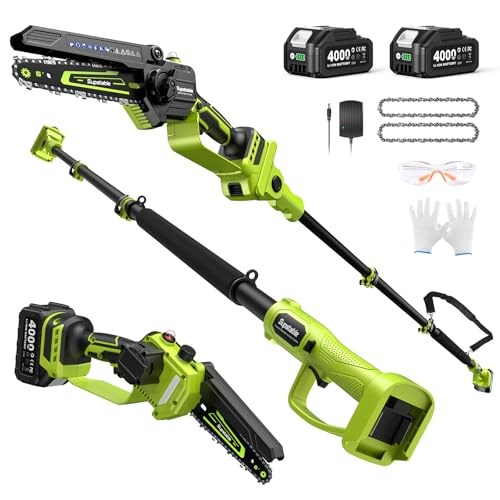

As an Amazon Associate we earn from qualifying purchases at no extra cost to you. Ratings are shown as listed on Amazon.
What Matters Most for Tree Trimming (Not Felling)
1. Bar Length vs. Branch Size
Choose a bar 2-4 inches longer than your largest expected branch. A 12-inch bar can safely cut limbs up to about 10 inches thick using a two-pass technique, which is ideal for pruning live trees, clearing low-hanging limbs, and storm cleanup. A 14-inch bar is better if you regularly trim mature hardwoods like oak or maple with 10-12 inch limbs, but it adds weight at the tip that increases shoulder fatigue during overhead work.
2. Weight and Balance
For overhead work, bare tool weight matters more than horsepower. Models under 8 pounds let you make controlled one-handed positioning and two-handed cutting without straining your shoulders. Look for a slim motor housing and a battery positioned under the rear handle – this centers the weight over your hands instead of pulling the nose down. Top-handle saws feel lighter but are designed for arborists; for homeowners, a conventional rear-handle layout is safer and more stable on a ladder or when reaching.
3. Battery Runtime in Real Cuts
Manufacturers list runtime in minutes, but that is usually no-load idling. For trimming, count cuts. A standard 40V 2.5Ah battery delivers roughly 60-80 cuts on 3-4 inch softwood branches, or 30-40 cuts on 6-inch hardwood. A 56V 2.5Ah or 40V 4.0Ah pack increases that by 40-60%. If you plan to trim for more than 30 minutes continuously, a kit with two batteries or compatibility with your existing cordless platform (DEWALT, Makita, EGO, Greenworks, Ryobi) will save you money and downtime.
4. Safety Features You Should Not Skip
For pruning, prioritize these four: inertia-activated chain brake that stops the chain in milliseconds on kickback, front hand guard, trigger lockout/throttle interlock to prevent accidental starts, and a low-kickback 3/8″ low-profile chain with anti-kickback guard links. Tool-free chain tensioning and automatic bar oiling also reduce mistakes – a loose or dry chain is the most common cause of derailment and accelerated bar wear.
Best Electric Chainsaws for Tree Trimming Compared
This comparison focuses on cordless battery models most homeowners actually use for pruning in 2026. All use brushless motors and automatic oilers.
| Model | Bar Length | Bare Weight | Weight with Battery | Voltage / Battery Tested | Chain Speed | Est. Cuts per Charge (4″ pine limb) |
|---|---|---|---|---|---|---|
| STIHL MSA 120 C-BQ | 12 in | 5.7 lbs | 7.9 lbs (AK 20) | 36V / 2x 18V AK 20 (4.0Ah) | 45 ft/s | 55-65 |
| Makita XCU06Z 18V LXT | 10 in | 6.0 lbs | 7.3 lbs (18V 5.0Ah) | 18V LXT | 43 ft/s | 50-60 |
| Greenworks 40V 12″ BRUSHLESS G40CS12 | 12 in | 6.5 lbs | 8.6 lbs (40V 2.5Ah) | 40V / 2.5Ah | 42 ft/s | 65-75 |
| DEWALT DCCS620B 20V MAX | 12 in | 7.2 lbs | 9.0 lbs (20V 5.0Ah) | 20V MAX / 5.0Ah | 45 ft/s | 70-90 |
| EGO Power+ CS1403 56V 14″ | 14 in | 8.2 lbs | 10.6 lbs (56V 2.5Ah) | 56V ARC Lithium 2.5Ah | 65 ft/s | 85-100 |
| Ryobi 40V 12″ RY40530 | 12 in | 6.8 lbs | 9.1 lbs (40V 4.0Ah) | 40V / 4.0Ah | 40 ft/s | 80-95 |
Note: Bare weight is without battery, chain and bar oil. Weight with battery is as typically kitted. Cuts per charge varies with wood hardness, chain sharpness, and temperature.
Which One Should You Choose? A Decision Matrix
Match your situation to the right type instead of chasing the most powerful spec.
| Your Situation | Best Fit | Why |
|---|---|---|
| Light pruning, small yard, limbs under 6″ and need the lightest saw | 10-inch class: Makita XCU06Z or STIHL MSA 120 C-BQ | Lowest fatigue for overheadReach, easiest to control with one hand while positioning |
| All-around homeowner trimming, mixed limbs 4-10″ | 12-inch class: Greenworks 40V 12″ or DEWALT DCCS620B | Best balance of weight, power, and battery cost; fits most cordless ecosystems |
| Taller trees, thicker limbs 8-12″, longer runtime needed | 14-inch class: EGO Power+ 56V 14″ | Higher chain speed and torque cuts hardwood faster; larger battery sustains longer sessions |
| You already own 18V/20V/40V tools | Stay in that platform (DEWALT 20V, Makita 18V, Ryobi/Greenworks 40V) | Batteries are the biggest long-term cost; interchangeability saves $100-$200 per extra pack |
| Infrequent use, tight budget, occasional storm cleanup | Corded electric 12-14″ (Greenworks 14″ 8-Amp or WORX WG305) | Lowest upfront cost and no battery degradation, but requires extension cord and limits reach |
Runtime Calculation: How Many Batteries Do You Actually Need?
Use this simple way to estimate before you buy an extra battery. It prevents mid-job stops.
Worked example for a typical trimming session:
- You plan to trim 25 limbs averaging 5 inches in diameter (maple).
- A 40V 2.5Ah battery averages about 35 cuts of that size. A 40V 4.0Ah averages about 55 cuts. A 56V 2.5Ah averages about 60 cuts.
- Calculation: 25 limbs ÷ 35 cuts per battery = 0.71 batteries. So one 2.5Ah pack is technically enough, but cold weather reduces capacity by 15-20% and a dull chain adds 20-30% more drain.
- Safe rule: Add a 30% buffer. 0.71 x 1.3 = 0.92, so one battery still covers it. For 40+ limbs, plan on two batteries or a 4.0Ah/5.0Ah pack. For continuous work over 45 minutes, two batteries are essential to allow one to cool while the other charges.
Charging time matters too: Most 2.5Ah packs recharge in 60-90 minutes, 4.0Ah/5.0Ah in 90-120 minutes on a standard charger. Rapid chargers cut that by about 40% but generate more heat, which shortens long-term battery life if used every cycle.
Durability and Ownership Realities
Electric chainsaws require less maintenance than gas, but they are not maintenance-free. Knowing what wears first prevents costly repairs.
What Wears First
- Chain: Needs sharpening every 2-4 hours of cutting time, or immediately after hitting dirt, nails, or a fence. A dull chain forces the motor to work harder, drains the battery up to 50% faster, and creates fine sawdust instead of chips. Replace the chain when teeth are shorter than 4mm or after 4-5 sharpenings.
- Bar: The bar rails and sprocket tip wear unevenly. Flip the bar after every 2-3 uses to even the wear, and clean the groove and oil hole with a thin wire each time. Replace the bar when the groove depth is under 5mm or the rails are flared.
- Bar oil consumption: Expect to use one tank of bar oil per battery charge. Use standard bar and chain oil, not motor oil. In winter, switch to a winter-weight oil so it flows.
- Battery: Lithium-ion packs lose 10-20% capacity after 200-300 full cycles or 3-4 years of seasonal use. Store at 40-60% charge indoors, not in a freezing garage or hot shed.
Common Mistakes That Shorten Life
- Running with a loose chain. Check tension before each use: you should be able to pull the chain 3-4mm away from the bar and it snaps back. A sagging chain derails and damages the drive sprocket.
- Forcing the cut. Let the chain do the work. Pushing hard overheats the motor and bar, especially on electric models with thermal overload protection that will shut the saw down.
- Cutting with the tip. The upper quadrant of the bar nose is the kickback zone. For pruning, use the bottom side of the bar and keep the saw close to your body with elbows slightly bent.
- Storing with oil and battery installed. Drain bar oil if storing over a month, wipe the bar with oil, and remove the battery.
Quick Maintenance Routine (5 Minutes After Each Use)
- Remove battery, brush sawdust from bar groove, sprocket cover, and chain.
- Check chain tension and sharpness, tighten bar nuts to spec.
- Top off bar oil and check for leaks.
- Wipe battery contacts clean and store battery separately at room temperature.
Final Picks by Use Case
Best Lightweight Pick for Overhead Trimming: STIHL MSA 120 C-BQ or Makita XCU06Z
If reducing fatigue is your top priority, a 10-12 inch saw under 8 pounds with battery is the easiest to maneuver overhead. The STIHL MSA 120 is notably quiet and low-vibration with a quick chain adjuster, while the Makita 10-inch is exceptionally compact for tight branches and ladder work.
Best All-Around Value for Homeowners: Greenworks 40V 12″ or DEWALT DCCS620B
These hit the sweet spot for most yards: enough bar for 8-10 inch limbs, weight that stays manageable, and batteries that are widely available and affordable. The DEWALT benefits users already in the 20V MAX system, while the Greenworks 40V platform offers strong runtime per dollar.
Best for Maximum Power and Runtime: EGO Power+ 56V 14″
If you trim large shade trees or do longer storm cleanup sessions, the 56V system delivers the fastest cuts and longest run on a single charge. It is heavier, so pair it with a proper stance and work in intervals to avoid shoulder strain.
For most homeowners trimming branches a few times per season, a 12-inch brushless electric chainsaw with a 2.5Ah to 4.0Ah battery, automatic oiler, and chain brake will handle the job without the weight or maintenance of a larger saw. Choose the lightest model that still covers your thickest common branch, and invest in a second battery before you invest in a longer bar.
Frequently Asked Questions
Is a corded electric chainsaw better for trimming than cordless?
Corded saws are lighter without a battery, cheaper (typically in the $70-$150 range), and never run out of power, but the cord limits reach and creates a tripping and cut hazard when working around branches overhead. Cordless is safer and more mobile for tree trimming, especially above shoulder height.
Can I trim a tree while on a ladder with an electric chainsaw?
Avoid overhead cutting from a ladder if possible. Use a pole saw attachment or a stable orchard ladder with three points of contact. If you must use a chainsaw above your head, keep the saw below shoulder height, never cut directly overhead, and keep the tip away from the trunk to reduce kickback risk.
What bar oil and chain should I use?
Use standard bar and chain oil rated for your temperature range. For chain pitch, most 10-14 inch electric saws use 3/8″ low-profile, 0.043″ or 0.050″ gauge chains. Match the exact gauge and drive link count stamped on your bar when replacing.