Key takeaways
- Compare the best billiards training balls with targets, rings and dots that show tip contact and spin, in regulation 2-1/4 inch size for American pool.
A plain white cue ball hides the two things practice is supposed to teach: where your tip actually landed, and how the ball is really spinning after contact. A training ball prints that information on the surface, so the real decision is which marking system matches the fault you are trying to fix: a full target grid for contact points, clock-style points for rebound control, or simple dots that reveal spin while you play ordinary racks.
This guide is for first-time buyers who keep miscuing draw shots, league players who suspect unwanted side spin, and home-table owners who coach family members. Every product below is a single practice cue ball or training ball chosen from the names, markings and specifications printed on its Amazon product page, not a full playing set.
Quick Picks
As an Amazon Associate we earn from qualifying purchases
| Product | Best for | Key spec from title |
|---|---|---|
| Aramith Jim Rempe Training Cue Ball | Learning exact tip contact with a guided manual | 2-1/4 inch regulation size with instruction manual |
| GSE Games & Sports Expert Billiard Practice Training Cue Ball | Structured drills on a home table | AAA-Grade PRO Cup, 6 oz, 2-1/4 inch |
| AGIEG Standard Pool Billiard Pro Cup Cue Ball with 6 Red Dots | Seeing spin during normal racks | 6 red dots, 2-1/4 inch, 6 oz |
| Mototo AAA-Grade Pro-Cup Billiard Cue Ball | A second dotted ball for shared tables | Regulation size 2-1/4 practice training pool ball |
How to Choose
Match the Markings to the Fault You Are Fixing
Printed targets, rings and dots do different jobs, so start from the mistake rather than the design. If your draw shots keep turning into stop shots, you need a ball with marked contact points, like the Rempe ball, so you can aim at a specific low point and check the chalk mark afterward. If your cue ball spins correctly but lands in the wrong place, clock-style points help connect strike position with rebound direction. If position play is fine but side spin creeps in, six plain dots are enough, because rotation becomes visible without a grid distracting you mid-rack.
Confirm the Size Matches Your Table and Ball Set
American pool uses a 2-1/4 inch cue ball, and every ball in this guide is listed at that size, but the check still matters because smaller English pool and snooker balls are sold in similar packaging. A training ball that is even slightly smaller or lighter than your object balls changes contact height and rebound speed, which quietly teaches the wrong lesson. Match the listed diameter first, then the listed weight: most balls here are listed at 6 ounces, in line with a regulation cue ball. If your home set is an older, lighter set, expect any regulation-weight trainer to feel livelier off the rails.
Decide Between Phenolic and Polyester Resin
The listing material affects how long the markings and surface stay useful under daily drilling. Phenolic resin, used in the Aramith Rempe ball and listed for the Mototo ball, is the harder material associated with tournament balls and resists chips and flat spots well. Polyester resin, listed for the GSE ball, is common in training balls and keeps the surface glossy, though it generally marks up faster under heavy use. Neither choice changes what the markings teach on day one. The difference shows up after months of break practice and rail work, when a worn surface starts hiding the chalk marks you rely on for feedback.
Check What Comes With the Ball
Some training balls are teaching systems and some are just marked balls, and the listing tells you which. The Rempe ball includes a 56-page instruction manual that explains its two patterns, which matters if nobody is coaching you. The GSE, AGIEG and Mototo balls are sold as balls alone, so your drills come from your own routine or lessons. Also check the variant before ordering: several listings offer dot colors or related ball options on the same page, and the Mototo listing even offers a numbered ball version. Confirm the training cue ball variant is selected, or your practice tool becomes a spare object ball.
The 4 Best Options
Aramith Jim Rempe Training Cue Ball

This is the ball for a player who wants instruction built into practice rather than a simple spin indicator. Its surface carries rings and targets in two patterns, one side arranged for beginners and the other for advanced players, so the same ball stays relevant as your stroke improves. Chalk left by the tip shows whether you struck the point you aimed at, which turns vague draw and follow drills into a visible pass-or-fail check. The included manual explains how to use the patterns, making it the natural pick for self-coached home practice.
Specs
- Brand: Aramith
- Diameter: 2.25 inches, regulation size
- Material: Resin, homogeneous phenolic resin construction
- Model number: 11-132
- Markings: Rings and targets, beginner side and advanced side
- Included: 56-page instruction manual
- Unit count: 1
Best for: Beginners and improving players who want marked contact points plus written drills.
Watch out for: The dense target patterns are a practice tool, so expect to swap back to a plain cue ball for regular games.
ASIN: B005GVGZSE
GSE Games & Sports Expert Billiard Practice Training Cue Ball

Choose this one if you like the idea of a marked ball with a cleaner, divided layout for repeat drills. The listing describes a double-sided design with lines and spots and a precise point division, intended to help you strike the same spot repeatedly and then read the angle and direction of rotation from the impact point. That makes it well suited to structured practice sessions where you set up the same shot ten times and track whether contact stays consistent. Its polyester resin body and regulation dimensions let it drop into a standard American pool setup without changing how your object balls behave.
Specs
- Brand: GSE Games & Sports Expert
- Diameter: 2.25 inches (57 +/- 0.15 mm)
- Weight: 6 oz (168 +/- 3 grams)
- Material: Polyester resin
- Part number: GB-5011
- Markings: Lines and spots with black dots, double-sided design
- Grade: AAA-Grade PRO Cup standard
Best for: Home players running repeat contact and rotation drills on a standard table.
Watch out for: No instruction manual is listed, so you need your own drill plan to use the point divisions well.
ASIN: B07C1PV8RT
AGIEG Standard Pool Billiard Pro Cup Cue Ball with 6 Red Dots

This ball takes the simplest approach in the guide: six red dots on a regulation cue ball, nothing else competing for your attention. That simplicity is the point for players who mostly play normal racks and want spin feedback inside real games rather than in set drills. When a follow shot picks up unwanted side spin, the dots wobble off axis where a plain ball would look clean, and when draw is working, the backward rotation is obvious all the way to the object ball. It suits league players checking their stroke under match-like conditions and anyone who finds full target grids visually noisy.
Specs
- Brand: AGIEG
- Diameter: 2.25 inches (2-1/4 inch)
- Weight: 6 ounces
- Material: Resin, molded construction
- Markings: 6 red dots
- Color: Red dots on white ball
- Unit count: 1
Best for: Players who want spin visible during ordinary racks without a printed target grid.
Watch out for: Dots show rotation only; they do not mark specific strike points for contact drills.
ASIN: B0CKR3LQNC
Mototo AAA-Grade Pro-Cup Billiard Cue Ball
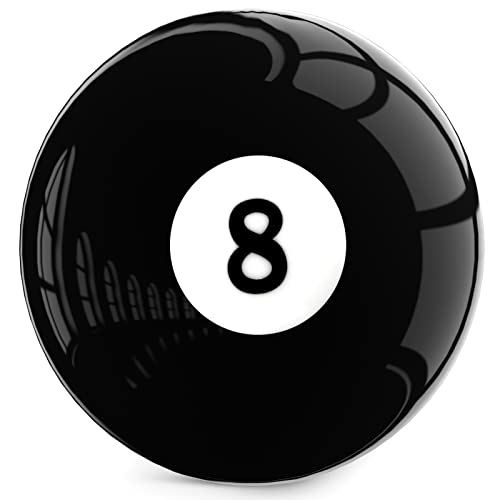
Keep this one in mind as a practical second training ball for a shared or club-style table where one marked ball is always in someone else’s session. The listing presents it as a regulation-size practice training ball with visible dots that act as spin indicators, so you can watch rotation on draw, follow and side-spin shots the same way you would with any dotted trainer. Its listed phenolic resin construction suits frequent use, and the standard diameter and regulation weight mean it can stand in during practice games when the main training ball is unavailable or being used for contact drills at the other end of the room.
Specs
- Brand: Mototo
- Diameter: 2-1/4 inches, standard regulation size
- Weight: Approximately 6 ounces
- Material: High-grade phenolic resin
- Markings: Visible dots used as spin indicators
- Use: Practice training pool ball
- Unit count: 1
Best for: Shared tables that need a spare dotted training ball for parallel practice.
Watch out for: The same listing also offers a numbered 8-ball version, so confirm the cue ball variant before ordering.
ASIN: B0B1VKLQGJ
Which One Fits Your Situation
You Keep Miscuing Draw and Follow Shots
Pick the Aramith Jim Rempe Training Cue Ball. Draw and follow failures usually start with tip contact a few millimetres away from where you think you aimed, and the Rempe ball’s rings and targets make that error visible through the chalk mark. Its beginner side gives you one clear target to repeat, and the manual explains the patterns, so each session has a defined check instead of guesswork.
You Play League and Suspect Hidden Side Spin
Pick the AGIEG cue ball with six red dots. League players rarely need a lecture on contact points; they need to see whether the spin they applied is the spin the ball actually carries during a real rack. Six dots reveal off-axis rotation immediately while leaving the ball plain enough to use in practice games, so the feedback arrives under the same pressure as a match.
You Run Set Drills at Home Several Times a Week
Pick the GSE Games & Sports Expert training ball. Repeat drills reward a ball whose markings divide the surface into clear points, because you can call the target before each attempt and score the result honestly. The double-sided design and lines-and-spots layout support that routine, and the regulation size and weight keep the reactions consistent with the object balls already on your table.
Two or More Players Share One Practice Table
Pick the Mototo AAA-Grade Pro-Cup ball as the second trainer in the room. One player can work through contact drills with a target ball while another runs rotation drills with the Mototo, instead of both waiting on a single marked ball. Its dotted surface covers the spin-feedback job, and its regulation dimensions mean either player can also use it for full practice racks.
Common Mistakes
- Buying a full 16-ball playing set when you only need one marked practice cue ball, then never using the markings in drills.
- Practicing with a training ball that is a different diameter or weight from your object balls, which distorts contact and rebound feedback.
- Choosing a dense target grid for match-style practice, then finding the markings distracting and abandoning the ball entirely.
- Ignoring the variant selector on listings that offer dot colors or numbered-ball versions, and ordering the wrong ball.
- Judging a drill by whether the object ball dropped instead of reading the chalk mark and dot rotation the training ball is there to show.
Frequently Asked Questions
Can a training cue ball be used in a normal game?
A dotted ball like the AGIEG or Mototo can roll through ordinary practice racks without changing the game, and many players leave one in play for spin feedback. A dense target ball like the Rempe is better kept for drills, because its patterns are teaching aids. For league or tournament play, check your competition rules and expect to use the standard cue ball supplied for the match.
How do the markings show where my tip actually hit?
Chalk transfers from your tip to the ball at the contact point. On a marked ball, that chalk spot lands inside a printed ring, target or point division, so you can compare the real strike location with the one you aimed at. Wipe the ball between attempts and repeat the same shot; a cluster of marks in one place means your stroke delivery is consistent, wherever it lands.
Will a 2-1/4 inch training ball work on any home table?
It works on tables set up for American pool with regulation-size object balls, which covers most 7-foot, 8-foot and 9-foot home tables sold for that game. It will not match smaller English pool or snooker sets, whose balls are smaller and lighter. Before ordering, measure one of your object balls or check its listed diameter, and buy the training ball in the matching size.
Do I need the instruction manual versions or is a dotted ball enough?
It depends on whether you already know which contact points produce draw, follow and side spin. If you do, a dotted ball gives all the feedback you need, because the dots simply reveal rotation. If you are still learning where to strike, a guided ball like the Rempe, whose manual explains its beginner and advanced patterns, teaches the map first and saves weeks of trial and error.
More from Amazon
Programs that pair well with the guide above. Offers and eligibility are set by Amazon and may change.
Free shipping on eligible items, Prime Video and more. Eligible new members can start with a free trial.
Start a Prime free trialA Prime membership for ages 18-24 with a trial period. Eligibility is set by Amazon.
See Prime for Young AdultsAudiobooks and podcasts to listen to on the go. Eligible new members can start with a free trial.
Try Audible freeAd-free music streaming. Eligible new subscribers can start with a free trial.
Try Music Unlimited freeAs an Amazon Associate we earn from qualifying purchases.