
Key takeaways
- Frame-tube mounts: Clamp onto the seat tube. They suit standard round tubes, but not all carbon frames or oversize tubing.
- Rack mounts: Attach to a rear rack made for child seats. Check the rack’s rated load, as a rack not rated for a child seat should not be used.
- Full suspension and e-bikes: Many e-bikes and full-suspension frames have limits on child-seat use. Read the bike maker’s manual and ask a bike shop before installing.
- Carbon frames: Some makers advise against clamps on carbon seat tubes.
For most families with a toddler, a rear-mounted child seat such as the Thule Yepp Nexus 2 Maxi or the Hamax Caress is the sensible choice, because a rear seat holds a growing child for years, while a front seat like the Thule Yepp 2 Mini suits only smaller toddlers and riders who want to keep an eye on the child. Before comparing brands, confirm that your child can sit up unaided and hold their head steady with a helmet on, and that your bike frame can carry the seat. Makers typically give a minimum age around nine months and a weight ceiling set by European or national standards, so treat the maker’s own limits as binding.
Our top picks


As an Amazon Associate we earn from qualifying purchases at no extra cost to you.
At a Glance: Bike Child Seats for Toddlers
| Seat | Mount style | Best for | Notes as stated by maker |
|---|---|---|---|
| Thule Yepp Nexus 2 Maxi | Rear, frame or rack adapter options | Toddlers through preschool age | Adjustable harness, footrests, recline options and shared mounting system |
| Thule Yepp 2 Maxi | Rear, frame, rack or seat-tube versions | Families wanting a secure, long-lasting rear seat | Same family with different mount choices |
| Hamax Caress | Rear, frame-mount with adapter options | Comfort-focused families who want recline and adjustable footrests | Padded seat, height-adjustable footrests, lockable system |
| Thule Yepp 2 Mini | Front, mounted ahead of the rider | Younger toddlers, riders who want to see the child | Smaller weight limit, shorter use period |
| Polisport Guppy Maxi | Rear, frame or rack mount | Budget-aware buyers | Simple design, fewer comfort features |
| Burley or Thule trailer | Towed behind the bike | Families wanting a rain cover or a place for two children | Not a seat, separate category |
Names and generations change. Several makers sell a seat in many mounting variants, so match the exact variant to your bike before ordering.
Basic Safety and Readiness Checks
A child seat does not replace readiness to ride. The child should be able to sit upright without help, and most makers set a minimum of around nine months. Children must wear a properly fitted bicycle helmet; make sure the helmet fits with the seat’s headrest because some helmets push the head forward. Follow your local rules, since some jurisdictions set an age or helmet requirement for passengers. If you are unsure whether your child is ready, ask a pediatrician.
Adult riders should also remember that the bike will handle differently. Mounting and parking become trickier with the child on board, so use a sturdy kickstand and do not leave the bike unattended with a child in the seat.
Rear Seats: The Default for Toddlers
Thule Yepp Nexus 2 Maxi
Thule’s Nexus line is a frequent pick among outlets because the seat can be moved between bikes using adapters, which suits families with more than one bike. The maker describes an adjustable harness and padded straps, adjustable footrests and a recline function, and a mount that locks onto a compatible bracket. It is designed for toddlers who sit well and typically accommodates a child up to the weight limit listed by Thule.
Thule Yepp 2 Maxi
This is a close cousin, sold in versions designed to attach to the frame, a rack or the seat tube. It is a good fit if you want to leave the seat on one bike permanently. Because there are several variants, check carefully which mounting version fits your bike’s tubing and rack standard.
Hamax Caress
Hamax’s Caress is promoted for comfort, with a padded seat, recline function and footrests that adjust for growth. Reviewers often note that long rides feel more comfortable for the child, which helps with naps on longer trips. It uses a mount system with a bracket on the bike, so you buy the bracket matched to your frame.
Polisport Guppy Maxi
Polisport’s seats have a long record among budget-conscious buyers. The Guppy Maxi gives a simpler seat shape with fewer comfort extras, but meets the same safety standards the maker lists for its class. It suits short trips and families that do not need recline or adjustability.
Front Seats: Smaller Toddlers, Shorter Window
Thule Yepp 2 Mini
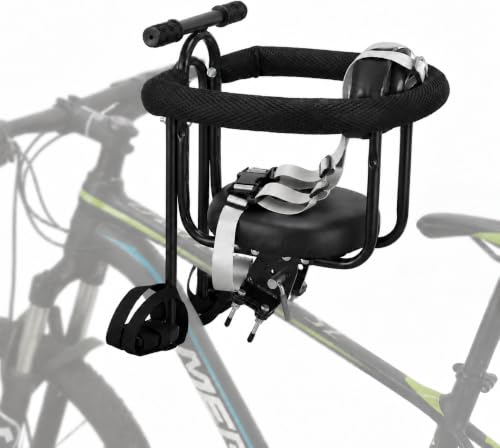
A front seat sits between the rider’s arms, which lets you see and talk to the child. The trade-off is a lower weight limit, a shorter time of use, and an effect on steering. Makers typically say a front seat is for younger toddlers, and a child who outgrows it will need a rear seat. Front seats are less suitable for some frame shapes or stems, so check the maker’s compatibility list.
Frame Compatibility
- Frame-tube mounts: Clamp onto the seat tube. They suit standard round tubes, but not all carbon frames or oversize tubing.
- Rack mounts: Attach to a rear rack made for child seats. Check the rack’s rated load, as a rack not rated for a child seat should not be used.
- Full suspension and e-bikes: Many e-bikes and full-suspension frames have limits on child-seat use. Read the bike maker’s manual and ask a bike shop before installing.
- Carbon frames: Some makers advise against clamps on carbon seat tubes.
If your bike is unusual, a local bike shop can match the seat to the frame and make sure the installation is secure.
Features That Matter
- Harness: A five-point harness is common. Look for straps that adjust to a growing child without tools.
- Footrests and foot straps: These keep feet away from spokes. Adjustable footrests are valuable as the child grows.
- Recline: Helps with napping, but make sure the child remains secure.
- Spoke protection: Many seats include guards to reduce the risk of feet reaching the wheel.
- Wind and sun protection: Some makers sell shields or rain covers as extras.
- Lockability: Some seats lock to the bracket, which deters casual theft and prevents accidental release.
Budget Tiers
- Budget: Polisport and similar seats. They meet safety standards but offer fewer adjustments.
- Mid-range: Hamax Caress and similar models. A good balance of comfort and adjustability.
- Premium: Thule Yepp Nexus 2 Maxi and related seats. Higher cost, but easy to move between bikes and widely supported.
Pick X If… Decision Table
| If you… | Pick | Why |
|---|---|---|
| Want one seat that lasts several years | Thule Yepp Nexus 2 Maxi | Adjustable fit, adapters for several bikes |
| Prioritize child comfort and napping | Hamax Caress | Padding, recline and adjustable footrests |
| Have a young toddler and want to see them | Thule Yepp 2 Mini | Front placement |
| Watch spending and ride short distances | Polisport Guppy Maxi | Simpler and cheaper |
| Want rain cover or two children | Trailer | Different format, more storage |
Alternatives Worth Considering
- Bike trailers: Burley and Thule make trailers that carry one or two children. They have more weather protection and stay upright when parked, but cost more and are harder to store.
- Cargo bikes: Longtail or box-front designs are built for carrying children and are worth looking at if you ride with kids daily.
- Trail-behind bikes: For older children who can pedal, a trailer bike can bridge the gap before riding independently.
Riding With a Toddler Passenger
Once the seat is installed, practice before taking a child on board. Load a weighted bag in the seat and ride in an empty car park to feel how the bike steers, brakes and turns. Rear seats raise the center of gravity and make the bike more sensitive to sideways movement, so mount and dismount carefully and hold the bike upright while the child is placed or removed. Many makers advise the adult to hold the handlebar firmly and use a strong kickstand designed for the extra load.
Plan routes with low traffic, smooth surfaces and gentle gradients. Rough ground jolts a small child and can cause discomfort. Dress the child for the weather, remembering that a passenger who is not pedaling feels the cold sooner than the rider. Take regular breaks, offer water and keep trips short at first.
Installation and Maintenance
- Follow the maker’s manual step by step, use the supplied tools and torque values, and ask a bike shop if you are unsure.
- Inspect bolts, straps and the mounting bracket before each ride and after any fall or knock.
- Inspect the harness for fraying and the shell for cracks, and replace parts that show wear.
- Keep fingers and clothing clear of folding or adjusting mechanisms.
- Store the seat out of direct sun when not in use, as prolonged UV exposure can weaken some plastics.
Frequently Asked Questions
At what age can a toddler ride in a bike seat?
Makers commonly set a minimum around nine months, and the child should sit upright without help and wear a fitted helmet. Local rules and your pediatrician’s advice take priority over any single number. If your child cannot hold their head steady with a helmet, wait.
Is a front or rear seat safer?
Both types are made to meet the same standards when used within their limits. A front seat allows eye contact but can affect steering, while a rear seat handles more predictably for most riders. Choose the one that matches your child’s size and your bike.
What is the weight limit for a rear seat?
Many rear seats are rated by the maker up to a stated weight, commonly in the low to mid twenties of kilograms. The exact figure differs by brand and model, so read the maker’s specification.
Can I fit a child seat to an electric bike?
Some e-bikes are designed for child seats and some are not. The bike maker’s manual will state whether a seat is allowed and where it should be mounted. A bike shop can confirm compatibility.
Does my child need a special helmet?
The helmet should be sized to your child and meet the safety standard in your country. Look for a model with a flatter back so it does not push the head forward against the seat. A shop can help with sizing.
How do I know when my child has outgrown the seat?
Check the maker’s weight limit and the position of the child’s shoulders relative to the harness. If the head rises above the seat shell or the harness no longer sits correctly, move to a trailer, trailer bike or their own bike.



