Key takeaways
- Compare the best banjo strings for 5-string and tenor banjos, with light and medium gauges in nickel, phosphor bronze, coated steel and Nylgut.
Fresh strings are the cheapest way to wake up a banjo. Old sets lose brightness, stop holding pitch cleanly, and make even a well set up instrument sound dull and uneven. The best banjo strings for your playing depend on three choices: whether your banjo has five strings or four, how much tension your hands and style prefer, and which wrap material suits the sound you want from the one wound string in most sets.
This guide compares five sets from five different makers, covering the main lanes a buyer is likely to shop: a warm phosphor bronze light set for 5-string players, a coated nickel set built for longer life, a synthetic Nylgut set for old-time and classical styles, a nickel tenor set for 4-string players, and a medium Nylgut set for a softer attack. Each entry lists the published gauges and construction so you can match a set to your banjo, tailpiece, and tuning before you order.
Disclosure: As an Amazon Associate, I earn from qualifying purchases.
1. D’Addario EJ69 Phosphor Bronze Light 5-String Set
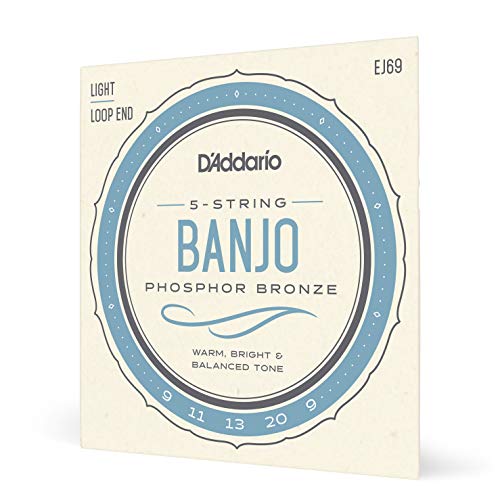
The EJ69 is the warm option in the D’Addario 5-string range. The first, second, third, and fifth strings are plain steel, while the fourth string is wound with phosphor bronze over a hexagonal high carbon steel core. That single wound string is where most of the tonal difference lives: phosphor bronze tends to sound warmer and rounder than a nickel wound fourth, which suits fingerpicking and melodic playing.
At a light 9-20 gauge, the set keeps playing tension low. Rolls feel easy, bends and slides ask less of the left hand, and the short fifth string matches the first string at .009, which keeps the top of the set balanced. The loop end construction fits the wide range of tailpieces used on modern and vintage style 5-string banjos. If your current set sounds bright but thin, this is a sensible first experiment because it changes the wrap material without changing your gauge family.
Specs
- Brand and model: D’Addario EJ69
- Instrument: 5-string banjo
- Gauges: .009, .010, .013, .020 wound, .009
- Wound string: Phosphor bronze wound fourth string
- Plain strings: Plain steel
- End type: Loop end
2. Elixir 11600 Polyweb Coated Nickel Light Set

Elixir takes a different approach: keep a familiar nickel plated steel recipe, then protect it with the Polyweb coating the company uses across its string lines. The practical appeal is a set that resists the dulling effect of skin oils, humidity, and frequent handling for longer than an uncoated set. That matters for players who pick up the banjo daily, play outdoors, or simply dislike changing strings often.
The 11600 set is the light gauge option, running from .009 on the first and fifth strings to a .020 wound fourth. Feel under the fingers is smoother than a bare nickel set, which some players like for slides and quiet position changes, while the underlying nickel wrap keeps the basic voice in the bright, traditional camp. Because the gauges mirror common light sets, most players can move to this set without touching the setup.
Specs
- Brand and model: Elixir 11600
- Instrument: 5-string banjo
- Gauges: .009 to .020, light gauge
- Construction: Nickel plated steel with Polyweb coating
- Plain strings: Plain steel
- End type: Loop end
3. Aquila AQ-5B Nylgut Medium 5-String Set

The AQ-5B is the outlier in this roundup, and deliberately so. Instead of steel, Aquila builds the set from its Nylgut synthetic material, which is designed to echo the feel and response of traditional gut while keeping the stability of a modern synthetic. The result is a softer attack, a rounder fundamental, and less metallic edge, a combination that fits classical banjo repertoire, minstrel style playing, and old-time music where a mellow voice is the goal rather than bluegrass cut.
Aquila lists this set at medium tension for a five string set tuned D-B-G-D-G as published by the maker. Synthetic strings behave differently from steel in two practical ways. They stretch more during the first days after fitting, so tuning settles gradually, and they prefer smooth nut slots, bridge slots, and tailpiece contact points, since sharp edges that steel tolerates can damage a synthetic string. Choose this set as a planned change of voice, not as a like for like replacement on a resonator banjo set up for steel.
Specs
- Brand and model: Aquila AQ-5B
- Instrument: 5-string banjo
- Material: Nylgut synthetic
- Tension: Medium
- Published tuning: D-B-G-D-G
- Set size: 5 strings
4. Martin Vega V720 Nickel Tenor 4-String Set
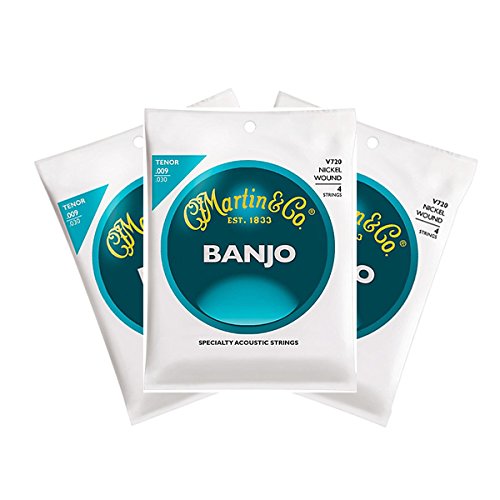
Four string players are not an afterthought in the Vega line. The V720 is Martin’s tenor banjo set, built from a nickel and steel alloy chosen for a clear, projected tone and smooth consistency across the set. Tenor banjos in standard C-G-D-A tuning need a very different gauge spread from a 5-string set, and this set is gauged for exactly that job, with two plain strings and two wound strings carrying the lower courses.
The published gauges run .009 for the A string, .016 for D, .023 wound for G, and .030 wound for C, so the set steps up in size as pitch falls, keeping tension reasonably even across a short tenor scale. That makes the V720 a straightforward replacement for tenor players in jazz and plectrum style accompaniment. Check your tuning before ordering: an Irish tuned tenor, played G-D-A-E, usually wants a heavier set than this one.
Specs
- Brand and model: Martin Vega V720
- Instrument: 4-string tenor banjo
- Gauges: .009, .016, .023 wound, .030 wound
- Material: Nickel and steel alloy
- Tuning focus: Standard tenor tuning, C-G-D-A
- String count: 4 strings per set
5. Gold Tone BSN-M Nylgut Medium 5-String Set
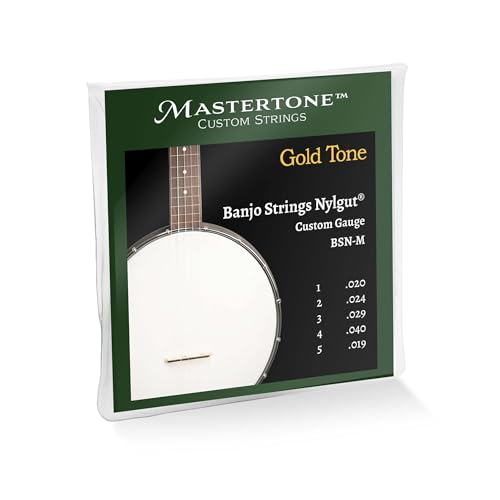
Gold Tone’s BSN-M gives 5-string players a second synthetic option, this time from a maker whose main business is banjos themselves. The set uses Nylgut at a medium gauge, and the published string sizes are noticeably heavier than a steel light set, which is normal for synthetic strings: a thicker synthetic string is how the maker reaches working tension at pitch, so the numbers should not be compared directly with steel gauges.
The voice is the point here. Nylgut on an open back banjo gives a warm, woody response with a softer leading edge to each note, which flatters clawhammer and frailing patterns and keeps fingertips comfortable through long practice sessions. As with any synthetic set, allow extra settling time after fitting, retune patiently over the first days, and confirm that your bridge and nut slots are smooth and wide enough for the larger string diameters before bringing the set up to pitch.
Specs
- Brand and model: Gold Tone BSN-M
- Instrument: 5-string banjo
- Gauges: .019, .040 wound, .029, .024, .020 as published for the set
- Material: Nylgut
- Gauge class: Medium
- String count: 5 strings
How to Choose the Right Banjo Strings
Start with string count and tuning
A 5-string set and a 4-string tenor set are not interchangeable. The 5-string banjo uses a short fifth string that starts partway down the neck and is tuned high, while a tenor banjo carries four full length strings in C-G-D-A, or in the heavier gauges Irish players use for G-D-A-E. Count your strings, confirm your tuning, and only then compare gauges.
Pick a gauge your hands and setup agree on
Light sets, roughly 9-20 on a 5-string, are easier on the fingers, bend more readily, and suit fast rolls and players building calluses. Medium sets, roughly 10-23, push back a little more, hold up better under hard picking, and give clawhammer players a firmer string to strike against. Moving one step in gauge rarely needs setup work, but a jump of two steps can change string height enough to deserve a setup check.
Understand the wound string materials
On most 5-string sets only the fourth string is wound, so its wrap decides much of the set’s character. Nickel plated steel is the traditional default: bright, clear, and familiar. Phosphor bronze warms and rounds that low string, which many folk and melodic players prefer. Coated sets such as the Elixir above trade a slightly different feel for longer useful life, while Nylgut removes metal from the equation entirely for a softer, older style voice.
Match the end type to your tailpiece
Most banjo sets use loop ends that hook over the posts or hooks of common tailpieces. Some sets use ball ends instead, which need a tailpiece with slots or holes that accept them. Look at your tailpiece before ordering, and order the end type it was built for.
Frequently Asked Questions
How often should banjo strings be changed?
Change them when the sound dulls, tuning starts to drift between sessions, or the wound string feels rough or looks discolored. Daily players often change steel sets every few months, while occasional players can go longer. Coated sets are designed to stretch that interval.
Can I put 5-string banjo strings on a tenor banjo?
No. A tenor banjo has four strings, a shorter scale, and different tunings, so it needs a dedicated tenor set with the right gauges and two wound strings, such as the Martin Vega V720 in this guide.
Are light or medium strings better for beginners?
Light gauges are usually the kinder starting point because they need less finger pressure and make early practice sessions more comfortable. Once technique and calluses develop, a medium set is an easy experiment if you want more resistance and volume.
Do Nylgut strings work on any banjo?
They work best as a planned change on banjos with smooth nut, bridge, and tailpiece contact points, and they suit open back and classical style instruments especially well. They stretch more than steel at first and give a much softer tone, so they are not a drop in tonal replacement for steel on a bluegrass resonator banjo.
Conclusion
The best banjo strings match your instrument’s string count, your preferred tension, and the job of the single wound string. Start with the D’Addario EJ69 for a warm, easy playing steel set, consider the Elixir 11600 if longer life matters most, and look to the Aquila AQ-5B or Gold Tone BSN-M when a softer synthetic voice is the goal. Tenor players are covered by the Martin Vega V720. Change one variable at a time, and your next set will teach you more about your own preferences than any single recommendation can.
More from Amazon
Programs that pair well with the guide above. Offers and eligibility are set by Amazon and may change.
Free shipping on eligible items, Prime Video and more. Eligible new members can start with a free trial.
Start a Prime free trialA Prime membership for ages 18-24 with a trial period. Eligibility is set by Amazon.
See Prime for Young AdultsAudiobooks and podcasts to listen to on the go. Eligible new members can start with a free trial.
Try Audible freeAd-free music streaming. Eligible new subscribers can start with a free trial.
Try Music Unlimited freeAs an Amazon Associate we earn from qualifying purchases.