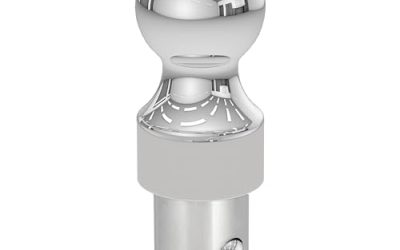
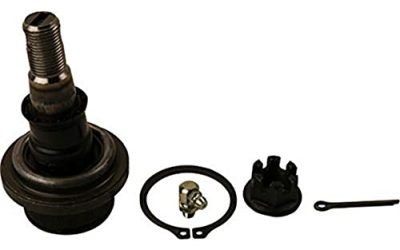
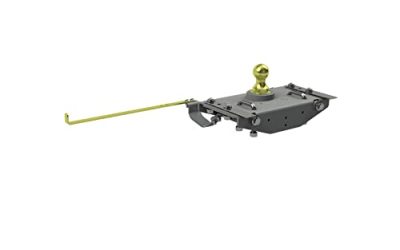
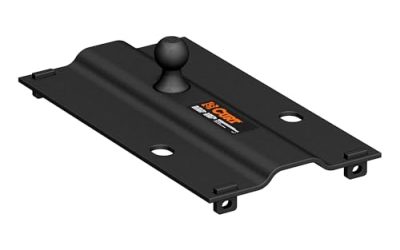
Our Short List of 3

- Best for: Hotshot and fleet trucks with 3-inch receivers pulling the heaviest bumper-pull trailers.
- Receiver size: 3 inches
- Towing capacity: 32,000 pounds
- Tongue weight: 3,500 pounds
- Drop/rise: 9 inches with 5 adjustable positions

- Best for: One-ton work trucks with 2.5-inch receivers that tow heavy trailers daily.
- Receiver size: 2.5 inches
- Towing capacity: 22,000 pounds
- Tongue weight: 3,000 pounds
- Drop: 6 inches with 4 adjustable ride heights

- Best for: Drivers who tow a few times a week and want the mount tucked away the rest of the time.
- Receiver size: 2.5 inches
- Gross trailer weight rating: 18,000 pounds
- Drop: 7 inches; rise: 7.5 inches
- Ball sizes: 2-inch and 2-5/16-inch dual ball
All 5 Picks at a Glance
| Product | Specs | Action |
|---|---|---|
| GEN-Y Hitch BOSS Torsion-Flex Tow Hitch, 3″ Receiver (GH-2225) |
| Check price on Amazon |
| BulletProof Hitches 2.5″ Adjustable Heavy Duty Trailer Hitch |
| Check price on Amazon |
| B&W Trailer Hitches Tow & Stow TS20040B |
| Check price on Amazon |
 GEN-Y Hitch Mega-Duty Tow Hitch, 2″ Receiver (GH-506) |
| Check price on Amazon |
 GEN-Y Hitch Mega-Duty Tow Hitch with Dual-Ball & Pintle Lock (GH-324) |
| Check price on Amazon |
Key takeaways
- Five ball hitch mounts rated for semi and heavy-duty truck towing, compared by receiver size, towing capacity, tongue weight and drop range.
A ball hitch on a heavy truck is never the strongest part of the setup by accident. The real decision is which link gives up first: the receiver welded under the truck, the mount sliding into it, the ball, or the coupler on the trailer. Buyers who haul equipment, livestock or freight on bumper-pull trailers behind one-ton and Class 5 trucks need every one of those links rated above the load, and the mount is the piece most often bought on a headline number alone.
This roundup is for hotshot drivers, ranch and construction crews, and owner-operators who pull heavy trailers with the receiver hitch on a heavy-duty or semi truck rather than a fifth wheel. Every mount below was picked from its Amazon listing by the same yardsticks: stated towing capacity, stated tongue weight, receiver size, and how much drop or rise the listing says it adjusts through.
Quick Picks
As an Amazon Associate we earn from qualifying purchases
| Product | Best for | Key spec from title |
|---|---|---|
| GEN-Y Hitch BOSS Torsion-Flex Tow Hitch, 3″ Receiver (GH-2225) | The heaviest bumper-pull loads on 3-inch receivers | 32,000 lbs towing capacity, 3,500 lbs tongue weight |
| BulletProof Hitches 2.5″ Adjustable Heavy Duty Trailer Hitch | Class V 2.5-inch receivers on one-ton trucks | 22,000 lb towing capacity, 3,000 lb tongue weight |
| B&W Trailer Hitches Tow & Stow TS20040B | Drivers who stow the mount under the truck between jobs | 18,000 GTW with a 7-inch drop |
| GEN-Y Hitch Mega-Duty Tow Hitch, 2″ Receiver (GH-506) | Tall trucks that need a deep drop to run level | 12.5-inch drop, 16,000 lbs towing capacity |
| GEN-Y Hitch Mega-Duty Tow Hitch with Dual-Ball & Pintle Lock (GH-324) | Mixed fleets that also pull pintle and lunette-ring trailers | Dual ball plus pintle lock, 10,000 lb capacity |
How to Choose
Start with the receiver size, not the capacity number
Heavy trucks leave the factory with three different receiver sizes, and the mount has to match yours exactly. Two-inch receivers sit under most older and lighter trucks, 2.5-inch receivers are standard on current three-quarter-ton and one-ton models, and 3-inch receivers appear on select heavy-duty Fords and the heaviest pickups. A mount built for a bigger tube will not seat properly in a smaller one, and reducer sleeves change the working length and can lower the safe rating of the whole setup. Measure the inside of your receiver tube before ordering anything, because the biggest capacity figure in this roundup is worthless if the shank does not fit your truck.
Read both ratings: towing capacity and tongue weight
Every listing in this guide states two numbers, and the smaller margin is the one that matters. Towing capacity is the gross weight of the trailer the mount can pull; tongue weight is the downward load the trailer coupler puts on the ball. A mount rated at 22,000 pounds with a 3,000-pound tongue limit still fails the job if your loaded equipment trailer presses down with more than that. Work trucks also need to remember that the mount is only one link: the receiver, the ball and the coupler each carry their own ratings, and the lowest number in that chain is the real ceiling for the load.
Get the drop right so the trailer runs level
A trailer that tows nose-high or nose-down handles badly, wears its tires unevenly and puts the wrong share of weight on the ball. The drop you need is the distance from the top of your receiver tube down to the trailer’s coupler height once the trailer sits level on flat ground. Tall, lifted or heavily sprung trucks need deep drops, which is why the mounts here adjust through anywhere from 6 to 12.5 inches across multiple pinned positions. Adjustable mounts earn their keep on working trucks because one truck usually pulls several trailers, and each trailer parks at a different coupler height.
Decide between dual ball, tri-ball and pintle setups
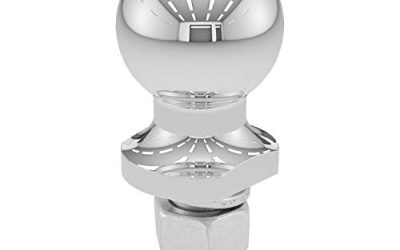
Most heavy bumper-pull trailers couple to a 2-5/16-inch ball, while lighter utility trailers still use a 2-inch coupler, so a dual-ball mount that flips between the two covers a working fleet without loose balls rolling around the cab. Pintle combinations go a step further: the mounts from GEN-Y in this list add a pintle lock, letting the same unit hook trailers fitted with lunette rings, which are common on rental, military-surplus and off-road equipment trailers. If your trailers are all one coupler type, a simpler mount is fine; if the yard sends you something different every morning, the combination units save real time.
The 5 Best Options
GEN-Y Hitch BOSS Torsion-Flex Tow Hitch, 3″ Receiver (GH-2225)
- Best for: Hotshot and fleet trucks with 3-inch receivers pulling the heaviest bumper-pull trailers.
- Receiver size: 3 inches
- Towing capacity: 32,000 pounds
- Tongue weight: 3,500 pounds
- Drop/rise: 9 inches with 5 adjustable positions
Hotshot and fleet trucks with 3-inch receivers pulling the heaviest bumper-pull trailers.
The 3-inch receiver is uncommon and limited to select heavy-duty trucks, so confirm your tube size before ordering.
This is the mount for the heaviest bumper-pull work a receiver hitch can do. The BOSS pairs GEN-Y’s Mega-Duty adjustable frame with rubber torsion arms, a design the listing says transfers far less trailer inertia to the truck than a rigid connection, which matters when a loaded equipment trailer starts pushing a one-ton around on rough ground. It fits the 3-inch receivers found on the heaviest pickups, carries the highest ratings in this roundup, and the included pintle lock means lunette-ring trailers hook up to the same mount. Fleets running near the top of Class V ratings will find the headroom here reassuring.
BulletProof Hitches 2.5″ Adjustable Heavy Duty Trailer Hitch
- Best for: One-ton work trucks with 2.5-inch receivers that tow heavy trailers daily.
- Receiver size: 2.5 inches
- Towing capacity: 22,000 pounds
- Tongue weight: 3,000 pounds
- Drop: 6 inches with 4 adjustable ride heights
One-ton work trucks with 2.5-inch receivers that tow heavy trailers daily.
Solid steel construction makes this a heavy unit to lift in and out of the receiver; check the listed weight if you swap mounts often.
BulletProof builds this mount around a solid steel shank and a simple pinned channel, with no moving mechanism beyond the height pins themselves. That simplicity is the appeal for trucks that live on job sites: there is very little to bend, jam or wear out, and the ratings sit well above what a 2.5-inch Class V receiver typically handles. Four ride heights cover the drop most one-ton trucks need, and the dual ball platform flips between the two common coupler sizes. For a work truck that pulls a heavy gooseneck-alternative bumper trailer day after day, this is the set-and-forget option in the list.
B&W Trailer Hitches Tow & Stow TS20040B
- Best for: Drivers who tow a few times a week and want the mount tucked away the rest of the time.
- Receiver size: 2.5 inches
- Gross trailer weight rating: 18,000 pounds
- Drop: 7 inches; rise: 7.5 inches
- Ball sizes: 2-inch and 2-5/16-inch dual ball
Drivers who tow a few times a week and want the mount tucked away the rest of the time.
B&W states that weight-distribution and sway-control systems do not fit the Tow & Stow, so look elsewhere if your trailer needs one.
The Tow & Stow solves a different problem: what the mount does when it is not towing. Between jobs it rotates under the truck, out of the way of shins, garage doors and loading docks, then swings back and pins at the height you need. Height adjusts in one-inch steps on two stainless steel pins, and the head rotates to put either the 2-inch or the 2-5/16-inch ball on top. Its 18,000-pound gross trailer weight rating covers most equipment and toy-hauler work behind three-quarter-ton and one-ton trucks, and the e-coat plus powder-coat finish is built for trucks that stay outside year-round.
GEN-Y Hitch Mega-Duty Tow Hitch, 2″ Receiver (GH-506)
- Best for: Tall or lifted trucks with 2-inch receivers that need maximum drop to tow level.
- Receiver size: 2 inches
- Towing capacity: 16,000 pounds
- Tongue weight: 2,000 pounds
- Drop: 12.5 inches with 5 adjustable positions
Tall or lifted trucks with 2-inch receivers that need maximum drop to tow level.
The deep drop hangs low, so check ground clearance on steep driveways and uneven job-site entrances before committing.
Plenty of working trucks still run 2-inch receivers, and this Mega-Duty is built for the tall ones. Its 12.5-inch drop is the deepest in this roundup, which makes it the natural pick for lifted trucks or high-riding flatbeds whose couplers sit far above a standard trailer tongue. Five pinned positions let you fine-tune the height instead of living with whatever a fixed mount gives you, and the 16,000-pound rating with a 2,000-pound tongue limit is serious capacity for a 2-inch shank. The silver finish also shrugs off the scuffs that come with daily pin changes in a gravel yard.
GEN-Y Hitch Mega-Duty Tow Hitch with Dual-Ball & Pintle Lock (GH-324)
- Best for: Mixed fleets that switch between ball couplers and lunette-ring trailers.
- Receiver size: 2 inches
- Towing capacity: 10,000 pounds
- Tongue weight: 1,500 pounds
- Drop: 7.5 inches with 4 adjustable positions
Mixed fleets that switch between ball couplers and lunette-ring trailers.
The pintle lock is designed for lunette rings of 1.5 inches or smaller, so measure your rings before relying on it.
Not every trailer in a working yard ends in a ball coupler. Rental yards, farms and surplus buyers run plenty of lunette-ring trailers, and this Mega-Duty handles both worlds: a dual-ball mount for ordinary couplers and a pintle lock that closes over a ring. The ratings are the lowest in this roundup, which is exactly why it suits mixed light-to-medium fleets rather than maximum-weight hauling. Four height positions cover the usual spread of trailer tongues, and the listing includes two locking pins, a small but real saving for a truck that parks outside overnight.
Which One Fits Your Situation
You haul hotshot freight behind a one-ton with a 3-inch receiver
Take the GEN-Y BOSS GH-2225. It is the only mount here built for the 3-inch tube, its 32,000-pound towing capacity and 3,500-pound tongue rating leave the most headroom for loaded equipment trailers, and the torsion-flex arms take some of the shove out of long highway days. The included pintle lock also covers the occasional ring-coupled trailer a broker sends your way.
Your truck pulls a different trailer every morning
Choose between the BulletProof 2.5-inch and the B&W Tow & Stow. Both flip between 2-inch and 2-5/16-inch balls without loose parts, and both adjust height on pins in seconds. Pick the BulletProof if the truck lives on rough sites and you want the fewest possible mechanisms; pick the B&W if the mount spends half its life stowed under the bumper between runs.
Your truck sits high and every trailer tows nose-down
The GEN-Y Mega-Duty GH-506 exists for this problem. A 12.5-inch drop with five positions gives you the range to bring a standard trailer level behind a lifted or tall-sprung truck, and its 16,000-pound rating still covers most equipment and livestock work. Just confirm you have the ground clearance to carry that much drop over broken ground.
Half your trailers use lunette rings instead of couplers
Go with the GEN-Y GH-324 and its pintle lock. It is rated lower than the others here, so keep it on the lighter side of the fleet, but it removes the need to carry a separate pintle mount and swap hardware at the yard. The dual ball still handles your ordinary coupler trailers, and the locking pins are already in the box.
Common Mistakes
- Buying on the towing capacity headline while ignoring tongue weight, even though the tongue limit is usually the number a loaded trailer exceeds first.
- Sliding a smaller mount into a bigger receiver with a reducer sleeve and assuming the full rating still applies.
- Ordering before measuring the receiver tube, then discovering the truck has a 3-inch receiver when the mount is built for 2.5 inches.
- Assuming a higher-rated mount raises what the truck can tow, when the receiver, ball, coupler and the truck’s own rating still cap the load.
- Setting the drop once for one trailer and never rechecking it, so the next trailer tows nose-high with too little weight on the ball.
Frequently Asked Questions
Can a ball hitch really be used on a semi truck?
Yes, within limits. Class 8 tractors usually pull with a fifth wheel or a pintle hook, but semi trucks and heavy-duty pickups fitted with a receiver hitch can tow bumper-pull trailers on a ball mount. The mounts in this guide fit 2-inch, 2.5-inch and 3-inch receivers and are rated by their listings for the heavy end of that work.
Which ball size do heavy trailers use?
Most heavy bumper-pull trailers use a 2-5/16-inch coupler, while lighter utility trailers commonly use a 2-inch coupler. That is why every mount in this roundup carries both sizes on one dual-ball platform. Always match the ball to the coupler stamped on the trailer, because a 2-inch ball in a larger coupler can uncouple under load.
Does a 32,000-pound mount mean my truck can tow 32,000 pounds?
No. The mount’s rating is only one link in the chain. Your truck’s own tow rating, the receiver’s rating, the ball and the trailer coupler all have their own limits, and the lowest of those numbers is the most you should pull. A higher-rated mount buys margin and durability, not extra legal capacity for the truck.
How much drop do I actually need?
Measure with the trailer level. Park the trailer on flat ground, level it, and measure from the ground to the top of the coupler. Then measure from the ground to the top inside edge of your receiver tube. The difference is the drop you need, and an adjustable mount whose range brackets that number lets you fine-tune rather than guess.
More from Amazon
Programs that pair well with the guide above. Offers and eligibility are set by Amazon and may change.
Free shipping on eligible items, Prime Video and more. Eligible new members can start with a free trial.
Start a Prime free trialA Prime membership for ages 18-24 with a trial period. Eligibility is set by Amazon.
See Prime for Young AdultsAudiobooks and podcasts to listen to on the go. Eligible new members can start with a free trial.
Try Audible freeAd-free music streaming. Eligible new subscribers can start with a free trial.
Try Music Unlimited freeAs an Amazon Associate we earn from qualifying purchases.