Key takeaways
- Best grease for hitch ball towing, with waterproof PTFE and water-resistant picks that cut coupler wear, noise and rust on every trailer trip.
A dry hitch ball grinds against the coupler on every turn, and that metal-on-metal contact is what wears both parts down, adds squeaks and groans on slow manoeuvres, and leaves bare steel open to rust. The fix is a thin film of the right grease, but dedicated hitch ball grease is a small class on Amazon, and most tubs and sprays on the shelf are general-purpose products never sold for this job. Choosing well means knowing which few listings are genuinely made for tow balls and couplers.
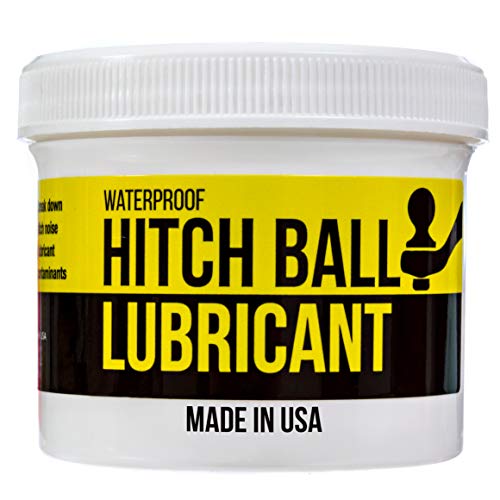

This guide is for anyone who tows a conventional trailer, from weekend boat and utility hauls to regular camper trips, plus owners of weight-distribution setups whose hitch heads also need lubrication. The three picks below are the verified listings sold specifically for hitch balls or hitch components: a PTFE-enhanced waterproof grease, a long-running white hitch ball lube in a jar, and the lubricant made by a weight-distribution hitch manufacturer for its own sockets and brackets.
Quick Picks
As an Amazon Associate we earn from qualifying purchases.
| Product | Best for | Key spec |
|---|---|---|
| Mission Automotive Ball Grease for Trailer Hitch | All-round towing and wet-weather hauls | PTFE-enhanced waterproof grease, 4 oz |
| Reese Towpower 58117 Hitch Ball Lube | Standard 1-7/8 in and 2 in ball setups | White water-resistant grease, 4 oz jar |
| Equal-i-zer 91-00-4250 High Performance Lubricant | Weight-distribution hitch owners | Calcium sulfonate lubricant, 4 oz tube |
How to Choose
Buy a grease sold for hitch contact, not a general lubricant
The coupler grips the ball under load and pivots constantly, so the product needs to stay in place under pressure rather than fling off or wash away. Greases formulated and sold for hitch balls, couplers and receiver hitches are built around that exact contact point. General-purpose tubs and dry sprays may be fine elsewhere on a vehicle, yet they are not marketed for this job and often disappear quickly. All three picks here are listed specifically for hitch use, which is why the shortlist is short rather than padded.
Match the formula to your towing conditions
A waterproof PTFE-enhanced grease suits boats launched in fresh or salt water and trailers stored outdoors, because the film resists wash-off and the PTFE helps the coupler slide over the ball with less friction. A water-resistant white grease covers ordinary road towing where rain and road spray are the main threats. Calcium sulfonate formulas, like the Equal-i-zer tube, are known for clinging to loaded metal surfaces. Think about where the trailer lives and how often it gets wet before picking a jar.
Check the pack size against how much you actually use
A hitch ball needs only a thin smear, roughly a fingertip of grease worked over the top and sides, so a 4 oz container lasts a long time for one trailer. All three picks come in 4 oz packs, which keeps the glovebox or toolbox footprint small and means the grease is unlikely to dry out before you finish it. Owners running several trailers or a fleet may reapply more often, but even then a single small jar per vehicle is the practical unit to buy.
Confirm the fit for your hitch type
Conventional ball-and-coupler towing is the core use here, and the Reese lube is stated for the common 1-7/8 in and 2 in ball sizes. Weight-distribution hitches add moving contact points at the sockets and L-brackets, and the Equal-i-zer lubricant is made for exactly those parts while also serving ball-and-coupler contact. Fifth-wheel couplings are a different system with their own lube plates and products, so do not treat this list as covering them; match the grease to the coupling you actually run.
The 3 Best Options
Mission Automotive Ball Grease for Trailer Hitch
This is the most complete all-rounder of the three: a PTFE-enhanced waterproof grease sold specifically for tow hitch mount balls, and the listing also names king pins, hitch locks, couplers and receiver hitches as intended contact points. The PTFE content targets the friction that makes couplers groan and balls wear shiny, while the waterproof base suits trailers that get rained on, launched or stored outside. It is made in the USA and comes in a 4 oz size that fits easily in a tow kit. For most conventional towing, this is the first jar to reach for.
Specs
- Size: 4 fluid ounces
- Formula: PTFE-enhanced waterproof grease
- Part number: MAHitchGrease
- Stated uses: tow hitch mount balls, king pins, hitch locks, couplers and receiver hitches
- Stated benefits: reduces friction, wear and corrosion
- Origin: made in the USA
Best for: Everyday conventional towing, especially trailers launched in water or stored outdoors.
Watch out for: Confirm the offer you order is the 4 oz 1-pack listing for this exact product before checkout.
ASIN: B07THD8GJR
Reese Towpower 58117 Hitch Ball Lube
Reese Towpower is one of the longest-standing names in towing hardware, and its 58117 lube is a simple white grease in a 4 oz jar made to cut the wear and friction between a trailer coupler and the hitch ball. The listing states it suits the two most common ball sizes, 1-7/8 in and 2 in, and describes the grease as water-resistant and non-toxic, which makes it a tidy choice for family towing gear handled without gloves. If you want the straightforward, single-purpose jar from a towing specialist rather than a multi-use formula, this is the pick.
Specs
- Size: 4 oz jar
- Formula: white grease, water-resistant
- Model number: 58117
- Stated property: non-toxic
- Stated ball sizes: 1-7/8 in and 2 in
- Stated purpose: reduces trailer coupler and hitch ball wear and friction
Best for: Standard ball-and-coupler setups using 1-7/8 in or 2 in balls.
Watch out for: Stock signals for this ASIN conflict between sellers, so confirm a live featured offer for the exact ASIN before ordering. Note that one listing field shows an incorrect litre volume; the jar is 4 oz.
ASIN: B0008F67JU
Equal-i-zer 91-00-4250 High Performance Lubricant
Equal-i-zer builds weight-distribution hitches, and this 4 oz tube of calcium sulfonate lubricant is its own product for keeping those hitches quiet and moving freely. The listing states its specific use as lubricating Equal-i-zer hitch sockets, and retailer copy adds that it works for hitch balls, the hitch head and L-brackets. That makes it the natural buy if you already run an Equal-i-zer setup, since one tube covers every contact point the manufacturer tells you to grease. Conventional-towing owners can use it on the ball too, but its real home is the weight-distribution hitch head.
Specs
- Size: 4 ounces, tube
- Material: calcium sulfonate
- Part number: 91-00-4250
- UPC: 816416010256
- Stated use: lubricating Equal-i-zer hitch sockets
- Also stated for: hitch balls, hitch head and L-brackets
Best for: Owners of Equal-i-zer weight-distribution hitches who want one lubricant for sockets, brackets and ball.
Watch out for: Current stock evidence for this ASIN is retailer-side rather than a fresh Amazon signal, so confirm a live featured offer for the exact ASIN before ordering.
ASIN: B007HRGZDK
Which One Fits Your Situation
You tow a boat or store the trailer outdoors
Pick the Mission Automotive grease. Its waterproof, PTFE-enhanced formula is the one here built to survive launches, rain and damp storage without washing off the ball, and the same jar also covers couplers, receiver hitches and hitch locks. One 4 oz container handles the whole tow setup, so there is no need to stock separate products for each contact point on the trailer.
You run a standard camper or utility trailer on 2 in gear
The Reese Towpower 58117 lube matches this setup directly, since the listing names 1-7/8 in and 2 in balls as its stated sizes. The white, water-resistant grease in a small jar is easy to apply before a trip and easy to store with the rest of the towing kit. Just double-check the live offer for the exact ASIN at ordering time, because seller stock signals for this one conflict.
Your weight-distribution hitch creaks and pops
Reach for the Equal-i-zer 91-00-4250 lubricant. It is made by the hitch manufacturer for its own sockets, and it also covers the hitch head, L-brackets and the ball itself, so a single tube handles every point that needs grease on that system. Calcium sulfonate clings well under load, which suits the high-pressure contact a weight-distribution head sees on every turn and bump.
You want one small jar for occasional towing
Any of the three works, because each comes in a 4 oz pack and a ball needs only a thin film per trip. The Mission Automotive grease is the safest single buy for mixed use, since its stated uses span balls, couplers, locks and receivers. Choose it unless your setup is specifically a weight-distribution hitch, in which case the Equal-i-zer tube is the more targeted option.
Common Mistakes
- Skipping grease entirely and letting the coupler grind dry, which accelerates wear on both the ball and the coupler and invites rust.
- Reaching for a general-purpose spray or tub that is not sold for hitch balls, then finding it has flung off or washed away within a few trips.
- Applying far too much grease, which collects road grit and turns the film into an abrasive paste instead of a protective layer.
- Greasing a dirty ball without wiping off the old, grit-loaded film first, so fresh grease goes on over contamination.
- Assuming fifth-wheel couplings use the same products as ball hitches, when they rely on their own lube plates and greases.
Frequently Asked Questions
How often should I grease a hitch ball?
Reapply whenever the film looks thin, dry or loaded with grit, and always after towing through heavy rain or launching a boat, since water strips grease fastest. A quick wipe and a fresh fingertip of grease before each trip is a simple habit that keeps wear down. Check the ball surface when you unhitch and let its condition set the schedule.
Can I use ordinary lithium grease or a dry spray instead?
Some owners do reach for general products, but they are not sold as hitch ball grease and are not what this guide ranks. Dry sprays leave little film to cushion loaded contact, and general tubs vary in how well they resist wash-off. A dedicated hitch lubricant is inexpensive in a 4 oz size and is formulated for coupler contact, so it is the safer default.
Does hitch ball grease reduce towing noise?
It can help with the squeaks and groans that come from a dry coupler pivoting on the ball during slow turns and manoeuvres, because the film lets the surfaces slide instead of grabbing. It will not fix noise from loose hardware, a worn coupler or chain rattle, so treat persistent sounds as a prompt to inspect the whole connection rather than simply adding more grease.
How much grease does one application take?
Very little. Spread a thin, even film over the top and sides of the ball where the coupler contacts it, about a fingertip’s worth, and wipe away any excess so it does not collect grit. That is why a single 4 oz jar or tube lasts a typical owner a long time, often across many trips and more than one season of regular towing.
More from Amazon
Programs that pair well with the guide above. Offers and eligibility are set by Amazon and may change.
Free shipping on eligible items, Prime Video and more. Eligible new members can start with a free trial.
Start a Prime free trialA Prime membership for ages 18-24 with a trial period. Eligibility is set by Amazon.
See Prime for Young AdultsAudiobooks and podcasts to listen to on the go. Eligible new members can start with a free trial.
Try Audible freeAd-free music streaming. Eligible new subscribers can start with a free trial.
Try Music Unlimited freeAs an Amazon Associate we earn from qualifying purchases.