Key takeaways
- Which water belongs in flooded lead-acid golf cart batteries, why distilled water is the standard, when to top up, and the watering mistakes that shorten battery life.
As an Amazon Associate we earn from qualifying purchases.
The water question for a golf cart sounds trivial until you price a set of batteries. Flooded lead-acid batteries, the kind under the seat of most electric carts, slowly lose water from their electrolyte as they charge and work. That water has to be replaced, and what you replace it with decides whether the plates inside stay healthy for years or quietly corrode and sulfate ahead of schedule. The decision is not really which brand of water to buy. It is whether the water you add introduces minerals into a system that cannot get rid of them again.
This guide is for cart owners running flooded lead-acid batteries who handle their own maintenance: homeowners with a neighborhood cart, golfers who keep a cart at the course, and anyone who inherited a cart and a vague instruction to keep the batteries watered. It explains the one water that belongs in these batteries, the waters that do not, when and how much to add, and the routine that keeps a pack alive. Sealed and lithium batteries are covered too, because the most expensive watering mistake is watering a battery that never needed it.
How to Choose
Choose Distilled Water, Every Time
Distilled water is the standard recommendation from battery makers for one simple reason: distillation removes the dissolved minerals that tap water carries. Inside a flooded battery, water leaves as gas during charging, but minerals do not. Every top-up with mineral-bearing water leaves its minerals behind, and they accumulate on the plates over the life of the battery, encouraging corrosion and reducing capacity. Distilled water adds nothing but water, so the electrolyte stays as close as possible to what the battery was filled with. It is sold inexpensively in grocery and auto stores, usually in gallon jugs, and one jug lasts a home cart owner a long time.
Know Which Waters to Keep Away From the Pack
Tap water is the most common bad choice, because its mineral content varies by town and by well, and none of that variation is good for plates. Well water is typically worse, often carrying more dissolved minerals and sometimes iron. Bottled drinking water and spring water are not a shortcut either: they are sold partly on the mineral content that makes them taste like something, which is exactly what a battery does not want. Purified water made by reverse osmosis or deionization is the only reasonable stand-in when distilled water is genuinely unavailable, and even then it is a substitute for an emergency top-up, not a new routine.
Confirm Your Batteries Are the Kind That Take Water
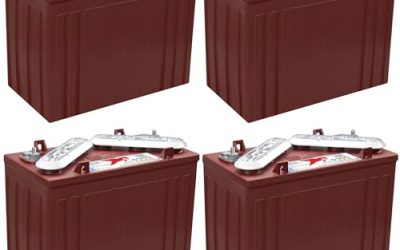
Only flooded lead-acid batteries with removable caps need watering. Sealed lead-acid designs, including AGM and gel batteries, do not have serviceable cells and must never be opened to add water. Lithium packs, increasingly common as cart upgrades, contain no electrolyte to top up at all. Before you buy water or pry at anything, lift the seat and look: a flooded pack has visible caps on each battery, usually three or six per battery depending on voltage, and often a warning label about checking electrolyte. If there are no caps, there is no watering job, and forcing the issue can ruin a sealed battery.
Treat the Water as One Part of a Maintenance System
Water choice matters most inside a routine. The same pack that gets distilled water can still die early from chronic undercharging, corroded terminals, or electrolyte left low for months. The owners who get long life from flooded packs tend to do four unglamorous things: charge after use rather than letting the cart sit discharged, check levels on a regular schedule, keep terminals clean and tight, and keep records simple enough to actually follow. Choosing distilled water is the easiest of the four, which is why it is the right place to start, not the whole job.
Understanding What Is Inside the Battery
A flooded golf cart battery holds lead plates submerged in electrolyte, a mixture of sulfuric acid and water. During discharge and especially during charging, some of that water breaks down and vents as gas, so the level slowly falls. The acid itself does not leave in normal use, which is why you add water and never add acid during routine maintenance. If the level falls far enough, the tops of the plates sit exposed to air inside the cell, and exposed plate material is damaged in a way that topping up later cannot fully undo. That single fact explains both rules of watering: keep the plates covered, and replace only what left, which is water.
This also explains why the fill line matters in both directions. A cell filled too low leaves plates exposed. A cell filled too high has no room for the electrolyte to expand and rise during charging, so acid can push out through the caps, corroding terminals and the battery tray and quietly reducing the acid strength inside. The correct level on most flooded cart batteries is just above the plates, up to the bottom of the fill well or the indicator ring the maker molded into the opening, not brimming to the top of the cap threads.
When and How to Add Water
Timing is the part most owners get backwards. The common guidance for flooded batteries is to check levels regularly, add water after charging when the pack is full and the electrolyte has risen and settled, and avoid filling a deeply discharged battery to the final line before charging, because the level will rise during the charge and overflow. If a battery is so low that plates are exposed before a charge, add just enough water to cover the plates, charge, and then complete the top-up afterward.
A careful watering session looks like this in practice. Park on level ground, switch the cart off, and let a recently charged pack rest briefly. Put on eye protection and gloves, because the caps sit over acid and old residue around them is acidic too. Open one battery at a time, look into each cell with a light, and add distilled water slowly to the fill line using a clean pitcher, a watering jug with a spout, or a battery watering gun if you maintain several carts. Wipe drips, seat the caps firmly, and move to the next battery. Check every cell rather than assuming they drink evenly; they do not, and the thirstiest cell is usually the one that was lowest last time too.
How often depends on use and climate. A cart used daily in hot weather, charged daily, will need checks more often than a cart used on weekends in a mild season. Many owners settle on a monthly check during the season of regular use, with a check before any long storage and after the first charges when the cart returns to service. The honest schedule is the one tied to your usage: if you cannot remember when you last looked, it has been too long.
Which One Fits Your Situation
You Just Bought a Used Cart
Assume the watering history is unknown, because it usually is. Lift the seat, identify the battery type, and if the pack is flooded, check every cell before your first long outing. Top low cells with distilled water following the charge-first timing above, clean the terminals, and start a simple log with dates and rough amounts. Within a month you will know how fast your pack drinks, which turns watering from a worry into a calendar habit.
Your Cart Sits for Weeks Between Uses
Your risk is less about water evaporating on the shelf and more about the pack sitting discharged, which damages flooded batteries regardless of water level. Keep the cart charged during storage according to the charger and battery maker’s guidance, check levels before the storage period and again when the cart wakes up, and top up after the first full charge rather than before it. Distilled water still applies; storage does not make tap water any safer.
You Maintain Several Carts
Consistency beats memory at fleet scale, even a small fleet of family or rental carts. Stock distilled water where the carts charge, keep one clean watering container that is used for nothing else, and check carts on a fixed day rather than when someone remembers. A basic watering system or gun that stops at the correct level can pay for itself in avoided overfills, but the water itself stays the same inexpensive distilled gallon jug.
You Are Thinking of Switching to Lithium
Then this guide mostly stops applying, and that is one of lithium’s genuine conveniences: no watering, no caps, no electrolyte checks. The trade-offs live elsewhere, in the conversion parts, charger compatibility, and how the cart’s weight and balance change. If watering is your main complaint about flooded batteries, it is a legitimate reason to look at a conversion, but decide on the whole picture rather than on the jug of water alone.
Common Mistakes
- Filling cells with tap, well, or spring water and letting minerals accumulate on the plates for the life of the pack.
- Adding acid during routine maintenance, when normal losses are water only and acid belongs in an initial fill or a spill repair handled carefully.
- Overfilling to the top of the threads, so electrolyte expands during charging and pushes acid onto terminals and the tray.
- Watering a sealed AGM, gel, or lithium battery that has no serviceable cells and was never meant to be opened.
- Checking only the easy batteries at the front of the pack while a rear battery runs its plates dry.
Frequently Asked Questions
Can I use tap water in a golf cart battery in an emergency?
If plates are about to sit exposed, covering them matters more in the moment than purity, and a small emergency top-up with clean tap water is less damaging than running a cell dry. Treat it as an emergency measure, not a routine: switch to distilled water for every normal top-up afterward, and do not let one emergency jug quietly become the permanent supply stored next to the charger.
How full should each cell be?
Fill to the battery maker’s indicated level, which on most flooded cart batteries is just above the plates and up to the bottom of the fill well or the molded indicator ring. Do not fill to the top of the opening. The electrolyte needs room to rise during charging, and a correctly filled cell stays below the cap with space to spare when the pack is at rest after a charge.
How often should I check the water level?
Check on a regular schedule matched to use: monthly is a common rhythm for a cart in regular service, with extra checks in hot weather, before storage, and after a stored cart returns to use. Heavy daily use and frequent charging consume water faster. The right interval is the one where you never find a cell with plates exposed; if you do, shorten the interval.
Does a battery need water added before or after charging?
The standard practice is to complete the top-up after charging, when the electrolyte level has risen and settled, so you do not overfill a battery whose level is temporarily low. The exception is a cell so low that plates are exposed: cover the plates with a little distilled water first, charge the pack, then finish filling to the line once charging is complete.
More from Amazon
Programs that pair well with the guide above. Offers and eligibility are set by Amazon and may change.
Free shipping on eligible items, Prime Video and more. Eligible new members can start with a free trial.
Start a Prime free trialA Prime membership for ages 18-24 with a trial period. Eligibility is set by Amazon.
See Prime for Young AdultsAudiobooks and podcasts to listen to on the go. Eligible new members can start with a free trial.
Try Audible freeAd-free music streaming. Eligible new subscribers can start with a free trial.
Try Music Unlimited freeAs an Amazon Associate we earn from qualifying purchases.