Key takeaways
- Find the best AC golf cart motor for your cart, with Navitas conversion kits for EZGO, Yamaha and Club Car compared by fitment, motor size and controller.
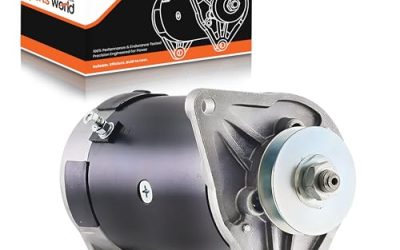
An AC golf cart motor is the heart of a DC-to-AC conversion, and it is the upgrade owners reach for when a stock DC cart feels flat on hills, slow away from a stop, or limited by an ageing motor and controller combination. Instead of replacing the motor alone, most modern AC upgrades arrive as a matched kit: an AC induction motor, a programmable controller, a wiring module matched to the cart brand, and an on-the-fly programmer that lets the driver adjust how the cart behaves. Choosing the best AC golf cart motor is therefore less about chasing the biggest number on a box and more about matching the kit to your exact cart, its factory controller, its voltage, and the way you actually drive.
As an Amazon Associate we earn from qualifying purchases.
This guide explains how AC motors differ from the DC motors fitted to most older carts, what the motor and controller ratings actually mean, and which checks matter before you order. It then looks at three verified Navitas conversion kits, one each for EZGO, Yamaha and Club Car carts, because Navitas is the name that dominates this category on Amazon US and each kit is built around a specific factory controller family. If your cart is not covered by one of these fitments, the buying guidance below still applies, because the same questions decide whether any AC conversion will work well.
Why Owners Switch From DC to AC
Most golf carts built over the last few decades use a DC motor. DC systems are simple and well understood, but they have known limits. Brushes wear, torque delivery can feel abrupt at low speed and soft at higher speed, and the motor and controller are usually tuned conservatively from the factory. An AC induction motor has no brushes to service, and when it is paired with a modern controller it can deliver strong torque from a standstill while remaining smooth at cruising speed.
The controller is half of the story. AC conversion kits pair the motor with a controller that manages acceleration, maximum speed and regenerative braking. Regenerative braking slows the cart when you lift off the accelerator and returns a small amount of energy to the battery pack, which also reduces wear on the mechanical brakes on long descents. Because the controller is programmable, the same hardware can be set up gently for a campground cart or more assertively for a hilly neighbourhood route, within the limits of the cart and its battery pack.
Efficiency is another reason owners convert. Listings for these kits consistently describe AC systems as more efficient than the DC systems they replace, which can translate into longer run time from the same battery pack. The exact gain depends on the pack, the terrain and the settings, so treat efficiency as a directional benefit rather than a promise, and focus first on correct fitment.
Start With Fitment, Not Power
Every kit in this guide is built for a named cart family and a named factory controller. That is not marketing caution; it is how these kits work. The controller module in the box is programmed and wired to speak to a specific original controller family, such as the Curtis 1206HB in an EZGO TXT, the Moric system in a Yamaha Drive or G29, or the Curtis 1510 and 1515 family in many Club Car models. A kit built for one family will not plug into another, even when the motor itself looks similar.
Before ordering anything, confirm four things on your own cart. First, the make, model and year, including sub-variants such as TXT, RXV, Drive, Drive2, Precedent, Onward or Tempo. Second, the factory controller model, which is printed on the controller label under the seat or in the controller bay. Third, the system voltage, most commonly 48 volts on carts that are candidates for these kits. Fourth, the battery type. Several of the listings below specifically exclude factory lithium models, because carts that left the factory with a lithium pack use different electronics. Aftermarket drop-in lithium packs are a separate question, and the kit maker’s guidance for your exact configuration is the authority.
Spline count matters too. Golf cart motors couple to the transaxle with a splined shaft, and the kits below use different spline counts for different brands, described as 19T in the EZGO and Yamaha listings and 10T in Club Car listings. The kit for your cart family already contains the correct motor, which is another reason to buy by fitment rather than by motor alone.
Motor Size and Controller Size, Explained
AC golf cart motors in this category are commonly listed at 4 kilowatts or 5 kilowatts, with higher-output 7.5 kilowatt packages also sold for some EZGO applications. A 4 kilowatt motor paired with a 440 amp controller is the moderate configuration: a clear step up from a stock DC system, aimed at everyday driving, mild hills and owners who want smoother, stronger performance without pushing the rest of the cart hard. A 5 kilowatt motor with a 600 amp controller is the higher-output configuration in the kits below, aimed at steeper terrain, heavier loads, larger tyres and drivers who want the strongest acceleration the platform offers.
Bigger is not automatically better. A higher-output controller can only deliver what the battery pack, cables and solenoid can supply. The listings for these kits recommend a heavy-duty solenoid and 2-gauge battery cables, and that recommendation should be treated as part of the conversion budget and plan, not an optional extra. An older lead-acid pack in poor condition will limit any motor, AC or DC, so assessing the pack honestly comes before choosing between motor sizes. If your pack is near the end of its life, replacing or upgrading it may matter more than the difference between the two motor sizes.
The Kits at a Glance
The three kits below cover the three biggest cart brands. All three are Navitas DC-to-AC conversion kits with a TAC2 controller, Bluetooth programming capability and an on-the-fly programmer, and all three are sold on Amazon US with the ASIN shown for each. They differ in the cart family they fit, the factory controller they are built around, and their motor and controller ratings.
| Kit | Fits | Motor | Controller |
|---|---|---|---|
| Navitas EZGO TXT 600A 5KW | EZGO TXT 48V with Curtis 1206HB | 5 kW AC motor, 19T | TAC2 600A with Bluetooth |
| Navitas Yamaha Drive/G29 440A 4KW | Yamaha Drive/G29 with Moric module | 4 kW AC motor, 19T | TAC2 440A with Bluetooth |
| Navitas Club Car 4KW | Specified Club Car models | 4 kW AC motor | TAC2 controller with Bluetooth |
Navitas AC Conversion Kit for EZGO TXT 48V, 600A and 5KW
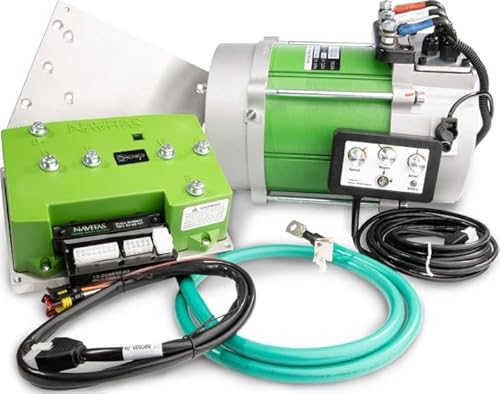
This is the headline configuration for the most common conversion candidate on the road, the 48-volt EZGO TXT. The listing specifies EZGO TXT 48V electric models with the Curtis 1206HB controller, and the package combines a 5 kilowatt AC motor with a 600 amp TAC2 controller. Included components listed for the kit are the 5 kW 19T AC motor, the TAC2 600A controller with Bluetooth and the EZGO TXT module, an on-the-fly programmer, a motor sensor cable and a hardware mounting kit.
The on-the-fly programmer is a small dash-mounted control that lets the driver adjust acceleration, maximum speed and regenerative braking while driving, and Bluetooth programming through a mobile app provides a second way to change settings and view system information. For an owner converting a TXT that feels breathless on hills or heavily loaded, this is the higher-output of the mainstream EZGO configurations, and the listing positions it as the performance choice for that cart.
Two cautions from the listing deserve emphasis. Factory lithium models are excluded, so an owner of a factory lithium TXT needs a different solution. The listing also recommends a heavy-duty solenoid and 2-gauge battery cables, which are part of doing this conversion properly. The package is substantial, listed at 80 pounds with package dimensions of 20 x 15 x 12 inches, and the listing carries a one-year manufacturer warranty description.
Navitas AC Conversion Kit for Yamaha Drive/G29, 440A and 4KW
Yamaha Drive and G29 owners get their own dedicated kit, built around Yamaha’s Moric controller system rather than a Curtis controller. The Amazon listing for this kit describes a 4 kilowatt 19T AC motor paired with a TAC2 440 amp controller with Bluetooth and the Yamaha Drive/G29 Moric module. The listed included components are the AC motor, the TAC2 controller, an on-the-fly programmer, a motor sensor cable and a hardware mounting kit, in a package listed at 80 pounds and 21 x 15 x 12 inches.
The 4 kilowatt and 440 amp pairing is the balanced configuration in the Navitas range. For a Drive or G29 used on a course, around a neighbourhood or on resort and campground roads with moderate grades, it delivers the core benefits of the AC conversion, smoother low-speed control, stronger hill performance and programmable driving behaviour, without specifying the highest-output hardware. Yamaha owners should confirm the Moric module match against their cart before ordering, because Yamaha used different electronics across Drive generations, and the module in the box is what makes the kit cart-specific.
As with the EZGO kit, programming is handled two ways: the on-the-fly programmer for adjustments from the driver’s seat, and Bluetooth through the maker’s app. Settings for acceleration, top speed and regenerative braking can be softened for guest or family use and firmed up for hillier routes, which is a practical advantage on a cart that serves more than one driver.
https://www.amazon.com/dp/B0FRZNJ348
Navitas Club Car 4KW AC Conversion Kit
Club Car’s Precedent, Onward, Tempo and DS families are the third major conversion platform, and Navitas offers a 4 kilowatt AC conversion kit listed for specified Club Car models. The kit follows the same formula as the others in this guide: a 4 kW AC motor, a TAC2 controller with Bluetooth, an on-the-fly programmer and the mounting and sensor hardware for the Club Car application, with the module matched to the Club Car controller family the cart was built with.
Club Car fitment needs particular care, because the range spans several controller generations and a production change in later model years. Club Car kits in this range are commonly specified around the Curtis 1510 and 1515 controller family for IQ, Precedent, Onward and Tempo carts, and listings for the Club Car range exclude factory lithium models and certain later production carts. The correct approach is to read the listing’s fitment notes against your cart’s year, model and controller label, and to contact the seller with those details if anything is ambiguous. A 4 kilowatt kit correctly matched to a Club Car delivers the same conversion benefits as the other platforms: brushless AC drive, programmable acceleration and regenerative braking, and smoother performance across the speed range.
For Club Car owners who want the higher-output configuration, Navitas also sells 5 kilowatt and 600 amp versions for specified Club Car models, so the choice within the brand follows the same logic as elsewhere in this guide: 4 kilowatts for everyday use, 5 kilowatts when hills, loads or tyre size demand more.
What Else the Conversion Needs
A motor kit is the centre of a conversion, not the whole of it. Plan around the kit in four areas. The solenoid should be a heavy-duty unit rated for the controller, as the listings recommend. Battery cables should be upgraded to the gauge the listing specifies, because the factory cables on an older DC cart were not sized for a 440 amp or 600 amp controller. The battery pack itself should be load-checked; a weak pack will sag under the new controller’s demand and mask the motor’s performance. Finally, tyres, brakes and suspension should be in sound condition, because a converted cart accelerates harder and, with regenerative braking settings available, behaves differently on descents.
Installation is within the reach of an experienced home mechanic with the kit maker’s instructions, and many owners instead use a cart dealer or independent shop, which adds labour to the project but brings a controller check and a first-drive setup with it. Either way, keep the original controller details and the kit documentation together; if you ever need support, the first questions will be about the cart model, the factory controller and the kit configuration.
Living With an AC Cart
Day to day, an AC conversion changes the cart’s manners more than its appearance. Throttle response is smoother at walking pace, which matters in garages, on paths and around pedestrians. Hill climbing is steadier, with less of the speed decay a stock DC cart shows on a grade. Regenerative braking can be set to taste, from gentle coasting to noticeable slowing when you lift off. Maintenance shrinks in one specific way: there are no motor brushes to inspect or replace. The rest of cart care is unchanged, including battery watering and charging discipline on lead-acid packs, tyre pressures and brake inspection.
One honest limitation is worth stating. An AC motor cannot fix a cart whose limits are elsewhere. Worn suspension, a tired pack, undersized cables or a bent frame will still be there after the conversion. The kits above are listed for specific electric carts in sound electrical condition, and the closer your cart is to that description, the closer the result will be to what the listings describe.
How to Choose Between These Kits
Choose by cart first and by output second. If you own an EZGO TXT 48V with the Curtis 1206HB controller and want the strongest mainstream configuration, the 600A and 5KW EZGO kit is the one built for you. If you own a Yamaha Drive or G29 with the Moric system and want a balanced conversion for everyday driving, the 440A and 4KW Yamaha kit matches that cart and that use. If you own a Club Car in the IQ, Precedent, Onward or Tempo families, start with the 4KW Club Car kit and confirm your controller generation against the listing before ordering. In every case, budget for the recommended solenoid and cables, verify that your cart is not a factory lithium model where the listing excludes them, and confirm the controller label with your own eyes rather than assuming it from the model year alone.
Frequently Asked Questions
Does an AC motor replace the controller as well?
In these conversion kits, yes. The motor and controller are a matched pair, and the kit includes both, along with the brand-specific module, programmer and hardware. Buying a bare AC motor without its matched controller is not how this category is sold.
Will an AC conversion work on a 36-volt cart?
The kits in this guide are specified for 48-volt carts. A 36-volt cart is a different configuration, and owners should look for a kit explicitly listed for their voltage rather than adapting a 48-volt kit.
What if my cart has a factory lithium battery?
The EZGO and Club Car listings discussed here exclude factory lithium models. Check the listing for your cart family, and if your cart is a factory lithium model, use a solution the maker lists for it instead.
Do I need new cables and a new solenoid?
The listings recommend a heavy-duty solenoid and 2-gauge battery cables for the higher-output kits. Treat those parts as part of the conversion, because the controller can only perform as well as the components feeding it.
Conclusion
The best AC golf cart motor is the one sold as a complete, correctly matched conversion for your exact cart. Navitas dominates this category because it builds that match for each major brand: a 5 kilowatt, 600 amp kit for the EZGO TXT with the Curtis 1206HB controller, a 4 kilowatt, 440 amp kit for the Yamaha Drive and G29 with the Moric module, and a 4 kilowatt kit for specified Club Car models. Confirm your controller, voltage and battery type, plan for the supporting electrical parts, and the conversion delivers what owners buy it for: smoother control, stronger hill performance and a cart that can be tuned to the way it is actually driven.
More from Amazon
Programs that pair well with the guide above. Offers and eligibility are set by Amazon and may change.
Free shipping on eligible items, Prime Video and more. Eligible new members can start with a free trial.
Start a Prime free trialA Prime membership for ages 18-24 with a trial period. Eligibility is set by Amazon.
See Prime for Young AdultsAudiobooks and podcasts to listen to on the go. Eligible new members can start with a free trial.
Try Audible freeAd-free music streaming. Eligible new subscribers can start with a free trial.
Try Music Unlimited freeAs an Amazon Associate we earn from qualifying purchases.