Key takeaways
- best 5 seater golf cart: how to choose a five-seat cart for family, resort and neighbourhood use, from seating layout and power to safety and storage space.
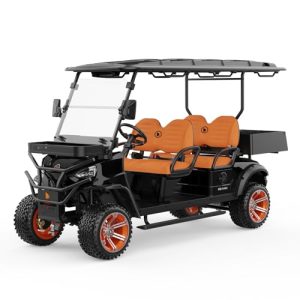
A five-seat golf cart solves a specific problem: four seats are one short for a family of five, and a six-seat cart is longer, heavier, and harder to park. The buyer is choosing between carrying everyone in one trip or leaving someone behind, and that decision shapes everything from the frame length to the motor. Most five-seat carts are built on a stretched frame with a front bench and a wider rear bench, so the real question is whether the fifth seat is genuinely usable for an adult.
This guide is for families who ride together around a neighbourhood, a resort, a campground, or a large property. It explains how five-seat layouts work, what power and range a loaded cart needs, and which safety and storage details matter most.
As an Amazon Associate we earn from qualifying purchases.
How to Choose
Read the seating layout before the seat count
A cart sold as a five-seater can arrange those seats in more than one way, and the layout decides whether the fifth passenger rides in comfort or perches on the edge. The most common arrangement is a front bench for two and a rear bench for three, with all passengers facing forward, which gives everyone a backrest and a clear view ahead. Some carts use a front bench for two, a middle row for two, and a single rear seat, which spreads weight along the frame but leaves the last rider with less legroom. A rear-facing flip seat can add a fifth place, yet it usually lacks a proper backrest and suits short, slow trips better than long rides. Ask for the seat dimensions and the weight rating of each row, and sit in every position before deciding, because a layout that looks fine in a photograph can feel cramped for an adult on the outer rear seat.
Match power and range to a full load
Five passengers, plus bags, coolers, and gear, add real weight, and a motor that feels lively with two riders can feel sluggish with five. Electric carts need a battery pack with enough capacity for the whole route, not just the distance to the furthest stop, and hills drain a pack far faster than flat ground. Gas carts handle heavy loads and long days with less fuss about charging, but they need fuel, oil, and more regular servicing. Check the rated passenger capacity and the payload figure on the specification sheet, and treat the payload as a hard limit that includes people, cargo, and any fitted accessories. A cart that is regularly run at its maximum load will wear its brakes, tyres, and suspension sooner, so buying a little more capacity than the household needs today is usually the wiser spend.
Check safety features for every seat
Safety matters more when five people ride together, because a sudden stop or a sharp turn affects the passengers at the back most. Look for a seat belt or lap restraint on every seating position, not just the front row, and check that the rear bench has a grab handle or a rail for passengers to hold. A windshield, mirrors, headlights, and brake lights matter for any cart that leaves private ground, and a horn helps in a busy resort or campground. The parking brake must hold the cart on a slope with a full load, so test it on an incline before accepting the cart. Children should ride in a proper seat with a restraint, never on a lap or standing on a footrest, and the driver should keep speeds low whenever the rear bench is occupied.
Plan storage and weather cover
A family of five brings more gear than the cart was designed to carry, so storage decides whether the cart is useful or constantly overloaded. Look for a rear cargo area, under-seat storage, or a roof rack that can hold bags without blocking the rear passengers or the driver’s view. A canopy or a full enclosure keeps rain off the rear bench, which matters because the back row is usually the first to get wet, and a windshield that folds down gives ventilation on hot days. Check whether the cart has a lockable glove box or a dash tray for phones and keys, and whether the floor is easy to hose down after a muddy trip. Storage that is planned from the start keeps loose items from sliding under the pedals or onto the rear passengers.
Five-Seat Layouts Compared
The front-bench-plus-wide-rear-bench layout is the most common five-seat arrangement, and it suits families who ride together on flat, paved ground. Two adults sit in front, three sit behind, and everyone faces forward, which keeps conversation easy and gives the rear passengers a proper backrest. The trade-off is length: the stretched frame needs more room to turn, and the rear overhang can scrape on steep driveways or rough tracks. A two-plus-two-plus-one layout spreads the weight more evenly along the frame and shortens the rear overhang, but the single rear seat often has less legroom and suits a child better than an adult. Some carts offer a rear-facing bench that flips into a cargo bed, which is useful for owners who sometimes carry five people and sometimes carry loads, yet the rear-facing seats are the least comfortable for long rides and usually lack restraints. When comparing layouts, measure the rear legroom and the width of the outer rear seat, and check whether the rear bench folds or removes for cargo days. A layout that fits the household’s usual five passengers, rather than an occasional fifth rider, is the one that will still feel right after a season of use.
Seating comfort for the fifth passenger
The fifth seat is only useful if an adult can sit in it for a whole round, so check the width of the outer rear seat, the height of the backrest, and whether the seat belt fits an adult rather than a child. A rear bench that squeezes three adults shoulder to shoulder will feel crowded within minutes, and a fifth passenger with no footroom will brace against the seat in front on every bump. Armrests help on longer rides, and a backrest that reaches the shoulders supports the rear passengers on hills. Sit in the fifth seat before buying, with the other four seats filled, and check that the ride stays comfortable for the length of a typical outing rather than a short test drive around the block.
Turning circle and parking
A stretched five-seat frame turns wider than a standard cart, so check the turning circle before committing to a layout, especially if the cart must turn in a narrow garage or a tight campground lane. Measure the garage depth and the door width, and check that the cart fits with room to walk around it, since a cart that fills the garage leaves no space for chargers, tools, or a second vehicle. A longer wheelbase also rides more smoothly over bumps, which suits a family with small children, but it needs more room to reverse out of a parking space. Test the turn in the space where the cart will live, not on an open lot, and confirm that the household can park it every day without a struggle.
Which One Fits Your Situation
A family of five in a flat neighbourhood
Choose a front-facing five-seat layout with a rear bench wide enough for three adults, a canopy for sun and rain, and a battery pack sized for the full daily route. The cart will run mostly on paved roads at low speed, so comfort and weather cover matter more than ground clearance or off-road tyres. Make sure every rear seat has a restraint and a grab handle, and keep a small cargo area free for school bags and shopping.
A resort or campground with hills
Choose a cart with a stronger motor and a larger battery pack, because five passengers on a slope drain power quickly and strain the brakes on the way down. A gas cart is worth considering if the days are long and charging points are scarce, and a parking brake that holds on a gradient is essential. Pick a layout with good rear legroom, since hilly routes make cramped rear seats feel worse, and check the payload rating against the full weight of the household plus gear.
A large property with rough ground
Choose a cart with a longer wheelbase for stability, higher ground clearance, and tyres suited to grass, gravel, or dirt rather than smooth pavement. The rear bench should have a high backrest and side rails, because rough ground throws rear passengers around more than the driver. A roof rack or a rear cargo bed helps carry tools and supplies, and a washable floor makes cleaning after muddy work far easier.
An owner who sometimes carries loads
Choose a five-seat cart with a rear bench that folds flat or removes, so the cart can switch between carrying five people and carrying cargo. A flip rear seat that converts to a flat bed is the most flexible option, though it usually sacrifices some rear comfort. Check the cargo bed weight limit separately from the passenger limit, and keep tie-down points clear so loads do not slide into the rear passengers.
Common Mistakes
- Counting seats instead of checking whether the fifth seat fits an adult, with a backrest and a restraint.
- Buying a battery pack sized for two riders and then running it flat with five passengers and gear on board.
- Ignoring the payload figure, which includes people, cargo, and fitted accessories, not just the passengers.
- Choosing a rear-facing jump seat for long rides, when it has no proper backrest and suits only short, slow trips.
- Forgetting weather cover for the rear bench, which is the first row to get wet and the hardest to keep dry.
Frequently Asked Questions
How many adults can a five-seat golf cart carry?
A five-seat golf cart is rated for five passengers, but whether five adults fit comfortably depends on the layout and the width of the rear bench. A front bench for two and a rear bench for three works well when the rear bench is wide enough for three adults, while a two-plus-two-plus-one layout often leaves the single rear seat short of legroom. Always check the payload rating as well, because five adults plus gear can exceed the limit on a lightly built cart.
Is a five-seat cart much longer than a four-seat cart?
Yes, a five-seat cart is usually built on a stretched frame, so it is longer than a four-seat cart and needs more room to turn. The extra length sits mostly behind the rear axle, which can reduce the departure angle on steep driveways or rough ground. Measure the turning space at home, in the garage, and on the routes the cart will use, and check that the cart fits the trailer or storage space it will live in.
Should I choose electric or gas for five passengers?
Electric carts suit flat neighbourhoods and resorts with easy charging, and they run quietly with little maintenance, but a full load on hills drains the battery faster. Gas carts handle heavy loads and long days better, and they refuel in minutes, but they need fuel, oil changes, and more servicing. The right choice depends on the terrain, the daily distance, and whether a charging point is available where the cart is stored overnight.
Do I need seat belts on a five-seat golf cart?
Seat belts or lap restraints on every seat are strongly recommended, especially for the rear bench, where passengers feel sudden stops and sharp turns most. Some areas require restraints or other safety equipment for carts used on public roads, so check the local rules before buying. Children should always ride in a proper seat with a restraint, never on a lap or standing on a footrest, and the driver should keep speeds low with a full load.
More from Amazon
Programs that pair well with the guide above. Offers and eligibility are set by Amazon and may change.
Free shipping on eligible items, Prime Video and more. Eligible new members can start with a free trial.
Start a Prime free trialA Prime membership for ages 18-24 with a trial period. Eligibility is set by Amazon.
See Prime for Young AdultsAudiobooks and podcasts to listen to on the go. Eligible new members can start with a free trial.
Try Audible freeAd-free music streaming. Eligible new subscribers can start with a free trial.
Try Music Unlimited freeAs an Amazon Associate we earn from qualifying purchases.