Key takeaways
- What makes the best street legal gas golf cart? Learn the lights, mirrors, horn, and registration rules to check, and how to choose a gas cart for road use.
Choosing a gas golf cart for street use is a different job from choosing one for the golf course. On the course, the questions are mostly about comfort, range, and how the cart handles hills. On public roads, the cart also has to be visible to other drivers, able to signal turns and stops, and compliant with whatever your state or town requires. A cart that is perfect on fairways can fall short on the road if it lacks the right equipment, and the cost of adding that equipment afterward can erase any saving from buying a course-only cart in the first place.
This guide explains what makes a gas golf cart street legal, how to judge a cart for road use, and which questions to ask before buying. It covers the equipment to look for, the trade-offs of a gas engine, and the local rules that decide where a cart may legally drive. As an Amazon Associate we earn from qualifying purchases
How to Choose
Start With Your Local Rules, Not the Cart
Street-legal requirements for golf carts vary by state, and often by city or county as well. Common requirements include headlights, tail lights, brake lights, turn signals, mirrors, a horn, and sometimes a windshield, seat belts, and a slow-moving vehicle sign. Registration, insurance, and a valid driver license may also be required, and some places restrict carts to daylight hours. Because the rules differ so much, check with your local motor vehicle office or town authority before shopping. A cart that is legal in one place may not be legal a few miles away, and a seller in another state may not know your local rules at all.
Weigh the Advantages of a Gas Engine
Gas carts appeal to road users. Refueling takes minutes at an ordinary gas station, and a full tank typically carries the cart further than a single battery charge, which matters on longer trips around a large community. Gas engines keep their performance steady as the tank empties, without the gradual fade of a discharging battery, and they handle hills well when carrying passengers or cargo. On the other hand, gas carts need oil changes, fuel filters, air filters, and engine servicing, and they are louder and produce exhaust, which some communities restrict. Think about how far you drive each day and whether refueling matters more than quiet running.
Check Lighting and Signaling Equipment
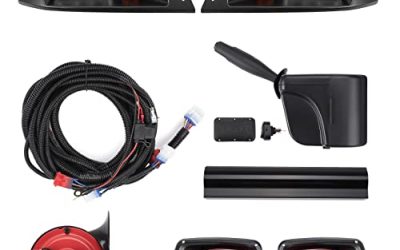
Lights and signals are the heart of street legality, so inspect them closely on any cart you consider. Headlights should be bright enough for evening driving, tail lights should be visible from behind, and brake lights should activate clearly when the pedal is pressed. Turn signals need to be visible from the front and rear, and the horn should be loud enough to be heard over traffic. Ask the seller to demonstrate every light and signal while you watch. If a cart lacks any of these, budget for a conversion kit and professional installation, and confirm that the added parts meet your local requirements.
Look at Mirrors, Windshield, and Safety Gear
Beyond lights, road use calls for equipment that helps you see traffic and stay safe in it. A rearview mirror and side mirrors are commonly required, and a windshield helps with wind, rain, and road debris thrown up by other vehicles. Seat belts are required in some places and sensible everywhere, since road driving involves higher speeds and closer traffic than course driving. Check the condition of tires and brakes, because a cart that will share roads with cars needs stopping power and grip it can be trusted with. Worn tires or soft brakes that are acceptable on a golf course become a real risk on a public road.
Which One Fits Your Situation
Driving Around a Gated Community
If your driving stays inside a gated community or a large resort, your needs are modest. A gas cart with basic lighting, a horn, and mirrors will usually cover short trips to the clubhouse, the pool, or a neighbor’s house. Confirm the community’s own rules, since some set speed limits, restrict carts to certain hours, or require registration with the homeowners association.
Running Errands in a Small Town
Errands take you onto public roads with cars and intersections, so the equipment bar rises. Look for a cart with a full signal set, brake lights, seat belts, and a windshield, and confirm registration and insurance requirements with your local authority before buying. A gas engine suits this use well, since refueling is quick and range is generous.
Covering Long Distances Daily
Owners who drive several miles a day should pay attention to fuel capacity, engine condition, and comfort. A larger tank means fewer stops, and a well-maintained engine is more reliable on longer runs, so ask for service records and listen for rough running or smoke on a test drive. A smooth ride and a canopy that blocks sun and rain also make long days far more comfortable.
Sharing Roads With Faster Traffic
Where carts share roads with faster vehicles, visibility becomes the priority. Bright lights, reflective markings, and a slow-moving vehicle sign help other drivers notice the cart early, especially at dusk or in rain. Drive defensively, keep to roads where carts are permitted, and avoid routes where the speed difference with other traffic is large. Plan your routes in advance so you are never forced onto a busy road without an alternative.
Common Mistakes
-
Assuming that a cart legal in one state or town is automatically legal everywhere is the most expensive assumption in this guide, because street-legal rules change at state and even county lines, and a cart that passes in one place can fail inspection a few miles away. The equipment list, the registration process, and the roads a cart may use are all set locally, so a seller in another state may not know your rules at all. Before buying, get the full list of requirements from your local motor vehicle office and compare it with the cart in front of you, item by item. A cart bought on the strength of another town’s rules may need mirrors, a windshield, or a slow-moving vehicle sign added before it can be driven, and those additions cost time and money that should have been part of the purchase decision. The rules for your roads are the only ones that matter, and they are worth confirming in writing before money changes hands. Confirming the rules in writing before you shop is the cheapest insurance against buying the wrong cart.
-
Buying a course-only cart and discovering later that adding lights, signals, and mirrors costs more than expected is a common and avoidable mistake. A cart built for the golf course may have no wiring for turn signals, no brake light switch, and no mounting points for mirrors, so every addition needs parts and labor. Get a quote for the full conversion before buying the cart, and add that figure to the purchase price when comparing carts. A cart that already carries the equipment you need is often cheaper overall than a cheaper cart plus a conversion, and it is ready to drive on the day you buy it. Shopping with the conversion cost in mind keeps a bargain from turning into a project that takes weeks to arrange. A cart that arrives ready for the road is worth more than a cheaper cart that still needs weeks of work.
-
Overlooking registration, insurance, or license requirements until after the purchase leaves you owning a cart that cannot legally be driven home. Some places treat street-driven carts as low-speed vehicles with plates and titles, while others require a local permit, an annual inspection, or a driver license, and the details vary widely. Call your local motor vehicle office before buying to learn what applies where you drive, and ask whether the cart needs a vehicle identification number or a title transfer. Sorting this out before the purchase avoids the frustration of a cart sitting in the driveway while paperwork is chased, and it also protects you if the cart turns out to be ineligible for registration in your area. A short call before buying saves weeks of delay afterward. Paperwork sorted before the purchase means the cart can be driven home on the day you buy it.
-
Choosing a gas cart without checking engine condition, fuel system, and service history means inheriting someone else’s neglected engine, and engine trouble is the most expensive surprise a used cart can hold. Ask for service records, listen for rough running or smoke on a test drive, and look for leaks around the fuel lines and the engine bay. A cart that starts hard, idles roughly, or smells strongly of fuel is telling you about work that is already overdue. A careful inspection before buying costs nothing, while an engine repair afterward can cost more than the cart is worth. Treat a used gas cart like a used car, and walk away from one whose engine has clearly been ignored. A seller who cannot show service records is telling you something about how the cart was treated.
-
Ignoring tire and brake condition on a cart that will share roads with cars is a safety mistake, because stopping distance and grip genuinely matter once the cart leaves the golf course. Worn tires that are acceptable on fairways lose grip on wet asphalt, and soft brakes that feel fine at course speeds may not stop the cart in traffic. Check the tread depth, look for cracks in the sidewalls, and test the brakes on a quiet road before buying. Replacing tires and brake parts is a normal cost of buying a used cart, so budget for it rather than treating it as an unexpected extra. A cart that stops well and grips the road is worth more than one that merely looks tidy. Good tires and brakes are the cheapest safety equipment a road-going cart can have.
Frequently Asked Questions
What makes a gas golf cart street legal?
Street legality depends on your state and local rules, but it generally requires lighting and signaling equipment such as headlights, tail lights, brake lights, turn signals, mirrors, and a horn. Some places also require a windshield, seat belts, a slow-moving vehicle sign, registration. Check with your local motor vehicle office to confirm the full requirements for your area before buying.
Do I need to register a street legal golf cart?
In many places, yes. Registration rules vary widely: some states treat street-driven carts as low-speed vehicles with plates and titles, while others allow them on certain roads with a local permit. Your town or county may add its own rules, . Contact your local motor vehicle office before buying to learn what applies where you drive.
Is a gas golf cart better than an electric one for street use?
Gas carts refuel in minutes and typically travel further on a full tank, which suits longer trips and frequent use around a large community. Electric carts run quieter, need less engine maintenance, and produce no exhaust. The better choice depends on how far you drive and whether quick refueling matters more than quiet running.
Can I drive a street legal golf cart on any road?
No. Even a fully equipped cart is usually limited to roads with lower speed limits, and some roads are off limits entirely. The permitted roads and speed limits are set by state and local rules, and they can change from one town to the next. Check those rules for every road you plan to use.
More from Amazon
Programs that pair well with the guide above. Offers and eligibility are set by Amazon and may change.
Free shipping on eligible items, Prime Video and more. Eligible new members can start with a free trial.
Start a Prime free trialA Prime membership for ages 18-24 with a trial period. Eligibility is set by Amazon.
See Prime for Young AdultsAudiobooks and podcasts to listen to on the go. Eligible new members can start with a free trial.
Try Audible freeAd-free music streaming. Eligible new subscribers can start with a free trial.
Try Music Unlimited freeAs an Amazon Associate we earn from qualifying purchases.