Our Short List of 3

- Brand: Callaway
- Type: 4-in-1 divot repair tool with ball marker, brush, and groove cleaner
- Material: Zinc alloy body
- Dimensions: 3.5 x 1.5 x 0.25 inches
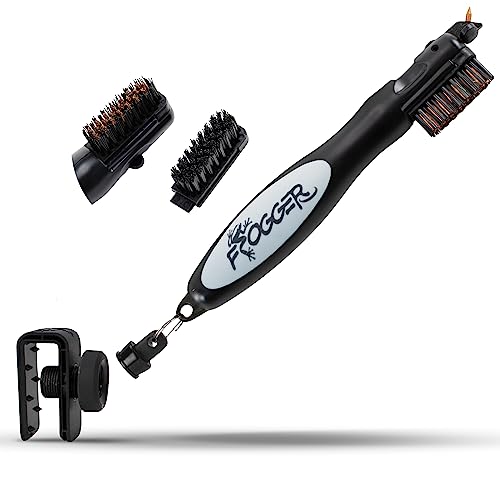
- Brand: Frogger
- Type: Retractable golf club brush and groove cleaner
- Bristles: Phosphorous bronze interior with nylon exterior, plus spare all-nylon head
- Cord: Retractable cord, 2.5 feet

- Brand: GoSports
- Type: Golf alignment training sticks, 3 pack
- Length: 48 inches per rod
- Material: Fiberglass rods
All 5 Picks at a Glance
| Product | Specs | Action |
|---|---|---|
| Callaway 4-in-1 Golf Divot Repair Tool |
| Check price on Amazon |
| Frogger BrushPro Golf Club Cleaner |
| Check price on Amazon |
| GoSports Golf Alignment Training Sticks |
| Check price on Amazon |
 I Gotcha Golf Ball Retriever |
| Check price on Amazon |
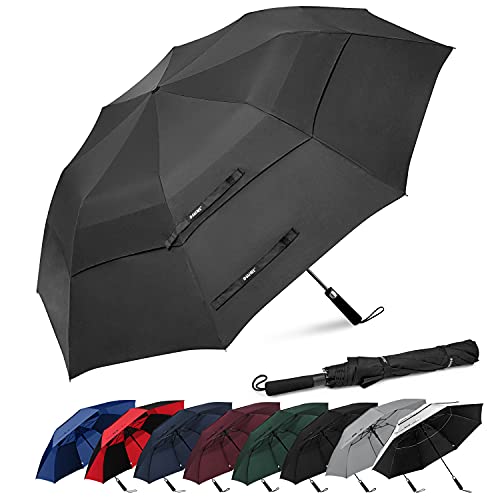 G4Free 62 Inch Portable Golf Umbrella |
| Check price on Amazon |
Key takeaways
- Find the best golf accessories for every round, from divot tools and groove cleaners to alignment sticks, retrievers, and large umbrellas on the course.
The best golf accessories are the small tools that solve real problems on the course, and the best golf accessories for most golfers are a divot repair tool, a club groove cleaner, alignment sticks, a ball retriever, and a large golf umbrella. Each one earns its place in the bag by doing a job that no club in the bag can do, and each one costs far less than a single new club while getting used far more often. A golfer who repairs pitch marks, keeps grooves clean, aims with a reference on the ground, recovers balls from hazards, and stays dry in rain plays faster, scores better, and enjoys the round more than a golfer who owns none of these tools.
As an Amazon Associate, we earn from qualifying purchases.
This guide covers five accessories that work together as a complete course kit. The divot tool and the groove cleaner handle care of the green and care of the clubs. The alignment sticks handle practice and setup. The ball retriever handles the water hazard and the deep rough. The umbrella handles the weather. Together they cover the four parts of a round that accessories can improve: the condition of the playing surfaces, the condition of the equipment, the quality of the setup, and the comfort of the player. None of them needs batteries, none of them needs a lesson to use, and none of them takes up more than a pocket or a side pocket of the bag.
Table of Contents
- Best Golf Accessories for Every Round
- How to Choose Golf Accessories
- Callaway 4-in-1 Golf Divot Repair Tool
- Frogger BrushPro Golf Club Cleaner
- GoSports Golf Alignment Training Sticks
- I Gotcha Golf Ball Retriever
- G4Free 62 Inch Portable Golf Umbrella
- Frequently Asked Questions
- Conclusion
- Product and ASIN Reference
How to Choose Golf Accessories
Start with the jobs that come up every round. Pitch marks appear on nearly every green a golfer plays, and a golfer who carries a divot tool repairs them in seconds. Dirty grooves appear after every shot from wet turf or sand, and a golfer who carries a groove cleaner restores the face before the next shot. Aim drifts without a reference, and alignment sticks give a golfer a straight line to check feet, hips, and shoulders against. Balls find water and deep rough, and a retriever turns a lost ball into a recovered ball. Rain arrives without warning, and a large umbrella keeps the golfer, the grips, and the bag dry enough to keep playing. Accessories that solve jobs this frequent earn their space in the bag, while accessories that solve rare problems stay at home.
Think about where each accessory lives during the round. A divot tool belongs in a trouser pocket or a shirt pocket, because it is needed on the green and nowhere else matters as much. A groove cleaner belongs clipped to the outside of the bag, because it is needed after shots and must be reachable without opening a pocket. Alignment sticks belong in a side pocket or strapped to the outside of the bag, because they are used on the range and during warm-up rather than during play. A ball retriever belongs in a long side pocket, because it is long when collapsed and only comes out when a ball needs recovering. An umbrella belongs in the umbrella sleeve of the bag or strapped to the side, because it must come out fast when rain starts. An accessory that is hard to reach is an accessory that does not get used, so storage matters as much as function.
Check the build of each accessory before buying. A divot tool should be made from a solid metal such as zinc alloy, because a plastic fork bends under pressure and a thin fork snaps in firm turf. A groove cleaner should combine firm bristles for irons with softer bristles for woods, because one brush must clean every club in the bag without damaging a painted wood face. Alignment sticks should be made from fiberglass, because fiberglass is light enough to carry, stiff enough to stay straight on the ground, and strong enough to survive being stepped on or shut in a car door. A ball retriever should use aluminum or stainless steel sections, because a long pole made from weak material bends and wobbles at full extension. An umbrella should use a double canopy with vents, because a single canopy catches wind like a sail and turns inside out in a gust.
Match the accessory to the golfer who will use it. A beginner benefits most from alignment sticks, because aim is the most common hidden fault in a new swing and sticks make the fault visible in seconds. A regular player who walks the course benefits most from a large umbrella and a light divot tool, because walking means carrying everything and weather matters more over eighteen holes on foot. A golfer who plays a course with water on many holes benefits most from a long retriever, because the retriever pays for itself in recovered balls over a season. A golfer who practices often benefits most from a groove cleaner, because practice sessions put more dirt on the faces than a single round does. There is no single best accessory for every golfer, but there is a best first accessory for each golfer, and it is the one that solves the problem that golfer meets most often.
Consider durability as a buying factor rather than an afterthought. Golf accessories live outdoors in sun, rain, mud, and sand, and they get dropped, stepped on, and stuffed into pockets with keys and tees. A tool with replaceable parts lasts longer than a tool that must be replaced whole when one part wears out. A brush with a spare brush head lasts longer than a brush with a single fixed head. A retriever with a simple spring mechanism lasts longer than one with a complex locking system that can jam with grit. An umbrella with fiberglass ribs lasts longer than one with thin steel ribs that bend and stay bent. Paying a little more for a durable accessory usually costs less over two seasons than buying a cheap accessory twice.
Finally, think about the bag as a system rather than a collection of separate items. Five accessories that each do one job well beat ten accessories that overlap and add weight. The five picks in this guide were chosen so that no two of them do the same job: the divot tool repairs greens and marks balls, the brush cleans clubs, the sticks check aim, the retriever recovers balls, and the umbrella covers the golfer. A bag packed this way stays light enough to carry and complete enough that nothing important is missing. Add accessories one at a time, use each one for several rounds, and only add another when a real gap appears.
Callaway 4-in-1 Golf Divot Repair Tool
- Brand: Callaway
- Type: 4-in-1 divot repair tool with ball marker, brush, and groove cleaner
- Material: Zinc alloy body
- Dimensions: 3.5 x 1.5 x 0.25 inches
The Callaway 4-in-1 Golf Divot Repair Tool is the best golf accessory to buy first, because it packs four course jobs into a single pocket tool and it solves a problem that appears on nearly every green. A pitch mark left unrepaired damages the putting surface for days and leaves a bump that deflects putts, while a pitch mark repaired at once heals quickly and keeps the green smooth for everyone behind. This tool makes that repair easy, and it adds a magnetic ball marker, a nylon club brush, and a metal groove cleaner to the same small body, so a golfer carries one item instead of four.
The repair fork has two prongs that slide under the edges of a pitch mark and lift the turf back toward the center. The motion is gentle and quick: push the prongs in around the mark, lift the turf from the edges, and tap the spot flat with the sole of the putter. A golfer who learns this motion repairs a mark in under ten seconds and leaves the green in better shape than it was found. The fork is made from zinc alloy, which is solid enough to push into firm summer turf without bending, and the metal stays rigid season after season. A plastic tool cannot match this, because plastic flexes under load and the prongs spread apart instead of lifting the turf.
The magnetic ball marker sits on the side of the tool and lifts off with a fingertip when the ball needs marking. A marker that lives on the tool cannot be lost in a pocket full of tees and coins, and the magnet holds it firmly enough that it stays put while walking yet releases easily on the green. Marking the ball properly matters more than most golfers think: a ball marked with a coin that slides, or a ball left unmarked while a playing partner putts, causes confusion and slow play. A marker that is always in the same place removes that friction entirely.
The nylon bristle brush sits on one end of the tool and cleans club faces between shots. Grass, mud, and sand collect in the grooves after shots from wet lies, and dirty grooves reduce spin and make distance control less predictable. A quick brush across the face before the next shot restores the grooves and keeps the ball flight consistent. Nylon bristles are firm enough to clear packed dirt and soft enough to use on every club in the bag, including woods with painted faces that a wire brush would scratch. The brush is small, but it is large enough to clean a full iron face in a few strokes.
The metal groove cleaner folds out from the body and reaches into the grooves themselves, where bristles cannot reach. Packed mud in a single groove changes the way the ball leaves the face, and the cleaner scrapes that mud out in one pass. The cleaner is sharp enough to work and short enough to control, so it cleans without gouging the metal. Golfers who play in wet conditions or from sandy lies will use the groove cleaner more than any other part of the tool, and golfers who play firm, dry courses will still reach for it after bunker shots.
Size is the quiet strength of this tool. At 3.5 x 1.5 x 0.25 inches it fits in a trouser pocket, a shirt pocket, or a small bag pocket without adding noticeable bulk, and it weighs about a tenth of a pound, so it disappears until it is needed. The compact form means a golfer actually carries it, and an accessory that is carried gets used while an accessory left in the car does not. The tool clips to a pocket or a bag strap, and the flat shape sits comfortably against the leg while walking.
This tool suits every golfer, from a first-time player to a low-handicap regular, because pitch marks, dirty grooves, and ball marking are universal parts of the game. It suits walkers who want to keep weight down, because it replaces four separate items. It suits golfers who play in wet conditions, because the brush and groove cleaner matter more when the course is soft. It also makes a practical gift for a golfer, because it is useful from the first round and it fits any bag. The one trade-off is that a multi-function tool is a compromise: a dedicated groove cleaner with a long handle cleans faster, and a dedicated brush with a large head covers a face in fewer strokes. But for a golfer who wants one tool that handles four jobs well, the compromise is worth it, and the tool earns its place in the pocket on the first round.
Frogger BrushPro Golf Club Cleaner
- Brand: Frogger
- Type: Retractable golf club brush and groove cleaner
- Bristles: Phosphorous bronze interior with nylon exterior, plus spare all-nylon head
- Cord: Retractable cord, 2.5 feet
The Frogger BrushPro Golf Club Cleaner is the best golf accessory for keeping clubs clean through a full round, because it combines two brush heads, a fold-out groove cleaner, and a retractable cord in a single ergonomic tool. Dirty grooves are one of the most common causes of unpredictable shots, and this cleaner addresses the problem directly: the brush clears the face, the groove cleaner clears the grooves, and the cord keeps the tool attached to the bag so it is always within reach. A golfer who cleans the face before every shot hits more predictable shots than a golfer who lets mud build up through the round.
The brush head uses a patented combination of phosphorous bronze bristles on the inside and nylon bristles on the outside. The bronze bristles are firm enough to cut through packed mud and dried grass on iron faces, while the nylon bristles are gentle enough for woods and hybrids. This combination matters because a bag holds clubs made from different materials, and a brush that is safe for irons can damage a painted wood face if it is too aggressive. The BrushPro solves that problem by putting both bristle types on one head, so the golfer uses the same tool for every club and does not need to think about which brush matches which club.
A second brush head comes with the tool, made entirely from nylon for forged clubs and softer faces. Forged irons have a softer metal than cast irons, and a golfer who plays forged clubs wants a brush that cleans without marking the face. The spare head swaps on in seconds: open the groove cleaner, slide the old head off, slide the new head on, and close the groove cleaner. The spare head also serves as a replacement when the first head wears out, so the tool lasts twice as long as a brush with a single fixed head. Replaceable parts are the mark of a tool built to last rather than a tool built to be replaced.
The fold-out groove cleaner is the part of the tool that does the work bristles cannot do. It extends from the handle at an angle that lets the golfer scrape along a groove with control, and it reaches the packed dirt at the bottom of the groove that a brush passes over. The cleaner is sharp enough to remove dried mud and sand, and it folds back into the handle when not in use, so it cannot snag a pocket or scratch a hand. Golfers who play from wet rough or sandy lies will use it on nearly every hole, and golfers who play firm courses will still use it after bunker shots and shots from divots.
The retractable cord extends to 2.5 feet and clips to the bag, so the tool hangs within reach and snaps back when released. A brush that lives in a pocket gets forgotten, and a brush that lives loose in a bag pocket takes time to find. A brush on a cord is always in the same place, and the golfer can pull it out, clean the club, and let it retract without breaking stride. The cord is long enough to reach any club in the bag while the bag stands on the ground, and short enough that it never tangles with other accessories. The latch that holds the tool to the bag is secure enough for walking and riding, and it releases with a simple pull when the golfer wants the tool in hand.
The handle is shaped to fit the hand, with a grip that stays secure when wet. Golf is played in rain, dew, and sweat, and a smooth handle slips at the worst moment. The BrushPro handle has a shape that the fingers wrap around naturally, and the material stays grippy even when the hands are damp. The tool is light enough to hang from the bag without pulling it sideways, and it is compact enough to fit in a side pocket when the golfer prefers to carry it inside the bag rather than clipped outside.
This cleaner suits golfers who play often, golfers who play in wet conditions, and golfers who care about consistent ball flight. It suits players with forged irons, because the spare all-nylon head protects softer faces. It suits walkers, because the cord keeps the tool on the bag without adding a pocket item. The trade-off is that it costs more than a basic two-sided brush, and a golfer who rarely cleans clubs will not use its extra features. But a golfer who cleans the face before every shot will notice the difference within a round: cleaner grooves, more predictable spin, and fewer shots that fly farther or shorter than expected for no visible reason.
GoSports Golf Alignment Training Sticks
- Brand: GoSports
- Type: Golf alignment training sticks, 3 pack
- Length: 48 inches per rod
- Material: Fiberglass rods
The GoSports Golf Alignment Training Sticks are the best golf accessory for fixing aim, because they turn an invisible fault into a visible line on the ground. Alignment is the most common hidden fault in golf: a golfer can have a sound swing and a clean strike and still miss the target, because the feet, hips, and shoulders were aimed somewhere else before the swing began. Sticks laid on the ground show the golfer exactly where the body is aimed, and that simple visual reference fixes more shots than any swing tip. Three 48-inch fiberglass rods cost little, weigh little, and work for every club in the bag.
The sticks lay parallel to the target line, one at the feet and one just outside the ball, so the golfer can see the aim line and the club path line at the same time. A golfer who aims left without knowing it will see the sticks pointing left and can correct the feet before the next shot. A golfer who aims right will see the same error in the other direction. The correction takes seconds, and the golfer can repeat it on the range until the correct aim starts to feel natural. Without a reference, a golfer practices the same faulty aim over and over and wonders why the ball keeps missing. With sticks on the ground, every practice shot gives feedback on aim as well as on contact.
The sticks work for more than full shots. Laid on the putting green, they show whether the putter face is square and whether the stroke follows the intended line. Laid across the body during a drill, they check shoulder alignment at address. Stuck in the ground as a gate, they give a target to swing through. Placed on the ground as a swing plane guide, they show whether the club travels inside or outside the intended path. One set of sticks serves as an aim aid, a putting aid, a posture aid, and a swing path aid, and a golfer who learns five drills with the same three sticks gets five training tools for the cost of one.
The rods are made from fiberglass, which is the right material for this job. Fiberglass is light enough that three rods add almost no weight to the bag, stiff enough that the rods stay straight on uneven ground, and strong enough to survive being stepped on, shut in a car door, or dropped on concrete. The rods are bright enough to see clearly against grass, so the aim line is visible from address position without bending down to look. Each rod measures 48 inches long, which is long enough to show the aim line clearly and short enough to fit in a side pocket of the bag or strapped to the outside.
The set includes three rods, and the third rod is more useful than it first appears. Two rods set the aim line and the ball line, while the third rod can mark a swing path, a putting gate, or a second aim line for a different club. A golfer practicing with a driver can set one rod for the feet, one for the ball, and one for the swing path, and check all three before each shot. A golfer practicing putting can set two rods as a gate and one as the aim line, and roll putts through the gate along the line. The third rod turns a simple aim check into a full practice station.
These sticks suit every golfer, but they suit beginners most of all, because aim faults are most common early and most damaging when they become habit. They suit golfers who practice regularly, because the sticks make every range session more useful. They suit golfers who take lessons, because a coach can set the sticks once and the golfer can repeat the drill alone. They suit golfers who struggle with a slice or a hook, because many slices and hooks begin with aim rather than with the swing itself. The trade-off is that sticks only help when they are used: a set that stays in the garage fixes nothing, while a set that goes to the range every week fixes aim within a few sessions. The sticks are so light and so easy to carry that there is no good reason to leave them behind.
I Gotcha Golf Ball Retriever
- Brand: I Gotcha
- Type: Telescoping golf ball retriever
- Reach: 18 feet, 21 feet including arm reach
- Collapsed length: 44.5 inches
The I Gotcha Golf Ball Retriever is the best golf accessory for recovering balls from water and deep rough, because it reaches where hands cannot and it pays for itself in recovered balls over a season. A ball in the water is not always a lost ball, and a ball in thick rough is not always a lost ball either, but without a retriever both are gone. This retriever extends to 18 feet, collapses small enough to fit in a bag pocket, and grabs the ball with a spring-loaded head that works the first time. A golfer who plays a course with water on many holes will use it often, and a golfer who plays a dry course will still be glad to have it when a ball rolls into a pond or a ditch.
The telescoping pole extends to 18 feet, which gives a reach of 21 feet when the golfer’s arm is included, and that reach covers most water hazards from the bank. The pole collapses to 44.5 inches, so it fits in a long side pocket of the bag and rides along without getting in the way. The sections slide smoothly and lock in place, so the pole stays at the length the golfer sets and does not slide back under its own weight. A pole that collapses while reaching for a ball is worse than no pole at all, and this one holds its length until the golfer collapses it on purpose.
The head uses a spring-loaded double-ring catcher that traps the ball as soon as the head is placed over it. The golfer lowers the head onto the ball, the rings close around it, and the ball stays trapped while the pole is pulled back. There is no scooping motion to learn and no delicate balance to maintain: place, trap, lift. The head works in water, where the ball is visible through the surface, and it works in rough, where the ball sits among grass stems. The rings are strong enough to hold the ball through the pull and gentle enough not to damage the cover, so the recovered ball is playable.
The pole is made from lightweight aluminum, which keeps the weight down to a range of 18 to 23 ounces depending on the model, and that weight matters when the pole is extended to full length. A heavy pole at 18 feet is hard to control and hard to hold steady over water. A light pole stays steady, and the golfer can aim the head precisely at a ball that sits several feet from the bank. The aluminum resists rust, which matters for a tool that spends its working life in ponds and wet grass, and the handle has a grip that stays secure when wet.
The retriever suits golfers who play courses with water, golfers who lose balls in rough, and golfers who want to recover range balls and practice balls as well as playing balls. It suits walkers, because it fits in the bag and adds little weight. It suits golfers who play alone, because there is no playing partner to wade in after a ball. The trade-off is that a retriever cannot reach every ball: a ball in the middle of a large lake is beyond any pole, and a ball buried deep in mud may not be visible at all. But a retriever that recovers even one ball per round saves a dozen balls over a season, and the tool costs less than a few dozen new balls. It is the only accessory in this guide that can return its own cost in recovered equipment.
G4Free 62 Inch Portable Golf Umbrella
- Brand: G4Free
- Type: Automatic open golf umbrella with double canopy
- Canopy: 62 inches across
- Canopy design: Vented double canopy
The G4Free 62 Inch Portable Golf Umbrella is the best golf accessory for playing through rain, because a 62-inch canopy covers the golfer and the bag at the same time and the double canopy design stands up to wind that turns smaller umbrellas inside out. Rain is part of golf, and a golfer who stays dry keeps a dry grip, dry gloves, and dry clubs, which means the swing stays normal while other golfers struggle with slipping grips and wet hands. This umbrella opens automatically with a single push, covers two to three adults under its arc, and folds into a stick that fits the umbrella sleeve of the bag.
The canopy measures 62 inches across, which is large enough to shelter the golfer from shoulders to knees and to shelter the top of the bag at the same time. A small umbrella covers the head and leaves the shoulders wet, and wet shoulders mean wet sleeves and wet grips. A large umbrella keeps the whole upper body dry, and that matters over eighteen holes in steady rain. The canopy is large enough for two golfers to share in a downpour, which makes it useful on a cart as well as on foot. The size also helps in sun, because the same canopy that blocks rain blocks direct sun on hot days.
The double canopy design is the feature that separates a golf umbrella from an ordinary umbrella. The canopy has two layers with vents between them, and wind passes through the vents instead of catching the canopy like a sail. A single-layer umbrella in a gust either turns inside out or pulls hard enough to strain the wrist. A vented double canopy lets the gust through, keeps its shape, and stays over the golfer instead of flipping. Golf is played in open country where wind has nothing to stop it, so a vented canopy is not a luxury but a requirement for an umbrella that will actually be used on the course.
The automatic open mechanism works with a push of a button, so the golfer can open the umbrella with one hand while holding a club or a bag strap with the other. Rain often starts suddenly, and an umbrella that needs two hands and several seconds to open leaves the golfer wet before it is up. The automatic mechanism opens the canopy fully in a single motion, and the shaft locks in place. The handle is shaped for a firm grip, and the stick is long enough to hold the canopy clear of the head while walking.
The umbrella is built for outdoor use, with a frame that stands up to repeated opening and closing and a canopy fabric that sheds water rather than soaking it up. A canopy that soaks up water becomes heavy and drips on the golfer after the rain stops. A canopy that sheds water stays light and can be shaken dry in seconds. The stick umbrella form means there are no folding joints to weaken over time, and the umbrella keeps its shape season after season. It fits in the umbrella sleeve that most golf bags include, and it straps to the side of a bag that has no sleeve.
This umbrella suits golfers who play in changeable weather, golfers who walk the course, and golfers who play early or late in the season when rain is common. It suits golfers who carry a cart bag, because the large canopy covers the bag opening and keeps the clubs dry between shots. It suits golfers who play in hot sun as well as rain, because the large canopy gives shade on the walk between shots. The trade-off is size: a 62-inch umbrella is larger than a compact travel umbrella and it takes up the full umbrella sleeve of the bag. But a compact umbrella does not cover a golfer on a golf course, and the golfer who chooses the smaller umbrella to save space ends up wet anyway. For golf, the large canopy is the right choice.
Frequently Asked Questions
Which golf accessory should a beginner buy first?
A beginner should buy alignment sticks first, because aim is the most common hidden fault in a new swing and sticks make the fault visible in seconds. A divot repair tool should come second, because it is used on every green and it teaches good care of the course from the start. A groove cleaner should come third, because clean grooves make distance control more predictable as the swing improves. A retriever and an umbrella can follow once the golfer knows how often water and rain appear on the courses played most.
How do alignment sticks help a golfer who already plays well?
Alignment sticks help a good golfer because aim drifts over time even for experienced players, and the drift is hard to feel without a reference. A golfer who checks aim with sticks on the range before a round catches the drift before it costs shots on the course. Sticks also serve as a putting gate and a swing path guide, so an experienced golfer can use them for drills that target a specific weakness rather than general practice. Many coaches use sticks with advanced players for exactly this reason.
Can a divot repair tool damage the green if used the wrong way?
A divot repair tool can damage the green if the golfer lifts the center of the pitch mark upward, because that tears the roots and leaves a scar. The right motion is to push the prongs in around the edges of the mark and lift the turf from the edges toward the center, then tap the spot flat with the sole of a putter. A tool with two short prongs and a solid metal body makes the right motion easy, and a golfer who repairs marks this way leaves the green smoother than it was found.
Do I need a large golf umbrella, or will a compact umbrella work on the course?
A large golf umbrella works far better on the course, because a 62-inch canopy covers the golfer and the bag while a compact umbrella covers only the head and shoulders. Rain on a golf course comes with wind, and a vented double canopy stands up to gusts that turn a compact umbrella inside out. A compact umbrella suits a walk to the car, but a golfer who wants to keep playing through rain needs the coverage and the wind resistance of a full-size golf umbrella.
Conclusion
The best golf accessories are the tools that solve problems every golfer meets on the course, and the five picks in this guide cover those problems without overlap. The Callaway 4-in-1 Golf Divot Repair Tool handles the green and the ball marker in one pocket tool. The Frogger BrushPro Golf Club Cleaner keeps grooves clean through a full round. The GoSports Golf Alignment Training Sticks make aim visible and fixable. The I Gotcha Golf Ball Retriever turns lost balls into recovered balls. The G4Free 62 Inch Portable Golf Umbrella keeps the golfer dry and playing through rain. Together they form a complete course kit that fits in a bag, costs less than a single new club, and gets used on every round.
Start with the accessory that solves the problem met most often, then add the others one at a time. A golfer who practices often should start with the alignment sticks. A golfer who plays wet courses should start with the groove cleaner and the umbrella. A golfer who plays a course full of water should start with the retriever. A golfer who wants one tool that does the most jobs should start with the divot tool. Whichever comes first, each of these five accessories earns its place in the bag within a few rounds, and a bag packed with all five is ready for any course, any weather, and any lie.
Product and ASIN Reference
| Product | ASIN |
|---|---|
| Callaway 4-in-1 Golf Divot Repair Tool | B0DPLFCJL2 |
| Frogger BrushPro Golf Club Cleaner | B01HFEX1E0 |
| GoSports Golf Alignment Training Sticks | B082N7L7QN |
| I Gotcha Golf Ball Retriever | B001TWKL16 |
| G4Free 62 Inch Portable Golf Umbrella | B07QB1GNN8 |
More from Amazon
Programs that pair well with the guide above. Offers and eligibility are set by Amazon and may change.
Free shipping on eligible items, Prime Video and more. Eligible new members can start with a free trial.
Start a Prime free trialA Prime membership for ages 18-24 with a trial period. Eligibility is set by Amazon.
See Prime for Young AdultsAudiobooks and podcasts to listen to on the go. Eligible new members can start with a free trial.
Try Audible freeAd-free music streaming. Eligible new subscribers can start with a free trial.
Try Music Unlimited freeAs an Amazon Associate we earn from qualifying purchases.