Key takeaways
- Compare the best clarinet mouthpieces for Bb clarinet from Vandoren, Selmer and D'Addario, with tip openings, facings and materials explained for buyers.
The mouthpiece is the single part of a Bb clarinet that shapes your sound more than any other. It is where the reed vibrates, where your air first meets resistance, and where the character of your tone is largely decided before the air even reaches the barrel. Swapping the basic mouthpiece that ships with a student clarinet for a well-made aftermarket model is one of the fastest upgrades a player can make: response becomes more immediate, intonation steadies, and articulation feels cleaner across the registers.
This guide compares five Bb clarinet mouthpieces that cover the main paths a player might take. Two come from Vandoren, the French maker whose facings have defined modern clarinet playing for decades. One comes from Selmer Paris, whose Concept model targets a focused, centered sound. One comes from D’Addario, whose Reserve line is milled rather than molded for consistency. The final pick is a complete student kit from Conn-Selmer’s Prelude line, sold under the Selmer name, which bundles a mouthpiece with a ligature and cap for beginners who need the whole setup at once.
Disclosure: As an Amazon Associate, I earn from qualifying purchases.
What to Look for in a Clarinet Mouthpiece
Tip opening
The tip opening is the distance between the tip of the reed and the tip of the mouthpiece, usually measured in millimeters or hundredths of a millimeter. A closer tip opening, around 1.00 to 1.10 mm, generally offers more control, a darker and more focused tone, and easier soft playing, which is why classical players often prefer it. A more open tip, around 1.20 mm and above, allows more air, supports a bigger and freer sound, and pairs naturally with softer reeds, though it demands a more developed embouchure to keep pitch centered. Neither is better in absolute terms; the right choice depends on your playing style, your reed strength, and the sound you are chasing.
Facing
The facing is the curve along which the reed separates from the mouthpiece table, and its length works together with the tip opening. A shorter facing responds quickly and feels nimble, which many players like for fast articulation. A medium-long or long facing tends to feel more stable and forgiving, giving the reed more room to vibrate and often producing a rounder tone. Makers describe facings in words such as medium-short or medium-long, and sometimes publish a facing length in millimeters, so it is worth comparing both figures when you shop.
Material
Most serious clarinet mouthpieces are made from ebonite, also called hard rubber, which is prized for its warm, resonant response and comfortable feel. Some modern models are milled from solid rods of hard rubber rather than molded, a process makers say improves consistency from one mouthpiece to the next. Student mouthpieces are usually plastic or phenol resin, which costs less, shrugs off knocks in a school band room, and still plays perfectly well for a first upgrade. Acrylic and composite designs sit between those poles. Material matters, but facing geometry matters more, so treat material as a secondary filter after tip opening and facing.
The 5 Best Clarinet Mouthpieces
1. Vandoren 5RV

The Vandoren 5RV is one of the most widely played clarinet mouthpieces in the world, and it has been a default recommendation from teachers for generations. Its close tip opening and medium-short facing make it exceptionally easy to control, so younger players and advancing students can produce a centered, even tone without fighting the equipment. The sound leans refined and focused rather than huge, which suits classical study, school ensembles, and chamber playing where blend matters. Because the facing is so consistent from mouthpiece to mouthpiece, buying a 5RV is a low-risk step: the one you receive will behave very much like the one your teacher described. If your current mouthpiece feels vague, stuffy, or hard to keep in tune, the 5RV is the classic first correction.
Specs
- Brand: Vandoren
- Model: 5RV
- Instrument: Bb clarinet
- Material: Ebonite (hard rubber)
- Tip opening: 1.065 mm
- Facing: Medium-short
- ASIN: B0002CZXOO
2. Vandoren B45 Lyre Profile 88

The B45 Lyre is the freer-blowing counterpart to the 5RV in the Vandoren range. Its noticeably wider tip opening lets the reed vibrate more freely, producing a broader, more projecting sound that many band and jazz-leaning players prefer. The Lyre version refines the original B45 facing for a touch more flexibility, and this Profile 88 variant uses the slimmer, more modern beak shape that many players find more comfortable over long rehearsals. The trade-off for that freedom is control: the B45 Lyre rewards a relaxed, well-supported embouchure and usually works best with a slightly softer reed than you would pair with a close-facing mouthpiece. Players who feel boxed in by a student mouthpiece often find the B45 Lyre freeing.
Specs
- Brand: Vandoren
- Model: B45 Lyre Profile 88
- Instrument: Bb clarinet
- Material: Ebonite (hard rubber)
- Tip opening: 1.27 mm
- Facing: Medium-long
- Beak: Profile 88
- ASIN: B0002CZRQS
3. Selmer Paris Concept
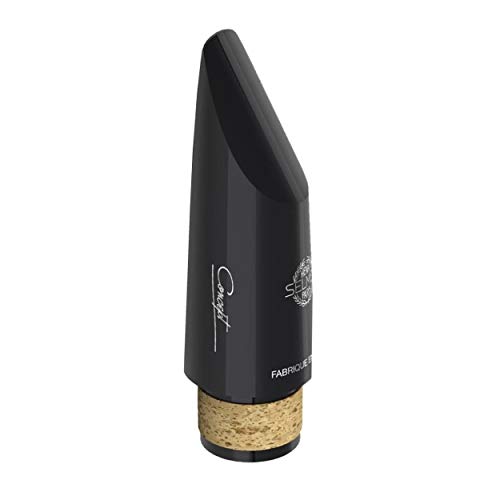
The Concept is Selmer Paris’s modern answer for players who want a round, centered sound with easy emission across the whole range of the instrument. Its tip opening sits in the middle ground, and the longer facing works with a trapezoidal chamber to keep the tone focused without feeling restrictive. Clarinetists often describe the Concept as even: the low register speaks warmly, the throat tones stay clear, and the upper register does not turn shrill when you push the dynamics. It is a natural step up for an advancing player moving from a beginner mouthpiece toward serious classical or wind-band work, and it pairs well with medium-strength reeds. If you play a Selmer or Buffet clarinet and want a mouthpiece voiced in the same French tradition, the Concept belongs on your shortlist.
Specs
- Brand: Selmer Paris
- Model: Concept
- Instrument: Bb clarinet
- Material: Ebonite (hard rubber)
- Tip opening: 1.10 mm
- Facing length: 23 mm
- Chamber: Trapezoidal
- ASIN: B078WNYYN4
4. D’Addario Reserve X5

The D’Addario Reserve line stands apart from most mouthpieces because each one is milled from a solid rod of hard rubber rather than molded, then finished to tight tolerances. The X5 is the middle option in the Reserve clarinet range, with a tip opening that keeps the feel controlled and classical while the medium-long facing adds a little warmth and flexibility. D’Addario pitches the Reserve models at A=441, which helps them sit comfortably with the tuning tendencies of modern ensembles. The result is a mouthpiece that feels precise and consistent, with clean articulation and a dark, even tone that recording and audition settings tend to reward. Players who have tried several molded mouthpieces and noticed small inconsistencies between examples often appreciate the Reserve approach.
Specs
- Brand: D’Addario
- Model: Reserve X5
- Instrument: Bb clarinet
- Material: Hard rubber, milled from solid rod
- Tip opening: 1.05 mm
- Facing: Medium-long
- Pitch: A=441
- ASIN: B008JCUS7G
5. Selmer Primo Mouthpiece Kit (Prelude P2KIT)

Not every player needs a professional mouthpiece, and that is exactly where this Conn-Selmer kit earns its place. Sold under the Selmer name as part of the Prelude student line, the Primo kit bundles a plastic Bb clarinet mouthpiece with a ligature and a protective cap, so a beginner gets everything needed to replace a lost or damaged school mouthpiece in one purchase. The mouthpiece itself is the same Primo model supplied with Prelude student clarinets, designed for easy response and good intonation for new players. Plastic construction keeps it durable for marching band bags and classroom storage. It will not rival the ebonite models above for tonal depth, but as a complete, ready-to-play starter or backup setup, it is a sensible and honest choice.
Specs
- Brand: Selmer (Conn-Selmer)
- Model: Primo Mouthpiece Kit, Prelude P2KIT
- Instrument: Bb clarinet
- Material: Plastic mouthpiece
- Includes: Mouthpiece, ligature and cap
- UPC: 641064572562
- ASIN: B00F2ORLAG
How to Choose the Right One
Start from your current playing rather than from a headline specification. If you are a student whose tone feels scattered, a close, controlled facing such as the Vandoren 5RV or the D’Addario Reserve X5 will usually tighten things up fastest. If you already play with a stable embouchure and want more volume and color, the wider Vandoren B45 Lyre opens that door. The Selmer Paris Concept suits the advancing classical player who wants an even, centered response across registers. The Conn-Selmer Primo kit is the practical pick for a first replacement or a spare.
Whatever you choose, plan to adjust your reeds. A new facing often wants a half-strength change up or down before it feels right, so try your current reeds first, then experiment. If possible, play long tones, scales across the break, and quiet entrances on any candidate mouthpiece, because those reveal more than loud high notes do. Finally, remember that a mouthpiece cannot fix a leaking pad or a warped reed, so rule out instrument problems before blaming your setup.
FAQ
What tip opening should a beginner choose?
A closer tip opening, roughly 1.00 to 1.10 mm, is usually easiest for a beginner to control, which is why models like the Vandoren 5RV are so often recommended for students.
Does mouthpiece material really change the sound?
Material has a modest effect. Ebonite tends to feel warm and resonant, while plastic is brighter and more durable. Facing shape and tip opening influence your sound far more.
Can I use one of these mouthpieces with any Bb clarinet?
Yes. Clarinet mouthpieces use a standard cork tenon fit, so these models work with student and professional Bb clarinets alike. A technician can adjust cork thickness if the fit feels loose or tight.
Should I buy a mouthpiece with a ligature included?
Only the Conn-Selmer Primo kit in this guide includes a ligature and cap. The other mouthpieces are sold on their own, so budget for a ligature separately if you do not already own one.
Conclusion
A better mouthpiece is the most affordable meaningful upgrade in a clarinetist’s kit. The Vandoren 5RV remains the safest all-round recommendation for students, the B45 Lyre Profile 88 serves players who want a freer, bigger sound, the Selmer Paris Concept delivers an even and centered classical response, and the D’Addario Reserve X5 offers milled precision with a dark, consistent tone. For beginners who simply need a complete working setup, the Selmer Primo kit covers the basics in one box. Match the tip opening and facing to your embouchure, adjust your reed strength to suit, and any of these five will move your playing forward.
More from Amazon
Programs that pair well with the guide above. Offers and eligibility are set by Amazon and may change.
Free shipping on eligible items, Prime Video and more. Eligible new members can start with a free trial.
Start a Prime free trialA Prime membership for ages 18-24 with a trial period. Eligibility is set by Amazon.
See Prime for Young AdultsAudiobooks and podcasts to listen to on the go. Eligible new members can start with a free trial.
Try Audible freeAd-free music streaming. Eligible new subscribers can start with a free trial.
Try Music Unlimited freeAs an Amazon Associate we earn from qualifying purchases.