Key takeaways
- Compare the best beach tents for families, couples, and solo beach days. Five sun shelters with quick setup, strong wind hold, and room to relax.
A good beach tent changes the whole shape of a beach day. Instead of chasing a narrow strip of shade as the sun moves, you get a cool pocket of shelter that stays put from the first cooler unpacked to the last grain of sand shaken out of the towels. The best beach tents go up fast, hold steady when the afternoon breeze picks up, and pack down small enough to carry over one shoulder with a chair in the other hand. This guide compares five sun shelters that cover the most common beach days: a quick hub pop-up for small groups, a porch-style tent for privacy, a roomy pole cabana for families, a size-flexible shelter for groups that change from trip to trip, and a large floor-extended tent for lounging. As an Amazon Associate, we earn from qualifying purchases.
Quick answer: For most beachgoers, the Pacific Breeze Easy Setup Beach Tent is the easiest first choice, with a hub pop-up design that opens in under half a minute and room for three or more people. Families who want the most shade per trip should look at the AMMSUN Beach Cabana, while the WolfWise porch tent suits anyone who wants a private changing space. Budget-minded shoppers who still want full sun protection will find the Etto Portable Sun Shelter and the LetsFunny Large Beach Tent hard to beat for the coverage they deliver.
Table of Contents
- How to Choose a Beach Tent
- Pacific Breeze Easy Setup Beach Tent
- WolfWise Instant Beach Tent with Zippered Extendable Porch
- AMMSUN Beach Cabana
- Etto Portable Sun Shelter
- LetsFunny Large 3-4 Person Beach Tent
- Beach Tent Setup Tips for Windy Days
- Caring for Your Beach Tent
- Frequently Asked Questions
- Conclusion
- Product and ASIN Reference
How to Choose a Beach Tent
Choosing a beach tent is mostly about matching the shelter to the way you actually spend a beach day. A tent that is perfect for two adults reading in the shade can feel cramped the moment two kids, a cooler, and a pile of sand toys arrive. A tent that is perfect for a calm morning can turn into a sail the moment the sea breeze strengthens. Work through the factors below before you settle on a size or a style, and the right pick usually becomes obvious.
Setup style
Setup style is the first decision, and it shapes everything else about the tent. Pop-up tents use spring-loaded frames that open the moment they leave the bag, which makes them the fastest option on the sand. Hub tents use a central hub with a drawstring or a push mechanism, and they open almost as fast while folding into a flatter, more predictable package. Pole tents and cabanas use separate poles and sand pockets, which takes a few minutes longer but gives a taller, more open shelter with a stronger stance in wind. If you arrive at the beach with kids in tow and want shade before the sunscreen has even dried, a pop-up or hub design is the practical choice. If you plan to stay for a full day and want a shelter that feels more like a room, a pole cabana earns its extra setup time.
Size and capacity
Tent capacity numbers describe how many people can sit shoulder to shoulder under the canopy, not how many people can stretch out with bags, coolers, and toys. A tent listed for three people is a comfortable fit for two adults and a child, or for three adults sitting upright. A tent listed for four people is a better fit for a family with two small children and their gear. Measure the footprint in your head before you buy: a floor around 85 inches long gives two adults room to lie down, while a floor under 60 inches long is really a sitting shelter. Height matters too. A tent under 48 inches tall is a crawl-in shelter, fine for shade while sitting or lying down, while a taller cabana lets you stand to change clothes or shake out a towel. When in doubt between two sizes, take the larger one, because beach gear always takes more room than you expect and a tent that feels generous at noon still feels generous at four in the afternoon.
Sun protection
Sun protection is the core job of a beach tent, and the UPF value is the number to check. Look for UPF 50+ fabric, which blocks the great majority of ultraviolet rays and is the standard across the picks in this guide. A high UPF value only helps if the tent actually shades the people under it, so check the shape as well. A tent with an extended floor or a front awning shades legs and feet that would otherwise stick out into direct sun. A tent with a full back and sides blocks low sun in the morning and late afternoon, when the sun angle is shallow and shade from above does not cover much. Darker fabrics absorb more heat, while lighter fabrics reflect more light and keep the interior cooler, so a light-colored canopy is a sensible choice for hot climates. Ventilation works together with sun protection: mesh windows and vents let hot air escape so the shaded space stays cooler than the open sand.
Wind resistance
Wind is the force that decides whether a beach tent stays up or ends up halfway down the beach. Three features matter most. First, sand pockets and sandbags anchor the tent with the weight of the beach itself, and they work better than stakes in soft sand because stakes pull out easily. Fill every pocket and bag the tent provides, and pile extra sand on top if the breeze is strong. Second, a low profile catches less wind, so a dome-shaped pop-up holds its ground better than a tall, flat-sided canopy in a gusty spot. Third, guy lines and tie-down points let you anchor the tent from several directions, which keeps it from lifting on one side. A tent with all three features can handle a normal sea breeze without drama, while a tent with none of them needs constant attention. Always face the back of the tent into the wind and keep the opening toward the sea or the view, which is the orientation the designers had in mind.
Weight and packed size
Weight and packed size decide whether the tent actually comes with you or stays in the garage. A tent around four to five pounds can be carried in one hand with a beach bag in the other, and it fits in a car trunk beside a cooler without a puzzle. A heavier cabana with poles and sand pockets weighs more and packs longer, so it suits car trips where you park close to the sand rather than long walks from a distant lot. Check the carry bag as well as the tent. A bag with a shoulder strap and a wide opening makes packing up at the end of the day far easier than a tight sleeve that needs the tent folded exactly right. If you walk a long way to your spot, a lighter pop-up is worth more than a larger tent you dread carrying.
Ventilation and views
A beach tent without airflow becomes a hot box by midday, so ventilation deserves real attention. Mesh windows on the sides let a breeze pass through while keeping the sun out, and a mesh panel at the back keeps air moving even when the tent faces away from the wind. Some tents add a vent at the peak, which lets rising hot air escape. The best setups give you shade and a view at the same time: a wide front opening frames the sea, while mesh side panels keep the interior from feeling closed in. If you plan to nap under the tent, ventilation matters even more, because still air under a canopy warms quickly and makes a nap uncomfortable.
Sand, water, and durability
Beach gear lives a hard life. Sand gets into zippers and seams, salt air corrodes cheap hardware, and wet fabric packed away damp can develop mildew. Look for polyester or nylon fabric with a water-resistant coating, which sheds a passing shower and dries quickly. Fiberglass poles are light and flexible, while steel or aluminum poles are sturdier in wind. Reinforced stitching at the corners and around the door takes the strain when the tent is pulled taut. A floor that extends beyond the canopy keeps sand off towels and makes the tent easier to clean, since sand shakes off a flat floor more easily than it shakes out of a mesh pocket. After every trip, shake the tent out, let it dry fully before packing, and store it in its bag away from damp.
Who should skip a beach tent
A beach tent is not the right shelter for every beachgoer. If you move between several spots during the day, a beach umbrella is lighter and faster to reposition. If you hike a long way to a remote cove, a compact sunshade or a wide-brimmed hat may be the practical limit of what you want to carry. If you only visit the beach for an hour at a time, a towel and sunscreen may be all you need. Beach tents earn their place when you stay in one spot for several hours, when you have children or older relatives who need reliable shade, or when you want a base camp for food, gear, and rest between swims.
Pacific Breeze Easy Setup Beach Tent
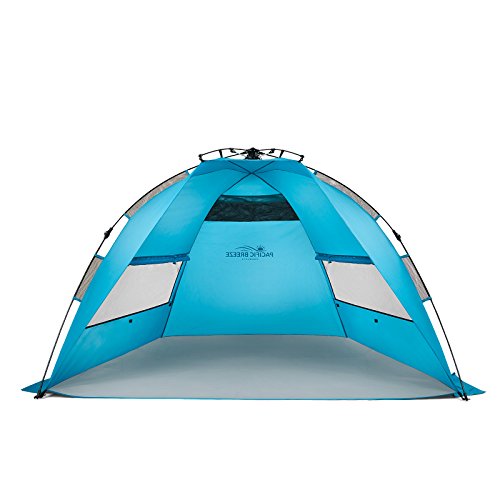
The Pacific Breeze Easy Setup Beach Tent is the pick that most beachgoers should consider first, because it removes the one obstacle that keeps many people from using a beach tent at all: the setup. The hub design opens with a pull of the central hub drawstring, and the tent is standing in under half a minute. There are no poles to thread, no sleeves to fight, and no instructions to remember after the first trip. That speed matters most on the days when you arrive with an armful of gear and a child already asking to get in the water. Shade goes up first, and everything else follows.
The tent is built for three or more people, which in practice means two adults and a child sitting comfortably, or three adults sitting upright with a small cooler at the edge. The canopy carries UPF 50+ sun protection, so the shade it casts is real protection rather than a dim patch that still lets the sun through. The fabric is a durable polyester that sheds light rain and dries quickly, and the tent weighs about four and a half pounds, which is light enough to carry over one shoulder with a beach chair in the other hand. The packed size is compact for a tent of this capacity, and the included carry bag makes the trip from car to sand straightforward.
Wind handling is a strength of the hub design. The dome shape sheds gusts rather than catching them, and the tent includes sand pockets that you fill from the beach itself for anchoring. In a normal sea breeze the filled pockets hold the tent steady without stakes, which are of little use in soft sand anyway. The low profile also helps the tent sit quietly through the afternoon, when the breeze typically strengthens. For stronger days, piling extra sand on the pockets and facing the back of the tent into the wind keeps things calm.
Inside, the tent feels open for its size. The wide front opening frames the view and lets the breeze in, while the fabric sides block the sun at low angles. The floor is sized for sitting and lounging, with room for towels and a small bag beside each person. Ventilation comes from the open front and the breathable design of the canopy, which keeps the interior cooler than a fully enclosed shelter. Families will appreciate that the tent goes up fast enough to shelter a small child within a minute of arrival, and that it comes down just as fast when the day is done.
The main tradeoff is that a hub tent is a sitting shelter rather than a standing one. You will not stand up inside it to change clothes, and taller adults will duck to enter. That is a fair exchange for the speed and the packed size, and it is the same tradeoff every pop-up and hub tent makes. The other consideration is that the tent is sized for small groups, so a family of five should look at a larger shelter instead of trying to squeeze everyone under one canopy. For couples, small families, and solo beachgoers who bring a friend, the capacity is right.
This tent suits the beachgoer who wants shade without a project. It is a mid-range pick that earns its place through speed, light weight, and dependable sun protection, and it is the shelter to choose when you want to be sitting in the shade within a minute of reaching your spot.
Specs
- Capacity: 3 or more people
- Setup: hub pop-up with central drawstring, opens in under 30 seconds
- Sun protection: UPF 50+ fabric
- Weight: about 4.5 pounds
- Fabric: polyester, water-resistant
- Anchoring: sand pockets
- Carry bag: included
WolfWise Instant Beach Tent with Zippered Extendable Porch

The WolfWise Instant Beach Tent with Zippered Extendable Porch is the pick for beachgoers who want a tent that does more than cast shade. Its defining feature is the zippered porch at the front, which extends the sheltered area and can be closed for privacy. That porch turns the tent into a changing room, a sheltered spot for a small child to nap, or a dry place to store bags when a passing shower rolls in. For families with young children, that privacy is the feature that matters most, and few tents at this size offer it.
The tent is a pop-up design, so it opens quickly and folds down into a portable package with a carry bag. The footprint measures 85 x 45 x 49 inches, which gives three to four people room to sit and stretch out, with the porch adding usable space at the front. The canopy carries UPF 50+ sun protection, and the fabric is a water-resistant polyester that handles sea spray and light rain. Mesh panels keep air moving through the tent, which matters when the porch is zipped closed, because a closed porch without airflow would warm up fast.
Wind handling is solid for a tent of this size. The pop-up frame holds a low, rounded shape that sheds gusts, and sand pockets at the corners anchor the tent with the weight of the beach. The porch itself is held by the same frame, so it does not flap or lift the way a loose awning can. In a steady sea breeze the tent sits quietly, and the porch gives you a place to sit that is sheltered from the wind as well as the sun. The zipper is a practical detail too: it runs smoothly when sand is kept out of the track, and it lets you open or close the porch in seconds.
Inside, the tent feels larger than its footprint suggests, because the porch extends the living area without adding to the packed size. The main compartment holds towels and bags, while the porch holds a chair or a cooler, or serves as a changing space. The floor is continuous, so sand stays outside the sleeping and sitting area as much as any beach tent allows. The interior height is enough for sitting and for changing while seated or crouched, and the wide opening keeps the space from feeling closed in when the porch is open.
The tradeoff is weight and packed size. A porch tent with a zippered extension packs larger than a simple dome, and it weighs more than the lightest pop-ups. That is a fair exchange for the extra space and privacy, but it matters if you walk a long way from the car. The other consideration is that the zipper and the porch add parts that need care: keep sand out of the zipper track, and let the porch fabric dry fully before packing. With that basic care, the tent holds up well across many seasons.
This tent suits families with small children, couples who want a private changing space, and anyone who likes a tent that adapts during the day, opening wide for the view and closing up for privacy or a shower. It is a mid-range pick with a feature that the other tents in this guide do not offer, and that feature is the reason to choose it.
Specs
- Capacity: 3 to 4 people
- Dimensions: 85 x 45 x 49 inches
- Setup: instant pop-up frame
- Sun protection: UPF 50+ fabric
- Porch: zippered extendable front porch for privacy and extra space
- Ventilation: mesh panels
- Anchoring: sand pockets
- Carry bag: included
AMMSUN Beach Cabana

The AMMSUN Beach Cabana is the largest shelter in this guide and the one to choose when shade is the priority and you are willing to spend a few extra minutes on setup. The cabana is a pole-supported canopy that measures 6.2 x 6.2 feet, which is enough room for a family to sit, eat, and play out of the sun. The open-sided design gives the feeling of a shaded pavilion rather than a tent, with air moving freely and a clear view in every direction. On a hot day, that openness is the difference between a shelter you want to stay under and a shelter you escape from.
Setup uses poles and sand pockets rather than a spring frame, which takes longer than a pop-up but gives a stronger, taller shelter. The sand pockets fill from the beach and hold the corners down, and a side wall is included for blocking low sun or wind from one direction. The canopy fabric carries UPF 50+ sun protection, and the navy sailor color keeps the interior cool while looking at home on the sand. The cabana is built for full-day stays: it holds a cooler, several chairs, and a pile of bags without feeling crowded, and the height lets adults stand to stretch or change without leaving the shade.
Wind handling is where a pole cabana earns its keep. The four-corner anchoring and the sand pockets hold the canopy steady in a breeze that would worry a taller umbrella, and the side wall can be moved to the windward side to cut gusts. The open design also helps, because wind passes under the canopy rather than pressing against a closed wall. In strong gusts, adding extra sand to the pockets and lowering the canopy angle keeps the structure calm. The poles are sturdy, and the canopy fabric is a durable polyester that resists tearing and dries quickly after a shower.
The cabana is a premium pick in this guide, and its strengths come with a clear tradeoff: it is heavier and packs longer than a pop-up tent, and setup takes several minutes with two people working together. That is the right exchange for a family that drives to the beach, parks close, and stays all day, but it is the wrong exchange for a solo visitor who walks a long way to the sand. The cabana also offers less privacy than an enclosed tent, since the sides are open except for the one side wall. If you need a private changing space, pair the cabana with a towel wrap or choose the WolfWise porch tent instead.
What the cabana does better than any other pick here is host a group. Four adults can sit under it with chairs and a cooler, and children can play in the shaded sand beneath it for hours. The 6.2 x 6.2 foot footprint is generous without being so large that it crowds neighboring beachgoers, and the square shape fits neatly into a beach setup with chairs on two sides and bags on the third. For family beach days, long picnics, and group outings, it is the most comfortable shelter in this guide.
Specs
- Capacity: family size, 4 or more people
- Dimensions: 6.2 x 6.2 feet
- Setup: pole-supported cabana with sand pockets
- Sun protection: UPF 50+ fabric
- Side wall: included for wind and low sun
- Fabric: polyester canopy
- Anchoring: sand pockets at corners
- Carry bag: included
Etto Portable Sun Shelter

The Etto Portable Sun Shelter is the flexible pick in this guide, and its strength is choice. It comes in sizes for two, three, four, and six to eight people, so you can match the shelter to your actual group instead of buying a tent that is too big for a couple or too small for a family reunion. The design is a portable sun shelter with a canopy, a floor, and a carry bag, built around quick setup and easy packing. For beachgoers whose group size changes from trip to trip, that range of sizes is the deciding factor.
The shelter carries UPF 50+ sun protection, and the fabric is waterproof, which means a passing shower beads off the canopy rather than soaking through. The canopy shape gives a wide patch of shade, and the floor keeps towels and bags off the sand. Ventilation comes from the open front and the side panels, which let the sea breeze pass through while the canopy blocks the sun from above. The shelter packs into its carry bag and is light enough to carry with the rest of the beach gear, which matters on the walk from the car.
Setup is straightforward, with a frame that opens quickly and sand pockets or anchor points that hold the shelter in place. The design is less enclosed than a dome tent, which keeps the interior cool and the view open, and more sheltered than an umbrella, which only shades the people directly beneath it. In a normal sea breeze the shelter holds steady with filled sand pockets, and the low canopy profile keeps it from catching gusts the way a tall canopy can. The waterproof fabric also means the shelter doubles as a rain shelter for a short shower, which is a useful bonus on changeable beach days.
The main tradeoff is that a shelter this open gives less privacy and less wind blocking than an enclosed tent. There is no zippered porch and no full walls, so changing clothes means stepping behind a towel or into the car. The smallest sizes are also true two-person shelters, so a couple with a child and a dog will want to size up rather than squeeze into the smallest option. The range of sizes solves that problem, as long as you buy the size that fits your largest regular group rather than your smallest.
This shelter suits budget-minded beachgoers who want full sun protection and a waterproof canopy without paying for features they will not use. It is the pick for groups that change size, for travelers who want a light shelter that packs small, and for anyone who values an open view and good airflow over full enclosure. Among the five picks, it offers the widest choice of sizes, and that flexibility is its strongest card.
Specs
- Capacity: sizes for 2, 3, 4, and 6 to 8 people
- Setup: portable pop-up style sun shelter
- Sun protection: UPF 50+ fabric
- Fabric: waterproof canopy with floor
- Ventilation: open front and side panels
- Anchoring: sand pockets
- Carry bag: included
LetsFunny Large 3-4 Person Beach Tent

The LetsFunny Large 3-4 Person Beach Tent is the lounging pick in this guide, built for beachgoers who want to stretch out under the shade rather than sit upright in it. The tent is sized for three to four people, with an extended floor that gives legs and feet a shaded place to rest. That extended floor is a simple feature that makes a real difference: in most beach tents, feet stick out past the canopy into the sun, while here the floor and the canopy line up to shade the whole body. For readers, nappers, and anyone who likes to lie flat on the sand, it is the detail that matters.
The canopy carries UPF 50+ sun protection, and mesh windows on the sides keep air moving through the tent while blocking the sun at low angles. The mesh also gives a view out to the beach and the sea without opening the tent fully, which keeps the interior cooler and the space more private. The fabric is a water-resistant polyester that handles spray and a light shower, and the tent includes a carry bag for the trip to and from the sand. Setup is quick, with a pop-up style frame that opens fast and folds down without a struggle.
Wind handling is good for a tent with this much floor space. The tent sits low, which keeps it from catching gusts, and sand pockets hold the corners down with the weight of the beach. The extended floor itself helps, because it can be weighted with sand at the front edge to hold the tent down from the windward side. The mesh windows let wind pass through the tent rather than pressing against the fabric, which keeps the structure calm on breezy afternoons. As with any beach tent, facing the back into the wind and filling every sand pocket is the way to a quiet afternoon.
Inside, the tent feels roomy for three to four people lying down or sitting up, with space for towels and a small bag at each end. The interior height is enough for sitting comfortably and for changing while seated, and the wide opening keeps the space bright and airy. The blue color keeps the interior from feeling dark, and the mesh windows give a cross breeze that makes the tent a pleasant place to rest through the hottest part of the day. Families with children will find the extended floor useful as a play area in the shade, and the mesh windows let parents watch the beach while staying cool.
The tradeoff is that the tent is a sitting and lying shelter, not a standing one, and it packs larger than the smallest pop-ups because of the extended floor. That is a fair exchange for the lounging space, and the carry bag keeps the packed tent easy to transport. The tent is also best suited to calm and moderately breezy days; in a strong wind, a lower dome without an extended floor holds its ground with less attention. For most beach days, though, the extra floor space is worth it.
This tent suits beachgoers who lie down more than they sit up, readers and nappers who want full-body shade, and families who want a shaded play area for children. It is a budget-friendly pick that delivers the largest usable floor in this guide, and it is the shelter to choose when lounging is the plan.
Specs
- Capacity: 3 to 4 people
- Setup: easy setup pop-up style with extended floor
- Sun protection: UPF 50+ fabric
- Ventilation: mesh windows
- Floor: extended floor for full-body shade
- Fabric: water-resistant polyester
- Anchoring: sand pockets
- Carry bag: included
How the Five Picks Compare
The five tents in this guide cover different beach days, and the right choice depends on which tradeoff matters most to you. The Pacific Breeze Easy Setup Beach Tent is the fastest to set up, opening in under half a minute with a hub drawstring, and it is the lightest of the enclosed tents at about four and a half pounds. It suits couples and small families who want shade immediately and do not need a standing-height shelter. The WolfWise porch tent is the most versatile enclosed tent, with a zippered porch that adds privacy and extra space, and it is the pick for families with young children who need a changing space. The AMMSUN Beach Cabana is the roomiest shelter by a wide margin, with a 6.2 x 6.2 foot canopy that hosts a whole family, and it is the pick for full-day stays where comfort matters more than packed size. The Etto Portable Sun Shelter is the most flexible, with sizes for two through eight people and a waterproof canopy, and it is the pick for groups that change size from trip to trip. The LetsFunny Large Beach Tent is the best lounger, with an extended floor and mesh windows that shade the whole body, and it is the pick for readers and nappers.
Think about your group first, then your walk to the sand, then your need for privacy. A family of four with two small children and a short walk from the car will be happiest under the AMMSUN cabana or the WolfWise porch tent. A couple with a long walk to a quiet cove will be happiest with the Pacific Breeze hub tent, which is light and fast. A group that sometimes numbers three and sometimes numbers seven will be happiest with the Etto shelter in the size that fits the largest regular group. A beachgoer who spends the day lying down with a book will be happiest in the LetsFunny tent with its extended floor. There is no single best tent for every beach day, and the five picks here are designed so that one of them matches the way you actually use the beach.
Budget groups line up neatly as well. The Etto shelter and the LetsFunny tent sit in the budget group, offering full UPF 50+ protection and quick setup without extra features. The Pacific Breeze hub tent and the WolfWise porch tent sit in the mid-range group, adding speed and privacy features that earn their place on busy beach days. The AMMSUN cabana sits in the premium group, offering the largest shaded area and the most comfortable all-day shelter. The premium group is worth it when you host a group under the canopy for hours at a time, while the budget group is the smart choice when you want reliable shade and a light carry without paying for space you will not use.
Beach Tent Setup Tips for Windy Days
Wind is the most common reason a beach day with a tent goes wrong, and a few habits keep the tent standing through the afternoon. Begin by choosing your spot with the wind in mind. Set up with the back of the tent facing the wind and the opening facing the view, which is the orientation that sheds gusts instead of catching them. Avoid the top of a dune or an exposed point where the wind is strongest, and look for a spot with a natural windbreak if one is available. Give your neighbors room, because a tent that lifts in a gust needs space to settle without hitting anyone.
Fill every sand pocket and sandbag the tent provides, and fill them fully. A half-filled pocket is little better than an empty one, and the sand is free, so there is no reason to skimp. Pile extra sand on top of the pockets if the breeze is strong, and press the sand down so it settles into the pocket. If the tent has guy lines, stake them or bury the ends under a mound of sand, and angle them away from the tent so they pull the fabric taut. A taut tent sheds wind, while a slack tent flaps and lifts. Check the lines after an hour, because sand settles and lines loosen as the day goes on.
Keep the tent low and closed when you leave it. If you go for a swim, close the front of the tent or lower the canopy, because an empty tent with a wide-open front catches the wind like a sail. Do not hang heavy bags from the frame, which can bend poles and pull the fabric out of shape. If a gust does lift a corner, let the tent settle and re-anchor it rather than grabbing the frame, which can snap a pole or tear the fabric. At the end of the day, fold the tent with the wind at your back so the fabric does not billow while you pack it, and shake the sand out before it goes into the bag.
A final habit saves trouble across the whole season: check the weather before you leave home. A beach tent is built for sun and a sea breeze, not for a storm front. If the forecast calls for strong gusts, bring the tent but be ready to take it down early, and never leave a tent standing overnight on the beach. A tent that survives a windy afternoon is a tent that was anchored well and watched, not a tent that was left to fend for itself.
Caring for Your Beach Tent
A beach tent that is cared for lasts many seasons, while a tent that is packed away wet and sandy wears out quickly. The most important habit is drying. After every trip, open the tent at home or hang it over a line until it is fully dry, even if it looks dry on the sand. Moisture trapped in the folds can lead to mildew, which stains the fabric and weakens it over time. The same habit applies to the carry bag, which should be emptied of sand and dried before the tent goes back in.
Sand is the second enemy. Shake the tent out thoroughly before folding, and brush sand out of zippers and seams with a soft brush or a dry cloth. Sand in a zipper track grinds the teeth and makes the zipper stick, and the WolfWise porch zipper deserves a quick brush after every trip. Rinse the tent with fresh water if it has been splashed with salt water, and let it dry fully before storing. Salt left on the fabric and the hardware corrodes metal parts and stiffens the material over time.
Storage matters as much as cleaning. Keep the tent in its carry bag in a dry place, away from damp garages and hot attics. Do not store heavy items on top of the packed tent, which can bend the frame or crease the fabric. Check the tent before the first trip of the season: open it, look for frayed seams or a sticky zipper, and make sure the poles and the hub mechanism work smoothly. A small repair early in the season is easy, while a failure on the beach is not. With drying, sand removal, and dry storage, a good beach tent will shade many summers.
Frequently Asked Questions
How many people fit comfortably in a beach tent?
Capacity numbers describe sitting room, so plan for one fewer person than the listed number when you bring bags, a cooler, and toys. A tent listed for three people fits two adults and a child comfortably, and a tent listed for four fits a family with two small children. If your group regularly brings a lot of gear, size up one step.
Can a beach tent handle a windy day?
A beach tent handles a normal sea breeze well when every sand pocket is filled and the back faces the wind. Dome and hub tents hold their ground better than tall canopies, and guy lines add stability in stronger gusts. On days with strong gusts, lower the canopy, close the front when you leave the tent, and be ready to take it down early.
What is the difference between a beach tent and a beach umbrella?
A beach tent gives enclosed shade with walls, a floor, and wind protection, while an umbrella gives open shade that moves with the sun. A tent suits long stays in one spot and families who need reliable shade, while an umbrella suits short visits and beachgoers who move between spots. A tent also blocks wind and light rain better than an umbrella.
How do I keep sand out of my beach tent?
An extended floor helps, because it gives you a clean surface for towels and bags, and a tent with a floor keeps more sand outside than an open canopy. Shake the tent out before folding, brush sand from zippers and seams, and leave shoes and sandy toys at the entrance. A quick rinse with fresh water and a full dry before storage keeps the fabric in good shape.
Conclusion
A beach tent is a simple piece of gear that pays for itself in comfort across a whole summer. The Pacific Breeze Easy Setup Beach Tent is the easiest choice for most beachgoers, with a hub design that opens in under half a minute and room for three or more people. The WolfWise porch tent adds privacy and extra space for families, the AMMSUN cabana hosts a whole group under a roomy 6.2 x 6.2 foot canopy, the Etto shelter fits groups of every size with a waterproof canopy, and the LetsFunny tent gives loungers a full-body shaded floor. Pick the shelter that matches your group, your walk to the sand, and the way you spend the day, anchor it well with filled sand pockets, and the shade will be waiting for you from the first hour to the last.
Product and ASIN Reference
| Product | ASIN |
|---|---|
| Pacific Breeze Easy Setup Beach Tent | B00RQQRTSM |
| WolfWise Instant Beach Tent with Zippered Extendable Porch | B08LVVNB15 |
| AMMSUN Beach Cabana | B0FS5PRRVT |
| Etto Portable Sun Shelter | B0DPMMS8P4 |
| LetsFunny Large 3-4 Person Beach Tent | B091689GKD |
More from Amazon
Programs that pair well with the guide above. Offers and eligibility are set by Amazon and may change.
Free shipping on eligible items, Prime Video and more. Eligible new members can start with a free trial.
Start a Prime free trialA Prime membership for ages 18-24 with a trial period. Eligibility is set by Amazon.
See Prime for Young AdultsAudiobooks and podcasts to listen to on the go. Eligible new members can start with a free trial.
Try Audible freeAd-free music streaming. Eligible new subscribers can start with a free trial.
Try Music Unlimited freeAs an Amazon Associate we earn from qualifying purchases.