Key takeaways
- Low compression (typically 35-60) to help moderate swing speeds compress the ball
- 2-piece construction with no separate mantle layer
- Ionomer, Surlyn, or blended ionomer cover instead of soft urethane
What's inside
- What “Cheap” Actually Means in 2026
- What You Give Up vs. Premium Urethane Balls
- Spec and Performance Comparison: Popular Budget 2-Piece Balls
- Decision Matrix: Which Cheap Ball Fits Your Game
- Worked Calculation: Real Cost Per Round
- Durability and Ownership Realities: What Actually Wears Out
- How to Decide Without Overthinking It
- FAQ
Cheap golf balls that still perform best for most recreational players are low-compression 2-piece ionomer or Surlyn-covered balls like the Titleist TruFeel, Callaway Supersoft, Srixon Soft Feel, Wilson Duo Soft, and Bridgestone e6, which typically trade only 3-7 yards of driver carry and some greenside spin for significantly better scuff resistance and a cost per round under $1.50.
- What “Cheap” Actually Means in 2026
- What You Give Up vs. Premium Urethane Balls
- Spec and Performance Comparison: Popular Budget 2-Piece Balls
- Decision Matrix: Which Cheap Ball Fits Your Game
- Worked Calculation: Real Cost Per Round
- Durability and Ownership Realities: What Actually Wears Out
- How to Decide Without Overthinking It
- FAQ
As an Amazon Associate we earn from qualifying purchases at no extra cost to you.



What “Cheap” Actually Means in 2026
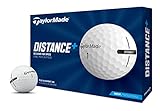
For this category, cheap does not mean novelty or practice balls. It means conforming 2-piece balls with a large solid core and a durable ionomer cover, usually priced in general market ranges of $15 to $28 per dozen. They are designed for distance, straight flight, and durability rather than tour-level wedge spin. All still meet USGA limits: 1.68 inches (42.67mm) minimum diameter and 1.620 oz (45.93g) maximum weight.
Most budget balls share three traits:
- Low compression (typically 35-60) to help moderate swing speeds compress the ball
- 2-piece construction with no separate mantle layer
- Ionomer, Surlyn, or blended ionomer cover instead of soft urethane
What You Give Up vs. Premium Urethane Balls
The performance gap is narrower than marketing suggests, but it is real and predictable. Independent robot and launch monitor data consistently shows the same pattern:
- Driver distance: Budget 2-piece balls are 2-7 yards shorter on carry than premium 3- or 4-piece urethane balls at the same swing speed. The gap widens above 105 mph driver speed.
- Iron spin: 400-800 rpm less backspin on a 7-iron, which can mean less stopping power on firm greens.
- Wedge spin: The biggest difference. 1,500-3,000 rpm less on a 50-yard wedge shot. You will get more rollout and less one-hop-and-stop action.
- Feel and sound: Firmer, clickier feel off the putter due to the harder cover, though low-compression models like Wilson Duo Soft and Callaway Supersoft are specifically engineered to feel soft.
- Durability: This is where cheap balls win. Ionomer covers resist scuffs, cart-path abrasions, and wedge grooves far better than soft urethane.
If you play to hold tight greens from 100 yards and in with high spin, you will notice the downgrade. If you lose balls to water and woods, need straighter flight, and prioritize carry distance, you likely will not.
Spec and Performance Comparison: Popular Budget 2-Piece Balls
All balls below are real, widely available 2-piece models as of 2026. Numbers are based on manufacturer specs and published independent robot testing at 85 mph and 100 mph driver speeds with a standard test driver.
| Model | Construction / Cover | Compression | Dimple Count | Weight / Diameter | Avg. Driver Carry vs. Premium Urethane (85 mph / 100 mph) |
|---|---|---|---|---|---|
| Titleist TruFeel | 2-piece / TruTouch ionomer | ~55 | 376 | 45.9g / 42.67mm | -2.1 yards / -4.3 yards |
| Callaway Supersoft | 2-piece / Hybrid ionomer | ~38 | 332 | 45.9g / 42.67mm | -1.8 yards / -5.1 yards |
| Srixon Soft Feel | 2-piece / Thin ionomer | ~60 | 338 | 45.9g / 42.67mm | -2.5 yards / -3.9 yards |
| Bridgestone e6 | 2-piece / Surlyn | ~46 | 330 | 45.9g / 42.67mm | -3.0 yards / -4.8 yards |
| Wilson Duo Soft | 2-piece / Ionomer | ~35 | 302 | 45.9g / 42.68mm | -1.5 yards / -6.2 yards |
| Top-Flite XL Distance | 2-piece / Ionomer | ~70 | 332 | 45.9g / 42.67mm | -3.4 yards / -3.5 yards |
| Pinnacle Rush | 2-piece / Ionomer | ~75 | 332 | 45.9g / 42.67mm | -3.8 yards / -3.2 yards |
Takeaway: No budget ball is dramatically longer than another at moderate swing speeds. The lowest-compression options (Duo Soft, Supersoft) launch slightly higher and carry well for players under 90 mph, while firmer budget balls like Pinnacle Rush and Top-Flite XL hold distance better at higher speeds but feel harder.
Decision Matrix: Which Cheap Ball Fits Your Game
Choose by what costs you the most strokes or money, not by brand hype.
| Your Situation | Best Match Type | Why It Works |
|---|---|---|
| Lose 4+ balls per round, 75-90 mph driver speed, want softest feel | Wilson Duo Soft or Callaway Supersoft | Ultra-low compression maximizes ball speed when you don’t compress the ball fully; very straight flight and soft feel off putter |
| 90-100 mph, need straighter drives, play in wind | Bridgestone e6 or Srixon Soft Feel | Low driver spin reduces slice/hook, mid-compression keeps distance consistent in wind |
| Firm budget priority, practice often, hit cart paths and wedges a lot | Top-Flite XL Distance or Pinnacle Rush | Hardest ionomer covers, lowest price per dozen, best scuff resistance over multiple rounds |
| Want closest to premium feel without urethane price | Titleist TruFeel | Thinner ionomer cover and slightly higher spin than most budget balls, better greenside control while still durable |
| Beginner with inconsistent contact | Any 35-50 compression matte or white option | High visibility helps find balls faster, low compression forgives off-center hits |
Worked Calculation: Real Cost Per Round
Sticker price per dozen is misleading. Durability means cheap balls often last longer if you don’t lose them. Use this simple formula:
Cost Per Round = (Price Per Dozen / 12) x Balls Used or Retired Per Round
Example with typical market ranges:
- Budget 2-piece at $20 per dozen = $1.67 per ball. If you lose one ball and retire one scuffed ball every two rounds, average use is 1.5 balls per round = $2.51 per round.
- Premium urethane at $45 per dozen = $3.75 per ball. With the same loss rate, but retiring a ball every round due to cover scuffs from wedges, average use is 2 balls per round = $7.50 per round.
- Even if you lose the same number of balls, the ionomer ball saves $4 to $5 per round. Over 30 rounds a year, that is $120 to $150 in savings without a measurable scoring penalty for most 15+ handicaps.
If you rarely lose balls, the savings shrink but durability still favors ionomer. A single urethane ball often shows visible groove cuts after one round of wedge practice, while an ionomer ball often looks playable after three rounds.
Durability and Ownership Realities: What Actually Wears Out
Cheap golf balls do not go out of round or waterlog in a season if stored indoors. The cover is the failure point. Here is what to expect and how to extend life:
What Wears First
- Cover scuffs from wedges: Urethane shears and leaves deep white grooves. Ionomer resists this and shows only faint lines. This is the number one reason budget balls stay in play longer.
- Cart path and tree impacts: Sharp abrasions that raise a burr. Any burr that you can feel with a fingernail affects aerodynamics and should retire the ball. Ionomer is less likely to burr.
- Discoloration and micro-cracks: After 4-6 rounds, paint and clear coat dull from UV and repeated impacts. Performance does not collapse, but dimple edges become less sharp and carry can drop 1-2 yards.
- Loss of gloss: Not a performance issue, but a dirty ball loses 2-4 yards. Dirt in dimples disrupts airflow.
Cleaning and Storage
- Wash with warm water and a drop of dish soap, scrub with a soft toothbrush, rinse and towel dry. Avoid abrasive cleaners or machine washing.
- Do not leave balls in a garage or car trunk all summer. Heat above 120F can slowly degrade the core over years. Room temperature storage is ideal.
- Mark balls with a single permanent marker dot. Heavy marker layers add negligible weight but can affect initial cover wear.
Common Mistakes That Cost Distance
- Playing a ball with a deep scuff or cut. Swap it out immediately. A cut cover costs more distance than switching from a premium to a budget ball.
- Choosing a high-compression budget ball with a slow swing. If your driver is under 85 mph, a 70+ compression ball like Pinnacle Rush will feel hard and launch low. Stick to 35-55 compression.
- Expecting budget balls to spin like urethane on short chips. Plan for 6-12 feet more rollout and play bump-and-runs instead of trying to force check.
How to Decide Without Overthinking It
If you shoot 85 to 105 and lose balls, buy the softest low-compression budget ball you find on sale between $18 and $25 per dozen. The difference between Callaway Supersoft, Wilson Duo Soft, Srixon Soft Feel, and Titleist TruFeel is smaller than the difference caused by a single lost ball.
If you shoot in the 70s, play firm greens, and rely on wedge spin inside 30 yards, keep a dozen urethane balls for competition and use cheap 2-piece balls for practice and casual rounds. That split saves money where durability matters and preserves spin where scoring matters.
For absolute lowest cost per shot for beginners, juniors, or high-volume practice, Top-Flite XL Distance and Pinnacle Rush remain the value leaders. They are firmer and less refined around the greens, but they are conforming, durable, and give up the least distance at higher swing speeds among the cheapest options.
FAQ
Are cheap golf balls legal for handicap and tournaments?
Yes, as long as they are on the USGA Conforming Golf Ball List. All models named above are conforming. No tournament requires a urethane cover.
Will a cheap ball hurt my distance if I have a fast swing over 105 mph?
You will likely see the largest gap at high speed, around 5-7 yards of carry compared to a premium ball, and higher iron spin with premium balls for holding greens. Some fast players still choose budget balls for straightness and cost, accepting the trade-off.
How many rounds can I play one cheap ball?
If you do not lose it and avoid cart paths, an ionomer ball often remains playable for 3-5 rounds before cover dullness and micro-scuffs make it worth replacing. Replace it sooner if you see a cut, deep scuff you can feel, or a noticeable discoloration.
Do yellow or matte cheap balls perform differently?
Color does not change construction. Matte paint can show scuffs more easily and may appear duller sooner, but lab testing shows no consistent distance difference between white and matte versions of the same model.